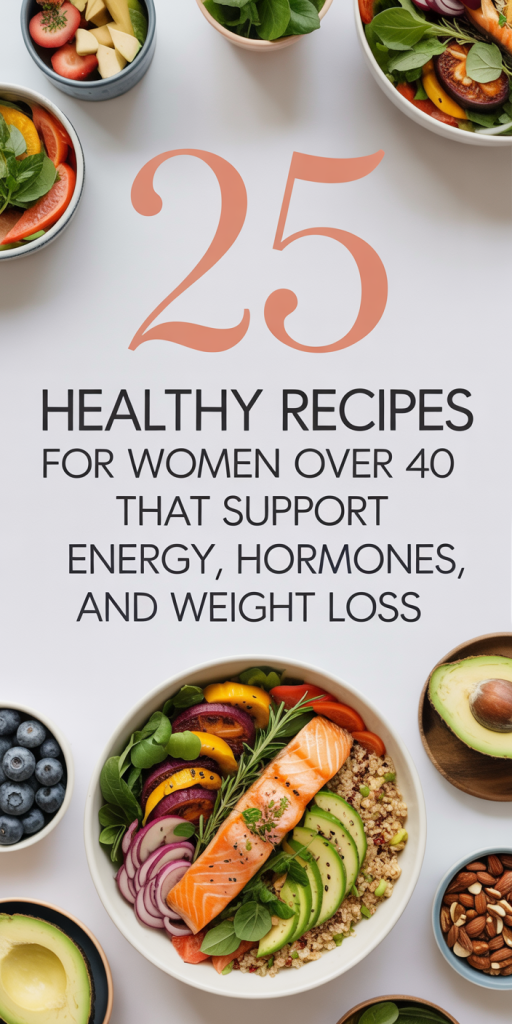
25 Healthy Recipes For Women Over 40: Boost Energy, Balance Hormones, And Support Weight Loss
As we move through our 40s and beyond, our bodies change: metabolism shifts, hormones fluctuate, and energy can dip. We’ve compiled 25 practical, nutrient-dense recipes designed specifically to support energy, hormone balance, and healthy weight loss in 2026. These recipes emphasize protein, fiber, healthy fats, low-glycemic carbs, and phytoestrogen- and micronutrient-rich ingredients (think leafy greens, fatty fish, legumes, nuts, seeds, and colorful vegetables). Each recipe includes ingredients and simple instructions so you can start cooking confidently tonight. Use them as building blocks for meals, swaps in your weekly plan, or as part of the sample 2-week plan we outline below.
Why These Recipes Work For Women Over 40 (Energy, Hormones, And Metabolism)
As we age, several physiological shifts affect energy, hormones, and weight. Our lean muscle mass gradually declines without resistance training or adequate protein, resting metabolic rate slows, and perimenopause/menopause causes estrogen and progesterone swings that influence fat distribution and cravings. The recipes here address those mechanisms with three core principles:
- Protein-first meals: We prioritize 15–30 g of high-quality protein at most meals to preserve lean mass, blunt appetite, and stabilize blood sugar. Sources include eggs, Greek yogurt, tofu, fish, poultry, legumes, and whey or pea protein where appropriate.
- Low-glycemic, fiber-rich carbs: Whole grains, legumes, and nonstarchy vegetables slow glucose absorption and reduce insulin spikes, important for weight management and energy stability.
- Hormone-supporting fats and micronutrients: Omega-3s (salmon, walnuts), monounsaturated fats (olive oil, avocado), and zinc, magnesium, vitamin D, and B-vitamins (leafy greens, nuts, fortified dairy) all support hormone production, mood, and sleep, indirectly helping metabolism.
We also focus on anti-inflammatory ingredients (turmeric, ginger, berries) and fermented foods to support gut health, which affects estrogen recycling and metabolic function. Portion control, balanced plates, and mindful eating, eating slowly and stopping when satisfied, are woven into the recipes rather than enforced through rigid calorie counting. Practically, these recipes are flexible: they can be scaled, swapped, and combined to fit different caloric needs and health goals while remaining evidence-aligned for women over 40.
How To Use This Guide: Portions, Meal Timing, Swaps, And A 2-Week Sample Plan
Portions: Aim for plates built around protein (¼), nonstarchy vegetables (½), and whole grains or starchy veg (¼) with a thumb-sized serving of healthy fat. For weight loss, reduce starchy carbs slightly and increase nonstarchy vegetables and protein.
Meal timing: We recommend three balanced meals with 1–2 nutrient-dense snacks as needed: many women find stable energy with 3–4 hour spacing. If you prefer intermittent fasting (e.g., 12:12 or 14:10), shift meals to your eating window while keeping protein targets.
Swaps: Each recipe is modular. Swap white rice for quinoa for more protein and fiber: swap dairy for fortified plant yogurt for lactose sensitivity: substitute salmon with chickpeas in salads for a plant-forward option: use olive oil instead of butter. Keep macros similar when swapping, maintain protein and fiber to preserve the recipe’s benefits.
2-week sample plan (overview): Week 1: Breakfasts, protein-rich smoothie or savory oats: lunches, large salads or grain bowls: dinners, lean protein + veg: snacks, Greek yogurt + berries, roasted chickpeas. Week 2: Repeat favorites, add batch-cooked soups and roasted veg for ease. We recommend prepping two breakfasts and two lunches on Sundays to cut decision fatigue. Below, the recipes include quick swap ideas to tailor the plan to your preferences.
25 Healthy Recipes Organized By Meal Type (Breakfasts, Lunches, Dinners, Snacks & Smoothies)
We organized 25 succinct, doable recipes with ingredients and instructions. Portions serve 1–2: scale as needed.
— Breakfasts (6)
- Spinach-Feta Omelet
Ingredients: 2 eggs, 1 cup fresh spinach, 1 tbsp crumbled feta, 1 tsp olive oil, salt & pepper.
Instructions: Sauté spinach in oil 1–2 min, whisk eggs, pour over spinach, sprinkle feta, fold when set. Serve with a slice of whole-grain toast.
2. Greek Yogurt Parfait with Flax
Ingredients: 1 cup plain Greek yogurt, 1/3 cup mixed berries, 1 tbsp ground flaxseed, 2 tbsp chopped walnuts, drizzle honey.
Instructions: Layer yogurt, berries, flax, walnuts. Drizzle honey. Stir and eat.
3. Steel-Cut Oats with Cinnamon & Almond Butter
Ingredients: 1/2 cup cooked steel-cut oats, 1 tbsp almond butter, 1/2 tsp cinnamon, 1/4 cup diced apple.
Instructions: Cook oats per package: stir in cinnamon and almond butter: top with apple.
4. Smoked Salmon & Avocado Toast
Ingredients: 1 slice sprouted-grain bread, 1/2 avocado mashed, 2 oz smoked salmon, lemon zest, pepper.
Instructions: Toast bread, spread avocado, top with salmon, squeeze lemon, grind pepper.
5. Tofu Scramble with Turmeric
Ingredients: 4 oz firm tofu crumbled, 1/2 cup bell pepper, 1/2 cup spinach, 1/4 tsp turmeric, 1 tsp olive oil, salt.
Instructions: Sauté peppers, add tofu and turmeric, cook 5 min, fold in spinach until wilted.
6. Berry Protein Smoothie Bowl
Ingredients: 1 cup mixed berries, 1 scoop protein powder, 1/2 cup unsweetened almond milk, 2 tbsp chia seeds.
Instructions: Blend until thick, pour into bowl, top with a few sliced almonds.
— Lunches (6)
7. Quinoa & Chickpea Salad
Ingredients: 1 cup cooked quinoa, 1/2 cup chickpeas, 1 cup chopped cucumber & tomato, 1 tbsp olive oil, lemon, parsley.
Instructions: Toss all ingredients, season with salt and lemon.
8. Turkey & Veggie Lettuce Wraps
Ingredients: 4 oz lean ground turkey, 1/2 cup shredded carrot, 1/2 cup sliced cucumber, romaine leaves, 1 tbsp soy/tamari.
Instructions: Sauté turkey with tamari until done: spoon into leaves with veggies.
9. Lentil Soup (Quick)
Ingredients: 1 cup cooked lentils, 2 cups low-sodium vegetable broth, 1/2 cup diced carrots, 1/2 cup celery, herbs.
Instructions: Simmer all for 10–15 min until veggies are tender. Season.
10. Salmon & Arugula Grain Bowl
Ingredients: 3–4 oz cooked salmon, 1 cup cooked farro, 2 cups arugula, 1 tbsp olive oil, lemon.
Instructions: Toss farro and arugula, top with salmon, drizzle oil and lemon.
11. Mediterranean Chickpea Wrap
Ingredients: 1 whole-grain wrap, 1/2 cup mashed chickpeas, 2 tbsp tzatziki, tomato, cucumber, spinach.
Instructions: Spread chickpeas and tzatziki, add veggies, roll tightly.
12. Cottage Cheese & Veg Plate
Ingredients: 1 cup low-fat cottage cheese, cherry tomatoes, sliced radish, 1 tbsp seeds.
Instructions: Plate cottage cheese with veggies and seeds: season with pepper.
— Dinners (8)
13. Baked Salmon with Lemon-Dill Yogurt
Ingredients: 4–6 oz salmon fillet, 1 tbsp olive oil, salt, pepper: sauce: 2 tbsp Greek yogurt, lemon zest, dill.
Instructions: Roast salmon 12–14 min at 400°F after drizzling oil and seasoning. Mix sauce and serve.
14. Turkey Meatballs with Zucchini Noodles
Ingredients: 8 oz ground turkey, 1 egg, 1/4 cup almond flour, garlic, 2 medium zucchinis spiralized.
Instructions: Mix meatball ingredients, bake 15–18 min at 400°F: sauté zoodles 2–3 min and top with meatballs.
15. Miso-Glazed Cod with Broccoli
Ingredients: 4 oz cod, 1 tbsp miso + 1 tsp honey, 1 cup broccoli florets.
Instructions: Brush cod with miso mix, bake 10–12 min: steam broccoli.
16. Chicken, Sweet Potato & Kale Sheet Pan
Ingredients: 6 oz chicken breast, 1 small sweet potato cubed, 2 cups chopped kale, 1 tbsp olive oil, paprika.
Instructions: Toss chicken and sweet potato with oil and paprika, roast 20–25 min at 425°F: add kale last 5 min.
17. Black Bean & Veggie Stir-Fry
Ingredients: 1 cup black beans, 1 cup mixed peppers, 1/2 onion, 1 tbsp sesame oil, garlic, ginger.
Instructions: Stir-fry veggies in sesame oil, add beans, heat through: serve over small portion brown rice.
18. Shrimp & Avocado Salad
Ingredients: 4–6 oz cooked shrimp, 1/2 avocado, mixed greens, 1 tbsp olive oil, lime.
Instructions: Toss greens with oil and lime, top with shrimp and avocado.
19. Eggplant & Lentil Stew
Ingredients: 1 cup diced eggplant, 1 cup cooked lentils, 1/2 cup crushed tomatoes, onion, cumin.
Instructions: Sauté onion, add eggplant and tomatoes, simmer until tender, stir in lentils and warm.
20. Grilled Chicken Caesar (Light)
Ingredients: 4–6 oz grilled chicken, romaine, 1 tbsp shaved Parmesan, light Caesar dressing, whole-grain croutons (optional).
Instructions: Toss ingredients and dress lightly.
— Snacks & Smoothies (5)
21. Roasted Chickpea Crunch
Ingredients: 1 cup chickpeas drained, 1 tsp olive oil, pinch cayenne, salt.
Instructions: Toss and roast at 400°F 20–25 min until crispy.
22. Apple Slices with Almond Butter & Cinnamon
Ingredients: 1 apple sliced, 1 tbsp almond butter, dash cinnamon.
Instructions: Spread almond butter on slices, sprinkle cinnamon.
23. Cottage Cheese Berry Bowl
Ingredients: 1/2 cup cottage cheese, 1/2 cup mixed berries, 1 tbsp chia.
Instructions: Combine and enjoy.
24. Green Hormone-Support Smoothie
Ingredients: 1 cup spinach, 1/2 banana, 1 tbsp ground flaxseed, 1 scoop protein powder, 1 cup water.
Instructions: Blend until smooth.
25. Dark Chocolate Walnut Bites
Ingredients: 1 oz 70% dark chocolate, 6 walnut halves.
Instructions: Melt chocolate, dip walnuts, chill to set.
Notes: Portions can be doubled for batch cooking. Swap proteins and grains to match preferences while keeping plate balance.
Simple Batch-Cooking, Meal-Prep, And Smart Shopping Strategies For Busy Women Over 40
Batch-cooking and smart shopping make nutrient-dense eating sustainable. We recommend a two-hour weekly prep window where you handle proteins, grains, and one cooked vegetable. Key tactics:
- Cook once, use thrice: Roast a tray of mixed vegetables and a batch of chicken or salmon. Use them in salads, wraps, and quick grain bowls across several meals.
- Grain and legume base: Cook a large pot of quinoa, farro, or brown rice and a batch of lentils or chickpeas. Store in glass containers for 4–5 days.
- Pre-portion snacks: Divide roasted chickpeas, nut mixes, and chopped veggies into single-serve containers so desirable snacks are ready.
- Pick versatile ingredients: Hard-boiled eggs, plain Greek yogurt, canned wild salmon, and frozen vegetables are wallet- and time-friendly staples that fit most recipes here.
- Use one-pot and sheet-pan meals: They save time and reduce cleanup. For example, sheet-pan chicken with sweet potato and Brussels cooks together and stores well.
- Smart shopping list: Plan meals around 5–7 core proteins, 3 grains, 6 vegetables, fruit for snacks, and healthy fats (olive oil, nuts, seeds). Buy seasonal produce and frozen greens to lower cost and waste.
- Label and rotate: Label containers with date and meal idea. Rotate flavors with dressings and herbs so leftovers don’t feel repetitive, think lemon-dill one night, cumin-chili the next.
By combining these strategies, we minimize decision fatigue and increase adherence to health goals. Batch-cooking preserves time and makes it easy to prioritize protein and vegetables, critical for hormone and metabolic support.
Adapting Recipes For Common Health Concerns: Menopause, Thyroid Issues, Diabetes, And Food Sensitivities
Menopause: During perimenopause and menopause, hot flashes, sleep disruption, and weight gain are common. We emphasize phytoestrogen-containing plants (soy, flax), omega-3s, and magnesium-rich foods to support sleep and mood. For hot flashes, cold smoothies and salads can feel better than hot soups. If you’re using hormone replacement therapy, these recipes remain compatible, check with your clinician about soy intake if advised.
Thyroid issues: For hypothyroidism, ensure adequate iodine and selenium (seafood, Brazil nuts) but avoid excess raw cruciferous vegetables if iodine is low, lightly cook crucifers to reduce goitrogens. For hyperthyroidism, focus on nutrient-dense meals but consult your endocrinologist for calorie needs.
Diabetes and blood sugar concerns: Prioritize low-glycemic carbs, pair carbohydrates with protein and fat (e.g., apple + almond butter), and prefer whole legumes and whole grains. Monitor portion sizes of starchy sides, and choose high-fiber options like lentils and quinoa.
Food sensitivities (dairy, gluten, nuts): Swap dairy yogurt for fortified plant-based yogurt: use gluten-free grains (buckwheat, millet, certified gluten-free oats): replace tree nuts with seeds (pumpkin, sunflower). For severe allergies, ensure cross-contamination precautions and consider recipes that use single-ingredient whole foods.
Medication interactions: Some supplements and foods interact with medications (e.g., grapefruit with statins, high-vitamin K greens with warfarin). We recommend reviewing specific contraindications with your clinician or pharmacist and tailoring recipes accordingly.
Customization tips: Use our swap guidance (from the “How To Use” section) to keep macronutrient balance steady while accommodating health needs. If you have complex conditions, work with a registered dietitian who can adapt portion sizes and micronutrient targets to your labs and medications.
Conclusion
These 25 recipes offer practical, flavor-forward options to help women over 40 maintain energy, support hormone balance, and pursue healthy weight loss without deprivation. We’ve focused on protein, fiber, anti-inflammatory ingredients, and flexible swaps so you can adapt meals to your health needs and schedule. Start by choosing three breakfasts, three lunches, and three dinners you enjoy, batch-cook key items, and build a two-week routine. Small, consistent changes, balanced plates, steady protein, and plenty of vegetables, add up to lasting benefits. We’re cheering you on: cook simply, savor meals, and adjust as you learn what fuels you best.