16 Nail Trends That Aren’t Worth It Anymore (And What To Wear Instead in 2026)
We love experimenting with nail trends, it’s how we express mood, polish an outfit, or simply try something new. But not every trend ages well. As nail health, sustainability, and wearable style rise in importance, a surprising number of once-beloved manicures now feel outdated, impractical, or downright damaging. In this guide we’ll call out 16 nail trends that aren’t worth it anymore, explain why they fell out of favor, and suggest smarter, healthier alternatives we can actually wear in 2026. Expect practical tips, real-world trade-offs, and clear visuals for keeping your nails fresh without sacrificing personality.
Overly Complicated Nail Art: Sticker Overload, Rhinestone Mania, And 3D Embellishments
Over the last decade, nail art became a playground for maximalism: tiny stickers layered across every finger, endless rhinestones, and 3D charms that jutted off the nail like jewelry. At their peak those looks were eye-catching and great for editorial shoots. Today, but, they’re often impractical. Rhinestones catch on clothing and hair, 3D embellishments break easily, and sticker-heavy manicures can peel unevenly, revealing glue and leaving a messy edge.
From a lifestyle perspective, most of us aren’t runway models who can avoid sleeves and scarves all day. Those complicated finishes also add thickness to the nail surface, making removal harder and increasing the risk of lifting and bacterial buildup under embellishments. If you’ve had peeling or staining after a stickered mani, you’re not alone, adhesives and sealants used to lock small decorations in place can be harsh and stripping.
When we evaluate trends, functionality matters. If a look requires special care, constant maintenance, or leads to damaged natural nails, it’s worth rethinking. There are ways to keep playful details without the downsides: smaller accents placed strategically (like one jewel on an accent finger), flat metallic decals that sit flush, or nail art created with polish and micro-brushes instead of adhesives. These give the illusion of complexity without the bulk or maintenance nightmare.
For events where nothing else will do, reserve rhinestone-heavy or 3D manicures for a single night and enlist a professional for both application and safe removal. But for regular wear, the trend has outlived its practicality, it’s time to guide our style toward smarter embellishment that looks intentional and wears well.
Extreme Acrylics And Damage-Prone Techniques: Super-Long Stilettos, Sculpted Inserts, And Dip Powder Overuse
Acrylics and enhancements changed the nail game, giving instant length and consistent shapes. But extremes, think sky-high stilettos, heavy sculpted inserts, and daily dip-powder refills, have a real cost. Super-long stilettos concentrate force on a tiny tip, so they chip or snap easily: when they break, natural nails often suffer. Sculpted inserts and thick overlays can hide a weak nail bed but don’t address the problem beneath. Over time, those repeated fills and long-term coverage weaken the natural plate and increase susceptibility to fungal infections if moisture gets trapped.
Dip powder launched as a “gentler” alternative to acrylics and gels because it can be applied without lamps. In practice, overuse has led to frequent reapplications without proper nail rests. The repeated abrasion of filing and the cumulative chemical exposure from frequent services can thin the nail and cause brittleness. We’ve also seen poor removal techniques damage the nail epithelium: scraping, aggressive filing, or peeling enhancements off instead of soaking them.
The takeaway: enhancements aren’t inherently bad, but moderation and technique matter. If we choose acrylics or dip, we should work with technicians who prioritize thin, well-adhered overlays, use proper sanitation, and schedule breaks for nail recovery. Favor shapes that distribute force, squoval, almond, or rounded, over fragile stilettos. For length, consider short-to-medium extensions that look polished but are compatible with daily life.
When considering a dramatic change, ask the salon about their removal protocol and whether they recommend a recovery regimen. Healthy enhancements enhance, they don’t become a long-term crutch that hides or accelerates damage.
Outdated Shapes, Finishes, And Color Fads: Chunky Glitter, Drip Manicures, And Overdone Ombrés
Color and finish trends rotate quickly. A few of the flashier fads, chunky glitter packed into multiple layers, ‘drip’ or paint-splatter manicures, and extreme ombrés with heavy blending, have started to look dated, especially when applied without subtlety. Chunky glitter can be hard to smooth and feels rough: it also requires thick topcoats that make nails look artificial. Drip manicures, which mimic melting polish, can read as gimmicky unless executed with restraint. Overdone ombrés, especially those with harsh banding between shades, date a look faster than a classic solid.
Beyond aesthetics, these finishes often demand more maintenance. Glitter requires additional removal effort and can leave residue that weakens the nail surface when aggressively filed away. Complex fades and blends require frequent touch-ups to avoid visible regrowth lines, making them a poor choice for low-maintenance wearers.
We’re also seeing a shift toward colors and finishes that age gracefully. Soft sheers, muted neutrals, and satin finishes offer more longevity visually, they hide tip wear and look intentional even as they grow out. Minimal metallic accents, micro-glitters blended into a clear base, or matte topcoats applied to classic shapes feel modern without being loud.
If you loved the glitz, consider reserving chunky glitter for pedicures (where it’s less likely to catch) or for a single accent nail. For fades and blends, aim for subtlety and scale back high-contrast combinations that will read as dated in months rather than seasons.
Instagram-Only Tricks To Skip
Instagram popularized a lot of clever hacks and visual tricks, but not all of them translate well into real life. Quick glamour can come at the expense of nail health, longevity, or authenticity. Below we break down specific social-media-fueled trends that we recommend skipping or using sparingly.
Poor-Fitting Press-Ons That Damage Nails And Look Fake
Press-ons had a renaissance thanks to improved glue and pre-sized options. But poorly fitted press-ons, either too wide, too narrow, or glued on with heavy adhesives, can trap moisture and promote lifting. If they don’t match nail curvature, they snag and pop off: if oversized, they catch and pry at the cuticle. Visually, a bad press-on reads immediately: visible glue, odd edges, and an unnatural curvature.
When press-ons are done well, they’re a fast, low-commitment option. Choose sets that offer many sizes, trim them to fit, and use nail-friendly adhesive tabs for short-term wear. Avoid industrial glues or using press-ons as a permanent substitute for proper salon work, because the cumulative damage can add up.
What To Try Instead: Healthy, Timeless, And Practical Nail Alternatives
If we’re stepping away from the trends above, what do we wear instead? Here are stylish, durable, and nail-friendly alternatives that feel modern in 2026.
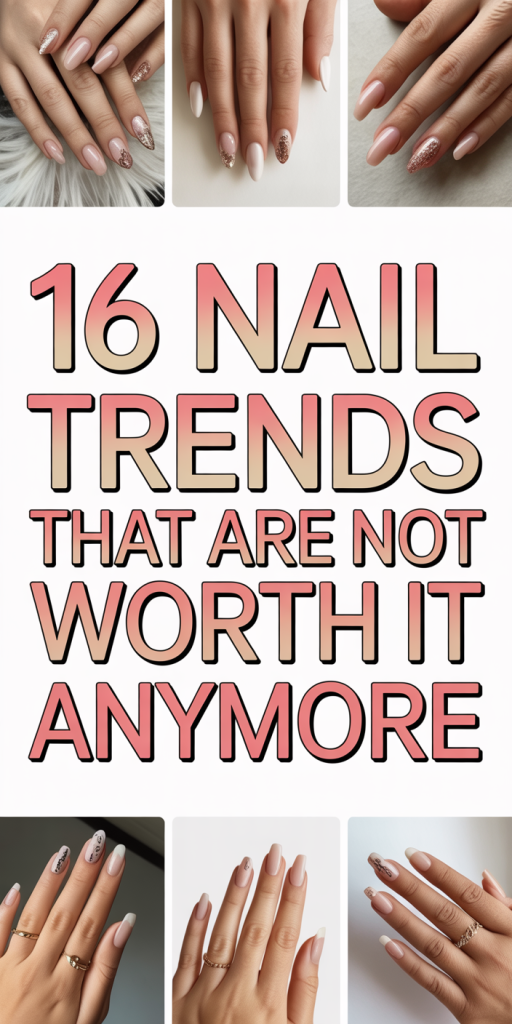
- Classic Shapes with a Modern Twist: Opt for squoval, soft almond, or rounded squares, shapes that distribute pressure and look chic. Minor tweaks, like a slightly tapered tip or a gently blunted almond, keep the look contemporary without fragility.
- Sheer and Neutral Palettes: Soft nudes, transparent pinks, and milky whites have staying power. They mask new growth, look polished in photographs, and complement virtually any wardrobe. A sheer base with a glossy finish is one of the most flattering looks we can wear.
- Minimal Accents Instead of Full-Scale Embellishment: Choose one accent finger with a micro-jewel, a foil edge, or a painted stripe. Minimalism reads intentional: small details age better than head-to-toe sparkle.
- Healthy Overlays: If we want extensions, thin gel overlays or light dip that’s professionally applied can strengthen without suffocating the nail. Ask for the thinnest possible application and plan periodic breaks to let natural nails breathe.
- Satin and Low-Gloss Finishes: High-gloss is classic, but satin and demi-matte topcoats are trendy without being gimmicky. They hide small imperfections and look refined.
- Nail Care as Style: Investing in cuticle oil, a calcium- and vitamin-rich base coat, and occasional biotin supplementation (after checking any health interactions) helps nails look better in any polish. Regular gentle filing, rather than aggressive buffing, preserves the plate.
- Salon Selection Matters: Choose technicians who prioritize sanitation, realistic shapes, and honest assessments of what your natural nails can handle. A good tech will recommend a plan that balances aesthetics and recovery, rather than upsell endless fills.
These alternatives keep our manicure game strong while respecting nail health and real-life wearability. They’re also versatile, perfect for office days, weekend plans, and everything in between.
Conclusion
Trends come and go, but our nails live with the consequences. By stepping back from overly complicated, damaging, or short-lived fads, we protect nail health and cultivate a signature look that fits our lives. In 2026, the smartest choices blend subtle creativity with longevity: thoughtful accents, sensible shapes, and a commitment to care. When we prioritize wearability and recovery, we don’t just follow trends, we make them work for us.