17 Nail Styles That Photograph Flawlessly: Photo-Ready Looks To Try In 2026
Photography changes how color, texture, and scale read on our hands. A nail style that looks stunning in person can fall flat in a photo, or the opposite can happen: a subtle look can become iconic when captured right. We curated 17 nail styles that consistently look better in photos, whether you’re shooting with a phone, mirrorless camera, or a pro setup. In this guide we explain why each style works on camera, offer quick tips for lighting and composition, and suggest variations to suit different nail lengths and skin tones. If you want nails that pop in your feed, portfolio, or wedding album, read on: these are the looks that photograph flawlessly in 2026.
How We Picked These Photo-Ready Nail Styles
We started by looking at trends and then filtered them through a practical, photo-first lens. Our criteria were simple but specific: how a style reads under common lighting scenarios (natural daylight, soft studio light, and phone flash), how texture and finish translate to pixels, and how easily the look scales from close-up macro shots to lifestyle images.
We tested dozens of manicures on a range of skin tones and nail shapes, photographing each under three lighting setups and at multiple distances. That process revealed patterns: certain finishes (like chrome and high-gloss gel) create crisp highlights that cameras love: matte finishes can read as velvety and editorial if lit properly: micro-details, thin lines, fine marbling, sometimes disappear unless we boost contrast or use shallow depth of field.
Beyond technical considerations, we factored in cultural and editorial value. A nail that’s visually interesting and distinctive will hold up across platforms: Instagram close-ups, TikTok transitions, Pinterest mood boards, and even magazine spreads. We prioritized looks that are versatile (workable on short or long nails), photographer-friendly (translate through a lens without heavy retouching), and current for 2026, meaning they nod to contemporary color palettes, sustainable lacquers, and wearable art.
For each style below, we explain why it photographs well, quick lighting and composition tips, and simple variations so you can adapt the look to your length, season, or outfit. Our aim: give you clear, usable choices that make your hands look intentional and camera-ready every time.
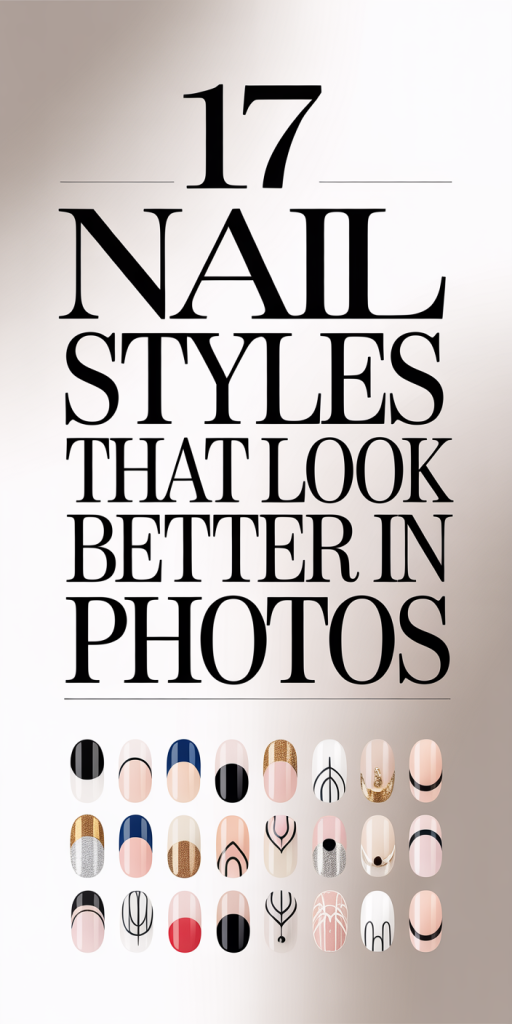
17 Nail Styles That Look Better In Photos — At A Glance
Minimal And Classic Looks (Photograph With Clean, Natural Lighting)
- Clean Nude Gloss: The understated classic. A sheer nude with a high-gloss gel finish creates soft highlights that flatter every skin tone. On camera it reads polished and timeless, especially when shot in natural window light at a slight angle to catch the shine. Keep cuticles tidy and edges soft: tiny chips show up in macro, so touch-ups matter.
- Classic French With a Modern Twist: Swap stark white tips for soft cream, baby pink, or even sheer metallics. The French silhouette is instantly recognizable in photos: subtle color shifts modernize the look without losing clarity. For photos, use a shallow depth of field to keep attention on the clean tip line.
- Single-Stripe Minimalism: One thin metallic or contrasting stripe down the center or along the tip reads as deliberate and editorial. Cameras pick up the linear graphic cleanly: it’s especially effective on shorter nails because the eye is guided along the line.
Bold Colors, Ombrés, And Gradients (Vibrant Hues That Pop On Camera)
- High-Contrast Red or Fuchsia: Saturated reds and hot pinks register strongly on camera sensors, producing bold, attention-getting images. These colors help hands stand out in lifestyle photos and editorial portraits. Use matte or semi-gloss for an editorial mood, or gloss for glamorous highlights.
- Soft Pastel Ombré: Pastel gradients photograph like soft sky transitions, dreamy and romantic. When blended smoothly from cuticle to tip or side-to-side, ombrés create depth and dimension that close-ups emphasize. For best results, shoot in diffuse daylight to avoid blown-out highlights.
- Two-Tone Block Colors: Pair complementary or analogous colors in blocks (thumb and ring match, others vary). The strong geometric contrast reads well in thumbnails and grid layouts, providing visual rhythm in a multi-image post.
Textures And Embellishments (Glitter, Chrome, Matte, And 3D Accents)
- Micro-Glitter Gradient: Fine glitter concentrated at the base or tip adds sparkle without overpowering the shot. Micro-glitter catches highlights in a way that looks luxe on camera, but avoid chunky glitter for close-ups, it can appear grainy.
- Chrome/Mirror Finishes: Chrome nails photograph with cinematic highlights and distinctive reflections. They’re fantastic for editorial portraits, but be mindful of unwanted reflections (we usually position light to create a controlled streak rather than multiple hot spots).
- Velvet Matte: Matte finishes absorb light and give a plush appearance that feels modern and editorial on camera. Matte can mute details, so pair it with a small glossy accent or metallic line to add dimension if you’re shooting macro.
- Pearl and Holographic Sheens: Iridescent and holographic polishes create shifting color in photos, which looks fascinating in movement shots or short videos. They’re particularly strong under indirect sunlight and ring-light setups that emphasize color shifts.
- 3D Accents, Subtle Is Key: Tiny pearls, single studs, or a miniature crystal cluster near the cuticle can become focal points in portraits. We recommend restrained 3D, too many elements can overwhelm the frame and read messy at macro scale.
Nail Art And Patterns (Lines, Marbling, French Variations, And Graphics)
- Thin-Line Geometrics: Minimal geometric lines, small triangles, or negative-space shapes photograph crisply and feel modern. Use a contrasting color or metallic for the lines so the camera captures edge definition.
- Watercolor Marbling: Soft marbling blends hues into each other with organic lines that look painterly in photos. Cameras favor marbling that has contrast between light and dark veins: this creates visual texture without overcrowding the nail.
- Tiny Illustrative Graphics: Small, well-placed icons, a tiny star at the corner, a mini heart, a lightning bolt, read as charming details in close-ups. Scale down the art: details that are too large can dominate the nail and distract from hand composition.
- Reverse/French Variations: Cheeky reverse French (colored crescent at the cuticle) or diagonal tips add unexpected structure. These variations photograph with clear geometry that is easy for viewers’ eyes to decode, especially when shot from above.
Seasonal And Event Styles (Bridal, Holiday, Festival, And Editorial Looks)
- Bridal Sheer With Pearlescent Accents: For weddings and formal shoots, soft sheers with a pearly sheen and a single crystal or micro-pearl photograph as elegant and understated. They reflect skin tones nicely and don’t steal attention from attire or jewelry.
- Editorial Festival Collage: This is a mix-and-match approach, bold colors, metallic stripes, tiny decals, and a holographic accent nail. In festival and editorial photography, contrast and variety read excitingly. For photos, keep one unifying element (like a repeated color or motif) so the design stays cohesive rather than chaotic.
, Practical photo tips that apply to most of the looks above:
- Lighting: Soft, diffused natural light (early morning or late afternoon) is the most forgiving. When indoors, bounce a ring light off a white wall for even illumination and to create a pleasing spark in glossy finishes.
- Composition: Shoot from a slight angle to catch natural highlights. Use shallow depth of field for intimate macro shots and higher f-stops for flat-lay group images where all nails need to be in focus.
- Prep: Clean, hydrated cuticles and consistent nail length make a huge difference. Cameras are unforgiving of ragged edges.
- Posture: Relax the hand: micro-tension shows in photos. Slightly curve fingers for a natural, model-like pose.
Each of the 17 styles above was selected because it meets at least two of these criteria: camera-friendly texture, strong editorial identity, and adaptability for real-life wear. In the next section we’ll close with a few final notes on how to pick the right look for your shoot or occasion.
Conclusion
Choosing a photo-ready nail style is about more than trend-chasing, it’s about picking finishes, colors, and details that translate well through a lens. Whether you prefer a barely-there nude that reads as refined or an editorial chrome that demands attention, these 17 looks give you a practical roadmap for nails that consistently photograph beautifully.
Before your next shoot or selfie session, think about the story you want your hands to tell and match lighting and composition to the style you choose. Small prep steps, clean cuticles, consistent lengths, and a quick glossy topcoat, will elevate any design. Try one of these 17 styles, tweak it to fit your aesthetic, and watch how your nail photos move from ordinary to memorable.