17 Decor Trends That Feel Tired The Second You See Them (And What To Do Instead)
We’ve all walked into a room and felt an odd déjà vu: the same patterned throw, the same matte black fixtures, the same curated vignette that looks like it wandered straight out of an interior-design feed. Trends make decorating feel accessible, but they also age a room faster than we expect. In this piece we’ll name the decor trends that register as tired the second they catch our eye, explain why they fall flat, and suggest realistic, lasting alternatives we can actually live with. This isn’t about being trendy or trendy-resistant for its own sake, it’s about building spaces that feel intentional and personal rather than templated and forgettable.
Why Decor Trends Get Tired So Fast—A Quick Psychology Of Style Fatigue
We notice repetition before we notice nuance. When a visual formula repeats across homes, magazines, and social media, our brains file it as “already seen” and move on. There are a few psychological mechanics at work:
- Familiarity breeds boredom: The human brain rewards novelty. When the same motifs, color combos, material pairings, layout patterns, appear everywhere, they stop generating excitement and start feeling safe in a bland way.
- Signaling and social proof: Trends spread because they signal something, taste, status, cultural alignment. Once a trend becomes a marker rather than a choice, it loses its meaning and starts to read as a pose.
- Empty customization: Many trends offer superficial ways to personalize a space (a monogram here, a neon sign there) without changing the underlying template. That creates homes that look “customized” but still essentially the same.
Understanding these forces helps us resist the urge to copy-paste a look and instead make decisions that reflect how we live. The easiest antidote to style fatigue is intentional friction: mix eras, prioritize functionality, and let a few unexpected pieces steer the eye. In the sections that follow we’ll call out specific trends that trigger this fatigue and propose alternatives that actually age well.
Overdone Patterns And Prints That Age A Room Instantly
Pattern is one of the quickest ways to add personality, but patterns also become clichés when they’re used as shorthand. A handful of prints have been overplayed to the point they’re now visual clichés:
- Large-scale geometric rugs in desaturated gray-beige combos. They read Instagram-ready, but they flatten a room’s personality because they’re designed to match everything.
- Tropical palm prints and monstera motifs on wallpaper or pillows. They signpost “vacation décor” in a way that often feels literal and lazy.
- Excessively distressed oriental rugs printed on synthetic fibers. They promise vintage charm but land as faux-heritage.
Why these patterns get tired: they’re repetitive, predictable, and designed to appeal to the widest possible audience. They remove the friction of decision-making but also the reward.
What to do instead:
- Choose scale and context: Use pattern as punctuation, not wallpaper. A smaller-scale, hand-drawn motif on upholstery can feel curated, while a bold patterned rug should anchor a room rather than match it to death.
- Layer authentic texture with restraint: Swap synthetic “distressed” prints for a genuine vintage rug or a modern flatweave with irregularities that show human touch.
- Own a motif that matters to you: If we love botanicals, pick a specific era or region, mid-century botanical prints differ radically from Victorian ones. That specificity reads intentional instead of templated.
A final tip: buy fewer patterned pieces and use them in higher-impact places, entry hall runners, a statement armchair, or a single wall, so the pattern feels deliberate.
Predictable Color Palettes And Finishes That Signal ‘Seen This Before’
There’s a palette that has dominated interiors for the last decade: warm white walls, greige upholstery, matte black accents, and brass highlights. It’s pleasing, safe, and completely omnipresent. Predictable finishes are similar, matte black pulls, gold faucets, and reclaimed-wood-look everything. They feel like an interior design cheat code, which explains why so many people lean on them.
Why predictable palettes age badly:
- They’re neutral by design, which makes them disappear into the background, fine as a base, but not as the whole story.
- When a finish or color becomes shorthand for “modern design,” rooms with it start to look like variations on the same template rather than unique spaces.
How to refresh without reinventing entirely:
- Pick a dominant undertone: Decide whether your neutral leans warm, cool, or green, and be deliberate about it. That small choice changes how everything else relates.
- Introduce one distinct, repeatable color: A single, confidently used accent, deep teal, indigo, or a muted terracotta, can make a neutral palette feel original.
- Treat finishes as texture, not fashion: Instead of defaulting to matte black or brass, mix finishes intentionally. Pair satin nickel with warm wood or soft bronze with cool stone to create subtle tension.
We’re not saying ditch neutrals, they’re practical and versatile. But use them as a canvas, not the whole painting. A restrained pop of color or an unconventional finish can keep a room from reading like a catalog shot.
Faux‑Rustic And Farmhouse Clichés That Have Lost Their Charm
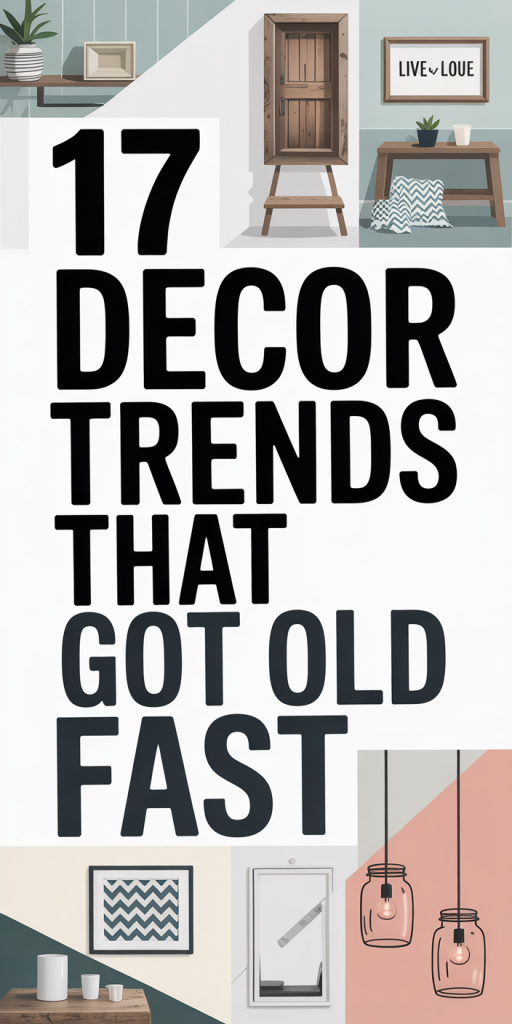
The farmhouse look was once a refreshing return to craft and comfort. But mass-market knockoffs turned those warm, lived-in cues into a set of predictable tropes: shiplap walls, oversized mason-jar decor, and barn-door hardware slapped onto cookie-cutter homes. Once novelty gave way to mimicry, the aesthetic started to feel postured.
Problems with faux-rustic décor:
- It reduces craft to surface decoration. Distressed paint finishes and faux-aged metals often read as theatrical rather than authentic.
- It flattens regional character. What should be a local, handmade aesthetic becomes a universal costume.
Smarter, more durable alternatives:
- Invest in real patina: A single genuine antique or a piece of salvaged wood will communicate the same warmth more credibly than a dozen faux-distressed finds.
- Introduce modern contrast: Pair a reclaimed table with streamlined seating or a sleek light fixture. The juxtaposition highlights the character of both pieces.
- Use material honesty: If we want rustic warmth, opt for real grainy woods, hand-thrown ceramics, and woven textiles. Let wear be earned, not factory-made.
We should respect the appeal of farmhouse comfort, it’s cozy for a reason, but aim for authenticity over theatrics. A room that shows real age and use tells a story: a room covered in faux wear tells a story someone else wrote.
Styling Clichés And Over‑Staging: Vignettes That Scream Template
Open any lifestyle blog and you’ll see the same vignette formula: stack three coffee-table books, add a candle, drop in a succulent, and, voilà, lifestyle achieved. The issue isn’t that curated vignettes are bad: it’s that when everyone uses the same shorthand, the result looks like a template we all copy from.
How over-staging reveals itself:
- Repetitive composition: The three-layer stack appears on console tables nationwide.
- Prioritizing picture-worthiness over practicality: Decorative objects that never move or get used start to feel performative.
How to style with character instead:
- Tell a small story: Rather than an abstract stack of props, make a vignette that represents something about you, travel finds, a family heirloom, a functional object (a mortar and pestle in frequent use, a well-loved pitcher).
- Vary scale and function: Mix small decor with a larger sculptural piece or a utilitarian item that gets used regularly. That interplay suggests life rather than a still life.
- Edit ruthlessly: We often overcompensate by adding more objects. Try removing one item and leaving the arrangement slightly imperfect. Negative space can create more personality than clutter.
We should style for living, not for likes. When vignettes reflect our actual habits, they land as genuine instead of choreographed.
Misused Materials, Textures And Tech That Read As Gimmicks
Not every new material or gadget ages well. Some combinations are clever in concept but shallow in execution, so they read as gimmicks rather than smart design choices. Examples we see too often:
- Oversized acrylic furniture: It looks modern, but it’s often heavy visually and can feel more like a novelty than a considered piece.
- Faux concrete everything: Concrete-effect countertops, tiles, and fixtures can feel industrially trendy until they reveal maintenance issues or poor mimicry.
- Over-branded smart home tech integrated for show: A row of glowing smart devices and hubs can make a living room look like a showroom rather than a home.
How to use materials and tech with integrity:
- Favor tactility: Materials that invite touch, textured plaster, handwoven textiles, natural stone, age by revealing their craft.
- Balance innovation with longevity: If we add a tech element, prioritize systems that reduce friction, like discreet smart thermostats or integrated lighting controls, rather than devices that exist primarily to be conspicuous.
- Be skeptical of one-trick finishes: If a finish exists only to imitate something else cheaply, opt for the real material at a smaller scale instead of the fake at full scale.
We’re not anti-tech or anti-modern materials. We just want them used where they add real value, not just visual novelty. Thoughtful integration keeps a space functioning and looking considered years down the line.
How To Spot A Tired Trend Early And Refresh Your Space With Confidence
Catching a trend before it ages your space comes down to asking a few practical questions and leaning into choices that have staying power. Here’s a checklist we use when deciding whether to adopt a popular look:
- Does this solve a problem for us, or does it just look good in photos? If it’s purely aesthetic, it’s more likely to feel staged later.
- How personal is it? Trends that can be customized, through color, proportion, or placement, are less likely to read as generic.
- Will it stand up to daily life? Materials and finishes that show wear gracefully will age better than those that reveal damage quickly.
Practical steps to refresh without a full redesign:
- Edit, don’t overhaul: Swap out a few high-visibility items (a rug, a light fixture, throw pillows) and leave foundational pieces in place. Small shifts can change a room’s personality.
- Introduce curated contrasts: If our room looks too on-trend, add one historical or handcrafted piece to break the template. A mid-century lamp, a handmade mirror, or an antique stool will reset the room’s narrative.
- Bring in color through accessories: Rather than repainting, use a repeatable accent color across cushions, an art piece, and a small object. Repetition creates cohesion and freshness.
- Reevaluate layout and scale: Sometimes the problem isn’t the style but the proportion. Moving a sofa off the wall or switching to a lower-profile coffee table can modernize a room without replacing a single thing.
If we’re still attached to a trend we love, we can armor it against fatigue by pairing it with timeless elements, quality upholstery, natural fibers, and pieces that reveal use rather than faux history. Confidence in our choices comes from knowing why we picked them, not just that they looked “on brand.”
Conclusion
Trends aren’t inherently bad, they give us a shared visual language and can point us to interesting ideas. But when a trend replaces intention, rooms start to feel tired the second we see them. Our best defense is deliberate selection: prioritize authenticity, mix in pieces that tell real stories, and use color and texture to make neutral templates sing. If we choose with purpose rather than defaulting to what’s everywhere, our spaces will age gracefully and, more importantly, feel like ours.