18 Nail Styles That Should’ve Stayed in the Past: How To Spot And Avoid Outdated Looks In 2026
Nail trends come and go faster than seasons, and by 2026 we’ve seen enough experimentation to know which styles deserve a proper burial. We’ve all tried trends that looked great for a weekend and then felt embarrassing in photos a year later. In this guide we’ll walk through 18 specific nail styles and broader trend categories that have overstayed their welcome, explain how to identify when a look has aged, and offer realistic, modern alternatives. Whether you’re a nail tech, a salon owner, or someone who loves switching up their manicure, our goal is practical: help you spot outdated choices and steer toward looks that’ll still feel fresh next year, not just this weekend.
Why Nail Trends Age — And How To Tell When A Style Has Run Its Course
Trends age for a few predictable reasons: overexposure, cultural context shifting, impracticality, and stylistic evolution. When a look becomes ubiquitous, think every influencer wearing the same shape and color, it loses the individuality that made it appealing. Cultural context matters, too: motifs tied to a specific era (early 2000s logos, for example) can feel out of touch when we move past that moment.
How do we tell a style has run its course? Here are practical signals we use:
- Saturation: If you can point to dozens of near-identical posts across social platforms in any given week, the look is saturated.
- Technical obsolescence: Newer materials or techniques can make older methods look clunky (heavy acrylics were once a novelty: now lighter gels and dip systems offer cleaner options).
- Wearability issues: Styles that chip, snag, or require constant maintenance die faster. If your manicure interferes with daily life, it’s not aging well.
- Cultural mismatch: Designs that reference a dated cultural moment without a modern twist will feel performative rather than fashionable.
We also look for influencer fatigue: when tastemakers publicly move on, it’s usually a reliable sign. That said, nostalgia is cyclical, some retro elements can come back, but only when reinterpreted thoughtfully. Our aim is to help you spot when a nostalgic throwback is genuinely inventive versus when it’s just a tired repeat.
Early 2000s And Y2K Nails That Need To Stay Buried
The early 2000s and Y2K era gave us iconic fashion moments, but several nail trends from that period should stay archived. These styles read as dated because they tie directly to a very specific aesthetic that, unless intentionally retroized, feels out of step in 2026.
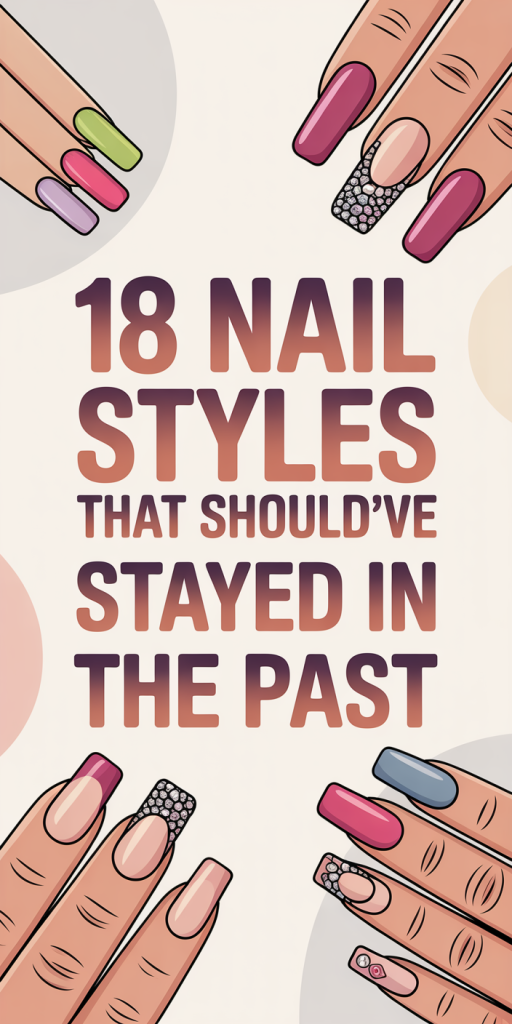
- Clear acrylics with giant embedded charms: Back then, bigger was bolder. Today those bulky charms look heavy and impractical. They catch on everything and rarely photograph well.
- Super-long coffin nails in ultra-shiny finishes: The coffin silhouette was everywhere, but extreme lengths paired with glossy chrome or mirror topcoats now underline an outdated maximalism.
- Logo-mania nails: Tiny repeating brand logos or faux designer plaques screamed Y2K flash. In our era of quiet luxury, these feel ostentatious and kitschy.
- Glitter gradients across the entire nail bed: Heavy glitter ombrés were a staple, but the effect often ages as it chips unevenly and highlights regrowth.
- Neon French tips with thick white lines: The fluorescent reinvention of the classic French overdid the contrast. It reads like a costume rather than modern polish work.
If you love Y2K aesthetics, we’re not saying never, but the key is restraint and context. Choose one nod to the era (a single accent nail with a tiny charm or a muted pastel with a delicate metallic stripe) and balance it with contemporary finishes and shorter, more practical lengths.
2010s Nail Fads That Haven’t Aged Well
The 2010s gave us an explosion of experimentation, and several fads that now look overly gimmicky. These trends often relied on novelty rather than thoughtful design, which is why they didn’t transition well into the more pared-back 2020s landscape.
- Over-the-top ombrés and airbrushed fades: Early ombrés were exciting, but many looked blurred or poorly blended. With techniques refined now, sloppy fades stand out as amateurish.
- Thick, blocky gel extensions in unblended tips: The ‘IKEA furniture’ look, straight, chunky tips stuck onto short natural nails, lacked finesse and longevity.
- Huge nail decals and 3D resin art on every finger: When every nail is a tiny sculpture, the overall look becomes chaotic. It’s also impractical for daily tasks.
- Matte finishes done poorly (streaky or uneven): Matte can be gorgeous, but low-quality mattes age badly, showing fingerprints and oils easily.
- Overuse of negative space as a gimmick: Negative space is a powerful design tool, but when used as mere trend-copying (random cutouts that don’t flatter the nail shape), it looks lazy.
We’ve learned to prioritize technique and cohesion. Modern takes on these 2010s ideas often involve subtler gradients, one standout nail rather than full-hand theatrics, and cleaner, shape-flattering execution. If your salon still offers cookie-cutter 2010s templates, ask for updated color stories and thinner, more refined accents.
Overly Extravagant And Impractical Styles That Belong In The Past
Some nail looks were never about everyday wearability: they were performance pieces. While spectacular for editorial shoots or runway shows, these extravagances don’t translate to real life. We think they belong in archives rather than our day-to-day rotation.
- Extreme lengths (think 3+ inches) with sculpted art: They demand constant attention, make tasks awkward, and create a safety hazard. There’s a reason ultra-long nails are niche.
- Heavy metal hardware and spikes: Beyond the obvious practicality issues, these elements can damage clothing, scratch skin, and feel aggressive in settings where subtlety is preferred.
- Thick encapsulated flowers and objects: Encapsulating random objects in acrylic creates awkward thickness and often results in brittle edges.
- Full-hand thematic nails (e.g., miniature diorama scenes): These are clever, but once the novelty fades, you’re left with a look that’s hard to maintain and doesn’t suit most wardrobes.
- Excessive layering of gels and polishes creating bulky nails: Multiple poorly applied layers lead to lifting, breakage, and an unnatural silhouette.
We appreciate artistic expression, but for regular clients we favor balance: choose a single statement nail for special occasions, and otherwise opt for approachable lengths and textures. If a client asks for extravagance, we recommend a removable option (press-ons or custom tips used temporarily) so the look can be enjoyed without long-term consequences.
Questionable Salon Hacks And Short-Lived DIY Trends To Avoid
The DIY boom and viral salon hacks have produced a few short-lived trends that, in hindsight, were ill-advised. Many of these spread quickly because they were cheap or accessible, but cheap isn’t the same as good.
- DIY over-filing and extreme structural thinning: Influencer tutorials that encourage aggressive thinning of the natural nail or over-filing of overlays increase risk of separation and fungal infection.
- Using household glue for nail repairs: Superglue and craft glues can contain chemicals harmful to the nail bed and slow proper adhesion of professional products.
- Home UV lamps with unknown wattages or DIY curing hacks: Proper curing requires consistent lamps: makeshift methods lead to tacky finishes and potential skin exposure issues.
- Press-on nails applied without proper prep: Skipping nail prep (dehydration, buffing, primer) results in lifting and damage. A quick Instagram hack won’t replicate salon durability.
- Mixing incompatible products (gel over normal polish without a bond): This can cause peeling, uneven wear, and compromised structural integrity.
Our advice: if a hack sounds too easy or promises salon results with household items, be skeptical. Invest in one good lamp, a quality press-on brand, and learn basic prep. For anything structural, professional application protects nail health and financial sanity in the long run.
How To Modernize Elements Of These Old Styles Without Looking Dated
We’re not advocating erasing history, many past elements can be salvaged with thoughtful updates. Modernizing means editing: keep what’s interesting, remove what’s clunky, and apply current sensibilities around color, proportion, and finish.
- Scale down: Replace oversized charms or thick acrylics with tiny, delicate metal studs or micro-encapsulated accents. Small details read as refined rather than flashy.
- Shorten the silhouette: Move from extreme lengths to medium or short shapes that flatter the finger and improve practicality. Slightly squared or softly rounded tips feel contemporary.
- Muted color stories: Swap neon or logo-heavy palettes for muted pastels, tonal nudes, or modern neutrals with one unexpected accent (a single metallic stripe, for instance).
- Selective texture: Instead of full-hand glitter or heavy 3D, use texture on one or two accent nails, a matte base with a glossy gloss stripe or a micro-glitter tip.
- Improve technique: Ask for seamless blends, thinner layering, and professional sealing. A refined finish lifts any retro reference.
A useful exercise is translating the intent of the old trend into modern terms. If you loved Y2K’s playfulness, think playful in scale and color, one playful accent, not a full-handed costume. If you appreciated 2010s art nails, choose one refined sculptural accent and pair it with minimal supporting nails. Small, intentional choices make nostalgia intentional rather than accidental.
Contemporary Alternatives: Fresh Nail Ideas To Try Instead
If you’re ready to ditch the dated looks, here are contemporary alternatives that feel current in 2026 while keeping individuality intact.
- Modern minimalism: Clean, short shapes in soft beige, warm taupe, or creamy off-white. Add a single, ultra-thin metallic line near the cuticle for a subtle edge.
- Micro French variations: Thin, precise tips in unexpected colors (muted sage, terracotta) or a negative-space reverse French that flatters the nail’s natural curve.
- Soft chrome accents: Use chrome sparingly, a micro chrome tip or chrome-on-one-nail, paired with a matte or satin base for contrast.
- Subtle texture play: Matte and gloss combinations, micro-glitter scatter (not full coverage), or bead-top finishes on one nail for tactile interest.
- Sculpted short almond and soft-square shapes: These silhouettes are both flattering and modern: they balance longevity with a fashionable profile.
- Sustainable and breathable options: Water-permeable polishes and thinner dip systems are gaining traction. They prioritize nail health and still look polished.
- Custom minimal nail art: Tiny hand-painted motifs, a single star, a minimalist face line, a tiny heart, placed strategically for a curated look.
We recommend adopting a “less-is-more” approach: pick one contemporary element (shape, finish, or a single accent) and keep the rest restrained. This ensures versatility across outfits and seasons while preserving the feeling that the manicure was chosen, not just copied.
Conclusion
Trends will keep cycling, but our best defense against ending up in dated nail territory is thoughtful editing. We encourage curiosity and experimentation, but with a clear eye on wearability, technique, and longevity. When in doubt, scale back: choose one standout detail, refine the execution, and prioritize nail health. That way, our manicures look intentional in 2026, and in photos five years from now.