14 Nail Trends That Are Way More Overhyped Than You Think (And What Actually Works)
We love a good nail moment as much as anyone, dramatic runway shapes, glossy chrome, micro-logos on every tip. But not every viral manicure is worth the time, money, or nail health sacrifice. In this piece we break down 14 of the most hyped nail trends, explain why they often disappoint in real life, and offer practical alternatives that actually hold up. Expect honest takes on durability, maintenance, and how these trends look beyond a filtered photo. If you’re trying to spend smarter and keep your nails healthy, read on: we’ll tell you what to try, what to skip, and how to make current looks realistic for everyday life.
Why Nail Trends Go Viral — And Why That Doesn’t Mean They’re Good
Trends go viral for a handful of predictable reasons: novelty, celebrity endorsement, viral-ready visuals, and algorithms that reward high-contrast or outrageous imagery. A sharply pointed stiletto or a mirror chrome finish photographs beautifully and gets saved, shared, and mimicked. But virality is not a quality stamp. When we look at why a trend spreads, we often find that ease of imitation and visual punch matter more than wearability, comfort, or long-term nail health.
Social platforms encourage extremes because extremes stand out. Short-form videos favor “wow” moments, the instant snap of a press-on fitting perfectly, the reveal of a 4-inch talon, the first swipe of an iridescent polish. Those shots rarely capture the day-to-day realities: chips after two days, snagging on fabric, difficulty typing, or damage from aggressive application.
Another factor is aspirational marketing. Nail artists and brands push boundaries (which is great for creativity), but their clients are often models, stylists, or celebrities whose schedules include touch-ups and handlers. For the average person juggling work, family, and finances, many viral looks are impractical.
So: viral = interesting: viral ≠ suitable. Our yardstick prioritizes durability, ease of maintenance, and nail health, not just a scroll-stopping photo.
The Tall Tale Of Extreme Lengths: Stiletto, Coffin, And Talon Nails
Extreme lengths are the showstoppers of nail trends. Stiletto and talon shapes scream drama: coffin nails read modern and editorial. But long extensions introduce a long list of practical problems. For one, extreme length multiplies leverage: a slight bump becomes a full break, and the force required to pry something open can stress natural nail beds. We’ve seen clients who loved the look in photos but hated real life, snagged sleeves, difficulty typing, and constant anxiety about losing a nail.
Maintenance is another issue. Longer nails need more frequent fills, careful filing to maintain shape, and sometimes reinforced tips made from acrylic or acrylic over gel. Those materials can be drying or damaging if not applied and removed properly. There’s also hygiene: longer shapes create crevices where dirt and bacteria collect unless you commit to diligent cleaning.
If you want the aesthetic without the liabilities, consider shortening the length and softening the point. Almond shapes give the illusion of length with less risk. Short coffin or tapered square shapes are easier to live with and still photograph nicely. And if you love talons for special occasions, treat them as occasional looks rather than daily uniforms, we recommend a professional removal and a restorative routine (cuticle oil, protein treatments) after long-wear sets.
When Minimalism Becomes Boring: The Overplayed Negative-Space Trend
Negative-space nails started as a clever minimalist twist: leave part of the nail bare for graphic shapes and modern contrast. The issue isn’t the concept, it’s ubiquity. Once the look became a template, many manicures lost personality and began to look like variations on the same formula: a nude base, a single curved crescent, or a tiny gap at the cuticle. That repetition strips the creative spark from minimalism and turns a thoughtful design into a default option.
There’s also a practical downside. Negative-space often relies on precise tape lines and thin polish applications: any slight smudge or growth can make the design look untidy within days. If we’re trying to maximize longevity, solid-color gel or a classic French tends to wear better visually over time.
Instead of abandoning negative-space altogether, use it intentionally. Try asymmetry (one negative-space nail per hand), mix in a matte texture, or let the negative area follow the natural nail lunula for a subtle, unique twist. Small customizations keep the minimalist vibe but make nails feel personal rather than copied.
Too Much, Too Soon: Overcomplicated Nail Art And 3D Embellishments
There’s a sweet spot between expressive nail art and impractical over-embellishment. Large crystals, layered decals, and 3D charms can make a manicure feel like wearable jewelry, but they also frustrate everyday life. We’ve witnessed clients losing rhinestones on the subway, catching charms on seat belts, and experiencing discomfort sleeping on pillows. Each added element increases the risk of snagging and requires stronger adhesives that can stress the natural nail during removal.
From a maintenance standpoint, complex art demands touch-ups that are often time-consuming and costly. And while a heavily embellished set photographs well for a night out, the longevity is usually poor: pieces fall off, glue yellows, and textures trap dirt.
What works better for most people is strategic embellishment. Select one statement nail per hand or use flat metallic decals that lie flush to the nail surface. Save the heavier 3D pieces for special events, and insist on professional removal to avoid peeling or trauma. If you’re committed to 3D, choose high-quality materials and ask your technician about reinforced bases that distribute stress away from the natural nail.
Chromes, Iridescents, And Mirror Finishes That Don’t Hold Up
Mirror chrome and iridescent finishes look futuristic and luxurious, until they show their first chip. Many of these effects rely on powder pigments or special topcoats that are sensitive to abrasion. They sparkle beautifully in photos, but under real-world stress (washing dishes, typing, opening cans), the finish can dull, develop micro-scratches, or reveal visible wear edges.
Application technique is crucial. Proper chrome finishes require a flat, fully cured base and a no-wipe topcoat cured correctly. But even with perfect application, the mirror surface reveals imperfections more readily than a matte or creamy polish. People also forget that some chrome powders can transfer to fabrics or skin during the first day or two.
If you love the futuristic sheen, use chrome as an accent rather than a full-hand treatment. Accent nails or tips get the visual payoff with less risk of a whole manicure failing. Alternatively, pick high-quality chrome systems and be prepared for touch-ups every 7–10 days. For longevity plus low maintenance, an ultra-gloss gel or pigmented metallic polish often wins in everyday life.
The Problem With Micro-Trends: Seasonal Shades, Tiny Logos, And Quick Fads
Micro-trends are nail fashion’s equivalent of disposable clothing: they explode, saturate feeds, and then fade within weeks. Seasonal shades (think ‘spring melon’ or ‘winter mauve’), tiny brand logos, and theme-based decals are easy to reproduce, which means they become ubiquitous and date quickly. We’ve seen entire salon menus flip to a single micro-trend for a month, leaving customers with nails that scream “I was into this for two weeks in April.”
Micro-trends also push us to buy more: a new shade every season, novelty charms, or themed stencils. That’s expensive and environmentally wasteful. From a stylistic perspective, micro-trends often lack staying power because they aren’t rooted in classic principles like flattering color, proportion, or adaptability.
To avoid trend fatigue, we recommend curating. Keep a small set of go-to shades that flatter your skin tone, and allow one nail for seasonal experimentation. If you love logos or themed art, do them sparingly, one accent nail or a removable press-on lets you enjoy the moment without long-term commitment. Think of micro-trends as fashion accessories, not identity markers.
DIY, Press-Ons, And Viral Hacks That Damage Nails More Than Help
The DIY and press-on revolution democratized manicures, great. But viral hacks can be misleading and, in some cases, harmful. We’ve seen guides that suggest peeling off gel polish, using acetone-soaked cotton balls without proper protection, or filing the nail surface aggressively to make press-ons stick. These shortcuts can strip natural oils, thin the nail plate, and make nails brittle.
Press-ons themselves are not inherently bad: many are a convenient, lower-cost option. The problem lies in application and removal. Overly aggressive buffing before applying a press-on weakens the nail. Cheap adhesives can contain harsh chemicals, and constant reapplication without breaks prevents the nail from recovering.
Our advice: treat DIY like any other beauty regimen. Follow manufacturer instructions, avoid aggressive removal (never just peel), and give nails regular breaks with nourishing treatments (cuticle oil, biotin-friendly diet, protective base coats). For hacks promising instant miracles, be skeptical. If a technique sounds too good to be true, it probably sacrifices something (usually nail health or longevity).
Celebrity Nail Moments That Look Great On Screen But Fail In Real Life
Celebrity manicures set trends because they’re high-visibility and aspirational. But the environment around a celebrity manicure is different: stylists, assistants, controlled photo shoots, and hours of touch-ups. A sculpted, gem-laden set might be wearable on a red carpet but impractical for a 9-to-5 routine. We’ve watched premium salon clients try celebrity looks and quickly discover they’re labor-intensive and fragile.
Celebrities also have the luxury of presenting pictures and short clips instead of living with a set for weeks. Photos rarely show the small annoyances, the chip that appears after one dishwashing session, the charm that loosens on day three, or the discomfort while sleeping. That gap between curated images and everyday usage is where disappointment lives.
How can we translate celebrity looks into realistic choices? The key is adaptation. Keep the silhouette but reduce embellishments. Choose a durable system (a hard gel or a well-applied soak-off alternative) and ask technicians to prioritize reinforcement at stress points. And remember: celebrity aesthetic is inspiration, not instruction.
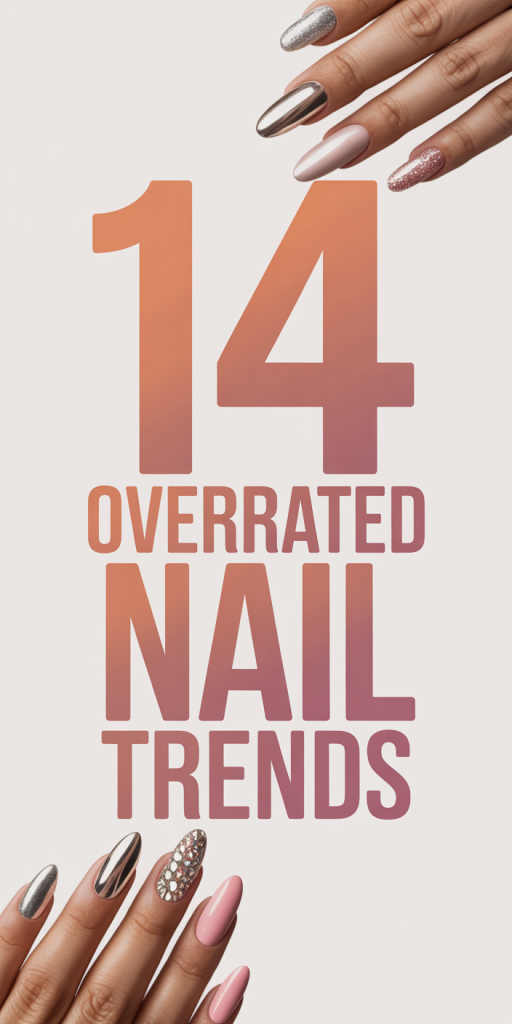
How To Decide Which Nail Trends Are Actually Worth Trying
Deciding which trends to try comes down to three practical tests: lifestyle fit, maintenance tolerance, and nail health. First, ask whether the look fits your daily life. Do you type a lot? Wash dishes by hand? Work with your hands? If yes, ultra-long or heavily 3D designs are probably a mismatch. Second, consider how much upkeep you’re willing to commit to. Some trends demand weekly salon visits or careful at-home maintenance. Be honest, if you won’t do it, choose a lower-maintenance alternative.
Third, factor in nail health. Trends that require heavy filing, aggressive adhesives, or frequent removal will compromise the natural nail over time. If your nails are already thin or brittle, prioritize restorative treatments and opt for gentler looks while they recover.
In practical terms, try this quick rubric: 1) Rate the trend on a 1–5 scale for daily compatibility. 2) Rate it for weekly maintenance. 3) Rate it for health impact (1 = healthy, 5 = damaging). If the sum skews high on maintenance and damage but low on compatibility, skip or adapt. We’ve found this simple approach saves money and preserves nail integrity. Eventually, trends should enhance your aesthetic without creating constant stress.
Conclusion
We’re not arguing against creativity, nail art is a form of expression. But virality and aesthetics shouldn’t override practicality and health. Many hyped trends work brilliantly in controlled environments or for short bursts, not as everyday choices. By prioritizing durability, routine compatibility, and nail wellness, we can enjoy looks that flatter rather than frustrate. Try adapting extreme styles into wearable versions, reserve high-maintenance trends for special occasions, and always choose safe application and removal. That way, our nails can stay stylish and strong, without the drama.