18 Home Styling Mistakes That Make It Look Like You Gave Up Halfway (And How To Fix Them)
We’ve all been there: a room that almost works, but somehow looks…unfinished. You can call it procrastination, budget constraints, or just being busy, but the result is the same. The difference between a lived-in space and one that reads as “we gave up halfway” often comes down to a handful of visible mistakes. In this guide we’ll walk through 18 common styling missteps that create that abandoned vibe, explain why they matter, and give practical fixes you can carry out today. These are straightforward, budget-conscious changes, no full renovations required. If you want your home to look intentional, comfortable, and put-together, start here. We’ll prioritize high-impact edits so you get the most ‘finished’ bang for your buck.
Half-Finished Projects And Temporary Fixes
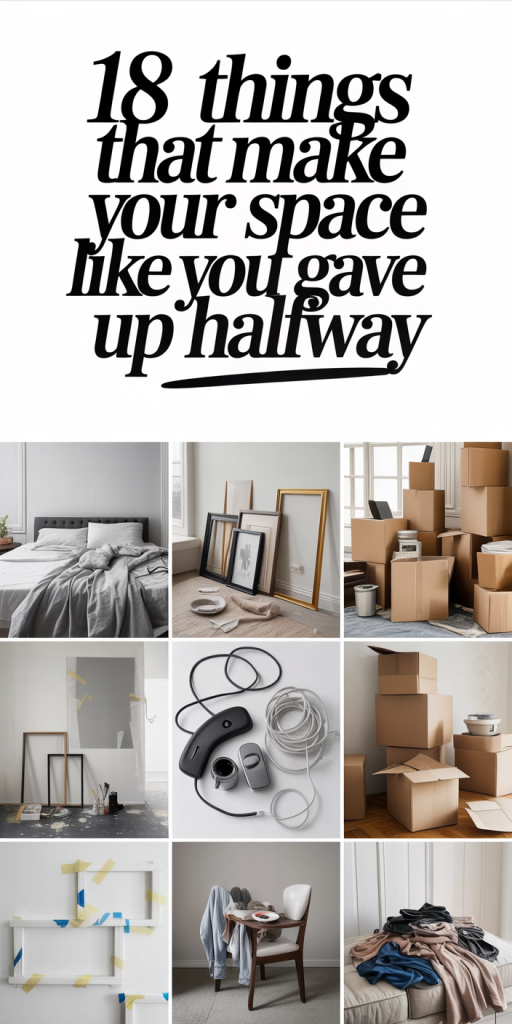
Nothing screams unfinished like tools on the coffee table or paint cans by the door. When we leave projects paused, they become visual noise that signals a lack of care more than a lack of time. Temporary fixes, duct tape, mismatched hardware, taped-up wallpaper seams, age into permanent eyesores if we don’t address them. The key is to either finish small projects fast or hide them neatly until you can.
How to fix it:
- Triage: List all unfinished tasks and rank them by impact. Replace a broken drawer pull or repaint a scuffed wall before tackling a full room redo.
- Set micro-deadlines: Commit to one 2–4 hour session to finish a single task. Momentum matters more than perfection.
- Use storage strategically: Keep tools and materials in a labeled bin and tuck it in a closet or garage. Out of sight = less stress.
- Replace temporary fixes with quick, inexpensive replacements (adhesive hooks for torn curtain hems, a new lamp shade instead of taped plastic).
Completing a few visible fixes creates a surprising ripple effect: the whole room reads as more intentional, even if larger projects are still pending.
Mismatched Furniture And Random Layouts
A common reason rooms look abandoned is that furniture arrived at different times with no cohesive plan. We end up with a living room where a vintage sofa shares a wall with a modern TV stand and an armchair from another decade, nice pieces, but no unity. Random layouts compound the problem: chairs facing away from conversation, sofas floating awkwardly, and pathways blocked by coffee tables.
How to fix it:
- Choose a focal point: fireplace, TV, or a big window. Arrange seating around that anchor to create intent.
- Edit ruthlessly: If pieces don’t work together, consider rehoming or refinishing a piece for cohesion. Even small changes, new legs or a slipcover, help.
- Balance scale and proportion: Avoid one oversized or tiny item dominating the room. Group smaller items to create visual weight.
- Use rugs to define areas: A rug that fits under front legs of seating unifies the group.
- Try quick layout tests: Move one major piece and live with it for a day before committing.
A plan and a few edits can turn a random assortment into a deliberate, comfortable setup.
Bare Walls And Missing Art That Stop The Room From Feeling Done
Bare walls are like an unfinished sentence, something essential is missing. Even well-designed rooms feel clinical without art, mirrors, or personal items to break up expanses. We often avoid hanging pieces because we fear making a mistake, so walls remain empty and the space reads as temporary.
How to fix it:
- Start with a statement piece: One large artwork or mirror brings instant completeness and reflects light.
- Create a gallery with intention: Plan the layout on the floor first, then transfer to the wall. Keep consistent spacing (3–4 inches between frames) for a cohesive look.
- Layer textures: Mix framed art with woven baskets, shelves, or a wall-mounted plant to add depth.
- Use scaled groupings: A trio of prints above a sofa or a vertical stack by an entryway helps proportion.
- Incorporate personal items: A framed photo, a child’s drawing, or travel mementos make a room feel lived-in and curated.
Hanging art changes the room’s personality overnight. It’s a small task with a big payoff, don’t leave your walls waiting.
Visible Cords, Cluttered Tech, And An Untidy Media Area
Tech is essential, but when cables snake across floors and remotes litter surfaces, the space feels neglected. We accept visual clutter because gadgets are useful, but that doesn’t mean they have to dominate the aesthetic. An untidy media area draws the eye in the wrong way and undermines otherwise good styling.
How to fix it:
- Hide cables: Use cable raceways along baseboards, in-wall kits for permanent solutions, or simple cord sleeves for visible areas.
- Consolidate devices: A power strip with surge protection tucked behind a console reduces plug sprawl. Label cables so troubleshooting isn’t a chore.
- Create a remote landing: A small tray or bowl keeps remotes organized and intentional.
- Style devices: Position a soundbar or game console within a styled console and break up tech with decor, stacked books, a plant, or a small sculpture.
- Regular purge: Every few months, unplug and remove accessories you no longer use.
Taming tech keeps the room calm and makes the rest of your styling shine. You’ll be surprised how much cleaner a space looks once cords are out of sight.
Poor Lighting Choices That Make Everything Look Flat
Lighting has a huge role in whether a room feels finished. Overhead fluorescent-like light or a single ceiling fixture leaves the space flat and uninviting. We often ignore layered lighting because bulbs and fixtures feel like boring choices, but the right mix of light sources transforms mood and shows off textures and color.
How to fix it:
- Layer lighting: Combine ambient (overhead), task (reading or kitchen prep), and accent (art or architectural features).
- Use lamps: Floor and table lamps add warmth and create cozy pools of light.
- Swap bulbs for warmth: Choose bulbs with a 2700–3000K color temperature for living spaces, it’s softer and friendlier than cool white.
- Add dimmers: Dimmers let us adapt light levels for different times and activities.
- Highlight features: Use adjustable spotlights or picture lights to draw attention to art, textured walls, or shelving.
Good lighting hides a lot of sins. It can mask small imperfections and make simple decor appear intentional and layered.
Overloaded Flat Surfaces And Unstyled Shelves
We tend to use flat surfaces as temporary drop zones for keys, mail, and random items. Over time, these areas become cluttered and visually noisy. Shelves are often either overloaded, every inch packed, or sparse in a way that signals indecision rather than design. Both extremes make a space feel unresolved.
How to fix it:
- Clear all surfaces: Start fresh by removing everything and sorting into keep, relocate, or discard piles.
- Style with groups of three: On tables and shelves, group objects in odd numbers and vary heights for visual interest.
- Leave breathing room: Resist filling every shelf: negative space is a design tool.
- Use trays and bowls: These contain small items and make surfaces look intentional.
- Rotate seasonally: Swap a few objects every few months to keep displays fresh without accumulating clutter.
The goal isn’t perfection, it’s restraint. When surfaces feel curated rather than accidental, the entire room reads as finished.
Halfhearted Organizing: Too Many Containers, No System
We often buy pretty containers and baskets in hopes of fixing chaos, but without a system they become decorative junk drawers. Piles of unlabeled bins on shelves or mismatched boxes under the bed create visual clutter and make tidying harder. Organization should simplify life, not add layers of confusion.
How to fix it:
- Assess needs first: Don’t buy containers until you know what you’re storing and where it will live.
- Uniform labeling: Use clear labels or consistent tags so everyone in the household knows where things belong.
- Limit container styles: Stick to one or two materials (wicker, fabric, or clear plastic) for a cohesive look.
- Zone your storage: Assign storage areas for categories, office supplies in one place, seasonal gear in another.
- Carry out a maintenance routine: Ten minutes a day or a weekly 30-minute session keeps systems working.
When storage is purposeful and consistent, the room feels calm. We’re less likely to shove things out of sight and more likely to keep spaces looking finished.
Generic, Impersonal Decor And Forgotten Accessories
A room can be styled beautifully yet still feel like a showroom if it lacks personality. Generic decor, matchy pillows, anonymous art prints, and store-bought vignettes, signals passivity. Accessories that once meant something get shoved into a corner and forgotten. The result is a space that’s polished but empty of story.
How to fix it:
- Add three personal touches: A family photo in a stylish frame, a souvenir from a trip, or a book that matters to you.
- Mix found objects with new purchases: Thrifted items add character and break up the “catalog” look.
- Edit seasonal accessories: Keep a small rotation of meaningful pieces rather than an overwhelming collection.
- Layer textiles: A throw with texture or a handcrafted cushion brings warmth and individuality.
- Be selective with trends: Incorporate one trendy piece rather than trying to outfit the whole room around it.
Personal items create connection. They tell visitors, and you, that the space belongs to real people, not a staging team.
Conclusion
Finishing a room isn’t about perfection: it’s about intention. By addressing half-finished projects, organizing with purpose, improving lighting, and adding personal touches, we can turn abandoned-looking spaces into rooms that feel considered and welcoming. Start with small, high-impact fixes, hide cords, hang art, and clear flat surfaces, and you’ll notice an immediate difference. Our homes tell stories: let yours say you arrived and stayed. Take one of these tips, try it this weekend, and watch the space come together.