We all know the itch to plan, big dreams, small wins, and the middle ground where progress actually happens. Bullet journaling gives us a flexible, analog space to translate ambition into daily action. In this guide we walk through why bullet journaling works for goals and motivation, how to design effective goal layouts, and 19 practical, creative spreads you can copy or adapt. We’ll finish with customization tips, common mistakes, and printable template ideas so you can start tracking meaningful progress right away.
Why Bullet Journaling Works for Goals and Motivation
Psychological Benefits for Goal Achievement
Bullet journaling marries intention with ritual. Writing goals by hand engages different cognitive pathways than typing, handwriting slows us down, forces clarity, and makes goals feel more real. On top of that, the act of creating a spread is itself a micro-commitment: setting up a page signals to our brain that this goal is important and worth revisiting.
We should also note the reinforcement loop journaling creates. Every time we check a box, color a tracker, or jot a reflection, we get a small dopamine boost. Those tiny wins accumulate and sustain motivation across weeks and months. That’s why simple activities, habit trackers, streak chains, or progress bars, punch above their weight: they compound motivation through visible evidence of progress.
How Visual Tracking Boosts Accountability
Visual tracking turns abstract goals into measurable progress. When we can see how many days we’ve stuck to a habit, or how far along a progress bar sits, it’s easier to make rational adjustments. Visual cues reduce ambiguity: instead of “I should write more,” we have “I wrote 3 of 5 days this week.” That clarity informs decisions, do we reduce scope, change timing, or double down on supports?
We also benefit from the social and psychological accountability that a journal provides, even if it’s only for our eyes. A journal creates a historical record we can review honestly. Over time we build a narrative of what worked, what didn’t, and why, giving us a better foundation for future goal-setting.
How To Design Effective Goal-Setting Layouts
Essential Materials And Tools
We don’t need a shelf of expensive supplies to succeed, just a few reliable items. At minimum: a dotted notebook (leads to cleaner grids), a fine-tip pen for writing, a ruler for clean lines, and highlighters or colored pencils to add visual hierarchy. Sticky notes and tabs are handy for temporary ideas or migrating tasks. If we like stickers and washi tape, they’re great for motivation, but avoid letting decoration become a barrier to action.
For digital crossovers, a simple habit-tracking app can complement the journal. We recommend using the journal for creative planning and reflection, and apps for reminders or time-sensitive alerts.
Design Principles: Clarity, Actionability, and Flexibility
Clarity: Every layout should answer at least one clear question, What is the goal? How will we measure it? When do we act? If a page doesn’t provide clarity, it’s likely to be ignored.
Actionability: Break big goals into actionable steps. A layout that only lists ambitions invites procrastination. We want to see next actions and checkpoints that move the needle.
Flexibility: Goals evolve. Design with adjustable blocks or modular sections so we can resize or repurpose areas as priorities change. Use erasable pens or sticky inserts for tentative plans.
Choosing Metrics, Timeframes, And Success Criteria
Pick one or two primary metrics per goal, less is more. For example, if the goal is fitness, choose either workouts per week or total minutes exercised, not both. Align timeframes to the goal’s scale: micro-habits measured daily, milestone projects planned by week or month, and strategic objectives reviewed quarterly.
Define success criteria upfront. Is success completing 12 chapters in a month or hitting a revenue target? Clear criteria prevent moving goalposts and make review sessions productive. When we review, ask: did we meet the metric, and if not, what concrete change will we try next?
19 Creative Layouts (Grouped With Purpose)
Below we present 19 layouts grouped by the kind of goal they serve. For each layout we describe purpose, how to set it up quickly, and a tip for maximizing impact.
Monthly Vision Board Layout (Big-Picture Goals)
Purpose: Capture overarching themes and inspiration for the month.
Setup: Reserve a full spread for images, keywords, and color swatches. Add a small action column with 3 must-do items.
Tip: Use clipped images or doodles tied to emotional drivers, this keeps the vision vivid.
Quarterly Goal Roadmap (Milestones And Deadlines)
Purpose: Bridge strategy and tactics across 3 months.
Setup: Create a three-column roadmap, Month 1, Month 2, Month 3, with rows for milestones and deadlines.
Tip: Assign a single KPI per milestone so progress is easy to evaluate.
Yearly Goals Overview (Breakdown By Theme)
Purpose: High-level goals divided by life domains (career, health, relationships, learning).
Setup: Use a two-page spread with four to six themed boxes. Include one bold metric and one emotional why in each box.
Tip: Revisit quarterly to reallocate focus if one area is lagging.
Monthly Focus With Top 3 Objectives
Purpose: Keep the month manageable by naming three non-negotiables.
Setup: List the Top 3 with a short action list under each and space for weekly check-ins.
Tip: Making objectives fewer increases follow-through, three is a sweet spot.
Weekly Goal Planner With Priority Matrix
Purpose: Balance urgent tasks and important projects across a week.
Setup: Draw a simple 2×2 priority matrix (Urgent/Not Urgent x Important/Not Important) and slot weekly tasks accordingly.
Tip: Use colors to mark tasks that support longer-term goals versus quick wins.
Daily Micro-Task Layout For Progress Habits
Purpose: Break goals into tiny, repeatable actions that add up.
Setup: Create a tiny to-do column for each day with 3 micro-tasks tied to bigger goals.
Tip: Keep micro-tasks under 15 minutes, lower friction increases completion rates.
Time-Blocking Weekly Spread For Deep Work
Purpose: Reserve focused blocks for high-value activities.
Setup: Map days across the top and time blocks vertically. Color-code blocks by focus area.
Tip: Protect at least one 60–90 minute deep-work block daily for your most important work.
Sprint Planner For Short-Term Goal Pushes
Purpose: Run 1–2 week sprints to accelerate progress.
Setup: Define sprint goal, sprint backlog (tasks), and a daily check-off column. End with a mini-retrospective.
Tip: Keep sprints short and specific to maintain urgency and momentum.
Habit Tracker Grid With Streak Highlighting
Purpose: Track daily habits and reward streaks visually.
Setup: Draw a grid with days across the top and habits down the side. Shade or dot completed days.
Tip: Highlight streaks of 7, 14, or 30 days to celebrate milestones.
Progress Bar Or Thermometer Tracker For Big Goals
Purpose: Visualize progress toward a numeric target (e.g., fundraising, word count).
Setup: Draw a vertical thermometer or horizontal bar and mark percentage thresholds (25%, 50%, 75%). Color in as you advance.
Tip: Pair the bar with short sprints, when the bar feels stagnant, run a focused push week.
Streak Chain Tracker For Consistency Motivation
Purpose: Build momentum by connecting daily wins into a chain.
Setup: Draw linked circles or boxes: fill a link each day the habit is completed. Longer chains are addictive.
Tip: Put the streak above your weekly spread as a visual nudge.
Pomodoro Tracker Integrated With Task Completion
Purpose: Combine timeboxing with tangible task progress.
Setup: For each task, add small Pomodoro circles. Fill a circle when a 25-minute session is complete.
Tip: Use Pomodoros as both progress measure and gatekeeping: only take new tasks after completing a set number of Pomodoros.
Goal Breakdown Map (Why, What, How, When)
Purpose: Deconstruct goals so each has rationale and an execution plan.
Setup: Divide a page into quadrants: Why (inspiration), What (objective), How (action steps), When (timeline).
Tip: Revisit the Why quadrant during slumps to maintain emotional connection.
SMART Goal Template With Checkpoints
Purpose: Make goals Specific, Measurable, Achievable, Relevant, and Time-bound with built-in checkpoints.
Setup: Create fields for each SMART element and add checkpoint boxes at regular intervals.
Tip: Use checkpoint dates to schedule short reviews rather than letting deadlines creep up.
OKR-Style Layout (Objectives And Key Results)
Purpose: Align aspirational objectives with measurable results.
Setup: Write one Objective per row, and list 2–4 Key Results beneath with progress bars.
Tip: Keep Key Results outcome-focused, numbers, not tasks.
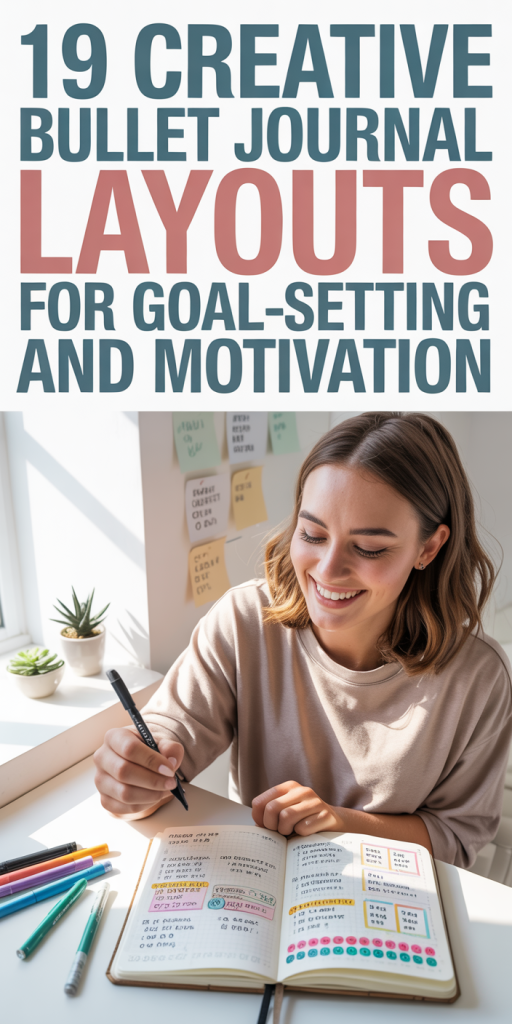
Action Steps Roadmap (Weekly Milestones)
Purpose: Convert monthly goals into weekly milestones and actions.
Setup: List weekly milestones with a short action column and a status checkbox.
Tip: At week’s end, migrate unfinished actions to next week with a note explaining why.
Motivational Quotes And Wins Log
Purpose: Maintain morale with quick wins and reminders.
Setup: Allocate a small spread for favorite quotes and a rolling wins list. Add dates to wins to track momentum.
Tip: When motivation dips, flip to this page first, seeing wins resets perspective fast.
Gratitude + Progress Journal Spread
Purpose: Link progress tracking with gratitude to reduce burnout and skew toward positive reinforcement.
Setup: Split a page: left column for three daily gratitudes, right column for one progress note and what we learned.
Tip: Keep the gratitude prompts brief to ensure daily use.
Reflection And Retrospective Template
Purpose: Close cycles and iterate smarter.
Setup: Include prompts: What worked? What didn’t? Surprises? Next steps? Rate the period 1–10.
Tip: Build retrospective time into our calendar, consistency beats intensity for long-term improvement.
Tips For Customizing Layouts And Staying Consistent
How To Tailor Layouts To Your Personality And Schedule
We’re more likely to use a layout that fits who we are. If we’re visual, use images, colors, and big grids. If we’re succinct, prefer bullet lists and compact trackers. Night owls may plan in weekly spreads that start on Wednesday: morning people might prefer calendar-aligned weeks. The point: adapt the format to your rhythm, not the other way around.
Simple Routines To Make Your System Stick
Routines make systems resilient. A quick weekly setup ritual, 10–20 minutes on Sunday, keeps the journal current. Pair the ritual with a habit (morning coffee or weekend review) and keep supplies in one spot so there’s no friction. Micro-routines like three-minute night reflections make pages less intimidating.
When To Iterate Or Combine Layouts
If a spread isn’t used after two weeks, rework it. Combine complementary layouts, habit trackers with gratitude spreads, or sprint planners with Pomodoro trackers, to reduce page clutter. Iteration is a feature, not a failure: our journal should evolve as our goals and constraints change.
Common Mistakes And How To Avoid Them
Overcomplicating Layouts Versus Keeping Momentum
A common trap is spending more time designing an ornate spread than actually doing the work. We’re tempted to make everything beautiful, but beauty without action is decoration. Prioritize utility first: if a minimal layout produces consistent progress, it’s superior to a masterpiece that sits unused.
Tracking Too Many Metrics At Once
Measuring everything sounds thorough, but tracking too many metrics splits our attention. Choose one funnel metric per goal and one supporting metric at most. For example, if writing a book is the goal, primary metric could be word count: the supporting metric could be chapters completed.
Neglecting Regular Review And Adjustment
A journal without reviews becomes a scrapbook. Schedule short reviews, weekly and monthly. Ask three questions: Did we move closer to the goal? What blocked us? What’s the next smallest action? Frequent, honest reviews keep us adaptive and prevent slow drift.
Printable Template Ideas And Setup Workflow
Quick Templates To Copy Into Your Journal
We’ve designed these bite-sized templates you can sketch in minutes:
- Monthly Focus: Header, Top 3 Objectives, 4 mini-week boxes, notes.
- Weekly Sprint: Sprint Goal, 5-day task column, Pomodoro trackers, mini-retro.
- Habit Grid: Habit names down left, days 1–31 across, space for monthly streak highlight.
- Progress Bar: Horizontal bar with 10 blocks labeled by percentage increments.
- Reflection Template: What worked (3 bullets), Challenges (3 bullets), Next steps (3 bullets).
These formats are intentionally compact so we can copy them freehand in under 10 minutes.
Weekly Setup Workflow For Minimal Friction
We recommend a five-step weekly routine that takes 10–20 minutes:
- Review last week’s wins and carryover tasks (3 min).
- Update the habit tracker and progress bars (2–3 min).
- Set the Top 3 objectives for the week and assign time blocks (3–5 min).
- Populate the daily micro-task list and Pomodoro plan (2–4 min).
- End with a short motivational note or quote to prime the week (1 min).
Keeping the workflow short reduces resistance and builds a cadence that scales, consistency compounds faster than perfection.
Conclusion
Bullet journaling gives us a creative, adaptable framework to translate goals into daily practice. Whether we use a minimalist Top 3 page or a detailed OKR spread, the real power lies in consistent review and small, visible wins. Try a few layouts from the list, adopt a simple weekly setup ritual, and give yourself permission to iterate. Over time the journal becomes not just a tracker, but a repository of momentum, a place that shows how far we’ve come and maps where we’ll go next.