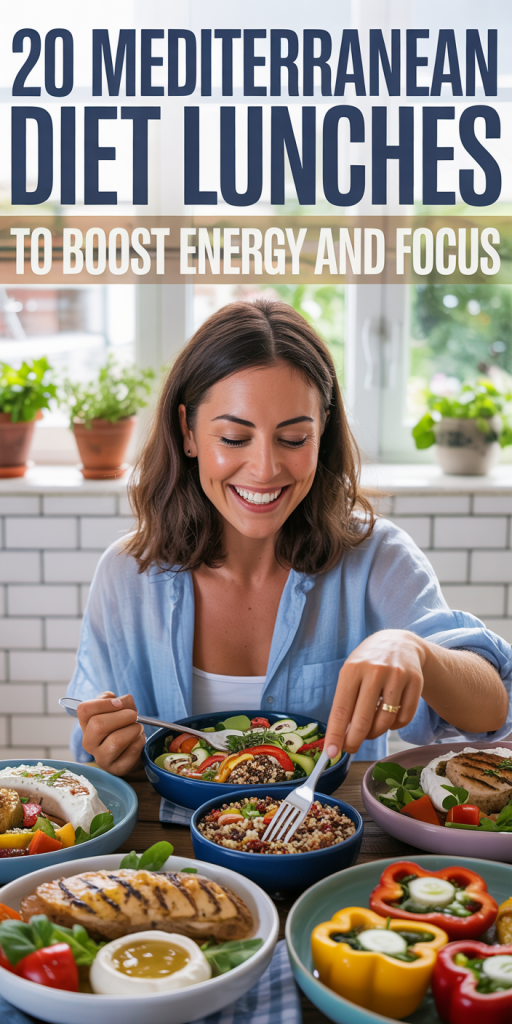
We’ve all felt the mid-day slump: coffee in hand, but our attention slipping and energy sagging. The Mediterranean diet, rich in vegetables, healthy fats, lean proteins, whole grains, and legumes, offers lunches that stabilize blood sugar, support brain health, and keep focus intact through the afternoon. In this guide we’ll walk through 20 lunch ideas (plus planning, storage, and swaps) that are realistic, flavorful, and designed to help us maintain steady energy and mental clarity. Each recipe idea is built around ingredients known to support cognition, omega-3s, fiber, antioxidants, and low-glycemic carbs, so we can feel productive, not sluggish. Let’s dig in and map out lunches that actually work for our days.
Why The Mediterranean Diet Boosts Energy And Focus
The Mediterranean diet’s benefits for energy and cognition come from its food pattern, not a single magic ingredient. It emphasizes whole foods, olive oil, vegetables, legumes, whole grains, nuts, fish, and moderate dairy, which together create a nutritional environment that stabilizes blood sugar, reduces inflammation, and supplies essential fatty acids for brain function.
Omega-3 fats from fatty fish (salmon, sardines) support neuronal membrane health and neurotransmitter function. Fiber from vegetables, legumes, and whole grains slows carbohydrate absorption, preventing the energy spikes and crashes that undermine focus. Antioxidants and polyphenols from colorful produce and extra-virgin olive oil reduce oxidative stress, which is linked to cognitive decline and fatigue. Finally, a balance of protein at lunch sustains satiety and supplies amino acids for neurotransmitter production (think dopamine and serotonin) that influence mood and focus.
By centering lunches around these principles, we’re not just eating to fill a hole, we’re fueling our afternoons with ingredients that keep energy steady and thinking sharp.
How To Choose And Balance Lunches For Sustained Energy
Picking the right lunch is more strategy than restriction. We want meals that combine protein, healthy fat, fiber-rich carbohydrates, and colorful vegetables. Below are practical guidelines for building lunches that sustain energy and cognitive performance.
Macronutrient Balance And Portion Guidelines
- Protein: Aim for 20–30 grams per meal when possible. That’s about a palm-sized portion of fish, poultry, or 1–1.5 cups of legumes. Protein supports satiety and neurotransmitter synthesis.
- Healthy Fat: Include a source like olive oil, avocado, olives, nuts, or fatty fish. Fats slow gastric emptying and provide long-lasting fuel, plus they carry fat-soluble nutrients to the brain.
- Carbohydrates: Choose low-to-moderate glycemic whole grains (farro, brown rice, quinoa) or starchy vegetables. Keep portions moderate, a cupped hand to a fist for most people, and pair them with protein and fat to blunt glucose spikes.
- Vegetables: Fill at least half the plate with vegetables, leafy greens, peppers, tomatoes, cucumbers, to maximize fiber and micronutrients.
Portion sizes depend on activity level, but this balance keeps blood sugar steady and reduces the mid-afternoon energy crash.
Timing And Snack Pairings To Maintain Focus
Timing matters. Eating too late or too early can leave us hungry or lethargic. For most, a midday lunch 4–5 hours after breakfast is ideal. If we know our lunch will be small, pairing it with a smart snack 2–3 hours after helps:
- Greek yogurt with a few walnuts (protein + healthy fat)
- Apple slices and almond butter (fiber + fat)
- Hummus with carrot sticks (protein + complex carbs)
Hydration and caffeine timing also affect focus. We should hydrate throughout the day and, if we rely on coffee, try to have the last cup early afternoon to avoid disrupting sleep and next-day energy.
Salad Bowls And Cold Meals
Salad bowls are perfect for quick lunches: they’re portable, flexible, and loadable with brain-boosting ingredients. We’ll offer five composed salads that balance protein, healthy fat, fiber, and flavor so we can eat for energy without sacrificing enjoyment.
Greek Chickpea Salad With Feta And Olives
This is a protein- and fiber-rich salad: canned chickpeas, diced cucumber, cherry tomatoes, red onion, crumbled feta, and Kalamata olives tossed with lemon juice, oregano, and extra-virgin olive oil. Chickpeas deliver steady carbs and protein: feta adds calcium and savory fat. We like adding fresh parsley and a sprinkle of black pepper.
Why it works: fiber and protein slow digestion, while olive oil and olives add beneficial monounsaturated fats that support cognition.
Tuna Niçoise-Inspired Power Salad
Start with a bed of mixed greens or baby spinach, add seared or canned tuna (in water or olive oil), blanched green beans, boiled baby potatoes (moderate portion), halved cherry tomatoes, hard-boiled egg, olives, and a mustard-lemon vinaigrette.
Why it works: tuna supplies omega-3s and high-quality protein: eggs provide choline for brain health.
Quinoa Tabbouleh With Roasted Vegetables
We swap bulgur for quinoa to boost protein and make it gluten-free. Mix cooked, cooled quinoa with chopped parsley, mint, cucumber, tomato, and roasted zucchini or eggplant. Dress lightly with lemon and olive oil.
Why it works: quinoa’s amino acid profile plus roasted veg antioxidants keep us satisfied and mentally alert.
Mediterranean Lentil And Cucumber Salad
Cooked green or brown lentils are tossed with diced cucumber, red bell pepper, scallions, parsley, and a red wine vinaigrette. Crumbled goat cheese or a dollop of plain Greek yogurt adds creaminess.
Why it works: lentils are a stable source of complex carbs and plant protein, ideal for long-lasting energy.
Avocado, Tomato, And White Bean Salad
Cannellini beans, diced avocado, cherry tomatoes, fresh basil, and lemon zest make a simple, creamy salad. A drizzle of olive oil and a pinch of sea salt finish it.
Why it works: white beans + avocado provide a mix of fiber, plant protein, and monounsaturated fats to keep blood sugar even and concentration high.
Grain Bowls, Wraps, And Sandwiches
Grain bowls and wraps are excellent when we need a heartier lunch. They’re easy to pack and reheat, and they carry the Mediterranean flavor profile well.
Farro Bowl With Roasted Salmon And Herb Yogurt
Roast a salmon fillet and serve over cooked farro with roasted cherry tomatoes, arugula, and a spoonful of herb yogurt (Greek yogurt mixed with dill, lemon, and garlic). Finish with a drizzle of olive oil.
Why it works: farro is a nutrient-dense grain with a satisfying chew, and salmon delivers omega-3s for brain health.
Hummus And Veggie Whole-Grain Wrap
Spread hummus on a whole-grain wrap, layer with shredded carrots, cucumber, roasted red pepper, spinach, and a few slices of grilled chicken or tofu. Roll tight and toast lightly, if desired.
Why it works: hummus provides plant-based protein and healthy fats: the veggies add fiber and micronutrients.
Brown Rice Bowl With Turmeric Chickpeas And Greens
Combine brown rice with roasted turmeric-spiced chickpeas, sautéed kale, and a lemon-tahini sauce. Add toasted pine nuts for crunch.
Why it works: turmeric has anti-inflammatory properties: paired with chickpeas and greens, it becomes a sustaining, flavorful bowl.
Grilled Vegetable And Halloumi Pita
Grilled zucchini, eggplant, peppers, and halloumi cheese tucked into a whole-grain pita with a smear of basil pesto or tzatziki.
Why it works: halloumi brings protein and a salty chew: grilled veg add fiber and antioxidants.
Mediterranean Chicken Shawarma Bowl
Marinated grilled chicken served over a bed of mixed greens and bulgur or brown rice, with pickled cucumbers, tomatoes, and a garlic-yogurt sauce.
Why it works: spiced lean protein plus whole grains and vegetables give a complex, satisfying meal that keeps us energized through the afternoon.
Seafood And Protein-Focused Plates
Seafood shines in the Mediterranean pattern: it’s rich in omega-3s and pairs well with bright, vegetable-forward sides. Here are five protein-focused plates that are great for lunch, some warm, some quick to assemble.
Lemon Garlic Shrimp Over Arugula And Quinoa
Sauté shrimp quickly in olive oil with lemon, garlic, and red pepper flakes. Serve over arugula tossed with cooked quinoa and a light lemon-olive oil dressing.
Why it works: shrimp are lean protein and prep fast, ideal when we want something quick and sustaining.
Baked Cod With Olive Tapenade And Steamed Greens
A flaky cod fillet baked with a topping of chopped olives, capers, parsley, and lemon zest. Serve alongside steamed Swiss chard or broccoli and a small scoop of farro.
Why it works: the tapenade adds flavor and healthy fats without excess calories: cod provides lean protein.
Sardine Toast With Tomato And Basil
For a nutrient-dense, no-cook option, mash sardines (in olive oil) on whole-grain toast with sliced tomato, basil, and a squeeze of lemon.
Why it works: sardines are an affordable omega-3 powerhouse and pair well with whole-grain carbs for brain fuel.
Grilled Salmon With Warm Lentil Salad
Top a grilled salmon portion with a warm lentil salad made from cooked lentils, diced carrots, celery, parsley, and a mustard vinaigrette.
Why it works: combining fatty fish and legumes offers complementary proteins and sustained energy.
Egg And Spinach Shakshuka-Style Plate
We adapt shakshuka for lunch: poach eggs in a sauce of tomatoes, peppers, onions, and smoked paprika: serve with a side of whole-grain toast or roasted potatoes and wilted spinach.
Why it works: eggs are nutrient-dense, supplying choline and high-quality protein to keep cognition sharp and hunger at bay.
Warm Vegetarian And Legume-Based Meals
Warm, plant-based lunches are cozy, filling, and often easier to batch cook. These five options rely on legumes, whole grains, and hearty vegetables to give us the staying power we need.
Mediterranean Stuffed Peppers With Bulgur And Feta
Fill halved bell peppers with a mixture of cooked bulgur, sautéed onions, diced tomatoes, herbs, and crumbled feta: bake until peppers are tender.
Why it works: bulgur is a quick-cooking whole grain and peppers add vitamins and fiber for slow-burning energy.
Eggplant Stew With Chickpeas (Briam-Inspired)
Simmer eggplant, zucchini, tomatoes, onions, and chickpeas with oregano and a splash of olive oil until silky and savory.
Why it works: the combination of legumes and vegetables supplies complex carbs and plant protein with antioxidant-rich tomatoes.
White Bean And Kale Ragout With Lemon
Slow-cook cannellini beans with garlic, shallots, kale, and lemon, serve with a drizzle of olive oil and crusty whole-grain bread.
Why it works: white beans are creamy and satiating: kale brings vitamins and a satisfying texture.
Mushroom And Farro Skillet With Herbs
Sauté mixed mushrooms with garlic and thyme, fold in cooked farro, finish with lemon zest and parsley.
Why it works: mushrooms provide umami and B-vitamins: farro adds chew and complex carbs for sustained energy.
Sweet Potato, Olive, And Spinach Sauté
Cube and roast sweet potatoes, then toss with wilted spinach, chopped olives, pine nuts, and a bright lemon dressing.
Why it works: sweet potato’s beta-carotene and fiber plus healthy fats from olives and nuts give a nutrient-rich, energy-stable lunch.
Make-Ahead Meal Prep, Storage, And Shopping Essentials
A little planning goes a long way. We’ll cover efficient strategies so these Mediterranean lunches are realistic during our busiest weeks.
Batch Cooking Strategies And Weekly Menu Planning
- Choose two or three proteins to prepare for the week (e.g., baked salmon, roasted chickpeas, grilled chicken). Cook once, use in different bowls and salads.
- Roast a large tray of mixed vegetables, zucchini, peppers, eggplant, to add to wraps, bowls, and salads.
- Cook a triple batch of a grain like farro, quinoa, or brown rice: store in glass containers for quick assembly.
- Plan four lunches per week around a template (salad bowl, grain bowl, sandwich/wrap, warm vegetarian) to keep shopping focused and reduce decision fatigue.
Best Practices For Packing And Reheating Lunches
- Use airtight containers with separate compartments or small dressing containers to prevent soggy greens.
- If reheating, keep dressings and delicate herbs separate until after warming.
- For salads with grains or proteins that reheat well, warm the base and add fresh greens on top for texture contrast.
Pantry Staples And Fresh Ingredients To Keep On Hand
Pantry: extra-virgin olive oil, canned chickpeas and beans, canned tuna/sardines in olive oil, brown rice, farro, quinoa, canned tomatoes, tahini, olives, nuts, and seeds.
Fresh: lemons, fresh herbs (parsley, basil, dill), mixed greens, cherry tomatoes, cucumbers, bell peppers, avocados, seasonal vegetables, eggs, Greek yogurt, and a fatty fish option (salmon or sardines).
Modifications For Common Dietary Needs
The Mediterranean pattern is flexible. Here are straightforward swaps so everyone can benefit.
Gluten-Free, Vegetarian/Vegan, Low-Sodium, And Nut-Free Options
- Gluten-Free: Use quinoa, brown rice, or certified gluten-free oats/farro alternatives. Ensure pita or wraps are gluten-free.
- Vegetarian/Vegan: Replace fish/chicken with chickpeas, lentils, tempeh, tofu, or extra-firm beans. Use dairy-free yogurt or omit cheese: add toasted seeds for creaminess and crunch.
- Low-Sodium: Choose no-salt-added canned beans and rinse them: limit olives and capers or use reduced amounts: flavor with herbs, citrus, and spices rather than salt.
- Nut-Free: Substitute seeds (pumpkin, sunflower) for nuts in salads and bowls: use seed-based spreads or tahini instead of nut butters.
We can mix and match these swaps to meet individual needs without losing the core energy and focus benefits of the Mediterranean pattern.
Conclusion
If our goal is steady energy and sharper afternoons, the Mediterranean approach to lunch is both practical and delicious. By prioritizing protein, healthy fats, fiber-rich carbs, and colorful vegetables, we build meals that prevent blood sugar rollercoasters and support brain health. The 20 lunches above give us templates we can tweak to our tastes, schedule, and dietary needs, whether we’re meal-prepping on Sunday or assembling a quick bowl between meetings.
Start with a simple plan: pick two recipes to rotate for the week, batch cook a grain and a protein, and keep pantry staples stocked. Over time we’ll notice fewer slumps, clearer afternoons, and lunches that don’t just fill us up, they fuel what we need to do. Let’s make our next lunch one that helps us finish the day strong.
