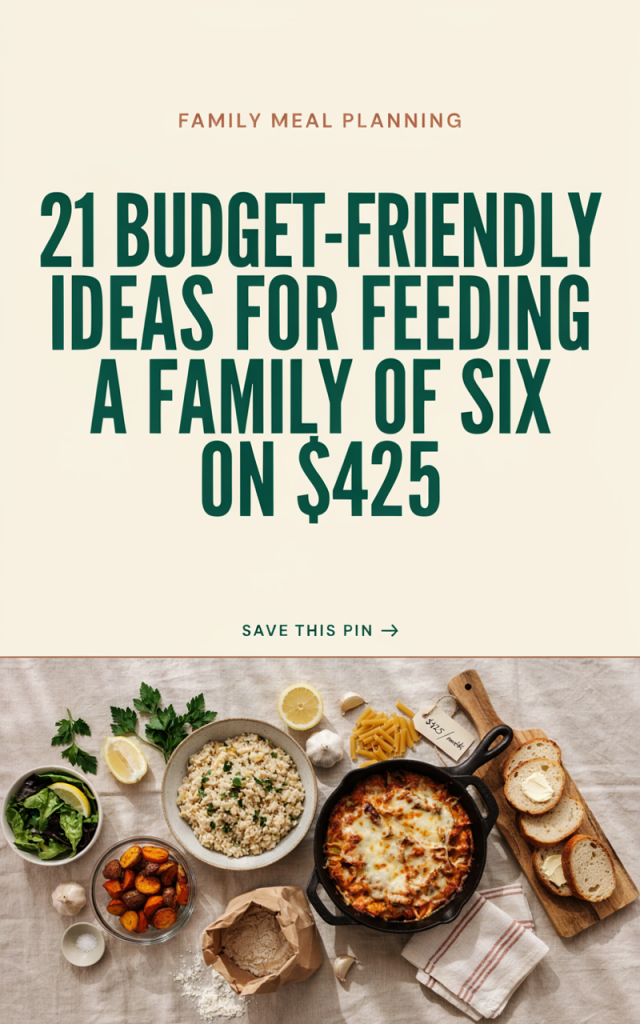
21 Budget-Friendly Ideas for Feeding a Family of Six on $425
Feeding six people on a careful grocery budget takes more than finding cheap recipes. It works best when you build meals around what is already available, cook enough to create useful leftovers, and rely on filling foods that stretch across several days. This two-week plan combines practical breakfasts, packable lunches, hearty dinners, simple sides, and planned desserts while showing how a modest increase in the grocery allowance can accommodate growing appetites.
1. Set a realistic budget for changing appetites
A family budget has to reflect both food prices and the amount growing children actually eat. Treat the $425 figure as a planning framework rather than a promise that every household will spend the same amount; adjust portions, proteins, and produce to match your family, then review the budget when prices or appetites change.
Explore this resource
2. Shop the pantry, freezer, and sale stock first
Before making a shopping list, check cupboards, the refrigerator, and the freezer. Sale-priced staples can be purchased ahead when the savings are worthwhile, and even small reductions become meaningful when repeated across many items. Build the menu around those ingredients instead of starting with a blank list.
3. Use freezing and batch cooking to stretch food
Freeze ingredients that spoil before they can be used, such as chopped onions, zucchini, or extra dairy when suitable. Cook extra meat, rice, and soup at the same time as the current meal, portion the surplus, label it, and freeze it for a future dinner or a busy evening.
4. Make flexible basics from scratch
Homemade cream-soup mix, baking mix, pie crust, cakes, sauces, and dressings can replace several packaged purchases. Keep a few dependable base recipes on hand and vary them with inexpensive seasonal ingredients so scratch cooking remains practical rather than elaborate.
5. Build breakfasts around filling staples
Rotate homemade granola, chocolate granola, baked oatmeal, eggs with toast, or occasional cereal and fruit. These breakfasts are simple enough for repetition, substantial enough to carry the family to lunch, and easy to scale when several people need larger portions. Homemade iced coffee-style drinks, blended fruit drinks, or warm vanilla milk can add variety without requiring a daily specialty purchase.
6. Plan satisfying lunches with repeatable components
Use a small set of dependable lunch combinations: meat-and-cheese sandwiches, hummus with carrots, yogurt with fruit, jelly sandwiches, or refried-bean quesadillas. Repeating components reduces waste and decision fatigue while allowing fresh fruit, canned fruit, or vegetables to change with availability.
7. Keep snacks simple and purposeful
When meals are filling, snacks can be occasional rather than an automatic part of every day. Offer fruit, nuts, yogurt, vegetables with hummus, or no-bake energy bites first, while leaving room for ordinary treats such as chips or cookies when they fit the household budget.
8. Week One Sunday: potatoes, beans, and planned dessert
Start with baked potatoes, lettuce salad, and homemade dressings, followed by rhubarb cheesecake squares. A second meal of beans on toast, popcorn, and a frozen fruit smoothie makes inexpensive pantry ingredients feel complete and gives the week a meatless option.
9. Week One Monday: stretch chicken with rice
Serve sandwiches, hummus, carrots, yogurt, apples, and pineapple at midday. For dinner, pair barbecue chicken drumsticks with rice and green beans, making extra sauce so the rice is flavorful; reserve the rhubarb dessert for another serving rather than preparing a new sweet.
10. Week One Tuesday: quesadillas and shepherd’s pie
Pepperoni pizza quesadillas provide a quick lunch alongside yogurt and fruit. Dinner can be shepherd’s pie with salad and homemade apple pie with ice cream, creating a filling meal from ground meat, vegetables, potatoes, and a manageable dessert.
11. Week One Wednesday: biscuits, gravy, and leftovers
A sandwich lunch with hummus, carrots, yogurt, grapes, and clementines keeps the day straightforward. Sausage gravy with homemade biscuits and salad makes a hearty dinner, while leftover apple pie supplies dessert without another baking project.
12. Week One Thursday: a one-pan beef and macaroni dinner
Repeat the economical sandwich-and-fruit lunch, then make a cheesy beef macaroni skillet with salad. Homemade brownies finish the meal, and their leftovers can be intentionally scheduled for the next day.
13. Week One Friday: beans, quesadillas, and a leftovers night
Refried-bean and cheese quesadillas with yogurt and fruit turn inexpensive beans into a satisfying lunch. Dinner is reserved for assorted leftovers with salad and the remaining brownies, preventing edible food from being forgotten in the refrigerator.
14. Week One Saturday: Mexican chicken and rice casserole
After a simple sandwich, vegetable, yogurt, and fruit lunch, serve Mexican chicken and rice casserole with peas. A from-scratch apple dump cake with milk provides a low-fuss dessert and demonstrates how one main dish and one baked treat can carry a family through the weekend.
15. Week Two Sunday: beef and rice, eggs, and smoothies
Begin the second week with a beef-and-rice skillet, salad, and leftover apple dessert. A separate breakfast of eggs, toasted sourdough, and a quick frozen-fruit smoothie uses affordable staples while changing the texture and flavor from the first week.
16. Week Two Monday: creamy chicken and rice with rhubarb
Sandwiches, hummus, carrots, yogurt, oranges, and apples cover lunch. Dinner turns chicken and rice into a creamy skillet meal with salad, followed by rhubarb crisp that can be served again the next day.
17. Week Two Tuesday: bean dip and sausage pasta soup
A quick refried-bean dip with tortilla chips, yogurt, apples, and grapes makes a flexible lunch. For dinner, creamy Italian sausage and pasta soup stretches a modest amount of meat with pasta and broth, while leftover rhubarb crisp handles dessert.
18. Week Two Wednesday: chicken stroganoff and coffee cake
Use sandwiches, hummus, carrots, yogurt, grapefruit, and bananas for lunch. Chicken stroganoff with salad creates a comforting dinner, and pumpkin crumb coffee cake adds a planned baked treat without requiring a separate dessert every night.
19. Week Two Thursday: pizza quesadillas and tomato-basil soup
Repeat pizza quesadillas with yogurt and fruit when a fast lunch is useful. Dinner pairs tomato-basil soup and parmesan with salad, then uses the remaining pumpkin coffee cake so the menu continues to build in leftovers.
20. Week Two Friday: chicken Alfredo casserole and broccoli
Jelly sandwiches, hummus, carrots, yogurt, canned peaches, and apples keep lunch inexpensive. Biscuits-and-mix-style chicken Alfredo casserole with roasted broccoli makes a substantial dinner, while banana chocolate-chip muffins provide a portionable dessert or breakfast extra.
21. Week Two Saturday: finish with planned leftovers
A final sandwich lunch with hummus, carrots, yogurt, peaches, and bananas uses familiar ingredients. Dinner is a leftovers buffet with salad, followed by the remaining muffins; this clears storage space and makes the next shopping trip easier to plan.
A budget menu becomes more sustainable when it is designed as a system rather than a collection of unrelated recipes. Start with the food already on hand, keep breakfasts and lunches repeatable, freeze useful extras, cook from basic ingredients when practical, and schedule leftovers before they become waste. The result is a flexible two-week rhythm that can be resized for any household and revised whenever prices or appetites shift.