We’ve gathered a practical, flavorful collection of 22 Mediterranean diet recipes designed to support heart health and longevity. Rooted in whole foods, extra virgin olive oil, vegetables, legumes, whole grains, nuts, fish, and modest dairy, the Mediterranean pattern is as delicious as it is evidence-based. In this guide we’ll explain why the diet protects the heart, share pantry essentials and swaps to get started, and then walk through breakfasts, salads, mains, seafood, snacks, desserts, cooking tips, and a full 7‑day sample menu so you can put these recipes into practice.
Why the Mediterranean Diet Supports Heart Health and Longevity
Key Nutrients and Heart-Protective Mechanisms
The Mediterranean diet supplies a mix of nutrients and food patterns that reduce cardiovascular risk. Key elements include monounsaturated fats from extra virgin olive oil, omega‑3 fatty acids from fatty fish and walnuts, soluble fiber from legumes and oats, and a broad spectrum of polyphenols from fruits, vegetables, herbs, and red wine in moderation. These components work together to:
- Lower LDL cholesterol and improve HDL function (olive oil, nuts).
- Reduce inflammation and oxidative stress (polyphenols, omega‑3s).
- Improve endothelial function and blood pressure (potassium, nitrate-rich greens).
- Enhance blood sugar control and insulin sensitivity (fiber-rich whole grains and legumes).
Rather than focusing on a single ‘‘miracle” nutrient, the Mediterranean pattern creates a synergy: small favorable shifts across lipids, inflammation, vascular function, and metabolism that add up to meaningful risk reduction over time.
Evidence From Population Studies and Trials
Large observational studies and randomized trials support real cardiovascular benefits. The PREDIMED trial, one of the largest randomized studies, found that a Mediterranean diet supplemented with extra virgin olive oil or nuts reduced major cardiovascular events by roughly 30% compared with a low‑fat control diet in high‑risk adults. Long-term cohort studies also link Mediterranean adherence with lower all‑cause mortality, reduced stroke risk, and better cognitive outcomes.
We don’t claim it prevents every illness, but the evidence is robust: consistently higher adherence correlates with longer life expectancy and fewer heart attacks and strokes.
Practical Benefits: Sustainability, Flavor, and Variety
Beyond numbers, the Mediterranean approach is sustainable and enjoyable, two essential qualities for long-term adherence. Meals are built around fresh produce, grilled or roasted proteins, legumes, whole grains, herbs, and modest portions of dairy and meat. That variety makes it easy to eat well without feeling deprived. It’s also adaptable to vegetarian, pescatarian, and lower‑meat preferences, which helps us stay consistent and enjoy food for life.
How To Start: Pantry Staples, Shopping, And Simple Swaps
Essential Pantry and Fridge Staples
Begin by stocking a small list of versatile, heart‑healthy staples that make the Mediterranean style effortless:
- Extra virgin olive oil (for dressings, finishing oil)
- Canned tomatoes and tomato paste
- Canned beans: chickpeas, white beans, lentils
- Whole grains: whole wheat pasta, farro, quinoa, brown rice
- Nuts and seeds: walnuts, almonds, pine nuts
- Olives and capers
- Dried herbs and spices: oregano, thyme, za’atar, smoked paprika
- Garlic and onions
- Vinegars: red wine, balsamic, lemon juice
- Greek yogurt (plain), feta cheese (moderate use)
- Fresh produce: lemons, seasonal greens, tomatoes, cucumbers, eggplant
- Frozen fish fillets and vegetables for convenience
With this kit, we can assemble salads, sauces, grain bowls, and fast mains any night of the week.
Heart-Healthy Swaps and Portion Guidance
Small swaps create big benefits:
- Swap butter for extra virgin olive oil when sautéing or roasting.
- Replace refined grains with whole grains (whole wheat pasta, farro, quinoa).
- Choose fatty fish (salmon, sardines, mackerel) twice a week instead of red meat.
- Use legumes as a protein source several times weekly in place of processed meats.
- Use herbs, citrus, and vinegar instead of salt-heavy sauces: aim for under 1500–2300 mg sodium/day depending on your needs.
Portion tips: aim for vegetables to fill half your plate, lean protein or legumes about a quarter, and whole grains or starchy vegetables the remaining quarter.
Meal Timing, Frequency, and Alcohol Considerations
Mediterranean eating is flexible: three meals with snacks or smaller frequent meals can both work, depending on appetite and schedule. If we drink alcohol, moderation is key: up to one glass per day for women and up to two for men, typically red wine with meals, and not as an excuse to drink daily if there are contraindications (medications, pregnancy, history of alcohol dependence). Prioritize regular meals, mindfully enjoyed, social connection at the table is part of the pattern and may have independent health benefits.
Recipe Collection: Breakfasts (4)
Greek Yogurt Parfait With Walnuts, Fresh Fruit, And Honey
Ingredients: plain Greek yogurt, chopped walnuts, mixed berries or sliced stone fruit, drizzle of honey, pinch of cinnamon.
Method: Layer yogurt, fruit, and walnuts in a bowl. Drizzle a teaspoon of honey and sprinkle cinnamon. We get protein, probiotics, omega‑3 precursors from walnuts, and a fruit dose to start the day.
Savory Tomato And Feta Shakshuka
Ingredients: olive oil, onion, garlic, canned crushed tomatoes, paprika, cumin, eggs, crumbled feta, fresh parsley.
Method: Sauté onion and garlic in olive oil, add spices and tomatoes, simmer. Make wells and crack eggs: cover until set. Finish with feta and parsley. Serve with whole grain toast. This dish is rich in lycopene from tomatoes and healthy fats from olive oil.
Olive Oil Banana Oat Pancakes
Ingredients: ripe bananas, rolled oats, egg, baking powder, splash of milk, tablespoon extra virgin olive oil, cinnamon.
Method: Blend oats until flour, mix with mashed banana, egg, milk, and baking powder. Pan‑fry lightly in olive oil until golden. These pancakes are lower in refined carbs and include fiber and healthy fat.
Herb Omelet With Spinach And Sun‑Dried Tomatoes
Ingredients: eggs or egg whites, handful spinach, chopped sun‑dried tomatoes, mixed herbs (parsley, chives), olive oil, fresh lemon zest.
Method: Sauté spinach and tomatoes in olive oil, pour beaten eggs, cook gently, fold and finish with herbs and lemon zest. Quick, nutrient‑dense, and portable.
Recipe Collection: Salads And Sides (5)
Classic Greek Salad With Chickpeas And Extra Virgin Olive Oil
Ingredients: tomatoes, cucumber, red onion, bell pepper, olives, feta (optional), canned chickpeas, oregano, olive oil, lemon juice.
Method: Chop vegetables, rinse chickpeas, toss with olive oil, lemon, and oregano. Add crumbled feta and olives. This boosts protein and fiber while keeping the fats heart‑healthy.
Mediterranean Quinoa Tabbouleh With Parsley And Lemon
Ingredients: quinoa, lots of parsley, mint, green onions, cucumber, lemon juice, olive oil, diced tomatoes.
Method: Cook quinoa, cool, mix with herbs and vegetables, dress with lemon and olive oil. Parsley provides micronutrients and phytonutrients while quinoa adds complete plant protein.
Roasted Seasonal Vegetables With Za’atar And Tahini Drizzle
Ingredients: seasonal root and summer vegetables, olive oil, za’atar, tahini, lemon, water.
Method: Roast vegetables tossed in olive oil and za’atar. Whisk tahini with lemon and water to loosen, drizzle over warm vegetables. Tahini adds calcium and healthy fat: za’atar gives herbaceous depth.
Lemon Garlic Artichoke And White Bean Salad
Ingredients: canned artichoke hearts, canned white beans, garlic, parsley, lemon, olive oil, black pepper.
Method: Toss drained artichokes and beans with minced garlic, parsley, lemon, and oil. Chill briefly. This is high in fiber and satisfying as a side or light lunch.
Braised Greens With Garlic, Olive Oil, And Toasted Pine Nuts
Ingredients: kale or Swiss chard, garlic, olive oil, red pepper flakes, toasted pine nuts, lemon.
Method: Sauté garlic, add chopped greens and a splash of water, simmer until tender. Finish with lemon and pine nuts. Bitter greens are nutrient‑dense and pair well with citrus to improve iron absorption.
Recipe Collection: Main Courses (7)
Grilled Lemon Herb Chicken With Olives And Tomatoes
Ingredients: boneless skinless chicken breasts or thighs, lemon zest and juice, oregano, thyme, olive oil, halved cherry tomatoes, pitted olives.
Method: Marinate chicken in lemon, herbs, and olive oil for 30 minutes, grill until done. Toss tomatoes and olives with a little olive oil and serve on top. A lean, flavorful protein with Mediterranean fat balance.
Baked Eggplant Parmesan (Light Version)
Ingredients: eggplant slices, whole wheat breadcrumbs or panko, grated Parmesan, canned tomatoes, garlic, basil, a modest amount of mozzarella, olive oil.
Method: Roast or pan‑sear breaded eggplant slices, layer with simple tomato sauce and cheese, bake until bubbly. Use less cheese and olive oil than classic versions to keep saturated fat lower.
Chickpea And Vegetable Stew (Caponata‑Inspired)
Ingredients: onions, celery, eggplant, bell pepper, canned tomatoes, capers, olives, canned chickpeas, red wine vinegar, olive oil.
Method: Sauté vegetables and eggplant, add tomatoes, chickpeas, capers, and olives, simmer until melded. Finish with a splash of vinegar. This hearty stew doubles as a main or side and reheats beautifully.
Whole Wheat Pasta With Sardines, Cherry Tomatoes, And Herbs
Ingredients: whole wheat spaghetti, canned sardines in olive oil, cherry tomatoes, garlic, lemon, parsley, red pepper flakes.
Method: Sauté garlic and tomatoes in olive oil, add sardines to warm through, toss with cooked pasta and herbs. Sardines provide DHA/EPA and calcium if we include bones.
Slow‑Roasted Tomato And White Bean Ragout
Ingredients: roma tomatoes or cherry tomatoes, garlic, rosemary, canned white beans, olive oil, whole grain toast or polenta for serving.
Method: Slow roast tomatoes with garlic and rosemary until intensely flavored, stir in beans, heat through and serve over grains. It’s comfort food with fiber and antioxidants.
Mediterranean‑Style Turkey Or Lamb Meatballs With Mint Yogurt
Ingredients: lean ground turkey or lean lamb, garlic, onion, breadcrumbs or cooked bulgur, egg, spices (cumin, coriander), Greek yogurt, chopped mint.
Method: Mix, form balls, bake or pan‑sear, and serve with a mint‑yogurt sauce. Choose turkey to keep saturated fat lower or lamb in moderation for flavor.
Stuffed Peppers With Quinoa, Feta, And Fresh Herbs
Ingredients: bell peppers, cooked quinoa, diced tomatoes, feta, parsley, dill, olive oil.
Method: Hollow peppers, stuff with mixture, bake until peppers are tender. These are portable, colorful, and packed with plant protein and veggies.
Recipe Collection: Seafood (3)
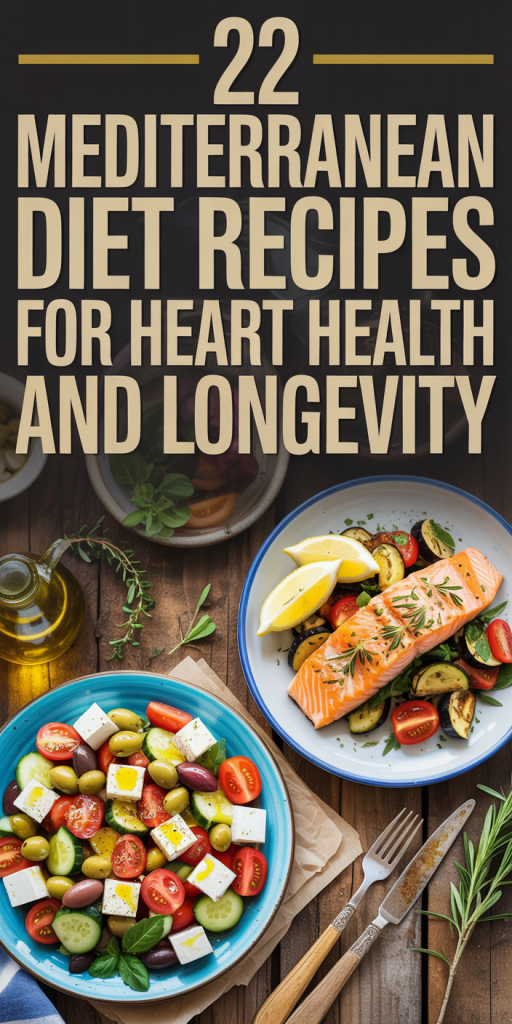
Pan‑Seared Salmon With Salsa Verde
Ingredients: salmon fillets, olive oil, parsley, capers, lemon zest, anchovy (optional), garlic.
Method: Sear salmon in olive oil skin‑side down, finish in the oven if thick. Blend parsley, capers, anchovy, garlic, lemon, and olive oil for a bright salsa verde. Salmon supplies omega‑3s that are central to heart protection.
Mediterranean Baked Cod With Olives, Capers, And Lemon
Ingredients: cod or other white fish, cherry tomatoes, olives, capers, lemon slices, olive oil.
Method: Arrange fish in a baking dish with tomatoes, olives, and capers, drizzle olive oil and bake until flakey. Quick, light, and aromatic.
Shrimp With Garlic, Lemon, And Wilted Spinach
Ingredients: shrimp, garlic, red pepper flakes, spinach, olive oil, lemon.
Method: Sauté garlic and shrimp briefly, add spinach to wilt and toss with lemon. Shrimp are a quick lean option, pair with whole grains for a balanced plate.
Recipe Collection: Snacks And Desserts (3)
Classic Hummus With Extra Virgin Olive Oil And Crudités
Ingredients: canned chickpeas, tahini, lemon juice, garlic, olive oil, chopped vegetables for dipping.
Method: Blend drained chickpeas with tahini, lemon, garlic, and a drizzle of olive oil. Serve with carrots, cucumber, and bell peppers. Hummus gives plant protein, fiber, and healthy fat.
Rosemary‑Roasted Almonds With Sea Salt
Ingredients: raw almonds, olive oil or a spray of oil, chopped rosemary, sea salt.
Method: Toss almonds with oil and rosemary, roast until fragrant. Keep portions to a small handful, nuts are calorie‑dense but cardioprotective when eaten modestly.
Baked Apples With Cinnamon And Greek Yogurt
Ingredients: apples, cinnamon, walnuts, drizzle of honey, Greek yogurt.
Method: Core apples, fill with chopped walnuts and cinnamon, bake until tender. Serve with a dollop of Greek yogurt. This dessert satisfies sweet cravings with fiber and protein rather than refined sugar.
Cooking Tips For Maximizing Heart Benefits
Using Olive Oil, Herbs, And Low‑Salt Flavoring Techniques
We should favor extra virgin olive oil for most cooking and finishing, its monounsaturated fats and polyphenols are protective. Use citrus, vinegar, garlic, roasted spices, and herbs to build flavor without excess salt. Toast spices briefly to unlock aroma, add acid at the end to brighten dishes, and finish plates with herb salads (baby greens tossed with lemon and oil) to add freshness.
Balancing Fats, Fiber, And Lean Protein In Each Meal
Aim for a plate where vegetables and whole grains supply fiber, a palm‑sized portion of fish, poultry, or legumes provides protein, and a thumb‑sized portion of nuts, seeds, or olive oil supplies healthy fats. This balance moderates post‑meal blood sugar and supplies the mix of nutrients linked to longevity.
Batch Cooking, Freezing, And Safe Reheating Practices
Many Mediterranean dishes freeze and reheat well: stews, ragouts, cooked grains, and roasted vegetables. Cool foods quickly, store in airtight containers, and label with dates. Reheat to steaming hot (165°F/74°C) for safety. Batch cook legumes and grains at the start of the week, then assemble salads, bowls, or mains in 10–15 minutes during busy evenings.
Meal Prep, Weekly Planning, And a Sample 7‑Day Menu
Simple Make‑Ahead Steps And Storage Guidelines
- Cook a double batch of quinoa or farro and store in the fridge for 3–5 days.
- Roast a pan of mixed vegetables to use as sides, salads, or grain bowl toppers.
- Make hummus and a yogurt dip for quick snacks.
- Portion nuts into single‑serve bags to control portions.
- Freeze single portions of seafood or cooked stews for easy reheat.
These small actions cut decision fatigue and make heart‑healthy choices the easy ones.
Sample 7‑Day Heart‑Healthy Mediterranean Menu Using These Recipes
Day 1
- Breakfast: Greek yogurt parfait with walnuts and berries
- Lunch: Classic Greek salad with chickpeas
- Dinner: Grilled lemon herb chicken with olives and tomatoes
- Snack: Rosemary‑roasted almonds
Day 2
- Breakfast: Olive oil banana oat pancakes
- Lunch: Lemon garlic artichoke and white bean salad with whole grain toast
- Dinner: Pan‑seared salmon with salsa verde, roasted seasonal vegetables
- Snack: Hummus and crudités
Day 3
- Breakfast: Herb omelet with spinach and sun‑dried tomatoes
- Lunch: Quinoa tabbouleh with added white beans
- Dinner: Whole wheat pasta with sardines and cherry tomatoes
- Snack: Baked apple with Greek yogurt
Day 4
- Breakfast: Savory shakshuka with whole grain toast
- Lunch: Leftover chickpea and vegetable stew
- Dinner: Stuffed peppers with quinoa and feta
- Snack: A small handful of walnuts and a piece of fruit
Day 5
- Breakfast: Greek yogurt with honey and sliced figs
- Lunch: Braised greens with toasted pine nuts and a slice of whole grain bread
- Dinner: Mediterranean turkey meatballs with mint yogurt, side salad
- Snack: Rosemary‑roasted almonds
Day 6
- Breakfast: Olive oil banana oat pancakes (again, they freeze well)
- Lunch: Slow‑roasted tomato and white bean ragout over polenta
- Dinner: Mediterranean baked cod with olives and capers, steamed greens
- Snack: Hummus with cucumber sticks
Day 7
- Breakfast: Herb omelet and leftover roasted vegetables
- Lunch: Greek salad with chickpeas and lemon vinaigrette
- Dinner: Chickpea and vegetable stew (caponata‑inspired) with crusty whole grain bread
- Snack/Dessert: Baked apple with cinnamon and Greek yogurt
Use this menu as a jumping‑off point and swap seasonal produce, fish choices, or grain types to keep things interesting. The focus is on plant forward meals, modest portions of high‑quality protein, and enjoyable fats.
Conclusion
We’ve shown how the Mediterranean diet combines science and flavor to protect the heart and support longevity, through beneficial fats, fiber, antioxidants, and a food‑first approach that’s easy to sustain. These 22 recipes give us breakfasts, sides, mains, seafood options, snacks, and desserts that make everyday eating healthful and enjoyable. Start with a few pantry staples, plan a batch‑cooking session, and pick three or four recipes to rotate each week. Over time, the small, consistent changes add up: better cholesterol, less inflammation, more energy, and meals we actually look forward to. Let’s cook, eat, and live a little longer, together.