We all know the feeling: mid-afternoon energy dip, rumbling stomach, and the sudden urge to reach for whatever’s easiest. Choosing a snack that actually satisfies, and helps us stay on track with our nutrition, starts with protein. In this guide we’ll explain why high-protein snacks matter, how to use this list (timing, targets, and quick rules), and give 25 concrete, tasty snack ideas organized by category. We’ll also cover portion sizes, meal prep and storage tips, and how to adapt snacks for dietary restrictions. By the end, you’ll have a practical, grab-and-go toolbox to keep us full between meals and support energy, muscle maintenance, and appetite control.
Why High-Protein Snacks Matter
Protein does more than build muscle. It slows digestion, stabilizes blood sugar, and triggers satiety hormones that help us eat less overall. Compared with carbs-only snacks, high-protein options keep hunger at bay for longer and reduce post-snack cravings. That matters whether our goal is weight maintenance, muscle gain, or simply getting through a busy afternoon without a sugar crash.
A few key points to keep in mind:
- Thermic effect and metabolism: Protein has a higher thermic effect than carbs or fat, our bodies burn more calories digesting it.
- Muscle preservation: Regular protein intake is essential to preserve lean mass, especially if we exercise or are losing weight.
- Appetite control: Protein increases feelings of fullness more effectively than the same calories from carbs.
Realistic snacks should aim for a meaningful protein dose, typically 10–20 grams, to make an impact. Later we’ll break down portion sizes and targets so you can tailor snacks to your day.
How To Use This List: Timing, Targets, And Quick Rules
This list isn’t prescriptive, we’re giving options you can mix and match depending on your routine. Here’s how to use it.
Timing
- Mid-morning or mid-afternoon: A snack 2–3 hours after a meal helps stabilize energy and prevents overeating at the next meal.
- Pre- or post-workout: A higher-protein snack (15–25 g) mixed with some carbs is ideal.
- Nighttime: Choose lighter, protein-focused snacks (10–15 g) to avoid disrupting sleep.
Targets
- Aim for 10–20 grams of protein for a standard snack. If you’re trying to build muscle or have a long gap before your next meal, pick snacks toward the higher end (20–30 g).
- Combine protein with fiber, healthy fats, or a small amount of carbs to increase satiety and stabilize blood sugar.
Quick Rules
- Keep it whole-food-focused: lean meats, dairy, eggs, legumes, nuts, and seeds are reliable.
- Read labels on bars and ready-made items: prioritize protein per serving and watch added sugar.
- Prep once, eat many times: simple meal-prep strategies make choosing high-protein snacks effortless.
With these rules in mind, let’s jump into 25 high-protein snack ideas organized by category so you can find options that fit our taste and lifestyle.
25 High-Protein Snack Ideas (Organized By Category)
Dairy and Egg‑Based Snacks
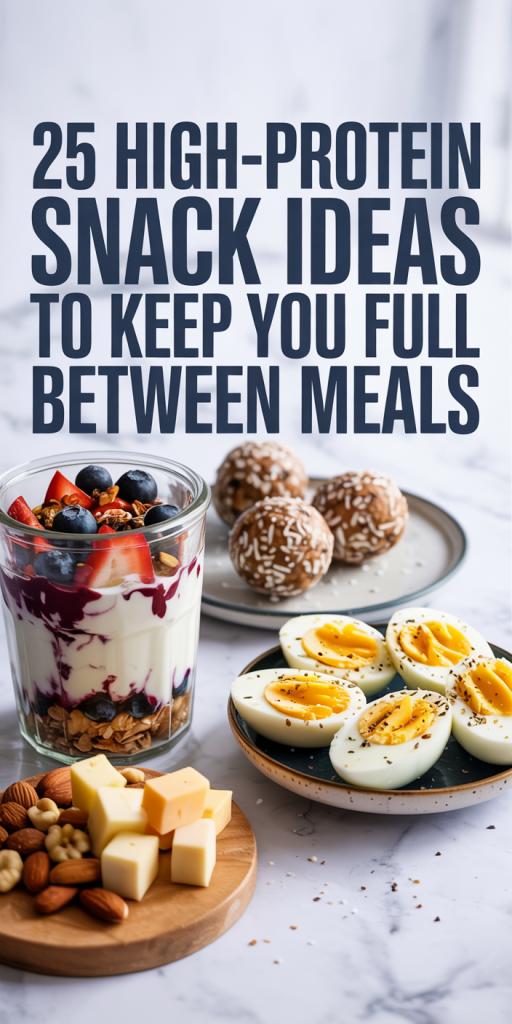
- Greek yogurt with berries and hemp seeds, A 6-ounce container of nonfat Greek yogurt typically has 15–20 g protein. Add a handful of berries and a tablespoon of hemp seeds (3 g protein) for texture and omega-3s.
- Cottage cheese and pineapple or cucumber, Half a cup of cottage cheese supplies ~12–14 g protein. Pair with pineapple for a sweet contrast or cucumber and dill for something savory.
- Hard-boiled eggs with everything seasoning, Two large eggs provide about 12–14 g protein and are portable and inexpensive. Sprinkle everything bagel seasoning for extra flavor.
- Ricotta and sliced apple with cinnamon, Half a cup of part-skim ricotta offers ~12 g protein. We like it with apple slices and cinnamon for a dessert-like but protein-forward treat.
- Skyr or strained yogurt parfait, Skyr (Icelandic yogurt) often exceeds 15 g protein per serving: layer with nuts and a drizzle of honey.
Nut, Seed, and Legume‑Based Snacks
- Roasted chickpeas, Half a cup offers 7–10 g protein depending on how they’re prepared. We roast ours with smoked paprika and a touch of olive oil for crunch.
- Edamame (steamed), One cup of shelled edamame contains about 16–18 g protein. Serve warm with a pinch of sea salt or chili flakes.
- Almond butter on rice cakes, Two tablespoons of almond butter add ~7 g protein. Spread on a whole-grain rice cake and top with banana slices.
- Trail mix with mixed nuts and roasted soy nuts, Swap some peanuts for roasted soy nuts (edamame-style) to boost protein. Aim for a controlled portion (¼ cup).
- Hummus and veggie sticks with a sprinkle of hemp seeds, Three tablespoons of hummus provide ~3–4 g protein: add hemp seeds or sunflower seeds to up the protein and healthy fats.
Meat and Seafood‑Based Snacks
- Turkey or chicken roll-ups, Slices of deli turkey wrapped around pickle spears or avocado make an easy 10–15 g protein snack depending on slices used.
- Canned tuna or salmon on whole-grain crackers, Half a can of tuna (~15 g protein) with 3–4 whole-grain crackers and mustard or Greek yogurt makes a satisfying plate.
- Beef jerky or biltong, A 1-ounce serving typically has 8–12 g protein: choose low-sugar, nitrate-free options when possible.
- Smoked salmon cucumber bites, Top cucumber rounds with cream cheese or skyr and smoked salmon for a light, 8–12 g protein snack.
- Mini meatballs, Make lean turkey or chicken meatballs ahead of time: two or three small meatballs equal roughly 12–15 g protein.
Plant‑Based Portable Snacks
- Lentil salad in a jar, Cooked lentils are high in protein (1 cup cooked ≈ 18 g). We make small jar salads with lentils, chopped veggies, and a vinaigrette for a filling snack.
- Tempeh bites, Marinated and pan-seared tempeh has about 15–20 g protein per 3-ounce portion. Keep bite-sized pieces in the fridge for quick reheating.
- Peanut butter and chia seed toast, A tablespoon of peanut butter (~4 g protein) plus chia seeds on whole-grain toast gives a modest but satiating boost.
- Protein-rich overnight oats with chia and soy milk, Using soy milk and a scoop of plant-based protein powder or Greek yogurt gives a 12–20 g protein snack that’s easy to grab.
- Black bean dip with jicama or bell pepper, Half a cup of black beans delivers ~7–8 g protein: blended with spices it becomes a creamy, fiber-rich dip.
Protein‑Packed Smoothies, Bars, and Ready‑Made Options
- High-protein smoothie (Greek yogurt or protein powder), A smoothie with ¾ cup Greek yogurt (12 g), 1 scoop protein powder (15–20 g), and fruit can easily hit 25–35 g protein, great pre- or post-workout.
- Protein bars (choose wisely), Look for bars with at least 10–20 g protein and under 10–12 g added sugar. We prefer bars with recognizable ingredients like nuts, oats, and whey or pea protein.
- Cottage cheese or yogurt single-serve cups (fortified), Ready-made cups with fruit or savory mixes usually contain 12–20 g protein and are genuinely convenient when we’re on the run.
- Ready-to-eat grilled chicken strips, Many stores sell pre-cooked chicken strips with ~10–20 g protein per serving. Pair with mustard or hummus for flavor.
- Protein pudding or Greek yogurt dessert cups, Pre-made, lower-sugar protein puddings or dessert cups using whey or casein offer 10–15 g protein for a sweet, satisfying option.
Tips on flavor and balance: Across categories, pair protein with fiber or healthy fats, fruit, veggies, nuts, seeds, or a small whole-grain serving, to elongate fullness and round out micronutrients. We rotate types (dairy, plant, meat) to keep variety and cover different amino-acid profiles.
Portion Sizes and Protein Targets For Different Goals
How much protein should a snack provide? It depends on our goals, body size, and activity level. Below we outline simple targets and how to think about portions.
General Targets
- Maintenance/light activity: 10–15 g protein per snack.
- Active / strength training: 15–25 g per snack, especially around workouts.
- Weight loss / appetite control: 15–25 g to increase satiety and preserve lean mass.
A few guidelines to convert food into protein amounts:
- Eggs: 1 large egg ≈ 6–7 g
- Greek yogurt/cottage cheese/skyr: ¾ cup–1 cup ≈ 12–20 g (varies by brand)
- Chicken/turkey (cooked): 1 ounce ≈ 7 g
- Tuna/salmon (canned): 1 ounce ≈ 7 g (half can often ~15–20 g)
- Lentils/edamame (cooked): ½–1 cup ≈ 8–18 g
- Nuts/seed butter: 1 tablespoon ≈ 3–4 g
- Protein powder: 1 scoop ≈ 15–25 g (check label)
Quick Portion Guide and Sample Snack Targets
- 12–15 g protein (light snack): 1 hard-boiled egg + 1 string cheese: or ¾ cup Greek yogurt.
- 15–20 g protein (standard snack): half can tuna on whole-grain crackers: or 1 cup edamame.
- 20–30 g protein (substantial snack / small meal): high-protein smoothie with protein powder: or 3–4 oz grilled chicken strips with raw veggies.
When we’re tracking macros, use these conversions to estimate protein quickly. For convenience, we also keep a few go-to, pre-portioned items, protein bars, yogurt cups, or pre-cooked chicken, in our bag or fridge.
Meal Prep, Storage, and On‑The‑Go Tips
Making high-protein snacking habitual is mostly about preparation. A little batch cooking and smart packing go a long way.
Make‑Ahead Prep and Batch Cooking Tips
- Hard-boil eggs in bulk: Do a dozen at the start of the week. Store peeled or unpeeled in airtight containers: they last about a week.
- Roast a big tray of chickpeas or edamame: Season and roast once, portion into snack bags for the week.
- Cook a batch of lean meatballs or chicken strips: Freeze in single portions or refrigerate for 3–4 days for quick reheat.
- Portion cottage cheese, Greek yogurt, or hummus into small containers: Grab-and-go convenience: add fruit or veg when you’re ready to eat.
- Pre-assemble jar salads with lentils, quinoa, or tempeh: Keep dressing separate or on the bottom and shake before eating.
Batch prep preserves variety and reduces decision fatigue. We recommend prepping two to three different protein snacks each week so we don’t get bored.
Packing, Storage, and Best Containers
- Use clear, BPA-free containers with tight lids: They’re stackable and keep food fresh longer.
- Insulated lunch bags and ice packs: Essential for dairy and cooked meats. Keep chilled to maintain quality and safety.
- Silicone snack bags or small glass jars: Great for portioning nuts, roasted chickpeas, or cottage cheese.
- Reusable utensil kit and small spice containers: Tiny perks, like a packet of everything seasoning or hot sauce, make repeat snacks feel new.
Food safety note: Perishable protein snacks should not sit out more than two hours at room temperature (one hour in hot weather). When in doubt, keep cold items chilled until you’re ready to eat.
Adjusting Snacks For Dietary Restrictions and Preferences
No single snack fits everyone. Below we give practical swaps and considerations for common dietary needs so everyone can use this list.
Vegetarian, Vegan, and Dairy‑Free Swaps
- Swap dairy yogurt for unsweetened soy or pea-protein yogurt: They offer comparable protein to dairy varieties.
- Replace cottage cheese with mashed chickpeas or tofu-based ricotta: Silken tofu blended with lemon and nutritional yeast works well.
- Use tempeh, edamame, lentils, and seitan as portable protein sources: Tempeh and seitan are especially useful if we miss meat textures.
- Nut and seed butters + soy or pea protein powders: Combine these to boost protein in smoothies or overnight oats.
We find that layering plant proteins (legumes + seeds + whole grains) helps approach complete amino-acid profiles.
Allergy Considerations and Low‑FODMAP Options
- Nut allergies: Choose seeds (pumpkin, sunflower), edamame, or roasted chickpeas instead of nuts. Sunflower seed butter is a good alternative.
- Dairy intolerance: Use lactose-free dairy, fortified plant milks, or pea/soy yogurts. Hard cheeses and Greek yogurt may be better tolerated by some with low lactose sensitivity.
- Low‑FODMAP: Hard cheeses, lactose-free Greek yogurt, and small portions of firm tofu are usually low-FODMAP. Avoid large portions of legumes unless tolerated: canned lentils or chickpeas rinsed well and eaten in small amounts may be better tolerated.
- Gluten sensitivity: Most whole proteins (eggs, dairy, meat, legumes) are naturally gluten-free. Check labels on processed bars, crackers, and jerky.
When dealing with multiple restrictions, we recommend planning a week of snacks and testing one new swap at a time. That makes it easier to identify what works and what doesn’t.
Conclusion
High-protein snacks are a simple, high-impact tool to stabilize our energy, manage appetite, and support fitness goals. Whether we prefer dairy, plant-based, or meat-centered options, aiming for roughly 10–25 grams of protein per snack, and pairing it with fiber or healthy fat, keeps us satisfied and less likely to reach for empty calories.
Start by choosing three go-to snacks from different categories and prepping them for the week. Keep portable protein sources on hand, Greek yogurt cups, hard-boiled eggs, edamame, and pre-cooked chicken are especially useful. As we experiment, we’ll find combos that fit our taste, schedule, and dietary needs. With a little prep and smart swaps, snacking becomes a strength rather than a weakness, fuel that carries us through the day without derailing our goals.