In a world saturated with fad diets and complex nutritional advice, the concept of “clean eating” has emerged as a refreshingly simple approach to food and wellness. At its core, clean eating is not a diet in the restrictive sense, but rather a lifestyle focused on consuming whole, minimally processed foods that are as close to their natural state as possible. This approach emphasizes nutrient-dense ingredients and encourages a return to home-cooked meals, offering a path to improved health without the need for drastic deprivation.
However, the term “clean eating” is not federally regulated, leading to a wide range of interpretations and, at times, misconceptions. This comprehensive guide will demystify clean eating, demonstrate its affordability, and provide you with a practical 7-day meal plan that proves healthy eating doesn’t have to break the bank.
Understanding Clean Eating
Clean eating is a dietary pattern that prioritizes whole, minimally processed foods. This means choosing foods that have undergone little to no alteration from their natural state. The Harvard T.H. Chan School of Public Health defines clean eating as “a concept that promotes health and wellness by encouraging the selection of minimally processed fruits, vegetables, whole grains, healthy proteins, and healthy fats”.
The fundamental principles of clean eating include focusing on fresh fruits and vegetables, lean proteins, whole grains, and healthy fats while minimizing the intake of artificial ingredients, preservatives, added sugars, and unhealthy fats. Research from the International Food Information Council found that consumers who identify as “clean eaters” typically choose foods with short, simple ingredient lists and avoid highly processed options.
It is crucial to approach clean eating with balance and flexibility. While the emphasis is on whole foods, minimally processed items such as canned beans, frozen vegetables, and whole-grain pasta can still be part of a healthy clean eating plan. The key lies in reading labels and being mindful of ingredients rather than pursuing an unrealistic standard of dietary purity.
The Science-Backed Benefits of Clean Eating
Adopting a clean eating lifestyle offers numerous benefits for both physical and mental well-being. By focusing on whole, nutrient-dense foods, you provide your body with essential vitamins, minerals, and antioxidants necessary for optimal function.
Physical Health Benefits:
- Increased energy levels through stable blood sugar regulation
- Improved digestive health from higher fiber intake
- Stronger immune system support from antioxidant-rich foods
- Reduced risk of chronic diseases including heart disease, type 2 diabetes, and certain cancers
- Better weight management through nutrient density and satiety
Mental Health Benefits:
The connection between diet and mood is increasingly recognized by the scientific community. A diet rich in whole foods helps stabilize blood sugar levels, leading to more stable moods and improved cognitive function. Conversely, diets high in processed foods and added sugars have been linked to inflammation and increased risk of depression.
As noted by Harvard’s nutrition experts, “Changing dietary habits to reduce the risk of these diseases can feel empowering, because other factors like family history and genetic predisposition cannot be changed”.
Debunking the “Expensive” Myth: Clean Eating on a Budget
One of the most persistent misconceptions about clean eating is that it requires a substantial financial investment. While some specialty health foods can be pricey, it is entirely possible to maintain a clean, whole-foods diet on a budget. The key lies in strategic shopping and smart meal planning.
The United States Department of Agriculture provides extensive guidance on healthy eating within budget constraints, and these principles align perfectly with clean eating principles. Success comes from understanding where to shop, what to buy, and how to prepare meals efficiently.
Strategic Shopping for Clean Eating
Pre-Shopping Preparation:
Before setting foot in the store, successful budget clean eating begins with thorough meal planning. Examine your pantry, refrigerator, and freezer to inventory existing ingredients. Create a detailed meal plan for the week, focusing on recipes that use similar ingredients across multiple meals to minimize waste and maximize value.
Smart Shopping Techniques:
Seasonal shopping represents one of the most effective cost-saving strategies. Fruits and vegetables in season offer peak flavor and nutritional value at the lowest prices. Local farmers markets often provide the freshest seasonal produce at competitive rates, while also supporting local agriculture.
The frozen and canned food sections deserve serious consideration in your clean eating strategy. Frozen fruits and vegetables are harvested at peak ripeness and flash-frozen to preserve nutrients, often making them more nutritious than fresh produce that has traveled long distances. When selecting canned goods, choose options with no added salt, sugar, or artificial preservatives.
Bulk purchasing of staple items like brown rice, quinoa, oats, and dried legumes can significantly reduce per-unit costs. However, ensure you have proper storage facilities and will use these items before they spoil.
Understanding unit pricing enables informed decision-making between different brands and package sizes. The unit price, typically displayed on shelf tags, shows the cost per ounce, pound, or other measurement unit, allowing for accurate price comparisons.
Budget-Friendly Clean Eating Staples
Building an affordable clean eating pantry requires focusing on versatile, nutrient-dense ingredients that provide maximum value. The following table outlines the most cost-effective options across all food groups:
| Food Group | Budget-Friendly Options | Average Cost per Serving |
|---|---|---|
| Proteins | Eggs, dried beans, lentils, canned tuna, chicken thighs | $0.50 – $1.50 |
| Whole Grains | Brown rice, oats, whole wheat pasta, quinoa | $0.25 – $0.75 |
| Vegetables | Seasonal produce, frozen vegetables, root vegetables | $0.30 – $1.00 |
| Fruits | Bananas, apples, seasonal fruits, frozen berries | $0.25 – $1.25 |
| Healthy Fats | Olive oil, nuts, seeds, avocados | $0.50 – $1.00 |
Your 7-Day Clean Eating Meal Plan
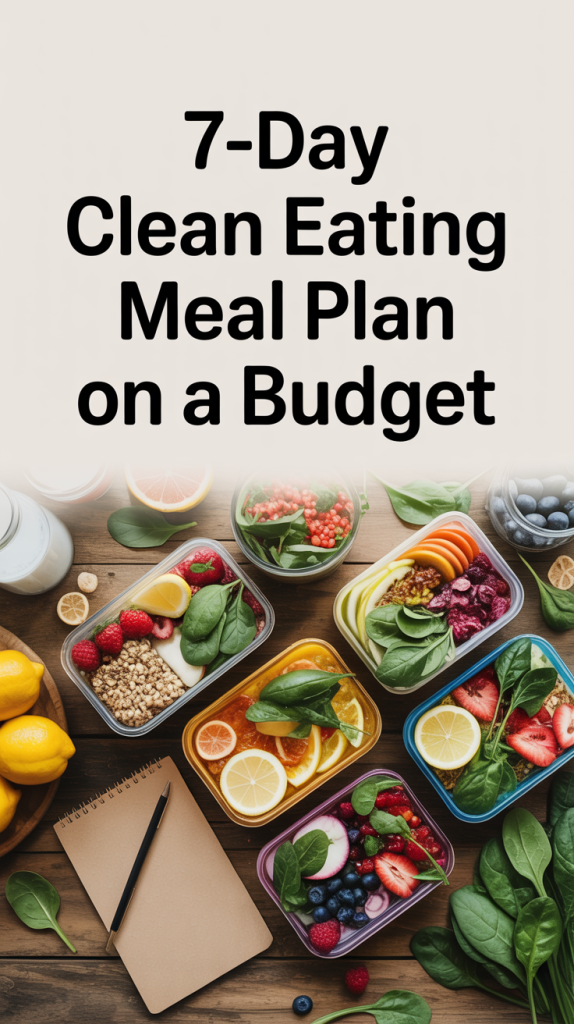
This carefully crafted meal plan demonstrates how clean eating can be both affordable and delicious. The plan emphasizes whole foods, incorporates leftovers strategically to minimize waste, and provides balanced nutrition throughout the week.
Week Overview
| Day | Breakfast | Lunch | Dinner | Estimated Daily Cost |
|---|---|---|---|---|
| Monday | Steel-cut oats with banana and cinnamon | Hearty lentil soup | Herb-roasted chicken with sweet potatoes and broccoli | $12.50 |
| Tuesday | Vegetable scrambled eggs with whole grain toast | Leftover chicken and sweet potatoes | Black bean burgers with mixed green salad | $8.75 |
| Wednesday | Greek yogurt parfait with berries and honey | Leftover black bean burger and salad | Quinoa power bowl with roasted vegetables | $10.25 |
| Thursday | Overnight oats with almonds and chia seeds | Leftover quinoa bowl | Baked tilapia with brown rice and green beans | $11.00 |
| Friday | Green smoothie with spinach and banana | Leftover tilapia and brown rice | Turkey and vegetable stir-fry | $9.50 |
| Saturday | Weekend veggie scramble with mushrooms | Leftover stir-fry | Grilled chicken salad with homemade vinaigrette | $10.75 |
| Sunday | Greek yogurt with apple slices and granola | Leftover chicken salad | Meal prep day: Batch cook lentil soup | $8.25 |
Weekly Total: Approximately $71.00
Detailed Daily Meal Plans
Day 1: Foundation Day
Begin your week with nutrient-dense meals that will provide leftovers for subsequent days. The lentil soup serves as a cornerstone meal that can be prepared in large batches and frozen for future weeks.
Breakfast: Steel-cut oats provide sustained energy through complex carbohydrates and fiber. Top with sliced banana for natural sweetness and potassium, plus a sprinkle of cinnamon for flavor and blood sugar regulation benefits.
Lunch: A hearty lentil soup packed with plant-based protein, fiber, and essential minerals. This meal provides approximately 15 grams of protein and significant amounts of folate and iron.
Dinner: Herb-roasted chicken breast offers lean protein while sweet potatoes provide complex carbohydrates and beta-carotene. Steamed broccoli adds vitamin C, vitamin K, and additional fiber.
Days 2-7: Strategic Leftover Integration
The remaining days strategically incorporate leftovers while introducing new flavors and textures. This approach minimizes food waste while ensuring meal variety throughout the week.
Nutritious Snack Options
Clean eating snacks should provide sustained energy and essential nutrients between meals:
- Apple slices with natural almond butter (provides healthy fats and protein)
- Carrot sticks with homemade hummus (offers fiber and plant-based protein)
- Hard-boiled eggs (complete protein source)
- Mixed nuts and seeds (healthy fats and minerals)
- Fresh seasonal fruit (vitamins, minerals, and natural sugars)
Complete Shopping List and Budget Analysis
This comprehensive shopping list supports the entire 7-day meal plan while demonstrating the affordability of clean eating. Prices reflect average U.S. grocery store costs and may vary by location and season.
Protein Sources ($31.50)
- Organic eggs (18 count): $6.00
- Dried lentils (2 lbs): $4.00
- Black beans (3 cans, 15 oz each): $3.00
- Chickpeas (2 cans, 15 oz each): $2.50
- Chicken breast (3 lbs): $12.00
- Ground turkey (1 lb): $4.00
Whole Grains and Starches ($19.50)
- Steel-cut oats (32 oz): $4.50
- Brown rice (5 lb bag): $4.00
- Quinoa (2 lb bag): $7.00
- Whole grain bread (1 loaf): $3.00
- Sweet potatoes (4 lbs): $4.00
Fresh Produce ($28.75)
- Bananas (3 lbs): $3.00
- Apples (3 lbs): $4.50
- Mixed berries (frozen, 2 bags): $7.00
- Spinach (2 containers): $5.00
- Broccoli (3 heads): $4.50
- Mixed salad greens (2 containers): $6.00
- Bell peppers (4 peppers): $4.00
- Onions (3 lb bag): $2.50
- Carrots (3 lb bag): $3.00
- Green beans (2 lbs): $3.50
- Mushrooms (1 lb): $3.00
- Tomatoes (4 medium): $4.00
Pantry Essentials and Healthy Fats ($25.25)
- Extra virgin olive oil (16 oz): $6.00
- Natural almond butter (16 oz): $7.00
- Raw almonds (1 lb): $6.00
- Chia seeds (12 oz): $5.00
- Greek yogurt (32 oz): $5.50
- Honey (12 oz): $4.00
- Sea salt and black pepper: $3.00
- Apple cider vinegar (16 oz): $3.00
Total Estimated Cost: $105.00
Cost per day: $15.00
Cost per meal: $5.00
Shopping List for 7-Day Clean Eating Meal Plan
Total Estimated Cost: $105.00
Serves: 1 person for 7 days (21 meals + snacks)
Average cost per meal: $5.00
MEAT & SEAFOOD SECTION
- [ ] Chicken breast (3 lbs) – $12.00
- [ ] Ground turkey (1 lb) – $4.00
- [ ] Tilapia fillets (1 lb) – $6.00
Section Total: $22.00
DAIRY & EGGS SECTION
- [ ] Large eggs (18 count carton) – $6.00
- [ ] Plain Greek yogurt (32 oz container) – $5.50
Section Total: $11.50
FRESH PRODUCE SECTION
Fruits
- [ ] Bananas (3 lbs, about 8-10 bananas) – $3.00
- [ ] Apples (3 lbs, about 6-8 apples) – $4.50
Vegetables
- [ ] Fresh spinach (2 containers, 5 oz each) – $5.00
- [ ] Broccoli crowns (3 heads) – $4.50
- [ ] Mixed salad greens (2 containers, 5 oz each) – $6.00
- [ ] Bell peppers (4 peppers, mixed colors) – $4.00
- [ ] Yellow onions (3 lb bag) – $2.50
- [ ] Carrots (3 lb bag) – $3.00
- [ ] Fresh green beans (2 lbs) – $3.50
- [ ] Button mushrooms (1 lb container) – $3.00
- [ ] Roma tomatoes (4 medium) – $4.00
- [ ] Sweet potatoes (4 lbs, about 6-8 potatoes) – $4.00
Produce Section Total: $47.00
FROZEN FOODS SECTION
- [ ] Mixed berries (2 bags, 12 oz each) – $7.00
Section Total: $7.00
CANNED GOODS & PANTRY SECTION
Canned Items
- [ ] Black beans (3 cans, 15 oz each, no salt added) – $3.00
- [ ] Chickpeas/Garbanzo beans (2 cans, 15 oz each, no salt added) – $2.50
Dried Goods & Grains
- [ ] Steel-cut oats (32 oz container) – $4.50
- [ ] Brown rice (5 lb bag) – $4.00
- [ ] Quinoa (2 lb bag) – $7.00
- [ ] Dried lentils (2 lbs, red or green) – $4.00
Section Total: $25.00
BAKERY SECTION
- [ ] 100% whole grain bread (1 loaf) – $3.00
Section Total: $3.00
NUTS, OILS & CONDIMENTS SECTION
Healthy Fats & Oils
- [ ] Extra virgin olive oil (16 oz bottle) – $6.00
- [ ] Natural almond butter (16 oz jar, no sugar added) – $7.00
- [ ] Raw almonds (1 lb bag) – $6.00
Seeds & Superfoods
- [ ] Chia seeds (12 oz bag) – $5.00
Natural Sweeteners & Condiments
- [ ] Raw honey (12 oz bottle) – $4.00
- [ ] Apple cider vinegar (16 oz bottle) – $3.00
- [ ] Sea salt (fine grain) – $2.00
- [ ] Black peppercorns (grinder) – $1.00
Section Total: $34.00
SHOPPING TIPS
Before You Shop:
- [ ] Check your pantry for items you already have
- [ ] Bring reusable bags
- [ ] Shop with a full stomach to avoid impulse purchases
- [ ] Check store flyers for sales on these items
Money-Saving Strategies:
- [ ] Buy store brands when available (can save 20-30%)
- [ ] Check unit prices to compare value
- [ ] Look for manager’s specials on produce
- [ ] Consider buying chicken in family packs and freezing portions
Seasonal Substitutions:
- Spring: Replace some items with asparagus, peas, strawberries
- Summer: Add zucchini, tomatoes, stone fruits
- Fall: Include winter squash, pears, Brussels sprouts
- Winter: Focus on root vegetables, citrus fruits, hearty greens
MEAL PREP DAY CHECKLIST
After shopping, prepare these items for the week:
- [ ] Cook large batch of lentil soup (Day 1 lunch, Day 7 dinner)
- [ ] Wash and chop vegetables for easy access
- [ ] Hard boil 6 eggs for quick breakfasts and snacks
- [ ] Cook 2 cups brown rice and store in refrigerator
- [ ] Prepare overnight oats for Thursday breakfast
COST BREAKDOWN BY CATEGORY
| Category | Cost | Percentage of Total |
|---|---|---|
| Fresh Produce | $47.00 | 45% |
| Nuts, Oils & Condiments | $34.00 | 32% |
| Meat & Seafood | $22.00 | 21% |
| Dairy & Eggs | $11.50 | 11% |
| Frozen Foods | $7.00 | 7% |
| Bakery | $3.00 | 3% |
| TOTAL | $105.00 | 100% |
🔄 ITEMS THAT WILL LAST BEYOND ONE WEEK
These pantry staples will extend into future weeks, reducing your ongoing costs:
- Olive oil (will last 3-4 weeks)
- Almond butter (will last 2-3 weeks)
- Chia seeds (will last 4-6 weeks)
- Honey (will last 2-3 months)
- Spices and vinegar (will last 6+ months)
- Oats and rice (will last 2-3 weeks)
Estimated Week 2 Cost: $65-75 (replacing only perishables)
Long-term Cost Considerations
Many pantry items including olive oil, spices, nuts, and grains will last beyond one week, making subsequent weekly costs significantly lower. After the initial investment in pantry staples, weekly grocery costs typically decrease to $60-75 for the same meal plan.
Meal Preparation and Time-Saving Strategies
Successful budget clean eating requires efficient meal preparation techniques that maximize both time and money. Implementing these strategies will streamline your weekly routine while ensuring consistent healthy meals.
Batch Cooking Essentials:
Dedicate 2-3 hours on weekends to prepare foundation ingredients for the week. Cook large batches of grains like brown rice and quinoa, prepare proteins such as baked chicken or hard-boiled eggs, and wash and chop vegetables for easy access throughout the week.
Strategic Leftover Management:
Plan meals that intentionally create leftovers for subsequent days. The meal plan incorporates this strategy by preparing larger portions of key dishes that transform into different meals throughout the week.
Freezer Utilization:
Prepare double batches of soups, stews, and casseroles to freeze for future weeks. This approach provides convenient backup meals while taking advantage of bulk ingredient purchasing.
Overcoming Common Clean Eating Challenges
Challenge: Limited Time for Meal Preparation
Solution: Implement batch cooking strategies and focus on simple, one-pot meals that require minimal preparation time. Many clean eating meals can be prepared in 30 minutes or less with proper planning.
Challenge: Family Members with Different Preferences
Solution: Start with universally appealing foods and gradually introduce new ingredients. Many clean eating principles can be applied to familiar family favorites by making simple substitutions.
Challenge: Social Situations and Dining Out
Solution: Research restaurant menus in advance and look for grilled, baked, or steamed options. Most restaurants can accommodate requests for vegetables instead of refined starches or dressings on the side.
Seasonal Adaptations and Flexibility
The beauty of clean eating lies in its adaptability to seasonal availability and personal preferences. This meal plan serves as a template that can be modified based on what’s fresh, affordable, and appealing in your local area.
Spring Adaptations: Incorporate fresh asparagus, peas, strawberries, and leafy greens that are at their peak during spring months.
Summer Modifications: Take advantage of abundant tomatoes, zucchini, berries, and stone fruits while focusing on lighter, cooler meals.
Fall Adjustments: Embrace winter squashes, apples, root vegetables, and heartier soups and stews as temperatures cool.
Winter Variations: Utilize stored grains, frozen vegetables, and warming spices while incorporating citrus fruits for vitamin C.
Long-term Success Strategies
Sustainable clean eating requires developing habits and systems that support long-term adherence rather than short-term perfection.
Gradual Implementation: Begin by replacing one meal per day with clean eating options, gradually expanding to include more meals as new habits become established.
Flexible Mindset: Allow for occasional deviations without abandoning the overall approach. Clean eating should enhance your life, not create stress or anxiety around food choices.
Community Support: Connect with others who share similar health goals, whether through online communities, local groups, or family members who can provide encouragement and accountability.
Continuous Learning: Stay informed about nutrition science while remaining skeptical of extreme claims or overly restrictive approaches that aren’t sustainable long-term.
Conclusion
Clean eating on a budget is not only possible but can be more affordable than relying on processed convenience foods. This 7-day meal plan demonstrates that wholesome, nutritious meals can be prepared for approximately $15 per day, providing excellent value for the nutritional benefits received.
The key to success lies in strategic planning, smart shopping, and embracing the simplicity of whole foods. By focusing on seasonal produce, versatile staples, and efficient meal preparation techniques, you can nourish your body with high-quality ingredients while maintaining financial responsibility.
Remember that clean eating is a journey, not a destination. Start with small, manageable changes and gradually build upon your successes. With time and practice, these healthy habits will become second nature, supporting your long-term health and well-being without straining your budget.
The investment in clean eating pays dividends not only in immediate health benefits but also in reduced healthcare costs, increased energy levels, and improved quality of life. Begin your clean eating journey today with confidence, knowing that healthy choices are within reach regardless of your budget constraints.