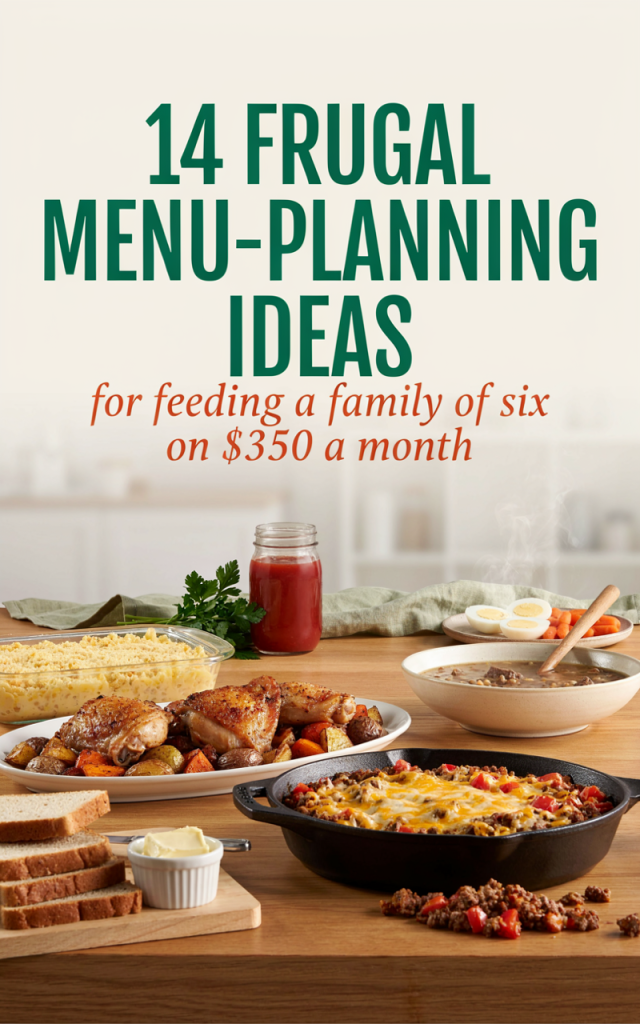
14 Frugal Menu-Planning Ideas for Feeding a Family of Six on $350 a Month
A practical two-week menu can make a tight grocery budget feel far more manageable. This plan is built around filling breakfasts, repeatable lunches, flexible dinners, leftovers, freezer staples, and homemade basics. Use it as a framework rather than a rigid prescription: adjust portions, ingredients, and shopping choices to fit your household, sales, pantry, and schedule.
1. Build the menu around what you already own
Start by checking the pantry, refrigerator, and freezer before writing the shopping list. A small stockpile of sale-priced staples can meaningfully reduce the cost of a menu when several modest savings accumulate. Plan meals around ingredients that need to be used first, then buy only the gaps.
Explore this resource
2. Use the freezer as a second pantry
Freeze ingredients and prepared foods before they spoil. Extra cooked meat, rice, soup, chopped onions, zucchini, and other suitable foods can become quick components later. Label portions and dates so frozen food is easy to find and rotate.
3. Make inexpensive basics from scratch
Homemade cream-style soup mix, baking mix, pie crust, desserts, and sauces can replace convenience products when the ingredients are already on hand. Scratch cooking also lets you stretch a recipe, adjust richness, and use ordinary pantry staples instead of buying several specialty packages.
4. Keep breakfasts simple and filling
Repeat dependable breakfasts such as granola, baked oatmeal, cereal with fruit, or another hearty grain-based meal. A short breakfast rotation reduces decision fatigue and helps the household stay satisfied until lunch. Save variety for toppings, fruit, or an occasional homemade drink rather than buying many separate breakfast foods.
5. Plan snacks instead of grazing all day
Serve substantial meals and keep a few low-cost snack choices available for genuine hunger. Fruit, nuts, vegetables with hummus, popcorn, or homemade energy bites are useful options; chips and cookies can remain occasional treats. The goal is not perfection but fewer unplanned purchases and less food consumed between meals.
6. Make weekend leftovers do the work
Reserve leftovers for the busiest meal periods. Doubling a dinner on Friday or Saturday can provide a ready-to-heat Sunday lunch, eliminating the need to cook immediately after a late morning away from home. Store leftovers in meal-sized containers and pair them with salad, vegetables, or fruit.
7. Week one: begin with flexible leftovers and easy lunches
The first week opens with assorted leftovers and salad, followed by tuna salad sandwiches, smoothies, and popcorn. The next lunches rotate meat-and-cheese sandwiches, yogurt, fruit, quesadillas, hummus with carrots and tortilla chips, and simple snack plates. These combinations rely on repeat ingredients, so one shopping trip can support several days.
8. Week one: stretch affordable dinners across cuisines
Dinners include chicken tikka masala with rice, French onion soup, a discounted pot roast with potatoes and carrots, chicken nuggets with roasted squash, Italian sausage and pasta soup, and Spanish rice with ground beef. Salads, green beans, peas, brownies, zucchini bread, and apple coffee cake fill out the meals. Substituting whole milk for cream and buying reduced-price meat show how to preserve the dish while lowering cost.
9. Week two: turn planned extras into new meals
The second week reuses soup, coffee cake, biscuits, pudding, and the Spanish rice skillet instead of treating leftovers as an afterthought. White-pizza grilled cheese, chili mac and cheese, refried-bean quesadillas, and breakfast sandwiches use familiar ingredients in different forms. This approach keeps the menu interesting while reducing waste.
10. Week two: rely on economical comfort-food dinners
The main dinners pair affordable, filling dishes with simple vegetables or salad: chili mac and cheese with green beans; sausage gravy with biscuits; breakfast sandwiches made from leftover biscuits, eggs, cheese, and bacon; Spanish rice with ground beef; cream cheese chicken soup; and a sausage-and-potato soup with salad. A small homemade dessert, such as vanilla pudding or oatmeal chocolate-chip bars, completes several meals without requiring a separate bakery purchase.
11. Repeat versatile lunch components strategically
Sandwich fillings, yogurt, apples, bananas, canned peaches, frozen blueberries, and cheese appear repeatedly because they are easy to portion and combine. Repetition is an advantage on a constrained budget: buy family-size quantities when the price is right, then change the format with bread, tortillas, fruit plates, or a quesadilla.
12. Balance rich main dishes with produce
Pair soups, skillet meals, sandwiches, and casseroles with lettuce salad, green beans, peas, carrots, squash, or fruit. Frozen and canned produce can be practical alternatives when fresh items are expensive or likely to spoil. Simple sides add color and volume without requiring another elaborate recipe.
13. Adapt recipes to the sale and the pantry
A budget menu should be adjustable. Use a lower-cost dairy substitute when it works, replace a costly cut with ground beef or chicken, and choose a reduced-price roast when one appears. Keep the flavor profile and cooking method in mind, but let current prices determine which protein or brand reaches the table.
14. Keep a two-week planning cycle manageable
A fourteen-day plan offers structure without requiring a month of detailed tracking. Write down only enough meals to guide purchasing, note which dishes create useful leftovers, and revise the next cycle based on what the family actually ate. A practical plan that gets used is more valuable than an ambitious schedule that becomes burdensome.
A $350 monthly food budget works best when the menu is organized around habits rather than expensive variety. Stockpile selectively, freeze ingredients, cook satisfying basics, repeat dependable lunches, and deliberately schedule leftovers for busy days. With those systems in place, a two-week rotation can provide plenty of inspiration while leaving room for sales, substitutions, and the appetites of a larger family.