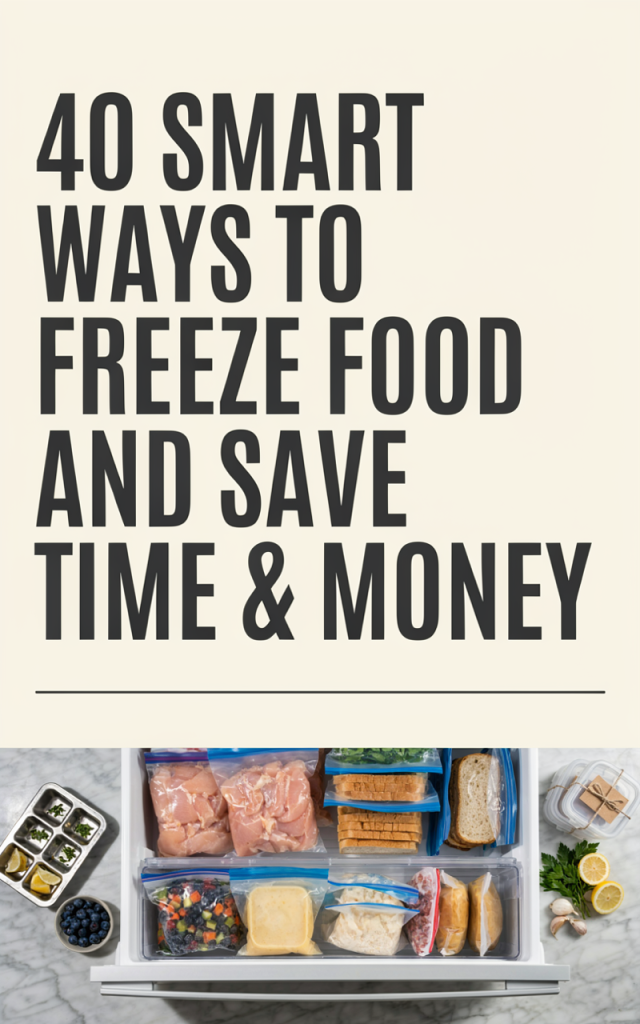
40 Smart Ways to Freeze Food and Save Time and Money
A well-organized freezer can turn sale-priced groceries, garden extras, and leftovers into future meals instead of future waste. The key is to freeze food in useful portions, label it clearly, and choose the best later use for each ingredient. These practical ideas cover everyday staples, baking ingredients, produce, and ready-to-heat meals.
1. Butter
Freeze butter in its original wrapping or an airtight freezer bag when it is discounted. It keeps its texture well and can be thawed for spreading, baking, or cooking, making bulk purchases easier to use before they spoil.
Explore this resource
2. Milk
Milk can be frozen for cooking, baking, or drinking after thawing. Leave expansion room in a container without a built-in air space, then shake the thawed milk well because separation is common.
3. Sour Cream
Freeze extra sour cream before it expires, knowing that its texture may become slightly less smooth. Use it after thawing in casseroles, soups, sauces, and baked dishes rather than as a fresh topping.
4. Cottage Cheese
Portions of cottage cheese can be frozen for later use in lasagna, casseroles, soups, or baked goods. Thawing may release liquid, so stir it and choose recipes where the changed texture will blend in.
5. Cream Cheese
Frozen cream cheese is best reserved for cooked dishes, dips, sauces, and baking because it may not regain its original spreadable consistency. Portioning it before freezing makes small recipe amounts convenient to retrieve.
6. Yogurt
Freeze yogurt before it spoils and use it later in smoothies, muffins, cakes, or other cooked recipes. Individual cups can also become simple frozen treats when a stick is inserted before freezing.
7. Shredded or Sliced Cheese
Extra shredded or sliced cheese freezes well when sealed tightly. It may clump after freezing, but that is rarely a problem when the cheese is going into casseroles, pizzas, sauces, or other cooked meals.
8. Diced Onions, Peppers, and Carrots
Prepare these vegetables in recipe-ready pieces and freeze them raw in well-sealed bags. For loose portions, spread them on a tray until firm before transferring them to a container; double-bag onions to contain their aroma.
9. Zucchini
Grate surplus zucchini, freeze it in measured portions, and thaw and drain it before adding it to breads, muffins, soups, or casseroles. Blanch diced zucchini first if you want to preserve it in chunks.
10. Grapes
Wash and dry grapes thoroughly, then freeze them for a cold snack or lunchbox fruit. Buying extra during a sale turns a short-lived purchase into a ready-to-eat treat.
11. Bananas
Peel and slice ripe bananas before freezing them for smoothies and baking. They will darken and soften, but their flavor remains useful; mashed bananas can be frozen in labeled recipe-size portions.
12. Berries
Wash berries, dry them carefully, and freeze them in bags or in a single layer first so portions stay separate. Because thawed berries soften, use them frozen, in smoothies, or directly in baked recipes.
13. Pesto
Freeze pesto in small scoops or cubes, then store the solid portions in a freezer container. Small servings thaw quickly and add flavor to pasta, vegetables, sandwiches, soups, and dressings without requiring a whole batch.
14. Pasta Sauce and Tomato Paste
Save partial jars of sauce and opened tomato paste by freezing them in measured spoonfuls or small containers. Once firm, transfer the portions to a labeled bag so the exact amount needed for a recipe is easy to find.
15. Garlic
Freeze garlic bulbs or separated cloves before they sprout. Frozen cloves can be peeled and pressed or chopped as needed, helping prevent waste when a recipe uses garlic only occasionally.
16. Avocado
Freeze ripe avocado halves or pieces with a little lemon juice to slow browning. The thawed texture is softer, so reserve it for dressings, dips, smoothies, and blended recipes rather than slicing it for a fresh salad.
17. Citrus Juice and Zest
Juice extra lemons, limes, or oranges into small portions and freeze the zest separately in a sealed bag. Measuring juice into cubes makes it simple to add a consistent amount to drinks, marinades, sauces, and desserts.
18. Apple Pie Filling
Peel and slice apples, combine them with the dry spices or thickener required by your dessert, and freeze the mixture in a labeled bag. It can become a pie, crisp, or dumpling filling later with little preparation.
19. Yeast
Keep yeast fresh longer by storing it in an airtight package in the freezer. Measure what you need while it is cold, then return the remainder promptly so a large package does not go stale before it is used.
20. Baked Cookies
Freeze homemade or purchased cookies in an airtight container to preserve them for future snacks and desserts. Separate layers if needed and thaw only the amount you expect to serve.
21. Cookie Dough
Shape cookie dough into individual balls, freeze them on a tray, and move them to a labeled bag once solid. Bake only what you need from frozen, allowing a little extra time for the centers to cook through.
22. Muffins and Sweet Breads
Freeze cooled muffins, quick breads, and other sweet loaves in tightly wrapped portions. A batch can then supply convenient breakfasts or snacks without requiring another baking session.
23. Cake
Freeze cake in slices or as a whole frosted cake when you want a dessert ready for unexpected guests. Wrap it well, allow it to thaw before serving, and expect that some frostings may bead or bleed slightly without losing flavor.
24. Bread
Freeze extra loaves of store-bought or homemade bread while they are still fresh. Slice homemade loaves first if you usually need only a few pieces, then remove portions as needed for toast, sandwiches, or meals.
25. Bread Crumbs
Store bread crumbs in the freezer when you use them infrequently. Cold storage helps protect them from staleness and rancidity, and they can be measured directly into meatballs, coatings, casseroles, or toppings.
26. Pancakes
Make a double batch of pancakes and freeze the cooled extras in a stack with separators. Reheat them in a microwave for softness or a toaster for crisp edges, creating a fast breakfast or lunch.
27. Pie Crust Dough
Shape extra pie dough into discs, wrap them tightly, and freeze them in a labeled bag. Thaw the dough, roll it out, and use it normally, which makes a multi-crust recipe much more practical.
28. Cooked Rice
Cook a large batch of rice and freeze the surplus in family-size or single-meal portions. Add a splash of water when reheating it as a side, or stir frozen rice directly into soup while it warms.
29. Cooked, Dry, and Refried Beans
Freeze cooked beans in portions roughly equal to a can, or preserve dry beans and homemade refried beans for later meals. Label the quantity so a recipe can be assembled without guessing or opening another package.
30. Tortillas
Freeze tortillas approaching their use-by date in a sealed bag with pieces separated if you expect to remove them individually. They may dry slightly but remain useful for enchiladas, quesadillas, wraps, and skillet meals.
31. Flour
Extend flour’s freshness by sealing it in its original package or a freezer bag and storing it cold. This is especially useful for specialty flours or large sale-sized bags that take months to finish.
32. Chips, Pretzels, Crackers, Graham Crackers, and Popcorn
Freeze snack foods that go stale before your household can finish them. Keep them tightly sealed, thaw them at room temperature, and use sale purchases gradually instead of opening several packages at once.
33. Nuts
Store nuts in the freezer to slow the development of stale or rancid flavors. They can be used straight from cold storage in granola, baking, salads, trail mix, and cooking.
34. Popcorn Kernels
Freeze popcorn kernels when a bag will sit unused for a long time. Keeping the kernels cold helps preserve their performance, so fewer are likely to remain unpopped when you make a later batch.
35. Soup
Cool homemade soup before transferring it to freezer-safe containers, leaving about an inch of headspace for expansion. Freeze meal-sized servings for quick lunches and dinners, and label the contents and date.
36. Casseroles
Double a casserole recipe and freeze the second portion before you need it. Covered, labeled freezer meals provide a practical dinner on busy days and make the effort of cooking once serve two meals.
37. Broth and Stock
Freeze leftover purchased broth or homemade stock in containers or measured cubes before it spoils. Small portions are convenient for pan sauces, grains, soups, and recipes that need only a little liquid.
38. Lunch Meat
If deli meat will not be used before its date, divide it into meal-sized packages and freeze it tightly sealed. Thaw a package in the refrigerator for sandwiches, wraps, and lunch preparation.
39. Raw Meat
Stock up on bacon, poultry, ground meat, roasts, steaks, or other meat when prices are favorable, then freeze it in useful portions. Remove excess air and date the packages; use pork products sooner because they are more prone to freezer burn.
40. Cooked Meat
Freeze cooked bacon, ground beef, or chopped chicken in recipe-ready amounts to shorten future meal preparation. Portioning ground beef by the pound, chicken by the cup, and bacon in pieces makes fast additions to breakfasts, soups, casseroles, and wraps.
Freezing works best when it is treated as part of meal planning rather than a place to hide leftovers. Freeze food while it is fresh, protect it from air, label every package, and portion it according to how you actually cook. With those habits, sale finds and extra ingredients can become dependable meals instead of wasted groceries.