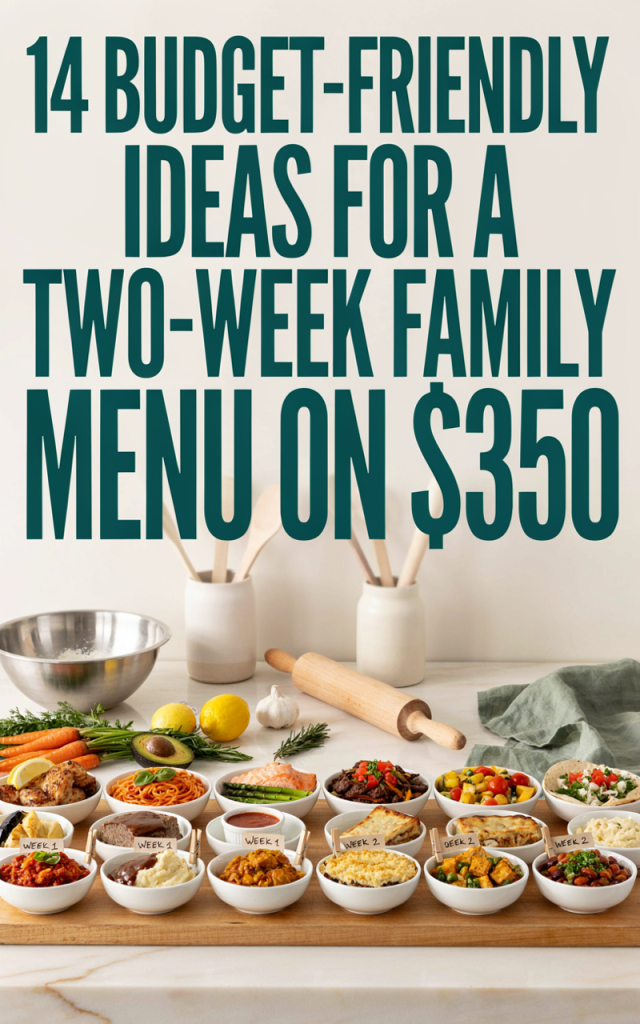
14 Budget-Friendly Ideas for a Two-Week Family Menu on $350
A lower grocery budget works best when the menu feels practical enough to repeat. Instead of chasing a perfect calendar or buying a long list of one-use ingredients, a two-week plan can give a family more structure while still leaving room for leftovers, changing schedules, and what is already in the kitchen. These ideas focus on building a satisfying family menu from flexible meals, simple routines, and ingredients that do more than one job.
1. Start with the Food You Already Own
Before writing a grocery list, take a quick inventory of the pantry, refrigerator, freezer, and any shelf where backup staples live. A bag of rice, a few cans of beans, frozen vegetables, or a package of chicken can become the starting point for several meals. Planning from what is already available reduces waste and helps the grocery budget go toward only the missing pieces.
Try listing six to eight meal ideas that use ingredients already on hand. Then shop to complete those ideas instead of shopping first and hoping the food turns into a plan later.
Explore this resource
2. Build Meals Around a Small Stockpile
A useful stockpile is not a closet full of random deals. It is a modest supply of ingredients your household uses often, purchased when the price is especially favorable. Pasta, beans, rice, oats, flour, canned tomatoes, frozen produce, and favorite proteins can all make meal planning easier when they are part of a familiar rotation.
Keep a running note of the staples that disappear fastest. When a sale fits your budget, replace those items before they are gone rather than waiting until a full-price emergency trip is necessary.
3. Let the Freezer Carry Some of the Work
The freezer can be one of the best tools for making a tight grocery budget feel less restrictive. Freeze extra cooked meat, rice, soup, bread, chopped vegetables, and portions of casseroles so that a future dinner begins with something already prepared. This also helps preserve ingredients that might otherwise be forgotten.
Label containers with the name and date, then work one or two freezer meals into each two-week plan. A ready-to-heat component can turn a busy evening into a home meal instead of an expensive last-minute detour.
4. Choose Scratch Cooking Where It Helps Most
Cooking from scratch does not require making every ingredient from the ground up. It can simply mean learning a few inexpensive basics that replace frequent convenience purchases, such as simple sauces, soup bases, baking mixes, bread, or salad dressings. These repeatable recipes can stretch ingredients and make ordinary meals feel more complete.
Pick one homemade staple at a time. Once it becomes easy, add another only if it saves money or makes meals more enjoyable for your household.
5. Use Filling Breakfasts to Simplify the Day
A dependable breakfast can reduce the need for constant snacking and make the morning easier to manage. Oatmeal, homemade granola, eggs, fruit, yogurt, toast, or a baked breakfast dish are simple options that can be repeated without requiring a new decision every day.
Choose two or three breakfasts that everyone will eat and rotate them. Repetition here is useful because it makes shopping predictable and keeps the morning routine from consuming the day’s energy.
6. Plan Snacks as a Backup, Not a Second Meal
Snacks are easiest on the budget when they are simple, familiar, and portioned with intention. Fruit, nuts, yogurt, popcorn, vegetables with dip, or an occasional homemade treat can bridge a hungry afternoon without replacing a full meal.
When possible, pair a small snack with a filling breakfast and lunch plan so hunger does not turn into a constant grocery expense. The goal is not to eliminate snacks; it is to make them work alongside the rest of the menu.
7. Keep Lunches Simple and Repeatable
Lunch does not need a separate elaborate plan every day. Sandwiches, hummus with vegetables, yogurt, fruit, leftovers, quesadillas, and simple salads can make a reliable rotation. Using a few recurring lunch combinations keeps ingredients from multiplying and gives everyone a routine they recognize.
Build lunches around components that can appear elsewhere in the week. Carrots, cheese, bread, fruit, cooked chicken, and beans can serve multiple meals instead of being purchased for a single occasion.
8. Make Leftovers an Actual Menu Choice
Leftovers work better when they are planned instead of treated as an afterthought. Put one or two leftover nights directly onto the two-week calendar, and use them as a flexible place for extra soup, casserole portions, cooked vegetables, or a snack-style dinner.
A leftovers night can be as simple as setting out small portions with salad, bread, fruit, or baked potatoes. Giving leftovers a place in the plan helps reduce waste without making dinner feel like a punishment.
9. Mix Low-Cost Proteins into the Rotation
A two-week menu can feel satisfying without relying on the same expensive protein every night. Beans, lentils, eggs, tuna, ground meat stretched with vegetables or grains, chicken, sausage, and cheese-based meals can all have a role. Rotating them creates variety while keeping the shopping list balanced.
Use one familiar protein in more than one way. Cooked chicken might become soup one night and a rice bowl another; ground beef might become a skillet meal and later fill quesadillas.
10. Double What Your Family Already Likes
When a casserole, soup, cookie bar, or skillet dinner works well, make an extra portion if you have the ingredients. Doubling a familiar recipe often adds far less work than cooking two separate meals, and the second portion can support a busy night later in the week.
Keep the extra portion for a freezer dinner, a lunch, or a planned leftovers night. This practice also helps a two-week menu stay flexible when one day becomes more hectic than expected.
11. Use a Few Easy Dinner Formats
Instead of needing a different kind of recipe every night, rely on flexible dinner formats. Rice bowls, baked potatoes, skillets, soups, quesadillas, pasta dishes, sandwiches, pizza-style meals, and casseroles can all adapt to what is in the refrigerator.
A format is easier to repeat than an exact recipe because you can swap vegetables, proteins, sauces, and sides. This helps the menu feel varied even when the ingredient list stays focused.
12. Plan for a Few No-Plan Evenings
Every household has evenings when the plan changes. Keeping a few quick options available, such as frozen vegetables, a simple pizza ingredient, chicken nuggets, soup, or sandwich supplies, can prevent a stressful day from becoming a costly takeout order.
These foods are not a failure of meal planning. They are part of a realistic plan that recognizes energy and time are limited resources too.
13. Make the Calendar Short Enough to Use
A two-week menu can be more manageable than a month-long plan because it gives direction without creating too much detail to maintain. You can see the balance of meals, use what is already available, and adjust before the plan starts feeling stale.
Write the plan in a visible place, but leave space for swaps. If Thursday’s meal no longer fits the day, move it to Saturday and use a quicker option instead. The calendar should support the household, not control it.
14. Review the Plan Before the Next Grocery Trip
At the end of two weeks, notice which meals were easy, which ingredients lasted longer than expected, and what everyone actually enjoyed. This short review turns each menu into a better starting point for the next one.
Keep the meal ideas that worked, cross out the ones that created unnecessary stress, and build the next plan from your household’s real habits. A budget menu becomes sustainable when it gets simpler over time.
A lower-cost family menu is built from repeatable systems rather than perfect recipes. Start with what you have, keep a few flexible meal formats in rotation, and give leftovers and freezer food a real place in the plan. With a two-week rhythm, the grocery budget can feel more intentional without making every meal a project.