How to Build Lasting Wealth in Your 20s: Practical Moves You Can Start This Week

Building wealth in your twenties isn’t about luck — it’s about using time, simple systems, and a few repeatable choices. Below are nine clear, practical steps you can act on this month to shift your finances for the long term.
1. Leverage the One Advantage No One Can Take Away
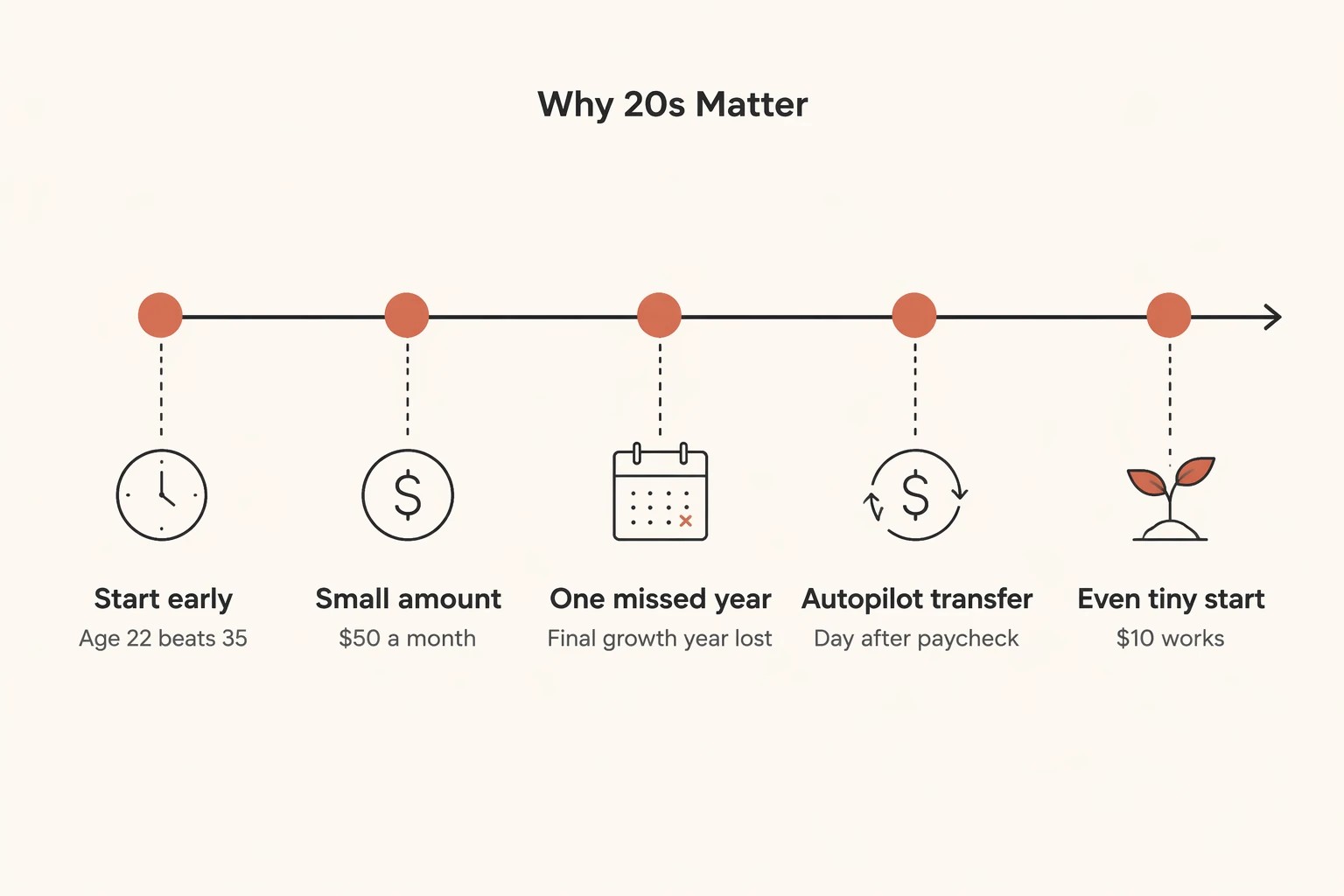
Your twenties buy you something rare: extra years for money to grow without you having to do more work later. The practical side of that gift is straightforward — start a small habit this week and let time amplify it. For example, set up an automatic transfer the day after payday to a savings or investment account so contributions happen whether you feel motivated or not. Begin with an amount you won’t miss and raise it whenever your income increases. Over time those tiny, boring deposits become the engine for larger goals, and the discipline of setting the system up once is all the heavy lifting you need to do.
2. Create a Ten-Minute Net-Worth Snapshot and a Rule for Every Dollar

Make a quick map of what you own and what you owe: list checking, savings, investments and sellable items, then list every debt. Subtract to get a net-worth number that turns vague worry into a clear starting point. Next, give each dollar a job by sorting money into four ordered buckets: near-term cash for essentials, high-cost debt addressed aggressively, a short-term cushion for surprises, and long-term investments. The rule is simple: every new dollar goes to the lightest bucket. Do a brief check-in on the same day each month and record four balances; three months of movement in one direction is a signal to act.
3. Find and Fix the Quiet Money Drains
Small, recurring charges add up without fanfare. Run a ten-minute audit: scan recent transactions for subscriptions you don’t use and cancel at least a few. Set a weekly limit for frictionless spending like delivery or rideshares and stick to it by noting the cap in your phone. Pick one convenience habit — daily takeaway coffee or impulse lunches — and replace it with a cheaper ritual; pack a thermos or prep lunches two evenings a week and move the savings immediately into a separate account. The key is to redirect the exact amount you stopped spending the same day so the money never reenters your everyday balance and becomes a visible gain.
4. Treat High-Rate Debt Like an Emergency
Not all debt is equal. Catalog every balance and its interest rate, then prioritize the ones that cost you the most each month. Focus extra payments on the highest-rate accounts while keeping minimums on the rest to avoid penalties. Before you accelerate payoff, secure any employer retirement match — that’s guaranteed upside you shouldn’t skip. If the cost of a debt exceeds what you’d expect to earn elsewhere, swamp it first; once it’s extinguished, redirect the same cash flow into saving or investing. Automating minimums and extra payments prevents missed due dates and keeps progress steady, turning debt repayment into a predictable, stress-reducing system.
5. Open the Right Accounts and Make Investing Automatic
Start with accounts that give you the most long-term advantage: capture any employer match, then use tax-advantaged individual accounts if eligible, and treat brokerage accounts as the final stop. You don’t need perfect picks — prioritize low-cost, broad-market funds and a simple, regular contribution schedule. Automate transfers so investing behaves like a bill and grows without monthly debate. Maintain a modest cash cushion for emergencies so you won’t be forced to sell in a down market. Over time increase the transfer amount as your income rises. The combination of the right account order, low-cost funds and automation removes emotional timing from your investing progress.
6. Make More Money Without Trading Away Your Time
Earning more is a skill you can practice. Prepare one clear number for a raise conversation, back it with market research, state it once, and then listen — silence often works in your favor. If an internal raise isn’t possible, identify adjacent roles in your field that pay better and apply; a lateral move at a different company can reset your salary band faster than waiting. For extra income, pick a low-cost side gig that uses skills you already have and offer it to a few potential clients to test demand. When your pay increases, route the incremental amount straight into your automatic savings so new income doesn’t quietly become new spending.
7. Use Milestones to Shift How You Manage Money

Think of early savings milestones as behavioral checkpoints: the first meaningful cushion buys control, the next level lets you move cash into higher-yield places, and a later milestone rewards focus and restraint. For the first cushion, focus on eliminating one recurring cost and depositing that money into a safety account. At the next milestone, move idle cash into accounts that earn more while remaining accessible. When you’re working toward a larger threshold, double down on what already works — give your proven side income more hours rather than chasing shiny new ideas. Keep a short weekly scorecard — three lines: cash, high-cost debt, and investments — to preserve momentum.
8. Practical Answers to the Questions People Ask First
If your paycheck feels small, start anyway: consistent, small contributions win when given time. With student loans, weigh the interest cost versus guaranteed workplace benefits — capture any employer match first, then compare whether paying a loan down or investing makes more sense for your situation. Tiny monthly transfers build habit and momentum; they don’t need to be large to matter. Side gigs are worth trying if they produce real extra cash without burning out your main job — test an offering with a handful of customers before investing heavily. When basics are covered, funnel extra money into tax-advantaged retirement, then debt reduction, then larger buffers or investing.
9. One Small, Unremarkable Move That Changes Everything
You don’t need a dramatic overhaul to start building long-term financial stability — pick one small action this week and lock it in. Open a higher-yield account if you don’t have one, or set up an automatic transfer timed after payday. If you carry a high-rate balance, make a plan to attack the single ugliest debt and automate the extra payment. Those modest, repeatable decisions convert future uncertainty into predictable progress. Accept that your twenties may not feel wealthy; the point is to create room to respond when things go sideways. Over time, these mundane systems compound into real freedom and options.
Start with one tiny, repeatable task this week — ten minutes to set a transfer or cancel a subscription — and let those choices do the long-term work. Consistency and sequence matter more than perfect timing.