Food or Groceries? A Practical Guide to Choosing Between Uber Eats and Instacart as a Side Hustle
Thinking about delivery work to top up your income or add flexible hours to your week? Two of the most common options are food delivery and grocery shopping. This guide walks through what each role feels like day to day, the practical trade-offs, and simple strategies you can use to decide which fits your rhythm and goals.
1. What the Work Actually Looks Like
Delivering restaurant meals and shopping for groceries are both delivery gigs, but they demand different on-the-job tasks. Food delivery usually means picking up ready orders and dropping them at a door with minimal handling; grocery work requires selecting produce, comparing brands, and sometimes communicating about replacements. For example, a typical food run could be a quick downtown pickup and drop-off, while a grocery shift might involve navigating aisles, weighing produce, and packing fragile items. Think about whether you prefer short, repeatable trips or a more involved, hands-on workflow that includes customer choices and substitutions.
2. How the Platforms Differ in Purpose and Flow
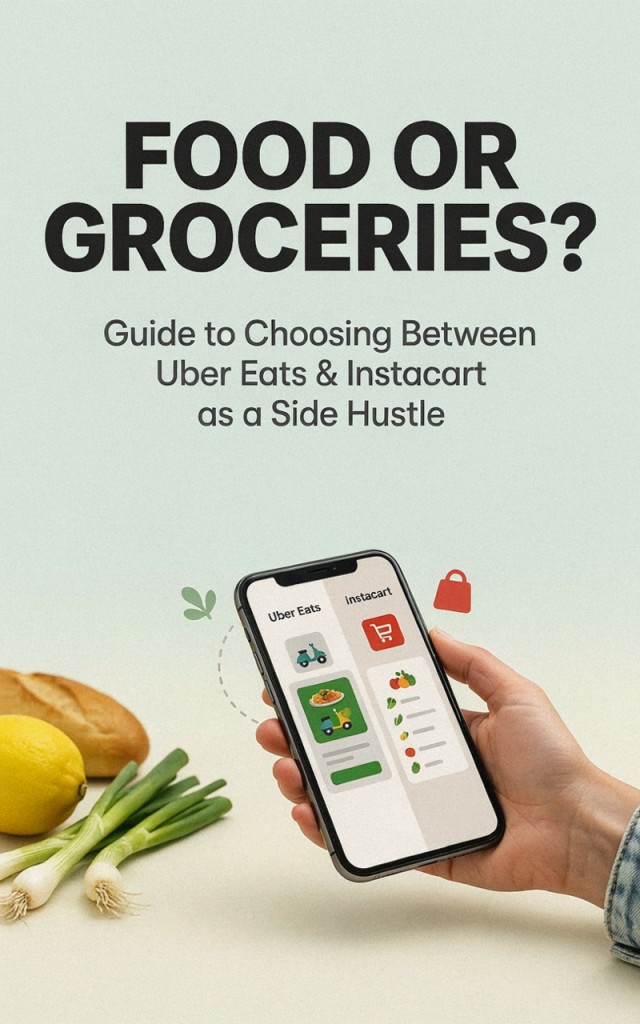
At a high level, the two platforms serve different customer needs: one focuses on prepared meals from restaurants and the other on grocery shopping and delivery. That difference shapes everything else—how orders are presented to you, how long a single job takes, and what the customer expects on arrival. In practice, that means food deliveries often have faster pickups and shorter customer interactions, while grocery batches can be longer but sometimes larger in value. Consider which flow matches your patience level and tolerance for in-store tasks: do you want repetitive quick stops or fewer, more complex orders?
3. Where and When Opportunities Tend to Appear
Demand for food and grocery delivery varies by location and time of day. Urban centers and dense suburbs usually have steady food orders during meal times, while grocery demand can spike mid-morning, on weekends, and around holidays. In smaller towns you might see fewer grocery partnerships but steady restaurant deliveries, or vice versa. As an example, you might notice a lunchtime surge for restaurant apps near office districts, while grocery batches are more common on weekend mornings. Scout your area for hot spots and typical rush windows before committing to a single platform.
4. What You Need to Get Started
Both services require a reliable smartphone and a background screening, but there are distinctions in vehicle and physical requirements. Food couriers often have more vehicle flexibility—cars, bikes, scooters, or even walking in dense neighborhoods—whereas grocery shoppers usually need a car with enough space for bags and larger items, plus the ability to lift shopping totes. Additional expectations can include valid licensing and insurance for drivers, and comfort with in-app navigation. Practical example: someone with a compact bike in a dense urban area might favor food delivery, while a person with a roomy hatchback may find grocery batches easier to carry.
5. Flexibility: Shifts, Scheduled Runs, and On-Demand Options
Flexibility is a major selling point for gig platforms, but it plays out differently across services. Some apps let you simply go online and accept whatever appears; others offer scheduled windows or shift sign-ups that can give priority to shoppers who commit to certain times. For example, you might log on to a food app whenever you want and grab quick orders, whereas grocery work can include both on-demand batches and scheduled blocks that deliver steadier flow. Decide whether you value absolute spontaneity or prefer predictable blocks that help plan errands or family time.
6. How Pay Is Calculated and Ways to Improve Your Take-Home
Earnings depend on multiple moving parts: base item pay, distance, order complexity, and customer tips. Platforms may also provide surge or incentive pay during busy periods. To optimize income, prioritize orders with shorter total travel time, stack errands when possible, and learn to identify batches that reward effort—examples include multi-item grocery orders in the same store or food orders clustered near each other. Tracking your time from acceptance to completion helps identify true hourly return, and testing which neighborhoods or times yield better payouts can noticeably improve your results.
7. Weighing Pros and Cons: A Realistic Look
Each platform has tangible upsides and trade-offs. Food delivery tends to offer quicker jobs and more frequent short trips, which can be less mentally taxing but involves traffic and parking stress. Grocery shopping offers variety and the potential for larger tips on complex orders, yet it can require patience for in-store searching and heavier lifting. For instance, someone who dislikes grocery aisles and heavy bags might prefer quick restaurant pickups, while someone who enjoys selecting produce and appreciates steadier, higher-value batches might opt for grocery shifts.
8. Customer Expectations and How They Affect Your Shift
Customer satisfaction influences tips, ratings, and repeat business. With prepared meals, timeliness and keeping food upright matter most—customers expect hot meals and swift handoffs. Grocery shoppers are judged on accuracy, freshness of produce, and clear communication about substitutions. Practical habits that help: double-check order notes, confirm unusual requests digitally, and use insulated bags for temperature-sensitive deliveries. Building small routines like a quick freshness check for produce or a photo of delivered items can reduce disputes and improve the customer experience.
9. Logistics to Consider: Vehicle Space, Safety, and Tools
Beyond the app, practical logistics influence comfort and efficiency. Think about how much cargo space you have, whether you can secure groceries against sliding, and whether a collapsible cart or insulated bags are worthwhile investments. Safety-wise, plan routes to avoid risky parking or pedestrian-heavy drop-offs, and keep sanitizing supplies and a basic toolkit handy. For example, a foldable crate makes handling multiple grocery bags easier, while a small cooler bag keeps food warm for food deliveries. Small gear upgrades can save time and reduce errors during busy shifts.
10. What Experienced Drivers Notice After Time on the Road
Seasoned couriers often say the right platform depends on local nuances and personal preferences. Common observations include: food runs offer more frequent turnover but more competition in dense areas; grocery batches can pay off when you find consistent lanes; and mixing both apps helps smooth income volatility. Drivers also highlight the value of learning store layouts and building routines—for instance, memorizing where popular items are stocked or which restaurants have quick pickup windows. Listening to peers and experimenting locally helps refine your approach faster than a one-size-fits-all rule.
11. Practical Strategy: Combining Apps Without Wasting Miles
Many top earners use both platforms strategically: pick grocery batches early in the day, switch to food delivery for lunchtime and dinner rushes, and keep both apps handy on quieter afternoons. A practical routine might be to accept a grocery batch if it’s nearby and compact, otherwise use a food app to capture quick restaurant hops. To avoid excess driving, only accept orders that route you through clustered neighborhoods or on your way home. Multi-apping can smooth earnings, but success comes from local testing and trimming orders that add long empty miles.
12. Key Takeaways to Choose What Fits Your Life
Choosing between restaurant and grocery delivery comes down to your priorities: speed and simplicity versus hands-on shopping and occasionally larger single payouts. Consider your vehicle, comfort with in-store work, preferred schedule, and how much you value predictability. A short trial—working a few shifts on each platform—reveals which rhythm suits you best. Keep an eye on local demand patterns, invest in small gear that improves speed and handling, and refine your approach based on real shifts rather than assumptions.
Both food delivery and grocery shopping can be solid side hustles when matched to your preferences and local demand. Try short stints on each platform, note which tasks you enjoy and which pay off in your area, and then build a schedule that leverages those strengths for reliable, flexible earnings.