How To Make Slow Cooker BBQ Pulled Pork
We love the idea of coming home to a kitchen that smells like barbecue without standing over a hot grill for hours. That’s exactly why slow cooker BBQ pulled pork is one of our go-to recipes for busy weekends, weeknight dinners, and entertaining a crowd. In this guide we’ll walk through why the slow cooker method works, which cuts and ingredients to choose, the exact steps to prep and cook, and how to finish and serve the best pulled pork you’ll make at home. We’ll also cover troubleshooting, storage, and a few regional flavor twists so you can tailor the result to your taste.
Why This Slow Cooker Method Works
The slow cooker is essentially a controlled low-and-slow environment, which is the same principle professional pitmasters use when smoking pork shoulder for hours. Low heat over a long period breaks down tough collagen into gelatin, turning a tough hunk of meat into tender, shreddable pork. The advantage of the slow cooker is convenience and consistency: it holds temperature, keeps moisture in, and frees us from babysitting an oven or smoker.
A few technical reasons this method is reliable:
- Time + moist heat = collagen breakdown. Pork shoulder (Boston butt or picnic roast) is full of connective tissue. At 170–203°F (77–95°C) collagen melts into gelatin after several hours, giving us juicy texture.
- Moisture retention. Slow cookers trap steam, reducing drip loss and preventing the meat from drying out like it might in a hot oven.
- Flavor infusion. Long cooking lets the dry rub and aromatics penetrate deeply. If we add liquid, stock, beer, or cola, it becomes a medium to distribute flavors and keep the meat moist.
We’ll show how to optimize these benefits while avoiding the classic slow-cooker pitfalls: under-seasoning, not enough time, or finishing the meat without enough sauce integration.
Ingredients You’ll Need
Here we list the core ingredients, then break out choices and recipes so you can make smart swaps or customize flavors.
Pork Cut Options And How To Choose
- Pork shoulder (Boston butt): Our top pick. It has a good balance of fat and connective tissue, yields tender shreds, and stays moist. Buy bone-in or boneless, bone-in gives a touch more flavor but boneless is easier to shred.
- Picnic roast: Slightly leaner and sometimes more irregularly shaped. Works fine if trimmed and cooked long enough.
- Pork loin or tenderloin: We don’t recommend these for pulled pork: they’re too lean and will dry out.
Choose a roast between 3–6 pounds for most slow cookers. For a crowd, double up and cook in two slow cookers or a large roaster.
Dry Rub Ingredients And Proportions
A good rub balances sweet, savory, and umami. Here’s a reliable proportion for a 4–5 lb shoulder:
- 2 tbsp brown sugar (light or dark)
- 1 tbsp smoked paprika (or regular paprika + a pinch of liquid smoke if you like)
- 1 tbsp kosher salt
- 1 tbsp black pepper (freshly ground)
- 1 tsp garlic powder
- 1 tsp onion powder
- 1/2 tsp cayenne (optional, adjust for heat tolerance)
- 1 tsp ground mustard (optional, for tang)
We like to rub generously, don’t be shy. The sugar helps with color and a touch of caramelization if you sear.
BBQ Sauce Options And Homemade Sauce Recipe
Store-bought sauces work fine, but homemade lets us control sweetness, acidity, and spice. Classic options:
- Kansas City–style: Thick, sweet, tomato-based, molasses-heavy.
- Carolina-style: Vinegar-forward (apple cider vinegar), tangy, with or without a tomato base.
- Texas-style: Less sweet, more pepper and smoke.
Simple homemade BBQ sauce (yields about 2 cups):
- 1 cup ketchup
- 1/4 cup apple cider vinegar
- 1/4 cup brown sugar
- 2 tbsp Worcestershire sauce
- 1 tbsp Dijon mustard
- 1 tsp smoked paprika
- 1/2 tsp garlic powder
- Salt and pepper to taste
Simmer these ingredients for 10–15 minutes to meld. We often reserve a cup for finishing and mix the rest right into the cooked pork.
Optional Add-Ins And Substitutions
- Liquids: Apple juice, cola, beer, chicken stock, or water. We prefer apple juice or stock mixed with cider vinegar for flavor balance.
- Aromatics: Sliced onions, smashed garlic, bay leaves. They add depth to the cooking liquid.
- Sweeteners: Swap brown sugar for maple syrup or honey in the rub or sauce, but reduce added liquid sugar in the sauce if using honey.
- Heat: Chipotle in adobo, cayenne, or hot sauce. Add gradually and taste when finishing.
Essential Equipment And Prep
You don’t need a long list of gadgets, just the right basics.
- Slow cooker (4–7 quart depending on portions): A 6-quart model handles a 4–6 lb shoulder comfortably.
- Instant-read thermometer: Non-negotiable. We aim for a safe and ideal internal temp range.
- Tongs and two forks (or meat claws): For shredding and handling the roast.
- Cutting board and sharp knife: For trimming and carving.
- Mixing bowls: For rub and sauce prep.
- Skimmer or ladle: For removing excess fat if needed.
Prep steps:
- Read the recipe and collect ingredients. Assemble rub and sauce ahead of time.
- Pat the pork dry with paper towels, dry surface = better rub adhesion.
- Trim large pockets of excessive fat (leave a thin layer for flavor).
- If we’re searing, heat a heavy skillet and get that ready before applying the rub.
Preparing The Pork
This section covers practical steps for trimming, rub application, and layering in the slow cooker.
Trimming, Scoring, And Applying The Rub
- Trim: Remove thick fat caps larger than 1/4-inch. Leave connective fat and marbling intact: that’s flavor and moisture.
- Score: If there’s a thick fat cap, lightly score it in a crosshatch so the rub and heat can penetrate.
- Apply the rub: Generously coat the entire roast. Press the rub into the meat with your hands so it adheres. For best flavor, wrap and refrigerate for at least 2 hours or overnight. If short on time, allow 30 minutes at room temperature.
Optional Searing: Pros, Cons, And How-To
Pros:
- Adds color and a bit of caramelized flavor.
- Helps render some fat before the slow cook.
Cons:
- Adds an extra step and cleanup.
- Can slightly increase cooking time in the slow cooker if cold meat is added directly after searing.
How-to:
- Heat a tablespoon of neutral oil in a cast-iron skillet until shimmering.
- Sear each side for 2–3 minutes until nicely browned.
- Transfer to slow cooker. Deglaze the skillet with a splash of apple juice or stock and pour those browned bits into the slow cooker for flavor.
Slow Cooker Settings, Liquids, And Layering
- Settings: Low for 8–10 hours or High for 4–6 hours for a typical 4–5 lb shoulder. We prefer Low, it gives a more tender outcome.
- Liquid: Add about 1/2 to 1 cup of liquid (apple juice, stock, cola) to create steam. Too much liquid dilutes flavor: we don’t submerge the roast.
- Layering: Place aromatics (sliced onions, garlic) in the bottom, then set the pork on top. Spoon some liquid over the roast but don’t drown it. Close the lid and resist opening during cooking: each peek drops the internal temp and adds time.
Cooking Times And Internal Temperature Targets
Pulled pork isn’t about hitting a single temperature and calling it done: it’s about the texture that follows. We use internal temperature as a guide, but tenderness is the goal.
Temperature and time guide for a 4–5 lb shoulder:
- 190–205°F (88–96°C): Ideal range where collagen fully converts to gelatin and the meat pulls apart easily. This usually happens after 8–12 hours on Low.
- 180–190°F (82–88°C): The meat will be tender but may still resist shredding: give it more time.
- 145°F (63°C): Safe for immediate consumption but far too firm for pulled pork.
How we check:
- Probe the thickest part with an instant-read thermometer.
- If it reads in the 200s but still resists with forks, let it rest in the pot for 20–30 minutes with the lid on, the carryover and residual heat help finish the job.
- Test with two forks: the meat should separate easily into long strands.
Timing variables:
- Roast size and shape.
- Whether it was seared and started hot or cold.
- Slow cooker brand and actual temperature (some run hotter).
Plan ahead and give it extra time rather than pulling it early.
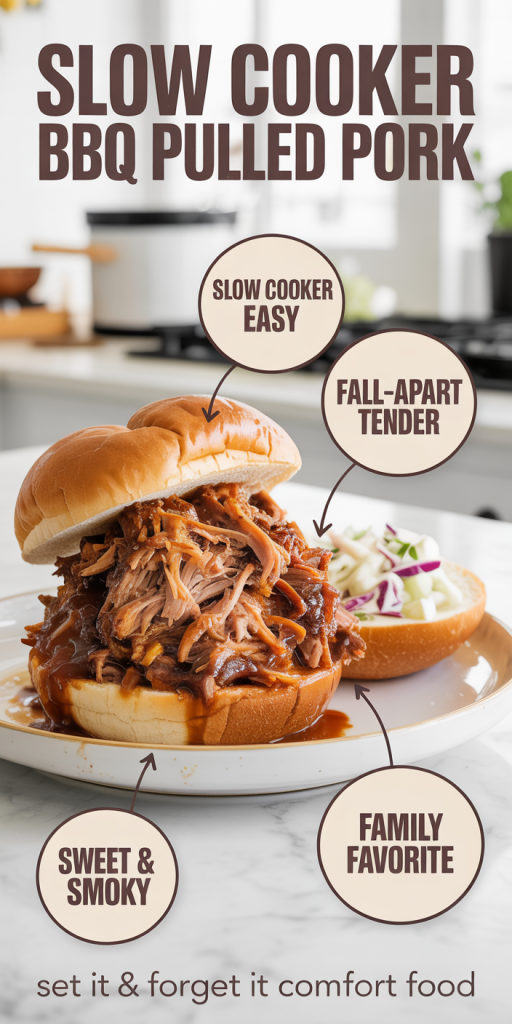
How To Shred Pulled Pork Properly
We want long, juicy strands with some bite, none of the crumbly dryness that happens when meat is overworked.
- Rest first: Let the roast sit for 15–20 minutes after cooking. This helps redistribute juices and makes shredding cleaner.
- Shred technique: Use two forks to pull meat apart, working with the grain. Alternatively, for larger batches, meat claws or a stand mixer with a paddle (brief 10–20 second bursts) work well, but don’t overdo it.
- Keep the juices: Reserve the cooking liquid. We spoon some of it back into the shredded pork to keep things moist and flavorful.
Finishing In The Sauce: Techniques For Best Texture
- Sauce ratio: Start with roughly 1/2 to 1 cup of sauce per 2 pounds of shredded pork, then add more as needed. Too much sauce can make the pork gloopy: too little makes it dry.
- Gently fold: Add sauce in batches and fold gently so you preserve texture. Heat the combined pork and sauce on Low in the slow cooker or in a covered pan for 10–15 minutes to let flavors marry.
- Caramelizing (optional): For a slightly sticky exterior, spread the sauced pork on a sheet pan and broil for 3–5 minutes, watch carefully to avoid burning.
Adjusting Seasoning And Consistency
- Taste and tweak: After saucing, taste for salt, acidity, and sweetness. Brighten with a tablespoon of apple cider vinegar or a squeeze of lemon if it’s too sweet.
- Thickness: If the sauce is too thin, simmer in a saucepan until it reduces. If it’s too thick, thin with a splash of water, apple juice, or reserved cooking liquid.
Flavor Variations And Regional Twists
Pulled pork is a blank canvas. Here are several flavor directions we like to take depending on the meal or mood.
Smoky And Texas-Style Variations
- Add smoked paprika, more black pepper, and a touch of liquid smoke to the rub or sauce.
- Finish with a dry rub crust (a ‘bark’) by searing first and finishing on high heat briefly.
- Keep the sauce straightforward, more pepper, less sugar, sometimes no tomato base.
Sweet And Carolina-Style Variations
- Vinegar-forward Carolina sauce: Mix 1 cup apple cider vinegar, 1/4 cup ketchup, 2 tbsp brown sugar, 1 tsp red pepper flakes, and salt to taste. Heat briefly.
- Eastern vs. Western Carolina: Eastern style is thin and just vinegar and pepper: Western (or Piedmont) adds ketchup for body.
- Serve with coleslaw either on the sandwich or on the side for textural contrast.
Spicy And International Flavor Twists
- Korean-style: Add gochujang to the sauce, a splash of soy sauce, and finish with sesame oil and sliced scallions.
- Mexican-style: Use chipotle peppers in adobo with cumin, oregano, and finish with lime and cilantro.
- Caribbean jerk: Rub with allspice, thyme, Scotch bonnet (careful.), cinnamon, and brown sugar for a sweet-heat profile.
These swaps are mostly at the finishing sauce or rub stage, keep the slow cooker technique the same.
Serving Suggestions And Side Pairings
Pulled pork is versatile, we serve it as sandwiches, plates, tacos, or over salads. Here are pairing ideas that always work.
Buns, Slaws, And Toppings
- Buns: Classic potato rolls, brioche buns, or sturdy kaiser rolls. Warm them before assembling.
- Slaws: Creamy slaw (mayo-based) for richness or vinegar slaw for brightness. Add apple, fennel, or jalapeño for interest.
- Toppings: Pickles, sliced red onion, pickled jalapeños, extra BBQ sauce, and fresh herbs like cilantro or parsley.
Side Dishes That Complement Pulled Pork
- Starchy: Baked beans, cornbread, potato salad, mac and cheese.
- Fresh: Cucumber-tomato salad, coleslaw, or a sharp green salad.
- Veg: Roasted Brussels sprouts, grilled corn, or collard greens.
For gatherings, set up a pulled pork bar with buns, slaws, sauces, and toppings so guests can customize.
Portioning, Leftovers, And Storage
Pulled pork stores and reheats well when handled properly. Here’s how we manage portions and leftovers.
- Portioning: Plan about 1/3 to 1/2 pound cooked pork per person for sandwiches: 1/2 to 3/4 pound for hearty appetites or plated dinners.
- Leftovers: Cool quickly, don’t leave at room temperature more than two hours. Divide into shallow containers to speed cooling.
Make-Ahead, Refrigerating, And Freezing Best Practices
- Refrigerate: Store in airtight containers for up to 3–4 days. Keep sauce separate if you want more control over moisture.
- Freeze: Freeze up to 3 months. Store in freezer bags with as much air removed as possible. Thaw in the fridge overnight.
- Make-ahead tips: We sometimes cook the pork a day ahead and finish with sauce the day of to keep texture fresh.
Reheating Without Drying Out The Meat
- Oven: Place pork in a covered baking dish with a splash of liquid/sauce at 300°F for 20–30 minutes until heated through.
- Stove: Reheat gently in a covered skillet on low with sauce or reserved liquid.
- Microwave: Use 50–70% power in short bursts, stirring between intervals, and add a little liquid to prevent drying.
Avoid high heat, slow, gentle reheating preserves moisture and texture.
Troubleshooting Common Problems
Even with simple recipes, things can go sideways. Here are fixes for the problems we see most often.
Dry Or Tough Pork: Causes And Fixes
Causes:
- Undercooked for tenderness (collagen not fully broken down).
- Lean cut used instead of shoulder.
- Overcooked at high heat without enough moisture.
Fixes:
- Return to the slow cooker with 1/2 cup hot liquid and cook on Low until it pulls apart.
- Shred and mix with a generous amount of sauce and reserved cooking liquid: cover and warm slowly.
- If it’s truly dry, make it into tacos or enchiladas with extra sauce, or chop finely for mixing into casseroles.
Sauce Too Thin Or Too Sweet: How To Rescue It
Too thin:
- Simmer uncovered in a saucepan until reduced and slightly thickened.
- Stir in a small slurry of cornstarch and water (1 tsp cornstarch + 1 tbsp cold water), heat until it thickens.
Too sweet:
- Add acid: apple cider vinegar, lemon juice, or a splash of Worcestershire.
- Add heat or salt: hot sauce, cayenne, or extra salt can balance sweetness.
Overly Fatty Finished Pork: Skimming And Serving Tips
- Skim fat: Use a spoon or ladle to remove fat floating on top of the cooking liquid. Chill the liquid briefly, fat will solidify and lift off for easy removal.
- Shred and drain: After shredding, let the pork rest on a rack over a tray to drain excess fat before saucing.
- Serve with acidic sides: Vinegary slaw or pickles help cut through richness.
Conclusion
Slow cooker BBQ pulled pork is one of those recipes that rewards patience and a few simple decisions: pick the right cut, season boldly, cook low and slow, and finish with a sauce that fits the meal. With the techniques we covered, trimming, optional searing, monitoring internal temperature for tenderness, and finishing in sauce, you’ll consistently get tender, flavorful shredded pork. Keep experimenting with regional sauces and spices, and don’t be afraid to make the recipe your own. When time is tight but you still want big barbecue flavor, our slow cooker method often delivers even better than a rushed oven roast.