How To Make Slow Cooker White Bean & Spinach Stew
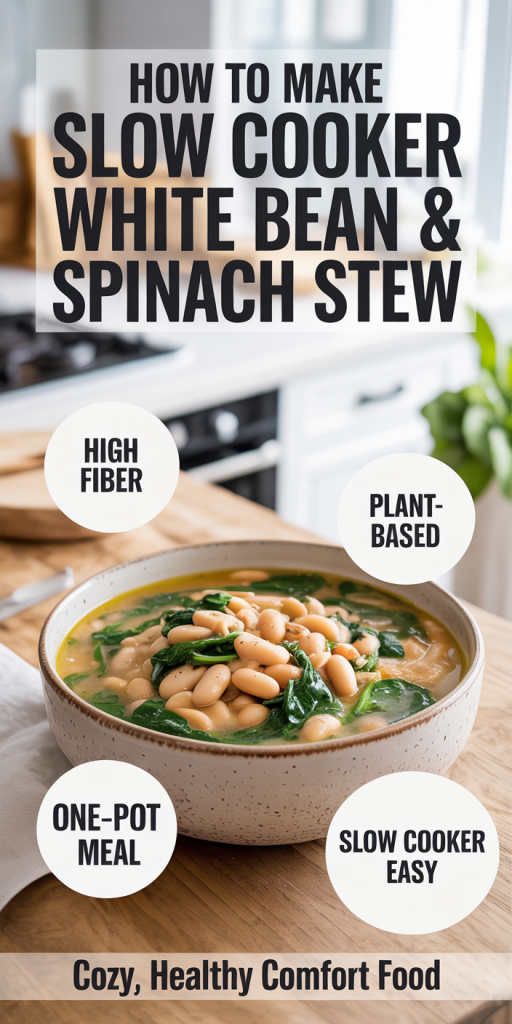
There’s something deeply satisfying about a pot of slow-cooked stew that tastes like it simmered all day even when we barely lifted a finger. In this recipe we’ll walk you through how to make slow cooker white bean & spinach stew that’s hearty, bright, and effortless. It’s a pantry-friendly, freezer-friendly dish that adapts to our weeknight schedules and weekend meal-prep plans alike. Whether you’re feeding a crowd or making a batch for lunches, this stew delivers warming comfort, plant-based protein, and a satisfying leafy green finish.
Why You’ll Love This Slow Cooker Stew
There are few recipes that combine convenience, nutrition, and pantry economics as neatly as this slow cooker white bean & spinach stew. Here’s why we keep coming back to it:
- Effortless cooking: After initial prep and a quick sauté, the slow cooker does the heavy lifting. We can set it and forget it for hours.
- Pantry-friendly ingredients: Dried white beans, canned tomatoes (or fresh), onions, garlic, and a bag of spinach, most of these items live in our kitchens year-round.
- Protein and fiber in one bowl: White beans provide a satisfying protein and fiber base that keeps us full and stabilizes blood sugar.
- Versatile and forgiving: We can tailor the stew to suit vegetarian, vegan, or omnivore households by swapping or adding proteins and adjusting seasonings.
- Meal prep and leftovers: The stew improves overnight, freezes well, and reheats without losing much texture, perfect for weekly meal planning.
Beyond practicality, this stew tastes layered: caramelized aromatics, a rich tomato-bean base, brightened by lemon or vinegar and finished with tender spinach and fresh herbs. It’s comfort food that doesn’t sacrifice freshness.
Ingredients (With Notes and Substitutions)
Below we list the core ingredients for our slow cooker white bean & spinach stew, with notes and smart substitutions so you can adapt the recipe to what’s on hand.
- 1 pound dried white beans (navy, Great Northern, or cannellini) OR 4 cans (15 oz) white beans, drained and rinsed
- Note: Dried beans give better texture and flavor when cooked slowly, but canned beans are a great shortcut. If using dried, soak or use the recommend cooking method below.
- 2 tablespoons olive oil (or neutral oil)
- Substitution: Use avocado oil or a vegan butter for richer flavor.
- 1 large yellow onion, finely chopped
- 3–4 garlic cloves, minced
- 2 medium carrots, diced (optional, for sweetness and texture)
- 2 celery stalks, diced (optional)
- 1 (28 oz) can crushed tomatoes OR 2 cups fresh diced tomatoes
- Substitution: Use passata for a smoother broth, or omit for a brothy bean stew and add an extra cup of vegetable broth.
- 4 cups low-sodium vegetable broth (or chicken broth if not vegetarian)
- Note: We prefer low-sodium so we can control final seasoning.
- 1–2 bay leaves
- 1 teaspoon smoked paprika (or sweet paprika)
- 1/2–1 teaspoon dried thyme or oregano
- 1/2 teaspoon crushed red pepper flakes (optional)
- 6–8 cups packed fresh baby spinach (about 8–10 oz) OR 10 oz frozen spinach, thawed and drained
- Note: Fresh spinach gives brightest flavor and texture: frozen works in a pinch but can water down the stew if not drained well.
- Juice of 1 lemon (or 2 tablespoons red wine vinegar) to finish
- Salt and black pepper to taste
- Optional final-herb garnish: chopped parsley or basil
- Optional toppings: grated Parmesan or a drizzle of extra-virgin olive oil (omit for vegan)
Protein add-ins and other substitutes:
- For a meat boost: add 1 pound of boneless chicken thighs (seared first) or cooked kielbasa slices in the last hour.
- For extra creaminess: stir in 1/2 cup plain Greek yogurt or 1/2 cup coconut milk at the end (note dairy/non-dairy choices).
By planning substitutions ahead, we ensure the stew is flexible enough to suit seasonal produce and dietary preferences.
Essential Equipment And Prep Work
This recipe leans on simple equipment, and a bit of prep makes the slow cooker method effortless.
Essential equipment:
- Slow cooker (4–7 quart), a 6-quart is ideal for batch cooking.
- Large skillet or sauté pan for browning aromatics and optional meat.
- Fine-mesh strainer (if using canned beans) and measuring cups/spoons.
Prep work checklist:
- Sort and rinse dried beans: If using dried beans, pick over them for stones or debris and rinse thoroughly.
- Soak beans (optional but recommended): We can either do a long soak, cover the beans with double their volume of water and soak for 6–8 hours, or a quick soak: bring beans and water to a boil for 2 minutes, then turn off heat and let sit for 1 hour. Drain and rinse before cooking.
- Chop aromatics: Dice onions, mince garlic, and chop carrots and celery if using.
- Measure spices and broth: Having these ready in small bowls speeds assembly.
- Preheat skillet: If we plan to sauté aromatics or brown meat, preheat our skillet while we chop.
Why this prep matters: Soaking and sorting dried beans shortens cooking time, improves digestibility, and gives a more uniformly tender result. Sautéing aromatics first deepens flavor and keeps the final stew from tasting one-note.
Step‑By‑Step Cooking Instructions
Follow these steps for a reliably delicious slow cooker white bean & spinach stew. We break the process into three subsections so you can choose shortcuts or the full method.
Sautéing Aromatics Before The Slow Cooker
- Heat 2 tablespoons of olive oil in a large skillet over medium heat.
- Add the chopped onion, and sauté until translucent and beginning to brown, about 7–10 minutes. Add carrots and celery if using, and stir until they soften (3–4 minutes).
- Stir in minced garlic, smoked paprika, and dried herbs: sauté another 30–60 seconds until fragrant. This step deepens the stew’s overall flavor and prevents raw-spice notes.
- If adding raw meat (chicken thighs or sausage), brown it now to build flavor, sear on both sides, then remove and set aside. We’ll add it back to the slow cooker later.
Assembling The Slow Cooker (Dry Beans Vs. Canned)
Using dried beans (recommended for texture):
- Place soaked and drained beans in the slow cooker.
- Add the sautéed aromatics and any seared meat.
- Pour in crushed tomatoes and 4 cups of vegetable broth. Add bay leaves and a pinch of red pepper flakes if desired.
- Stir to combine, cover, and cook on Low for 6–8 hours or on High for 3–4 hours, until beans are tender.
Using canned beans (shortcut):
- Add drained and rinsed canned white beans to the slow cooker along with the sautéed aromatics.
- Reduce broth to 2–3 cups because canned beans are already cooked and won’t absorb as much liquid.
- Add crushed tomatoes and seasonings, stir, and cook on Low for 2–3 hours or on High for 1–2 hours to let flavors meld.
Notes:
- If we prefer a more brothy stew, add up to an additional cup of broth. For thicker stew, mash a cup of cooked beans against the pot wall and stir: the released starch will thicken the liquid.
- Keep bay leaves in during cooking and remove before serving.
Cooking Times And Temperature Guide
General guide based on the slow cooker size and ingredient choices:
- Dried beans, Low: 6–8 hours, best for tenderness and even cooking.
- Dried beans, High: 3–4 hours, acceptable when short on time but check for doneness to avoid chalky beans.
- Canned beans, Low: 2–3 hours, just enough for flavors to marry.
- Canned beans, High: 1–2 hours, watch carefully so beans don’t break down.
Check beans 30 minutes before the target time: they should be tender but not falling apart. If beans are still firm, add 30–60 minutes and test again. Altitude and bean age affect cooking time, older dried beans can take longer to soften.
Finishing steps (after cooking but before serving):
- Remove bay leaves and any large chunks of meat if used for shredding.
- Taste and adjust salt, pepper, and acidity (lemon juice or vinegar).
- Add fresh spinach and stir until it wilts, about 2–4 minutes. If using frozen spinach, make sure it’s well-drained and add earlier if you want it fully integrated.
Finishing Touches And Serving Suggestions
Once the stew has reached the right consistency and the beans are tender, a few finishing touches lift the entire pot from good to memorable.
Adding Spinach, Acid, And Fresh Herbs
- Spinach: Add 6–8 cups of fresh spinach in batches, stirring until it wilts. The leaves will reduce dramatically in volume, so don’t be shy, the bright green adds color and nutrients.
- Acid: Brighten the stew with the juice of one lemon or 2 tablespoons red wine vinegar. We prefer adding acid at the end so it preserves vibrancy.
- Fresh herbs: Stir in a handful of chopped parsley, basil, or dill right before serving. Herbs refresh the palate and add an aromatic lift.
- Final fat: A drizzle of good extra-virgin olive oil, a spoon of pesto, or a pat of butter (or vegan butter) helps carry flavors.
Serving Ideas And Garnishes
- Grain bowls: Serve the stew over fluffy rice, quinoa, or farro for a filling meal.
- Crunchy toppings: Toasted pumpkin seeds, chopped walnuts, or breadcrumbs fried in olive oil add texture contrast.
- Cheese options: Grated Parmesan, crumbled feta, or a dollop of ricotta pairs beautifully with the beans, omit for vegan servings.
- Bread: Offer crusty bread, garlic toast, or soft naan for scooping.
- Individual bowls: Top with a lemon wedge, a sprinkle of flaky sea salt, and freshly cracked black pepper for diner-style appeal.
We like to serve the stew with a simple green salad and a squeeze of lemon to cut through the richness.
Variations, Add‑Ins, And Flavor Profiles
This stew is a fantastic template for experimentation. Below we outline protein boosts, texture and dietary swaps, and three global flavor twists to keep the base recipe interesting.
Protein Boosts And Grain Pairings
- Chicken: Add 1 pound boneless skinless chicken thighs. Sear first and add to the slow cooker: shred after cooking and stir back in.
- Sausage: Sliced cooked kielbasa or Italian sausage adds smoky richness, add during the last hour to heat through.
- Tempeh or tofu: For extra plant protein, cube and pan-fry tempeh or tofu and add in the final 30 minutes to keep texture.
- Grain pairings: Rice (short-grain or basmati), farro, barley, or polenta are excellent bases. For gluten-free bowls, serve over quinoa or cauliflower rice.
Spice, Texture, And Dietary Swaps (Vegan, Gluten‑Free)
- Vegan: This base is vegan when we use vegetable broth and omit dairy garnishes. Boost umami with a splash of tamari or miso paste.
- Gluten-free: Naturally gluten-free when served with rice or quinoa, watch processed additives in store-bought broths.
- Texture tweaks: If we want a creamier stew without dairy, blend 1–2 cups of the cooked beans and stir back in to thicken naturally. Or stir in a spoonful of tahini for richness.
- Heat: Add harissa, chipotle in adobo, or extra red pepper flakes if we want spice.
Mediterranean, Indian, And Latin Flavor Twists
- Mediterranean: Add roasted red peppers, kalamata olives, and oregano: finish with crumbled feta and a drizzle of olive oil.
- Indian: Stir in 1 tablespoon garam masala and 1 teaspoon ground cumin: finish with cilantro, a squeeze of lime, and serve over basmati rice.
- Latin: Add a smoked jalapeño or chipotle pepper, cumin, and coriander: finish with fresh cilantro, avocado slices, and a lime wedge.
These variations show how the stew can travel across cuisines with a few deliberate ingredient swaps.
Troubleshooting Common Problems And Pro Tips
Even reliable recipes benefit from a set of pro tips. Here are common issues we encounter and how to fix them.
Fixes For Thin, Bland, Or Overcooked Stew
- Thin stew: Thicken by mashing a cup of beans against the pot side and stirring to release starch. Alternatively, simmer uncovered for 20–30 minutes to reduce liquid, or stir in a slurry of 1 tablespoon cornstarch plus 2 tablespoons water and cook until thickened.
- Bland stew: Add acid (lemon juice or vinegar), salt, and a pinch of sugar if tomatoes taste too acidic. Finish with fresh herbs and a drizzle of olive oil to lift flavors.
- Overcooked beans: If beans are mushy, stretch the stew by adding a can of drained whole beans or a handful of cooked barley or farro. For future batches, reduce cooking time or use canned beans.
How To Adjust Seasoning And Texture Late In Cooking
- Layer seasoning: Taste and season in layers, a little salt after sautéing aromatics, then again before serving.
- Correcting late saltiness: If we over-salt, dilute with unsalted broth, add a peeled potato to absorb salt for 20–30 minutes (then discard), or stir in unsalted beans or grains.
- Texture balance: Add fresh raw spinach or arugula at the end for immediate color and bite: for creaminess, swirl in yogurt, tahini, or coconut milk.
Safety Tips For Cooking And Storing Beans
- Dried beans: Never cook dried beans directly in slow cookers without pre-soaking and proper heat if you are using kidney beans, raw or undercooked kidney beans contain phytohaemagglutinin and must be boiled for at least 10 minutes before slow-cooking. While white beans don’t have the same toxin risk, soaking reduces cooking time and helps even tenderness.
- Cooling: Cool stews quickly by dividing into shallow containers before refrigerating.
- Reheating: Reheat to a rolling simmer (165°F/74°C internal) to ensure safety. Store leftovers for up to 3–4 days in the fridge, or freeze for 2–3 months.
These tips keep our stew safe, delicious, and reliably good every time.
Storage, Make‑Ahead Strategies, And Reheating
This stew is a meal-prep star. Here’s how we store, make ahead, and reheat without losing texture or flavor.
Cooling, Refrigerating, And Freezing Best Practices
- Cooling: After cooking, divide stew into shallow, airtight containers. Let cool uncovered at room temperature no longer than 1 hour, then refrigerate.
- Refrigeration: Store in the fridge for 3–4 days. Label containers with the date so we rotate older batches first.
- Freezing: Allow the stew to cool fully, then freeze in freezer-safe containers or heavy-duty zip-top bags with excess air removed. We recommend freezing in portion sizes (2-cup or 4-cup) for easy defrosting. Properly frozen, the stew keeps well for 2–3 months without major texture loss.
- Defrosting: Thaw overnight in the refrigerator or use the defrost setting on a microwave for quick turnaround.
Reheating Without Losing Texture Or Flavor
- Stovetop: Reheat gently over medium-low heat, stirring often. If the stew seems dry, add a splash of broth.
- Microwave: Reheat in a covered microwave-safe bowl in 1-minute intervals, stirring between pulses, until the center is hot.
- Avoid overcooking: Reheating too long can break down beans and greens. Add a handful of fresh spinach at the end to restore brightness.
- Freshen flavors: After reheating, brighten with a squeeze of lemon and a sprinkle of fresh herbs to bring back the initial vibrancy.
Make-ahead strategy: We sometimes stop the slow cooker an hour before the final step, refrigerate, and finish the last hour during dinner prep. This concentrates flavors while fitting into busy schedules.
Nutrition, Portioning, And Dietary Notes
This white bean & spinach stew is nutrient-dense and adaptable to dietary needs. Here’s what we should know about nutrition and portions.
- Macronutrients: White beans are a good source of plant protein and complex carbohydrates, with significant fiber content. A typical 1 1/2–2 cup serving provides sustained energy and satiety.
- Micronutrients: Spinach contributes vitamin K, vitamin A (as beta-carotene), folate, iron, and magnesium. Tomatoes and herbs add vitamin C and antioxidants.
- Calories: A plain bowl (about 2 cups) without grains or cheese ranges from ~300–450 calories depending on added oils and whether we use canned vs. dried beans and added proteins.
- Protein: One serving provides approximately 12–20 grams of protein from beans alone: add meat, tempeh, or grains to increase this.
- Fiber: A serving offers 10+ grams of fiber, which supports digestive health and steady blood sugar.
Dietary considerations:
- Vegan/Vegetarian: Use vegetable broth and skip dairy toppings. Add a splash of tamari or miso for extra umami.
- Gluten-free: Naturally gluten-free when prepared with gluten-free broth and served over rice or quinoa.
- Low-sodium: Choose low-sodium broth and canned beans, and add salt slowly at the end.
- Low-FODMAP: Beans are high in FODMAPs: those following a strict low-FODMAP diet should avoid or test small portions. Canned beans rinsed well reduce some oligosaccharides but aren’t fully low-FODMAP.
Portioning tips:
- For meal prep: portion into 2–3 cup containers with a grain on the side if desired.
- For family dinners: plan on 1–1.5 cups per adult as a main course with sides, or 3/4 cup as a side dish.
This stew is an easy way to get plant-forward meals on the table without sacrificing flavor or nutrition.
Conclusion
We hope this guide shows how to make slow cooker white bean & spinach stew feel both approachable and endlessly adaptable. With a few pantry staples, a bit of sautéing, and some patient slow-cooker time, we can create a nourishing, flavorful meal that suits weeknights, meal prep, and freezer-friendly cooking.
Try the base as written, then experiment with the protein boosts, spice variations, or global twists to keep the recipe fresh. And remember: the best stew is the one we tailor to our tastes, more acid if we prefer brightness, more herbs for an aromatic finish, or a scoop of grains for extra heartiness. Now turn on the slow cooker, and let the flavors do the work.