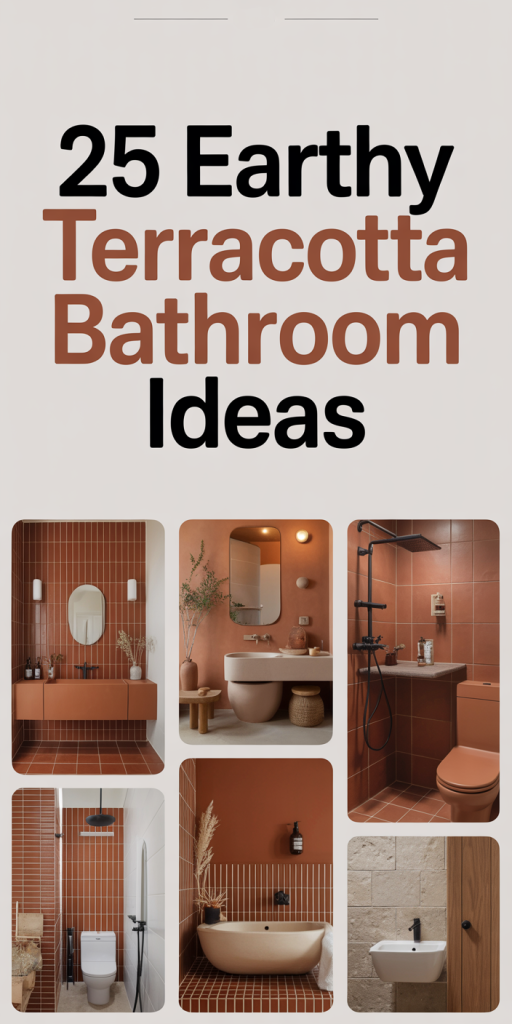
25 Earthy Terracotta Bathroom Ideas With Warm Neutral Tones — Cozy, Timeless Designs For 2026
Terracotta has quietly become the go-to material for designers who want bathrooms that feel lived-in, warm, and timeless. In 2026, we’re seeing a shift away from stark white bathrooms toward layered, earthy spaces where terracotta anchors a soothing palette of warm neutrals. In this guide we’ll walk through why terracotta works in bathrooms, how to plan complementary palettes, tile treatments that stand up to moisture, fixtures and lighting that enhance the tone, and practical care and budgeting tips. Finally, we’ll inspire you with 25 terracotta bathroom ideas categorized by style and scale so you can visualize how to bring this look into your home. Let’s get started and make a bathroom that feels like a calm retreat, not a clinical space.
Why Terracotta Works In Bathrooms: Mood, Material, And Practical Benefits
Terracotta’s appeal is as much emotional as it is functional. The natural, baked-earth hue brings instant warmth and a grounded quality that softens the sharpness of plumbing fixtures and mirrors. Psychologically, warm tones like terracotta evoke comfort and relaxation, exactly what we want from a bathroom. Material-wise, traditional terracotta is clay fired at lower temperatures than porcelain, creating a porous surface that’s often sealed for moisture resistance. When properly treated, terracotta tiles and basins perform well in bathrooms: they’re durable, repairable, and develop a beautiful patina over time. Practically, terracotta’s tonal range, from pale peach to deep rust, works as a neutral rather than a statement color, so it pairs effortlessly with wood, brass, stone, and muted greens. Another benefit is sustainability: many terracotta products are made from locally sourced clay and require less energy to produce than high-fired ceramics. Finally, terracotta’s tactile quality, slightly rough, matte, or gently glazed, adds texture in a room that often relies on hard, reflective surfaces. That texture reduces glare and makes the space feel more intimate and human-scaled.
Planning Your Palette: Warm Neutrals That Complement Terracotta
Choosing a palette is about balance: terracotta is warm and dominant, so we pair it with neutrals that let it sing without overwhelming. Start with a base of creamy off-whites and warm beiges, these keep the room feeling bright while harmonizing with terracotta’s red-orange undertones. For contrast, consider warm greys and taupes rather than cool greys: cool tones can clash and make terracotta look muddy. Accents in muted olive green or dusty sage create an organic trio, earth, plant, and stone, that reads contemporary and cozy. Materials influence color perception, so select wood finishes with honey or caramel undertones rather than pale bleached woods. For metal accents, aged brass and satin bronze enhance warmth: brushed nickel can work if paired with warmer woods and textiles. When planning, we recommend creating a simple five-swatch composition: primary terracotta, light neutral (walls), mid-tone (vanity or cabinetry), accent (textiles or plants), and metal (fixtures). This ensures cohesion across large surfaces and small details. Also consider lighting: warm LED temperatures (2700–3000K) preserve terracotta’s richness, while very cool lighting flattens it. Finally, test samples in your bathroom at different times of day, terracotta reads differently in morning and evening light, and natural vs. artificial light can shift its undertone significantly.
Terracotta Tile Treatments: Choosing Texture, Size, And Finish
Tile choice defines the mood: rough, hand-formed terracotta tiles create a rustic, artisanal feel: smooth, glazed tiles read more modern and are easier to maintain. Texture affects slip resistance, textured finishes or matte glazes help prevent slips in wet areas, which is crucial for bathroom floors. Size and grout lines also change perception: large-format terracotta slabs make a small bathroom feel more spacious, while smaller, staggered tiles add rhythm and tactile interest. For us, the sweet spot often lies in medium-format tiles (6″x12″ to 8″x8″) for floors and accent walls, these sizes balance visual interest with practical installation.
Glazed terracotta is popular in bathrooms because the glaze creates a waterproof barrier: choose low-porosity glazes rated for wet environments. Unglazed terracotta can be used if sealed with a high-quality penetrating sealer and re-sealed periodically. When specifying grout, a slightly darker warm tone minimizes staining and complements the tile rather than competing with it. For transitions, consider bullnose or custom-cut edges to avoid exposed tile edges. Finally, reclaimed or handmade terracotta tiles bring character, expect slight color variation, which we view as a feature rather than a flaw.
Floor Patterns And Layouts For Terracotta Tiles
Floor layout can make or break a design. Classic herringbone with rectangular terracotta tiles creates movement and a refined look that suits both rustic and modern aesthetics. Straight lay is clean and understated, ideal for letting a statement vanity or freestanding tub remain the focal point. We also love diagonal layouts in small bathrooms: placing tiles on the bias visually expands the floor. For a Mediterranean feel, consider encaustic-inspired patterns mixing terracotta with muted cream tiles. When installing, staggered offsets (running bond) hide seams and are forgiving with slight size variation, useful with hand-formed tiles. Don’t forget functional planning: slope toward drains must be consistent when using thicker tiles, and underfloor heating is a great pairing with terracotta because the clay retains and radiates warmth.
Wall And Shower Options: Slips, Glazes, And Waterproofing
For walls and showers, glaze selection and waterproofing are critical. Fully glazed terracotta tiles are our top pick for shower walls because they create a smooth, non-porous surface that’s easy to clean. Matte glazes can mimic natural clay while offering protection: glossy glazes intensify color and reflect light, brightening smaller showers. When using unglazed tile in wet zones, we insist on professional waterproofing behind the tile (membranes or liquid waterproofing systems) and multiple coats of penetrating sealer on the tile itself. For slip prevention in shower floors, smaller tiles or textured finishes increase grout lines and traction. Consider mixing terracotta with ceramic or porcelain trim tiles at waterline heights to reduce maintenance where water contact is heaviest. Finally, choose grout sealers and silicone joints rated for bathrooms to prevent mold and discoloration over time.
Fixtures, Lighting, And Textures To Pair With Terracotta
Fixtures and textures create the supporting cast for terracotta. We prioritize finishes that reinforce warmth: matte black offers a graphic, modern counterpoint: aged brass or satin bronze amplifies terracotta’s warmth: and oil-rubbed bronze reads even richer in low-light spaces. For vanities, wood with visible grain, like walnut or oiled oak, creates a cohesive earthy scheme. Stone countertops in warm beige or light quartz prevent visual competition with terracotta while keeping surfaces durable. Texture matters: rattan baskets, linen towels, and matte plaster walls all add dimension. When choosing mirrors and shelving, lean toward warm-toned woods or metal frames instead of chrome-heavy options that can feel cold. Above all, mix materials so the room doesn’t feel flat: one strong terracotta surface, one solid wood element, and a complementary metal tie the scheme together.
Metals, Wood, And Stone Combinations That Elevate Warm Neutrals
Combining materials is an exercise in harmony. Pair terracotta with warm woods, teak, walnut, and honey oak, to reinforce the natural palette. For stone, choose travertine, limestone, or warm-toned marble: these stones have subtle veining that complements terracotta’s surface without competing. Metals should feel curated: brushed brass for taps and towel rails adds vintage charm, while matte black anchors contemporary schemes. A successful combo often uses one dominant material (terracotta) and two supporting ones (wood and metal or stone and metal). For example, a terracotta tiled wall behind a walnut vanity with brass hardware creates depth and richness. We recommend mockups or mood boards before committing so we can see how finishes read under the bathroom’s light.
Lighting, Textiles, And Accessory Strategies To Enhance Warmth
Good lighting and textiles turn a good design into a great one. Start with layered lighting: recessed warm LEDs for general light, wall sconces beside mirrors for flattering task light, and a dimmable pendant or chandelier for ambiance if space allows. Warm color temperature (2700–3000K) keeps terracotta from looking washed out. Textiles, think woven bath mats, linen shower curtains, and soft cotton towels in cream, olive, or muted terracotta, add softness and reinforce the palette. Accessories like ceramic planters with low-light plants (snake plant, ZZ, or pothos), woven baskets, and wooden soap dishes provide tactile contrast and functionality. Don’t over-accessorize: select a few sculptural pieces with natural finishes to keep the feeling calm and curated.
25 Terracotta Bathroom Ideas Categorized By Style And Scale
Below we group 25 terracotta bathroom ideas so you can find a concept that matches your space and budget. We’ll list compact, mid-range, and statement options across styles from rustic to modern.
Compact & Budget-Friendly
- Terracotta hexagon floor tiles with a cream subway wall, visual interest without a big budget.
- Terracotta-look porcelain floor that mimics clay but reduces sealing needs.
- Terracotta skirting tiles with painted warm beige upper walls to keep costs down.
- Small-format terracotta shower floor with neutral large-format porcelain walls.
- Terracotta sink on a floating laminate vanity, looks luxe, costs less.
Mid-Range Upgrades
6. Glazed terracotta accent wall behind a freestanding tub with brass fixtures.
7. Terracotta penny tiles in a vanity backsplash paired with oak cabinetry.
8. Mixed-size terracotta floor using 8″ and 12″ tiles for a custom pattern.
9. Terracotta tiles with in-floor heating for a cozy matinée feel.
10. Reclaimed terracotta floor with a neutral plaster wall for an antique mood.
Statement & Designer Ideas
11. Full terracotta-clad wet room with frameless glass and matte black fixtures.
12. Terracotta chevron floor paired with a stone freestanding tub.
13. Two-tone terracotta wall tiles, gloss top, matte bottom, for depth.
14. Terracotta window seat with integrated storage and textured cushions.
15. Large-format terracotta slabs with minimal grout lines for a seamless effect.
Mix-and-Match Contemporary Looks
16. Terracotta tile band around the room at vanity height with painted walls above.
17. Terracotta shower niche with contrasting cream tile and integrated lighting.
18. Terracotta counter tiles with under-mounted sink and warm quartz top.
19. Terracotta stairs leading to a sunken tub, dramatic, for larger homes.
20. Terracotta combined with black hexagon tiles for a bold graphic look.
Eclectic & Natural Styles
21. Terracotta tiles with open shelving and potted plants for a botanical feel.
22. Hand-formed terracotta floor with raw-edge wooden vanity for artisan charm.
23. Terracotta backsplash paired with vintage brass plumbing fixtures.
24. Mix of terracotta and encaustic tiles in a foyer bath for pattern play.
25. Soft terracotta plaster walls (tadelakt-style) with matching tiles for a monolithic appearance.
Each idea can be scaled up or simplified to match our budget and timeline. Mix materials thoughtfully and test samples so the terracotta tone harmonizes with existing finishes.
Practical Care, Installation Tips, And Budgeting For Terracotta Bathrooms
Terracotta looks effortless but requires practical planning. For installation, hire a tile setter experienced with natural clay tiles, uneven thickness and size variation are common and need careful layout. Use flexible adhesives suited to ceramic/stone and consider cementitious or hybrid mortars for wet areas. Waterproofing behind shower walls and pan membranes are non-negotiable. If using unglazed terracotta, we recommend a two-part approach: a high-quality penetrating sealer followed by a topcoat sealer in high-traffic zones: re-seal every 1–3 years depending on wear.
On budgeting, terracotta ranges widely. Porcelain tiles that mimic terracotta are generally less expensive and lower maintenance: handmade or reclaimed terracotta tiles cost more but add character and longevity. Factor in specialized installation time, expect 10–25% higher labor costs than standard ceramic tile installation. For mid-range projects, allocate roughly 35–45% of the total budget to materials (tiles, grout, sealers) and 25–35% to labor: high-end handmade tile projects will skew materials higher. For maintenance, plan a modest annual budget for re-sealing and grout touch-ups. Finally, if sustainability matters to us, look for locally made terracotta and certifications indicating low-VOC sealers and finishes.
Conclusion
Terracotta offers a timeless path to warm, inviting bathrooms in 2026. By planning a complementary palette, choosing the right tile treatment, pairing thoughtful fixtures, and following sound installation and care practices, we can create spaces that feel both modern and grounded. Use the 25 ideas above as a starting point, test samples, consider lighting, and don’t be afraid to mix materials. With terracotta, slight imperfections become part of the story, and the result is a bathroom that welcomes us every day.