When LED Strip Lighting Ruins The Bedroom: How To Stop The Glow In 2026
LED strip lighting exploded in popularity over the last decade. Affordable, easy to install, and endlessly customizable, it promised to transform bedrooms into moody retreats, gaming dens, or trendy influencer backdrops with little effort. But as designers, homeowners, and sleep scientists have started to push back, a clearer picture has emerged: badly chosen or poorly installed LED strips can do more harm than good. They can wash out décor, wreck color balance, and even disrupt sleep.
In this text we’ll explain why LED strip lighting became such a bedroom staple, the specific design and psychological problems it creates, the common installation mistakes that make rooms look cheap, and practical alternatives that preserve ambience without sacrificing comfort and function. We’ll also give step-by-step fixes you can make this weekend, no gut renovation required. If your bedroom feels like it’s glowing for all the wrong reasons, read on: we’ve got a plan to tame the light and reclaim restful, attractive spaces in 2026.
Why LED Strip Lighting Became A Bedroom Staple
The rise of LED strip lighting in bedrooms is easy to explain: cost, accessibility, and a social-media-friendly aesthetic. As LEDs became cheaper and controllers more sophisticated, anyone could order a roll, stick it behind a headboard or under a shelf, and call it a day. That democratization of design is powerful, lighting used to be specialized and expensive: now it’s an impulse-buy that promises a designer look.
We should also acknowledge the psychological appeal. LED strips offer instant personalization. Warm white for cozy nights, cool white for focused tasks, or saturated colors for parties and TikTok clips, it’s a toolkit for self-expression. Brands leaned into that, selling not just lamps but lifestyles. Influencers posted before-and-after bedroom shots, and a trend was born.
Technological improvements helped, too. Early LEDs had poor color rendering and flicker: modern chips are far better. Silicone-coated, waterproof strips and Bluetooth controllers made installation simpler. Still, ease of access created a side effect: many users equate “easy to install” with “done.” And that’s where problems start. Without an understanding of color temperature, light layering, and human circadian needs, a quick aesthetic win can become a constant source of visual discomfort.
Finally, retailers and smart-home ecosystems promoted LEDs as an upgrade. Integration with voice assistants and phone apps made LED strips feel futuristic. But those same features encourage constant color changes and brightness extremes that are more about novelty than livability. In short, LED strip lighting became ubiquitous because it’s cheap, customizable, and photogenic, but those virtues don’t guarantee a good lighting design.
Design Problems LED Strips Create In Bedrooms
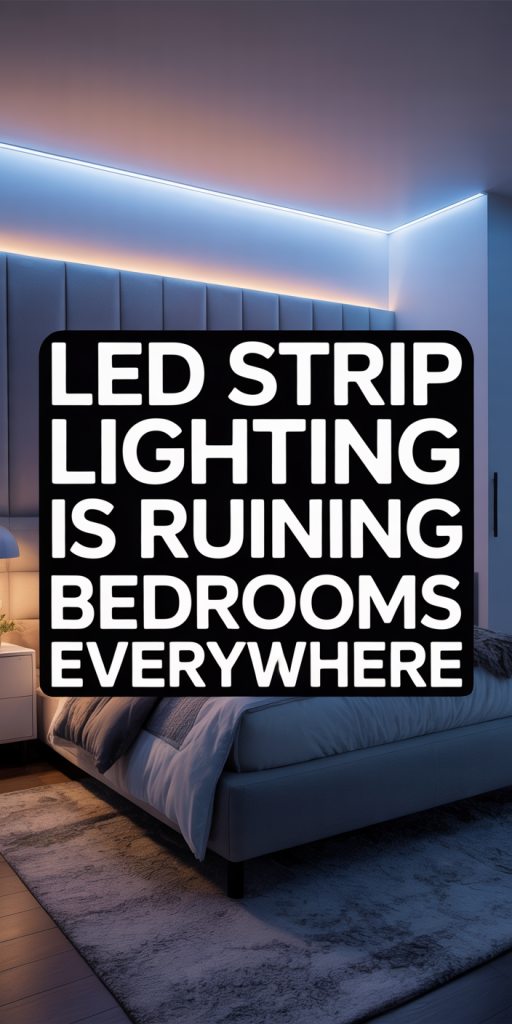
When we look beyond the initial wow-factor, several consistent design problems arise. LED strips often create flat, directional wash instead of nuanced illumination. They can highlight dust, emphasize imperfections in paint or wallpaper, and create sharp edges of light that read as harsh rather than ambient. Because many people place strips where they’re visible, behind TVs, under beds, or along crown molding, they become a compositional element. If the strips aren’t diffused or hidden properly, they announce themselves in a way that cheapens the design.
Color balance is another major issue. Strip LEDs are typically available in discrete color temperatures, 2700K, 3000K, 4000K, or in RGB(A) variants that mix colors electronically. Mixed lighting sources in a bedroom (table lamps, recessed cans, daylight through windows, and strip LEDs) can produce clashing color temperatures. That makes skin tones look off in the mirror, bedding colors appear washed out, and artwork lose vibrancy. It’s a subtle but pervasive problem: the room feels slightly ‘off’ and no one can immediately say why.
Then there’s scale. Small rooms with a single continuous strip can end up feeling rim-lit or haloed, which reduces depth and makes the space look smaller. Bright strips near the eye line cause glare and distract from focal points like the bed. In short, without thought to diffusion, placement, and temperature, LED strips shift from accent to dominant light source, often to the room’s detriment.
Harsh Light, Poor Color Rendering, And Sleep Disruption
Harsh light and poor color rendering are intimately tied. Many inexpensive LED strips have low CRI (Color Rendering Index), meaning they don’t reproduce colors naturally. CRI below 80 can alter how fabric, paint, and skin appear: a CRI of 90+ is generally what we want in bedrooms where appearance matters. When people buy RGB strips because they like the saturated hues, they rarely consider CRI at all. The result: a neon-ish cast that reads as unnatural.
But the design issue becomes a health issue when we talk about sleep. Blue-rich white light (around 5000K and higher) suppresses melatonin and signals wakefulness to our circadian system. Even colored LEDs can emit significant blue spikes depending on the diode chemistry. Using strips as a constant background glow in the evening, especially near the bed or behind a TV, can delay sleep onset, reduce sleep quality, and make waking groggier.
We’ve seen anecdotal reports and emerging research linking evening LED exposure to later bedtimes and lighter, more fragmented sleep. For most people, the fix is straightforward: use tunable white or warm dimming in the evening, limit blue-rich colors after sundown, and avoid bright strip placement near the headboard. If you keep a bedside strip for reading, make it a warm, low-CRI-tolerant option or use it as accent only while you’re awake and active.
Finally, brightness control matters. Many strips are capable of high lumens per foot: the same strip that creates a dramatic effect at 80% looks blinding at 100%. We recommend dimmers or controllers that allow for soft-start and progressive dimming to avoid abrupt, sleep-unfriendly transitions.
The Psychology Of Ambience: When Mood Lighting Backfires
Mood lighting is meant to set a tone, but ambience can backfire when it becomes a substitute for thoughtful design. We’ve all been seduced by the idea that color equals personality, teal for calm, red for passion, purple for mystery. But if the lighting reads as deliberate theatre rather than a coherent part of the room, it undermines authenticity. Guests and roommates may interpret constant colored lighting as trying-too-hard or juvenile.
There’s also a cognitive cost to variable light: when colors and intensities switch frequently, our brains spend energy processing those changes. That might be desirable during a party, but in a private space like a bedroom it can prevent relaxation. Over time, habitual switching between saturated colors and stark white can create a form of sensory whiplash. We’ve seen clients complain that their rooms no longer feel restful, the constant presence of dynamic lighting makes it harder to settle into a predictable nighttime routine.
Ambience should support behavior. If the goal is relaxation, warm, steady, low-intensity light works much better than animated hues. If the room doubles as a workstation or vanity, layered light with different zones makes sense, but those zones should be deliberate and easy to control. When mood lighting is used for social media photos more than day-to-day living, it stops serving the occupants’ wellbeing and starts serving an audience.
Common Installation Mistakes That Make Bedrooms Look Cheap
Poor installation is where many LED strip projects fail. We see the same mistakes repeatedly: exposed strips with visible adhesive, irregular runs with lumpy connectors, poor cable management, and strips placed too close to the eye line. These are avoidable errors that change an otherwise tasteful space into something that reads like a dorm room or a rental staging hack.
Other typical missteps include using non-diffused strips and relying on corner cuts that create harsh shadow lines. Many people mount strips directly onto painted surfaces without furring or a channel: over time the adhesive fails, edges sag, and dust collects where the strip meets the wall, tiny details that scream low-cost installation. Another common error is failing to account for the strip’s beam angle. LED strips designed for under-cabinet tasks throw light downward: when used for indirect cove lighting, their hot spots become obvious.
Controller placement is another overlooked factor. Cheap controllers and receivers stuffed behind nightstands can cause unreliable color shifts or sudden resets. Finally, many installations neglect serviceability: power supplies and controllers should be accessible for swapping when they fail, LED products don’t last forever.
The antidote is simple: plan for concealment, use aluminum channels with diffusers, choose continuous runs with clean soldering or quality connectors, and pay attention to where the strip sits relative to eye level. These small investments instantly elevate the perceived quality of the lighting.
Practical Alternatives And Better Ways To Use LED Lighting
We’re not anti-LED. LEDs are efficient, long-lived, and versatile. The issue is how they’re used. Here are practical alternatives and better uses that keep the benefits of LED technology while avoiding the common pitfalls.
First, prioritize quality: pick LED strips with a CRI of 90 or higher for areas where color matters. Look for tunable white strips that let you shift from warm to cool color temperatures across the day. If you want colors, use RGBW or RGBWW strips, which include dedicated white diodes for more natural tones.
Second, use LED strips as accents, not the primary illumination. Accent runs behind headboards, inside built-in shelving, or under floating nightstands work best when diffused. For primary lighting, consider soft overhead fixtures, bedside lamps with warm-dimming halogens or high-CRI LEDs, and wall sconces for reading.
Third, think about integration. Smart lighting ecosystems like Zigbee or Matter-compatible controllers allow scheduling and scenes. That means your strips can default to warm, dim scenes after sunset automatically. Automation reduces the temptation to keep saturated colors on all evening.
Fourth, invest in proper accessories: aluminum channels for heat dissipation and clean lines, frosted diffusers to eliminate hot spots, and quality power supplies sized with headroom rather than a hair’s-breadth fit. These choices cost more upfront but deliver a premium look that cheap strips can’t match.
Finally, consider hybrid solutions, combine LED strips for cove and accent work with decorative fixtures and task lighting. That way you keep the personalized aesthetic without sacrificing color fidelity, scale, or comfort.
Layered Lighting, Tunable White, And Placement Tips
Layered lighting is a foundational principle we lean on: combine ambient, task, and accent light to create depth and flexibility. For bedrooms, a simple layered plan might include: a central ambient source (flush mount or pendant), bedside task lights (sconces or table lamps), and discreet LED strip accents hidden in coves or behind furniture.
Tunable white is one of the most practical upgrades you can make. A tunable white LED strip shifts color temperature while maintaining consistent color rendering. We recommend programming warm tones (2700K–3000K) for evening and slightly cooler tones (3000K–3500K) for daytime tasks. If you have an app or smart hub, schedule the temperature shift to follow sunset and sunrise patterns automatically.
Placement tips:
- Keep strips out of direct sightlines. Hide them behind crown molding, under floating headboards, or within shelving recesses. Diffusion matters, use frosted channels.
- Avoid long continuous lines around small rooms: break runs into shorter segments to create controlled illumination that reads as intentional.
- Place color-capable strips away from mirrors and clothing storage: reflected colors can distort appearance and make dressing harder.
- For bedside accents, don’t place strips directly behind where your head rests. Instead, put a narrow recessed channel under the headboard’s lip or behind a shelf at eye level to soften the glow.
- Use multiple control zones. Separate bedroom zones for reading, relaxing, and getting ready will let you activate the appropriate light for the task without adjusting the whole room.
Those small placement decisions make all the difference. Thoughtful placement combined with tunable white functionality preserves ambience while keeping the space functional and restful.
How To Fix Your Bedroom Without Gutting The Space
If your bedroom currently reads like an LED showroom gone wrong, we’ve got a pragmatic fix-list you can tackle in a weekend. These steps prioritize low-cost changes and visible impact.
- Audit and simplify. Turn everything off and evaluate the room under neutral, warm ambient light. Note where strips are visible, where colors clash, and which sources feel dominant.
- Reduce blue and brightness. Set strips to warm (2700K–3000K) and lower brightness to 20–40% for evening use. If your controller allows scheduling, make warm/dim the default after sunset.
- Add diffusion. If the strip is visible, install an aluminum channel with a frosted diffuser. Channels are inexpensive and instantly remove hot spots and glare.
- Reposition or hide. Move strips out of direct sightlines, behind molding, inside shelf recesses, or under furniture lips. If hiding isn’t possible, create a purposeful reveal with a narrow gap and diffuser rather than exposed tape.
- Introduce layered light. Add a bedside lamp or adjustable sconce with a warm, high-CRI bulb for reading and dressing. If you don’t want new wiring, plug-in sconces work well.
- Improve control. Replace basic remotes with a dimmer or a smart controller that supports zones and automated scenes. This reduces the temptation to leave saturated colors on.
- Upgrade critical strips. Replace low-CRI or single-temperature strips in areas that affect appearance, around mirrors, vanities, and beds, with CRI 90+ tunable white or RGBW products.
- Organize power and hardware. Move power supplies into a ventilated closet or above built-ins and secure cables with raceways. Neater installations look higher-end and last longer.
Follow this sequence and you’ll transform the space without a full renovation. The goal is to make the lighting feel intentional and supportive, subtle changes deliver outsized improvements in both appearance and sleep quality.
Conclusion
LED strip lighting isn’t the enemy, but unchecked use of cheap, poorly planned strips is why LED strip lighting is ruining bedrooms everywhere. We’ve seen how bad placement, low CRI, wrong color temperature, and sloppy installation can turn a bedroom from restful to restless. The good news is that with modest investment, smarter product choices, and intentional placement, we can keep the benefits of LED technology without sacrificing comfort or design.
If you’re ready to act, start with an audit, prioritize diffusion and tunable white, and adopt layered lighting. Small changes produce big returns: better sleep, truer colors, and a bedroom that feels like a home rather than a stage.