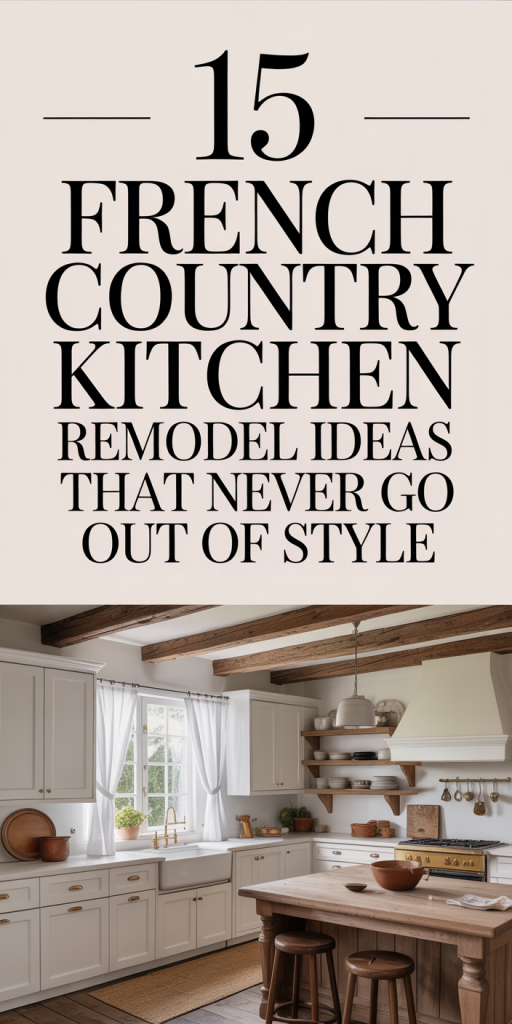
French country kitchens keep showing up on our inspiration boards for a reason: they balance warmth and refinement in a way that feels lived-in, not staged. In this text we’ll walk through 15 French country kitchen remodel ideas that never go out of style, practical choices and design moves you can rely on in 2026 and beyond. Whether you’re gut-renovating or doing a refresh, our approach focuses on materials, color, storage, and the small details that give a kitchen its character. We’ll explain why this aesthetic remains relevant, what color palettes and textures work best, how to choose cabinetry and countertops that age gracefully, and how to blend modern conveniences without losing vintage charm. Expect concrete recommendations, real-world trade-offs, and a few stylistic rules worth bending. By the end, you’ll have a clear roadmap to a kitchen that feels both timeless and unmistakably yours.
Why French Country Style Still Works Today
French country remains popular because it answers a fundamental design question: how do we make spaces that feel elegant but comfortable? The style originates in rural France where homes were built to last and enjoyed daily life, that combination of durability and warmth is what keeps it relevant now. In practical terms, French country blends natural materials, hand-crafted details, and a muted, sun-washed palette. That creates a backdrop that accommodates evolving trends: swap the textiles or lighting, and the room still reads as classic. For homeowners who want an investment that won’t look dated in five years, this is reassuring. Another reason it endures is human scale: open shelving, apron-front sinks, and farmhouse tables encourage gathering. That social quality fits our current focus on multifunctional kitchens, work, school, entertaining, so the style is as functional as it is pretty. Finally, French country tolerates imperfection. Distressed paint, visible joinery, and mixed metals add personality, which feels more authentic than ultra-polished minimalism. In short, it’s forgiving, adaptable, and inherently cozy, a rare combo in design.
The Classic Color Palette And Textures To Use
A timeless French country kitchen starts with a palette rooted in nature: warm creams, soft whites, muted blues, sage greens, and sun-baked ochres. These tones reflect rural landscapes and age well under changing light. When we pick colors, we favor layered neutrals as the base, think off-white walls with a warm undertone, then add accents in faded blue or Provence lavender. Texture matters as much as hue. Pair matte limewash or chalky paint on walls with plaster-like finishes and exposed wooden beams to add depth. Natural linens, burlap, and hand-thrown ceramics introduce tactile contrast. For cabinetry or island accents, consider glazing or a slightly weathered finish to impart softness without looking shabby. We recommend limiting high-contrast color pops to small accessories: a painted pantry door, patterned floor tiles in a small area, or a rustic rug. Those choices give visual interest without compromising the understated elegance French country is known for. Finally, balance warm and cool elements, a cool stone countertop against warm wood cabinetry, to maintain harmony and keep the kitchen feeling inviting year-round.
Cabinetry And Storage: Achieving Rustic Elegance
Cabinetry in a French country kitchen should feel solid and made to last. We lean toward paneled wood doors, beadboard, or inset cabinetry with visible joinery, details that read handcrafted. Paint or stain choices should highlight grain and texture: an island painted in a complementary color becomes a focal point while perimeter cabinets remain neutral. Open shelving is a hallmark (more on that later), but don’t sacrifice concealed storage: deep drawers for pots, pull-out spice racks, and corner solutions matter in daily life. For hardware, choose aged brass, oil-rubbed bronze, or hand-forged iron for authenticity. The key is scale and proportion, tall uppers can be softened with crown molding or a modest ledge where we place pottery. When budget limits options, prioritize good door construction and soft-close drawer boxes: finishes can be updated later. For cabinetry layout, integrate practical zones: a baking center with mixing bowl storage, a coffee nook near an outlet, and a cleaning area with under-sink organization. These thoughtful storage choices give a lived-in feeling and keep the kitchen functional while reinforcing that rustic elegance.
Countertops, Backsplashes, And Flooring
Countertops, backsplashes, and flooring form the visual foundation of any kitchen. In a French country remodel we choose materials that feel tactile and enduring: honed stone, butcher block, and aged marble for counters: hand-made or subway tile for backsplashes: and wide-plank wood or natural stone for floors. The surfaces should read as comfortable, not showroom slick. When selecting a backsplash, a simple glazed subway tile laid in a brick pattern keeps things classic, while hand-made encaustic tiles can add regional flair in a small area like behind a range. Grout color matters: slightly darker grout with light tile adds depth and hides wear better than stark white. Layering rugs or runners in high-traffic zones warms stone or wood floors and introduces pattern. For lower-maintenance options that still read traditional, we like porcelain tile that mimics terracotta or wood grain. No matter the material, aim for finishes that age gracefully, honed or tumbled textures hide scratches and patina over time, which complements the French country ethos.
Best Countertop Materials For Longevity And Charm
When durability meets charm, these countertops stand out for French country kitchens. First, honed granite: it resists heat and stains better than polished varieties and develops a soft patina that looks intentional. Marble is classic, its veins and warm aging are beautiful, but it requires more care: we suggest reserving marble for islands or low-traffic prep areas. Soapstone offers a deep, matte look and can be oiled to enrich color: small scratches blend in and contribute to character. Butcher block brings warmth and is perfect for prep zones: choose long boards and maintain them with periodic sanding and oiling. For a modern twist with traditional feel, we recommend engineered quartz with a honed finish that mimics natural stone while offering stain resistance: pick subtle veining to avoid a too-contemporary look. Whichever material we choose, plan for cutting boards and trivets: embracing a few sacrificial surfaces preserves the countertop and fits the lived-in aesthetic. Also, consider edge profiles, a simple eased or eased-and-beveled edge reads more authentic than overly ornate or contemporary bullnose edges.
Flooring Options That Age Gracefully
Flooring is where French country kitchens gain a sense of history. Wide-plank hardwood in oak or reclaimed pine develops a soft sheen over time and repairs easily: choose a medium-to-warm stain to keep the palette cohesive. If moisture is a concern, consider wide-format porcelain planks that mimic wood grain, they’re resilient but still feel traditional from a distance. Natural stone like honed limestone or travertine is quintessential for country kitchens: uneven surface textures and subtle color variation create authenticity. Terracotta tile is iconic, but modern sealed options resist staining and are easier to maintain: we often mix terracotta-look tiles with a runner to warm the space. Patterned encaustic tiles make a bold statement in a smaller area such as the cooking zone or entry, and they age attractively with wear. For open-plan homes, keep flooring consistent from kitchen to adjacent rooms to preserve flow. Finally, select finishes that hide wear: matte or slightly textured surfaces show less scuffing than high gloss, aligning with the forgiving nature of French country style.
Sinks, Open Shelving, And Functional Details
Sinks and shelving are functional features that also shape the look. An apron-front farmhouse sink is almost synonymous with French country: we prefer fireclay or cast-iron enameled sinks for their heft and classic silhouette. Double basins work well for busy households, but a single deep basin simplifies cleanup and echoes historic kitchens. Open shelving displays pottery, glassware, and textiles, but the key is curated clutter: group items by color and texture to avoid a messy vibe. Use solid wood or aged iron brackets to reinforce the rustic feeling. For functional details, add a pot-filler over the range, a pull-down faucet with a bridge design, and integrated towel bars on islands. Don’t forget practical touches like garbage pull-outs, under-shelf lighting for open storage, and a dedicated drawer for linens. Window treatments should be light and natural, linen or cotton Roman shades filter sun without blocking views. These small decisions shape everyday experience: when we design with both beauty and use in mind, the kitchen becomes a room we actually want to spend time in.
Lighting, Hardware, And Decorative Finishes
Lighting and hardware are the jewelry of a French country kitchen. Layered lighting, recessed cans for ambient light, pendant fixtures over islands, and under-cabinet task lighting, gives us control and mood. For pendants, consider hand-blown glass, aged metal shades, or woven rattan to maintain that lived-in look. Chandeliers above dining nooks can be rustic wrought iron or a softer patinaed brass for warmth. Hardware should feel tactile: rounded knobs, cup pulls, and long backplates in finishes like aged brass, pewter, or blackened iron complement wood tones and cabinetry finishes. Decorative finishes such as a glazed cabinet treatment, subtle distressing on furniture pieces, or a soft patina on metal vent hoods add authenticity. For wall finishes, a hand-troweled plaster or limewash adds depth and reads as older craftsmanship. We also like to incorporate artisan elements, hand-painted tiles, a vintage scale on the counter, or woven baskets, which add story and texture. Thoughtful lighting and hardware choices make the kitchen feel intentional and well-loved.
How To Blend Modern Comforts With Vintage Character
Balancing modern convenience with antique character is where many remodels succeed. We recommend starting with durable modern systems, efficient appliances, LED lighting, and high-performance plumbing, then disguise or complement them with period-appropriate facades. For example, panel-ready refrigerators and dishwashers let us keep clean lines while matching cabinetry. Choose modern ranges with classic knobs and a simple hood to retain a vintage vibe. Smart home tech can be integrated discreetly: under-cabinet outlets with USB ports, concealed charging drawers, and app-controlled lighting that preserves the look but adds convenience. When selecting appliances, favor matte or stainless steel finishes paired with warm hardware to avoid a cold, clinical feel. Another tactic is to layer new with old: pair a vintage armoire as a pantry with contemporary soft-close drawers, or install reclaimed shelving above a streamlined countertop. Finally, don’t over-restore antiques, let them show patina. That honest wear paired with modern reliability creates a kitchen that’s beautiful, comfortable, and practical for everyday life.
Conclusion
A French country kitchen remodel offers a rare combination: warmth, longevity, and versatility. By grounding decisions in materials that age well, honed stone, warm woods, hand-finished metals, and layering in functional modern comforts, we create kitchens that feel both timeless and tailored to our lives. The 15 ideas we’ve outlined are less about rigid rules and more about a mindset: choose authenticity, craft, and human scale. Small choices add up, the right countertop edge, a curated open shelf, an aged brass pull, and together they make a kitchen that invites gatherings for years to come. If you’re planning a remodel in 2026, use these tips as a flexible framework, not a checklist: personal touches will always be the secret ingredient.