Accent Walls Are Dying (And It’s About Time): Why Designers Are Moving On In 2026
We’ve all seen the photo: a moody navy or deep emerald wall in an otherwise neutral living room, a single wall painted to ‘anchor’ the space. For a decade, accent walls were the shorthand for personality and instant refresh. But in 2026 the design world is moving on. In this piece we’ll explain why accent walls are losing favor, how shifting tastes and technology have changed how we use color, and, most important, what better, longer-lasting approaches are replacing them. Whether you’re planning a full remodel or just want to update a rental, we’ll give practical, stylish alternatives that achieve the same goals without the awkward side effects that made accent walls fall out of fashion.
The Rise And Fall Of The Accent Wall
Accent walls rose to prominence as a fast, inexpensive way to add drama. In the early 2000s designers and DIYers embraced the idea: paint one wall in a bolder color, and the room suddenly had focus, depth, and personality. It worked well for open-plan spaces, where visual anchors were needed to define living areas, and for renters who wanted a statement without committing to a complete repaint.
But fashions shift. By the 2010s the accent wall had become ubiquitous, and then, predictable. Photographers began staging rooms with the exact same single-color treatment. Social feeds filled with before-and-after shots that started to look the same. As homeowners matured in their design literacy, the limits of the accent-wall strategy became obvious. We noticed the problems: awkward sightlines where the standout wall clashed with adjoining spaces, the difficulty of integrating the wall with furniture and textiles, and the way a single bold plane can date a room as tastes evolve.
The decline of the accent wall has been gradual but steady. Designers began to favor approaches that offered richer, more integrated layers of interest. Instead of asking “Which wall should we paint?” we started asking “How can the whole room sing together?” The accent wall’s rise and fall is less about a dramatic repudiation and more about a maturing palette: people want depth and cohesion, not a single loud note.
Why Accent Walls No Longer Deliver What Homeowners Want
An accent wall promises impact for minimal cost, but homeowners today expect more from their spaces. Several practical and aesthetic issues explain why that promise no longer holds up.
First, the visual imbalance. A single wall of saturated color can make a room feel lopsided. From different angles the wall competes with natural sightlines, distracting instead of harmonizing. That’s especially true in open-plan homes where rooms bleed into each other: an accent wall that works in isolation often fails when seen across the kitchen or down a hallway.
Second, resale and longevity. We’re living in a market where buyers value neutral, move-in-ready spaces. A dramatic accent wall can be a turnoff, it reads as a paint job that must be fixed. Even when homeowners love the color, trends shift. What felt fresh five years ago can feel dated now, and repainting is a hassle many want to avoid.
Third, the limited design payoff. Accent walls often solve only one problem: adding color. But color alone doesn’t create texture, warmth, or architectural interest. Homeowners increasingly want multifunctional solutions, color that also improves acoustics, surfaces that resist wear, or design choices that conceal rather than highlight imperfections.
Finally, the proliferation of alternatives. With better paint technologies, affordable textured finishes, and the rise of integrated millwork, there are now many ways to achieve the goals accent walls once claimed. People prefer layered, subtle approaches that grow with the home instead of a single theatrical gesture that ages badly.
How Trends, Technology, And Lifestyle Changed Color Use
Color use in interiors has evolved alongside cultural and technological shifts. We’re not just choosing hues differently, we’re choosing according to new priorities.
Trend cycles: The last decade saw a pendulum swing from maximalism to minimalism and now into curated comfort. After years of stark monochrome and ultra-minimal palettes, people sought color that felt personal and layered. That pushed designers toward palettes that work across rooms, tonal gradations, muted saturation, and nature-inspired hues, instead of isolated punches of color.
Paint technology: Advances in paint formulas changed the game. Low-VOC and washable paints allow homeowners to pick bolder colors with less environmental guilt and easier maintenance. But more consequential is the palette tools we now use: digital visualizers, AR apps, and sample pots with truer pigment representation. These tools encourage experimenting with color across multiple surfaces, which naturally favors integrated approaches over a single accent wall.
Lifestyle shifts: We work from home, entertain differently, and value flexible, calming environments. Homes serve multiple functions, so finishes must be resilient and adaptable. Accent walls often prioritize spectacle over comfort. People now expect surfaces to perform, for durability, acoustic dampening, or easy maintenance, which steers choices toward textured wall panels, smart textiles, and plaster finishes that deliver both beauty and function.
Cultural influences: Global travel and cross-cultural aesthetics have democratized taste. Earthy tones, artisan techniques, and subtle patinas reflect a desire for authenticity and handcrafted character. Those qualities don’t translate well to a single flat color patch: they need layering, materiality, and craftsmanship, qualities accent walls rarely provide.
Better Alternatives That Achieve The Same Goals Without The Drawbacks
If the aim of an accent wall was to create focus, personality, and depth, we can achieve those goals in smarter ways. Below are alternatives that deliver greater flexibility, longevity, and design sophistication.
- Layered paint techniques and color blocking that read across a room rather than isolating one surface.
- Architectural details, texture, and integrated finishes that add tactile interest and better hide wear.
These approaches preserve the benefits of an accent wall, focal point, drama, and color, while reducing the visual and practical downsides. We’ll explore two categories in detail below.
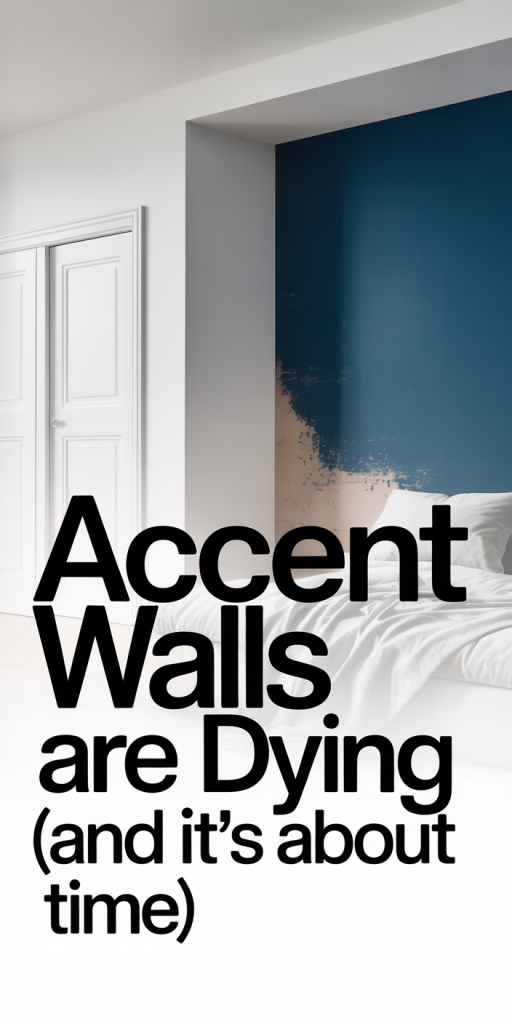
Layered Paint Techniques And Color Blocking
Layered paint techniques and thoughtful color blocking are the easiest ways to move beyond the single accent wall. Instead of a solitary painted plane, we work with complementary hues across trim, doors, ceilings, and cabinetry to create cohesion.
Ombré and gradual shifts: Subtle gradient treatments across a wall or between adjacent walls draw the eye without demanding dominance. An ombré effect, darker at the base, lighter above, adds perceived height and depth, and it ages well because the transition is soft and adaptive to furnishings.
Two-tone treatments: Painting the lower third of walls a deeper shade with a lighter color above creates a grounded, tailored look. It’s historically inspired (think classic wainscotting) but contemporary in execution when paired with modern colors or matte finishes. We recommend coordinating the lower color with trims and furniture rather than leaving it an isolated statement.
Color blocking across built-ins and doors: When we use color strategically on shelves, built-in cabinets, and interior doors, the hue becomes part of the architecture rather than a single focus. Painting the inside of a bookcase a rich color, then carrying that color onto a door or cabinet face creates rhythm and intentionality. This approach is especially effective in open-plan homes because the color reads across multiple sightlines.
Accent ceilings and trims: The ceiling is an underused canvas. Painting the ceiling a slightly warmer or cooler tone than the walls can make a room cozier or more expansive. Similarly, painting baseboards, window frames, or moldings a contrasting shade introduces definition without the starkness of a single bold wall.
Why this works: Layered treatments let us tailor color intensity to the room’s function. A home office can have a more saturated built-in for focus, while adjacent living spaces keep softer complementary tones. Because color is dispersed, it feels integrated and flexible, easier to update with accessories or minor paint adjustments rather than a full repaint.
How To Transition Your Home Away From Accent Walls—Practical Steps
Moving away from accent walls doesn’t require a full overhaul. We recommend a phased, low-risk strategy that protects your budget and preserves your home’s resale appeal.
- Audit your sightlines and function: Walk your home and note where the accent wall visibly dominates from other rooms. Prioritize spaces where the wall creates tension or conflicts with adjacent palettes. Also consider function: does the room need improved acoustics, storage, or lighting?
- Start small with finishes: Replace a painted accent wall with a textured finish or wallpapered panel behind the focal furniture rather than repainting the whole room. Peel-and-stick wallpapers and textile panels are great for renters and low-commitment homeowners.
- Introduce color in layers: Paint trims, doors, or the inside of built-ins to carry the accent hue across multiple planes. If you like the color, carry it subtly so it ties rooms together instead of isolating them.
- Add architectural detail: Simple, cost-effective modifications, picture rails, fluted molding, or a shallow built-in shelf, immediately provide structure and reduce the sense that a single wall is trying to do all the work.
- Use textiles and art strategically: A gallery wall, a large woven hanging, or floor-to-ceiling curtains can replace the need for a painted statement wall while adding warmth and texture. Rotate textiles seasonally to keep the space feeling fresh without new paint.
- Improve lighting: Adjusting light levels can diminish a harsh contrast caused by an accent wall. Add dimmers, change bulb temperatures, or install accent lighting to bring cohesion between planes.
- Test before committing: Use sample panels, digital mockups, and temporary installations to preview changes. Live with those samples for a week to see how the colors and textures behave at different times of day.
- When repainting is necessary, choose anchor colors: Opt for versatile, slightly desaturated hues that complement multiple finishes. Avoid ultra-saturated single-wall colors in favor of tones that harmonize across textiles, millwork, and flooring.
By taking these steps, we move the focus from a single dramatic gesture to a layered, resilient strategy that keeps our homes flexible and future-friendly.
Conclusion
Accent walls served a purpose: quick impact with minimal cost. But as our expectations for durability, cohesion, and function have evolved, the single painted statement no longer meets modern needs. We’re choosing approaches that disperse color, add texture, and integrate architecture, solutions that look thoughtful today and age gracefully tomorrow. If you’re ready to update a space, start by thinking in layers: carry color across surfaces, invest in texture, and make finishes do more than just look pretty. The result will be a home that feels intentional, lived-in, and genuinely ours, without relying on a single wall to do all the work.