Why Rugs That Are Too Small Should Be Banned: A Design Manifesto For More Balanced Rooms In 2026
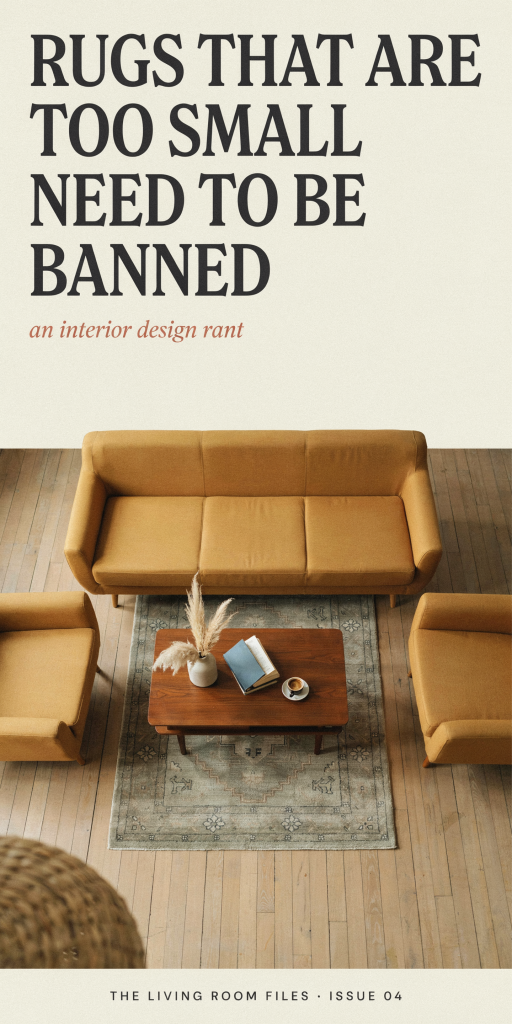
We’ve all seen them: a beautiful sofa paired with a postage-stamp rug, a dining table hovering over a doily-sized circle, a bed with only the tips of the nightstands resting on a sliver of textile. Those tiny rugs are jokers in an otherwise well-designed room. This piece isn’t just about aesthetics or a petty gripe, it’s a considered argument for shifting how we buy, sell, and style rugs so interiors feel balanced, safe, and intentional. Drawing on proportion, human perception, and practical use, we’ll show why undersized rugs are more than a style mistake. We’ll also give actionable guidance for choosing the right size, fixes when a rug is already too small, and what retailers and stylists should change to stop the problem at the source. By the end, we want you to see rug sizing not as an afterthought, but as a foundational design decision that deserves standards.
The Case Against Undersized Rugs: More Than Aesthetic Pet Peeve
Undersized rugs are often dismissed as a harmless stylistic quirk. We think that’s a mistake. When a rug is too small for its setting it sends mixed visual signals: it suggests the room is smaller or cluttered, it breaks the rhythm of furniture groupings, and it highlights negative space in ways that feel accidental. Those effects matter because humans interpret interior space quickly, within seconds of entering a room we register scale, hierarchy, and flow. A tiny rug interrupts that reading and creates cognitive friction. Beyond visual annoyance, small rugs frequently betray the intent of the design. Designers use rugs to anchor groups, define circulation paths, and provide texture transitions. When the rug is undersized it fails at each purpose.
We should also consider the cultural and economic context. As open-plan living and multifunctional rooms proliferate, the rug becomes a critical tool for spatial definition. Spending on high-quality rugs, then placing them incorrectly, wastes resources and undermines craftsmanship. In short: undersized rugs are a design failure with aesthetic, functional, and economic consequences, not just a pet peeve.
How Small Rugs Break Visual Balance And Perception
Visual balance depends on proportion, scale, and the way elements relate to one another. A rug that’s too small creates an imbalance because it reduces the perceived scale of surrounding furniture and leaves awkward margins that read as mistakes. For example, a sofa floating over a small rug appears unanchored: the eye struggles to determine the intended focal point. Negative space becomes negative attention.
We also need to talk about perceptual illusions. Small rugs tend to fragment the visual field, which can make spaces feel busy or cramped. Conversely, correctly sized rugs create a frame that unifies a composition, producing a sense of calm and coherence. Color and pattern amplify these effects, bold patterns on small rugs can dominate without offering structural support, while muted, large-format rugs provide a background that lets furniture and art breathe.
Finally, scale is relational: a rug’s size should be chosen relative to furniture and room dimensions, not in isolation. When we ignore that relationship, the entire interior loses its hierarchy: the rug stops being an anchor and becomes a distraction.
Safety, Comfort, And Functional Problems Caused By Tiny Rugs
Design is more than how a room looks: it’s how a room functions. Tiny rugs often create tangible problems. From a safety standpoint, undersized rugs are tripping hazards. When only a portion of furniture legs rest on a rug, edges curl or catch, and people step on hard floor immediately after stepping off a soft surface, both scenarios increase fall risk. In high-traffic areas, small rugs move and bunch, especially when paired with inadequate rug pads.
Comfort is another issue. Rugs provide acoustic dampening and thermal insulation. A rug that’s too small will fail to reduce echo or cold floors across a seating group, making the space less comfortable for conversations or long periods of use. Functionally, small rugs don’t define zones effectively. In open-plan layouts, an undersized rug won’t delineate a living area from a dining area, leading to awkward furniture arrangements and inefficient circulation.
There are also maintenance concerns: dirt and wear concentrate on a small footprint, leading to uneven fading and premature degradation. In all these ways, undersized rugs are practical liabilities, not merely stylistic missteps.
How To Choose The Right Rug Size For Your Space
Choosing the right rug size is an exercise in proportional thinking. We recommend starting with the room’s major furniture groupings and measuring them rather than guessing by eye. A practical rule: aim for a rug that visually unites a seating or dining zone and leaves a border of exposed floor around it, this border helps the rug feel intentional rather than pasted on.
Consider traffic patterns next. Ensure at least 18–24 inches of floor between the rug edge and walls in formal spaces, while leaving more generous walkways in high-traffic open-plan rooms. Evaluate door swings and circulation paths so rugs don’t obstruct movement.
Material and pile height also influence perceived size: low-pile, light-colored rugs often read larger, while deep, dark shag rugs can make the area feel smaller. For patterned rugs, scale matters, large motifs suit bigger rugs, while small repeats work on medium pieces. Eventually, our selection method is simple: measure the furniture footprint, add an appropriate border, and buy the largest rug that fits the room’s circulation and budget. In most cases, larger is better than smaller.
Living Room Rug Sizing: Anchoring Seating Areas Correctly
In living rooms, the rug’s role is to anchor seating and create a social zone. We recommend two reliable approaches. First, choose a rug large enough that at least the front legs of all major seating pieces, sofa and primary chairs, sit on the rug. This creates a unified grouping and visual connection. Second, for more spacious rooms or if you prefer a grander look, select a rug large enough for all furniture legs to rest fully on the rug. That feels intentional and luxurious.
Practical dimensions often translate to standardized sizes: in many sofas, a 9×12 or 8×10 rug will work well: smaller living rooms may accept a 6×9 if furniture placement allows front-leg-on coverage. Measure the seating footprint: the rug should extend beyond the coffee table by at least 12–18 inches on each side to prevent the table from appearing isolated. When in doubt, test with masking tape to visualize the rug’s edge before purchasing. That quick mock-up saves expensive returns and ensures the rug performs as an anchor, not a floaty afterthought.
Bedroom And Dining Rug Sizing: Proportions That Work
Bedrooms and dining rooms demand different rules but the same principle: rugs should support the primary activity area. For bedrooms, we usually aim for a rug that extends beyond the sides and foot of the bed by at least 18–24 inches. With a king bed, an 8×10 or 9×12 rug often works: for a queen, a 6×9 or 8×10 can suffice depending on bedside table placement. The goal is to provide a soft landing when you step out of bed and to frame the bed as the focal point.
Dining rooms require a rug size that accommodates both the table and chairs when pulled out. We recommend adding at least 24 inches to each side of the table’s dimensions so chairs remain on the rug even when occupied. That usually means a 9×12 rug for a standard 6–8 person table. Undersized dining rugs create awkward moments where chairs catch on the rug edge or scrape across the floor. Correct proportions in bedrooms and dining areas contribute directly to comfort and usability, two measures of good design we can’t ignore.
Common Buying Mistakes And Practical Fixes For Tiny Rugs
We see the same buying mistakes over and over. People rely on standard stock sizes without measuring their furniture, choose rugs based on price rather than proportion, or pick a rug to fit an awkward corner without considering the seating footprint. Retail photos are often staged with professional styling that misleads shoppers into thinking smaller rugs look intentional. Another trap: buying a rug that matches a single element (like a sofa color) and ignoring scale.
Fixes are straightforward. If you already own a rug that’s too small, assess whether it can be repurposed, entryways, bathrooms, or layered looks (more on layering below) are common alternatives. If the rug must stay in the primary zone, consider repositioning furniture so that at least the front legs are on the rug, or combine two rugs for a larger effective footprint. Finally, prioritize buying the largest rug your budget and room will allow: custom sizing is more affordable than ever and often worth the investment to achieve proportion.
Layering, Rug Pads, And Alternatives To Replace Undersized Rugs
Layering is an elegant and practical response when a single rug falls short. We often place a large neutral base rug and top it with a smaller patterned rug to achieve both scale and personality. This combo creates a larger visual field while allowing the smaller piece to contribute pattern, texture, or color. When layering, ensure both rugs are secured with high-quality rug pads to prevent slipping and bunching.
Rug pads themselves deserve attention: a properly sized pad increases grip, reduces wear, and adds cushioning, especially important when using a thin or small rug. If replacing a rug outright isn’t an option, consider alternatives like runner configurations to elongate a seating area or modular carpet tiles for custom footprints.
Finally, for renters or tight budgets, temporary solutions like large woven throws, canvas carpets, or even multiple affordable rugs stitched together can produce a correct scale without a huge outlay. Functionally, the objective is simple: increase the rug’s effective area so it anchors, protects, and harmonizes the room.
Guidelines For Retailers, Stylists, And Showrooms To Stop Selling Bad Fits
Retailers and stylists play an outsized role in how people understand rug sizing. We believe they should adopt clear, consistent guidelines to help customers make better choices. First, showrooms must display rugs in context, full-room vignettes with accurate proportions, and include dimensions of both the rug and the furniture in the display tags. Product pages should feature multiple images: an overhead plan, a staged photo with dimensions called out, and a video or interactive tool to visualize rugs in various room sizes.
Second, sales teams should be trained to ask simple questions, room dimensions, furniture footprints, and traffic patterns, instead of pitching stock sizes. Return policies should discourage undersized purchases by offering in-store visualization sessions or virtual consultations. Third, retailers can influence supply by promoting larger sizes and custom options, and by featuring educational content on rug selection prominently on product pages.
If showrooms and e-commerce platforms commit to these practices, we’ll see fewer impulse buys and more intentional purchases. That change reduces returns, increases customer satisfaction, and elevates design literacy, an outcome that benefits everyone.
Conclusion
Rug sizing matters because it shapes how we experience rooms, visually, functionally, and emotionally. We’ve laid out why undersized rugs aren’t merely a styling hiccup but a broader design problem that affects perception, safety, and comfort. The fix is practical: measure first, prioritize larger rugs, and use layering or alternatives when necessary. Retailers and stylists must also shoulder responsibility by educating customers and presenting products in real-world scale.
If we adopt these standards together, buyers, sellers, and designers, we’ll end the era of tiny rugs that undermine great interiors. Let’s make balanced rooms the norm in 2026: a small rule for a big improvement.