Open Shelving In Kitchens Is Over: Why The Trend Failed And What To Use Instead In 2026
Open shelving exploded into kitchens a decade ago as a lifestyle-friendly, Instagram-ready shorthand for casual, airy design. We bought into the idea that replacing upper cabinets with floating shelves would instantly make a space look larger, more curated, and, crucially, more personal. But as the novelty waned and everyday life returned, many homeowners discovered that open shelving often created more problems than it solved. In this text we’ll trace how open shelving rose to fame, explain the practical and stylistic reasons it failed for most households, and offer modern, evidence-based alternatives that deliver the same aesthetic benefits without the daily hassle. If you liked the look but not the maintenance, read on, we’ve mapped a transition plan that keeps style and adds real-world functionality for 2026 and beyond.
How Open Shelving Became The Must-Have Kitchen Trend
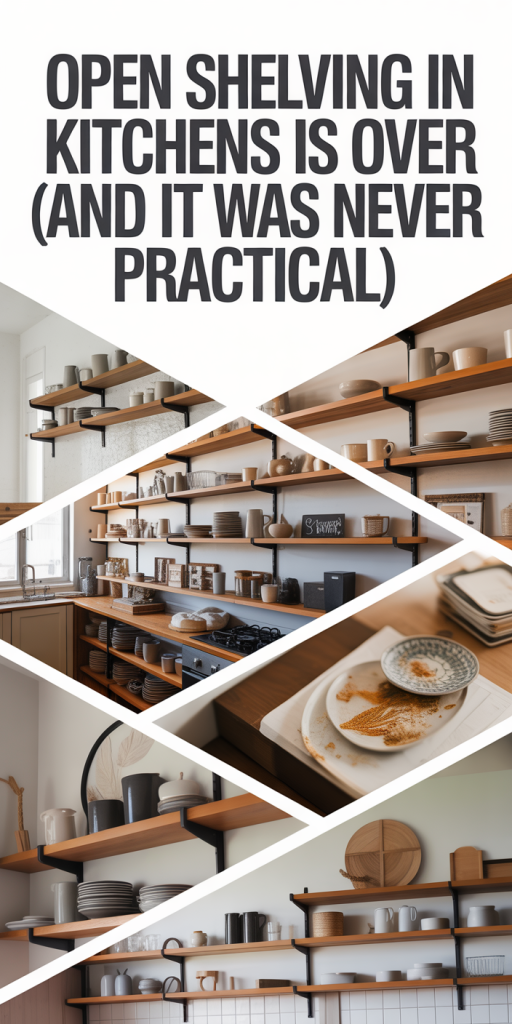
Open shelving’s rise was hardly accidental. We saw a confluence of cultural, economic, and media forces push the idea into mainstream kitchens. First, social media platforms and interior-design blogs favored photographs over lived-in reality. A neatly styled row of ceramics on a white floating shelf photographs beautifully: it signals minimalism and hospitality in a single frame. Influencers and magazines amplified that visual shorthand, and soon many homeowners equated open shelving with modern taste.
Second, the DIY and budget-conscious market embraced it. Removing upper cabinets and swapping in inexpensive shelves felt like a fast upgrade that promised a big visual payoff for relatively little money. In renovation shows and affordable-makeover posts, open shelving was framed as an accessible shortcut to high-end style.
Third, a broader cultural shift toward “displaying the personal” made exposed storage seem appealing. People wanted kitchens that reflected their collections, heirlooms, and everyday objects. Open shelves offered an immediate way to showcase personality without custom cabinetry.
There was also an ideological layer: the move away from enclosed storage paralleled trends in architecture favoring openness and transparency. That philosophical appeal, openness equals honesty, clutter equals stress, convinced many designers and homeowners that open shelving was not only stylish but morally superior.
None of this is surprising. Trends often begin with great visuals and a story that feels right. But visuals and stories are not the same as long-term usability. As we’ll explain next, the day-to-day realities of cooking, cleaning, and living with children and pets pushed open shelving out of favor for many households.
Practical Drawbacks That Made Open Shelving Unworkable For Most Homes
When we move from staged photos to actual kitchens, several recurring, predictable problems emerge. These problems aren’t merely aesthetic: they affect hygiene, storage efficiency, and the mental load of maintaining a home. Below are the main practical drawbacks we see over and over, with the specific issues broken into focused subheadings.
Design Myths Versus Reality: Why It Didn’t Deliver On Style Promises
Open shelving promised several design benefits: perceived spaciousness, instant personality, and a lower-cost route to a high-end look. The reality has been more nuanced.
Perceived spaciousness often depends less on what’s on the wall and more on lighting, color palette, and the proportion of cabinetry to appliances. In small kitchens, a row of open shelves can actually make the wall feel heavier if items are densely packed. We learned that keeping shelf contents sparse to maintain a sense of airiness undermines storage utility.
The promise of instant personality relies on careful curation. But personal items on display need to work visually: otherwise they read as clutter rather than character. We’ve seen homeowners with beautiful dish collections who still can’t make the shelves look intentional because everyday utilitarian items, blender jars, coffee filters, storage lids, don’t photograph well.
Cost savings are often overstated. Basic shelving may be cheaper than custom cabinetry on the surface, but when you factor in the loss of organized storage, the need to buy additional lower-cabinet organizers, or the temptation to retrofit drawers and pantry systems later, the initial savings can evaporate. Plus, poorly installed shelving can sag or require costly reinforcement if heavier items are stored on them.
In short, the design wins were real in specific scenarios, stylish apartments, show homes, or kitchens used mostly for entertaining. For full-time family kitchens, though, the trade-offs have proven less attractive than marketing suggested.
Smarter Alternatives To Open Shelving (That Look Just As Good)
We’re not arguing for a return to heavy, top-to-bottom cabinets everywhere. Instead, we recommend flexible, mixed strategies that preserve the aesthetic benefits of open shelving without its practical downsides. Below are alternatives that give us the best of both worlds.
Glass-front cabinets: These provide the visual depth and display capability of open shelves but protect contents from dust and grease. Frosted or seeded glass hides clutter while still offering glimpses of what’s inside. Glass fronts work particularly well for dishes you want to show off without the maintenance burden.
Partial open shelving + cabinets: Use open shelving sparingly for curated displays, one or two floating shelves, while keeping most upper storage enclosed. This approach lets us feature beloved items but keeps daily-use storage behind doors.
Open-backed cabinets: With a closed box and an open front or partially open design, these units create depth and a framed display area that reads like intentional design rather than exposed storage. They can be inset with a contrasting backsplash or painted interior for visual interest.
Appliance garages and roll-up doors: These elements hide small appliances while maintaining easy access. They keep counters clear and avoid the visual mess of often-used devices.
Pull-out pantry systems and drawer stacks: These increase organization while keeping contents out of sight. Deep drawers with vertical dividers are especially effective for pots, pans, and Tupperware, items that look messy on open shelves.
Integrated lighting and open-shelf mimicry: Optical tricks, under-cabinet lighting, open-shelf-like recessed niches, and glass-front uppers, offer the same brightness and perceived openness without exposing everything to the room.
When we plan a kitchen today, we mix these strategies to prioritize ease of use. The point is to be intentional: choose visible storage for items you use less frequently or items you genuinely enjoy displaying, and pick concealed storage where function matters most.
How To Transition From Open Shelves To Practical, Attractive Storage
If we’re replacing open shelves in an existing kitchen, the switch can be straightforward and budget-friendly if we follow a sequence that minimizes disruption.
- Audit what’s on the shelves: Before ripping anything out, catalog what’s displayed and how often each item is used. We typically find that 20–30% of items are used daily, another 30% occasionally, and the rest are purely decorative. That informs what needs accessible storage versus what can be boxed or moved.
- Start with partial enclosures: If you want a low-cost trial, add cabinet doors to the existing shelf structure rather than installing full cabinetry. Custom doors can be fitted to floating shelves or open frames and painted to match the kitchen for a cohesive look.
- Introduce concealed storage where it counts: Convert a section of upper shelves into shallow cabinets or install a deep drawer system beneath the countertop. We prioritize storing cookware, food storage lids, and frequently used small appliances in concealed spaces.
- Curate remaining open displays: Keep only the items that are truly beautiful and used rarely, vintage glassware, ceramic serving pieces, or curated cookbooks. Limit the number of objects per shelf and use consistent color palettes to avoid visual chaos.
- Add functional design features: Install under-shelf lighting, spice rail pullouts, or magnetic knife strips on the backsplash to reduce clutter on the remaining shelves. These additions increase utility without compromising style.
- Test and iterate: Live with the changes for a few weeks and note pain points. Often, small tweaks, like swapping a shelf for a cabinet or adding a drawer organizer, solve most problems.
By moving deliberately and prioritizing utility first, we can retain much of the visual charm that drew us to open shelving while eliminating the routine frustrations that come with exposed storage.
Environmental, Cost, And Long-Term Value Considerations
A responsible approach to kitchen design in 2026 means evaluating environmental impact, lifecycle cost, and resale value, not just how a shelf looks on Instagram.
Environmental impact: Custom cabinetry and solid-wood shelves can have higher embodied carbon than simple floating shelves, especially if made from tropical hardwoods or materials with high VOC finishes. But, longevity matters. Cabinets that last decades and reduce the need for replacements often have lower lifecycle impact than cheap shelving that needs frequent repair or replacement. We recommend choosing sustainably sourced woods, low-VOC finishes, and durable hardware to reduce long-term environmental costs.
Cost analysis: The upfront savings of open shelving are often apparent, but when we model total cost of ownership over 10–15 years, concealed storage frequently offers better value. Consider costs for additional cleaning supplies, potential replacement of sagging shelves, and the resale penalty if future buyers prefer enclosed storage. Investing a bit more in quality cabinetry or hybrid solutions typically provides better function and higher perceived value at resale.
Resale and market preferences: Real estate trends show that buyers prioritize functionality and storage. While some buyers appreciate curated display spaces, most prefer practical, well-organized kitchens. In many markets, a kitchen that balances aesthetic touches with ample concealed storage sells faster and at a higher price point than one dominated by open shelving.
Waste reduction and adaptability: Modular cabinetry and adjustable interior fittings let us adapt storage as needs change, kids grow, hobbies evolve, or lifestyle shifts. This adaptability reduces waste over time by making the kitchen future-proof. Open shelving offers little adaptability beyond adding hooks or baskets, which is another long-term drawback.
In short, when we factor sustainability, lifecycle costs, and resale into the equation, the smarter, often more sustainable investment is a hybrid approach that privileges durability and function while allowing for tasteful display.
Conclusion
Open shelving made a compelling promise: effortless style and personality. But in real kitchens, where we cook, clean, and live, the practical downsides became impossible to ignore. Dust, visual clutter, inefficient storage, and ongoing styling pressure turned many once-enthusiastic adopters away.
We believe the right move for most households in 2026 is a balanced one: keep the visual warmth that open shelving offers but pair it with enclosed, organized storage that handles the daily realities of life. Glass-front cabinets, partial open shelving, deep drawers, and smart pantry systems give us flexibility, hygiene, and long-term value. If you loved the look, you don’t have to give it up, just be strategic about where and how you show it. That way, the kitchen becomes both beautiful and livable, and you get back the time and peace of mind you lost to shelf maintenance.