A Calm Christmas Craft Afternoon: A Parent’s Guide to Low‑Stress Creativity
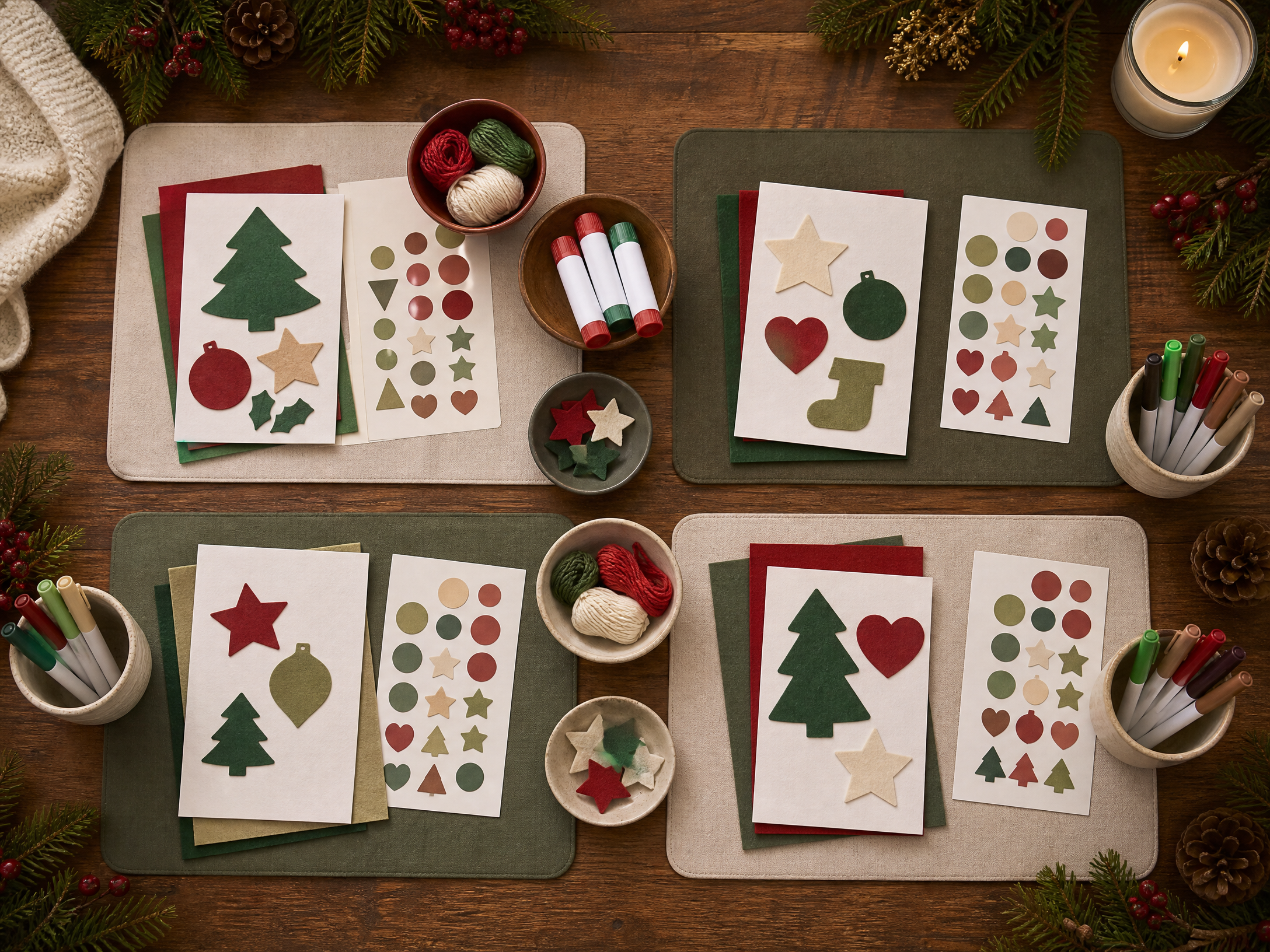
An afternoon of simple, seasonal crafting can be one of the warmest holiday memories for children — and it doesn’t have to be chaotic. With a little planning, a few low‑mess materials, and clear routines, you can host a relaxed session that keeps energy low and creativity high. The goal is connection and play, not perfection or a perfect Pinterest table.
Start by choosing projects and supplies that match the ages and skills of the children attending, and always use age‑appropriate materials. Read and follow product directions for paints, adhesives, and tools so you can anticipate how much adult help will be needed. With boundaries that encourage independence and a setup that contains mess, the whole family can enjoy a peaceful, productive craft afternoon.
1. Pick a low‑mess craft format
Choose projects that focus on one medium at a time and avoid activities that require lots of liquid, sanding, or airborne glitter. Paper crafting, sticker mosaics, washable marker art, pre-cut felt pieces glued with sticks, and yarn wrapping are examples that keep the table tidy. Limiting the number of techniques prevents spills and reduces the need for constant redirection.
Also think about the time and attention the format asks for. Simple, repeatable steps (stick a shape, trace and cut a line, paint inside a bounded area) suit short attention spans better than multi-step assemblies. Offer projects with a clear beginning and finish so children get the satisfaction of completion without dragging a mess out over hours.
2. Set up a compact supply station
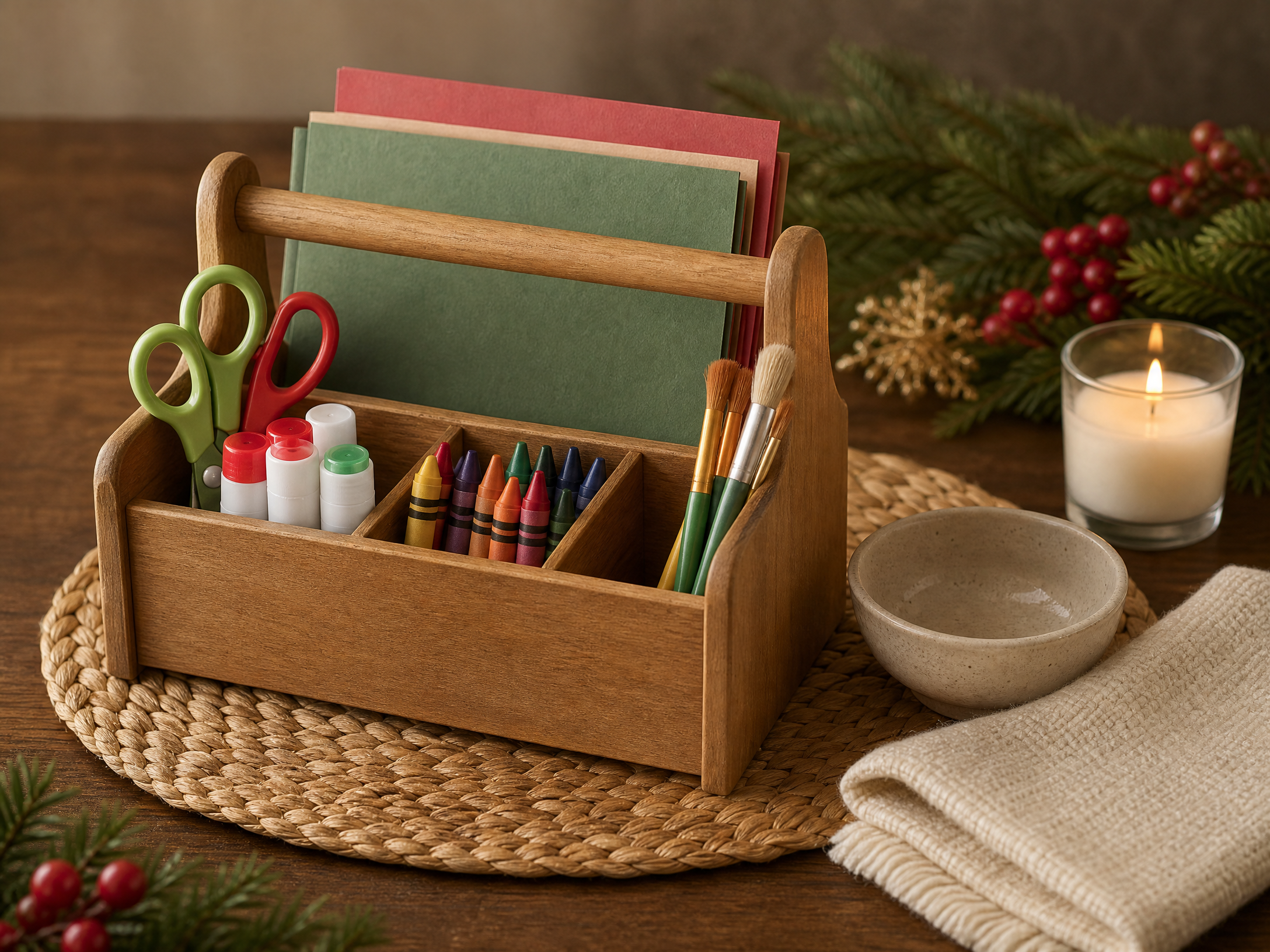
Create a single, small supply station rather than spreading materials across the room. Use a tray, shallow box, or a few small containers to keep paint, glue sticks, scissors, and paper together. Place a washable tablecloth or placemats under each child so any stray marks stay contained. Keep extra items in a cupboard and only bring out replacements as needed — fewer choices reduce fidgeting and clutter.
Checklist:
- One shallow tray or caddy per table; limit to essentials
- Washable glue sticks and child‑safe adhesive options
- Age‑appropriate scissors, brushes, and non‑toxic paints
- Pre‑cut paper shapes, sticker sheets, and short lengths of yarn
- Wet wipes, small waste bin, and protective mats
- Read and follow product directions for any adhesive or paint before use
3. Group materials by age and dexterity
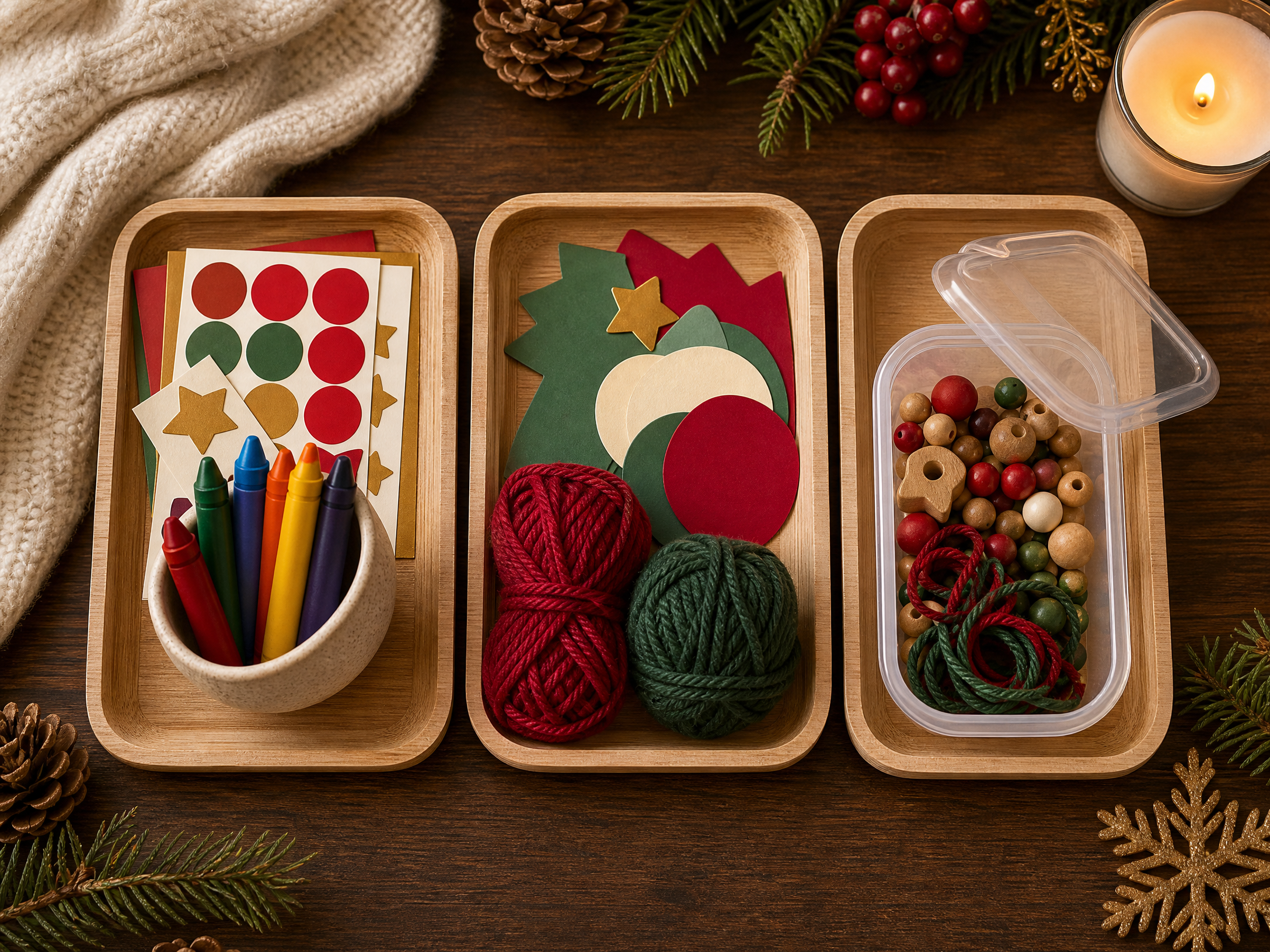
Sort projects and tools into clearly labeled groups so each child gets materials that match their developmental level. Place toddler‑friendly options — large stickers, chunky crayons, and pre‑cut cardboard shapes — in one area. Offer more intricate tasks, like detailed cutting lines or simple threading projects, in a separate space for older children. This reduces frustration and keeps smaller kids from handling tiny parts that pose choking risks.
For mixed‑age gatherings, plan at least one cooperative activity where younger and older kids can contribute in different ways (for example, younger children decorate large background pieces while older children add finer details). Reiterate that some tools are for adult use only, and keep those tools stored out of reach until an adult is ready to assist.
4. Supervision and handling of cutting, glue and small parts
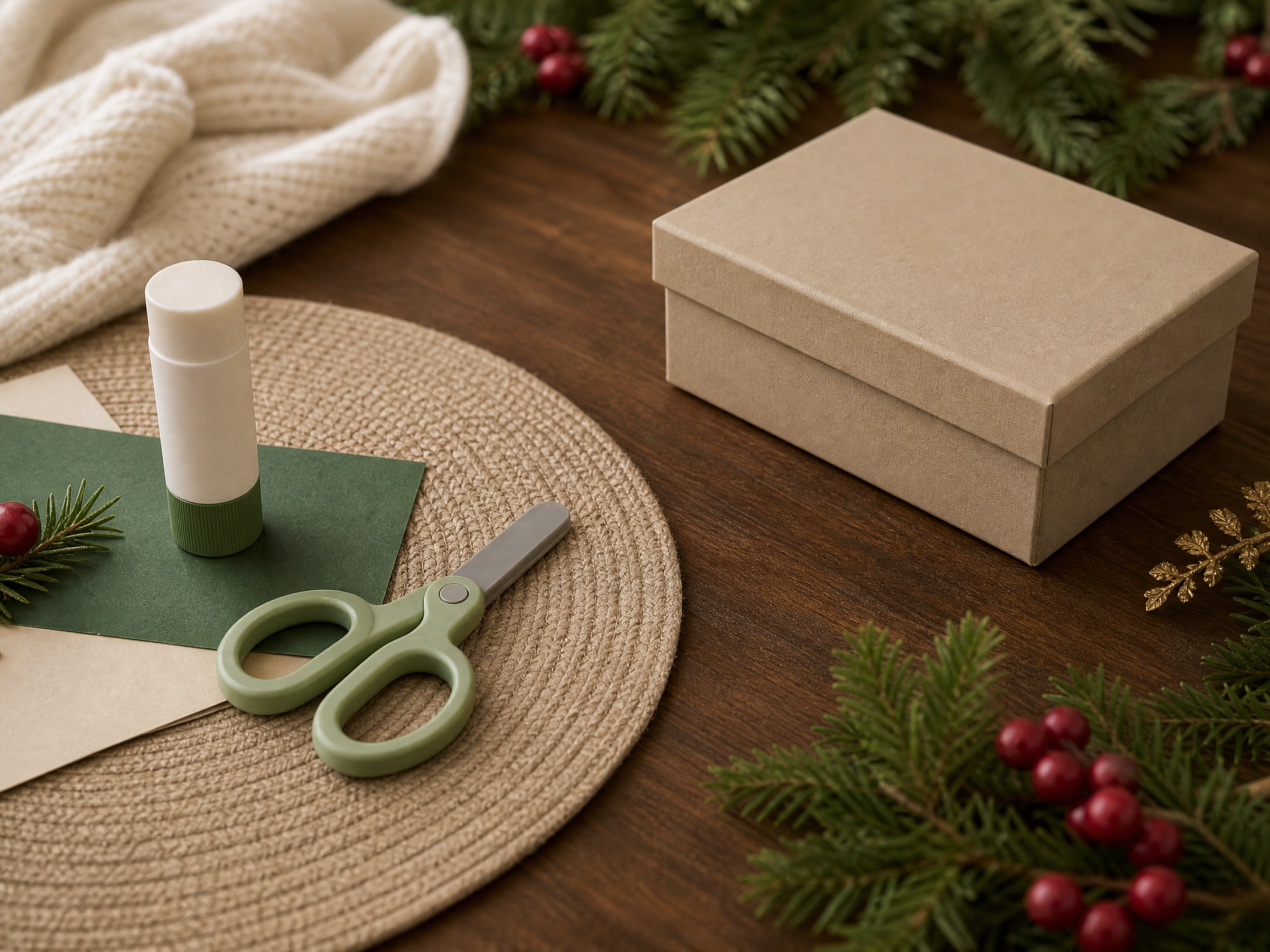
Decide in advance which tasks require adult handling and which can be done independently. Reserve sharp or heat‑based tools for supervised moments: adults should do precise cutting, hot‑glue work, or any activity that could cause injury. If you plan to introduce small beads, sequins or tiny decorations, explain the safety rules and either have an adult place them or keep them for older, closely supervised children.
Model safe use and name the rule each time you hand a child a tool (“These scissors are for older kids; I’ll cut the shape and you’ll glue it.”). Always read and follow product directions for adhesives and art materials — some supplies need ventilation, curing time, or specific storage, and being aware of those instructions keeps everyone safer and calmer.
5. Work with simple project families

Organize a small selection of project types so children can choose an approachable activity without overwhelm. Think in categories: paper projects (cards, bookmarks), paint projects (watercolor washes inside stencils), collage (pre‑cut shapes glued to a base), thread and felt (yarn wrapping or felt stickers instead of complex sewing), and ornament making (cardstock shapes decorated with stickers and ribbon). Keeping similar tools together simplifies transitions and reduces clean‑up time.
Within each family, pick low‑mess techniques: glue sticks instead of liquid glue, tray watercolors rather than pouring paints, and self‑adhesive felt pieces instead of needlework for younger children. Offer one example demonstration for each family and let kids adapt it to their taste — the variety comes from color and placement, not complexity of steps.
6. Pace the session to maintain calm
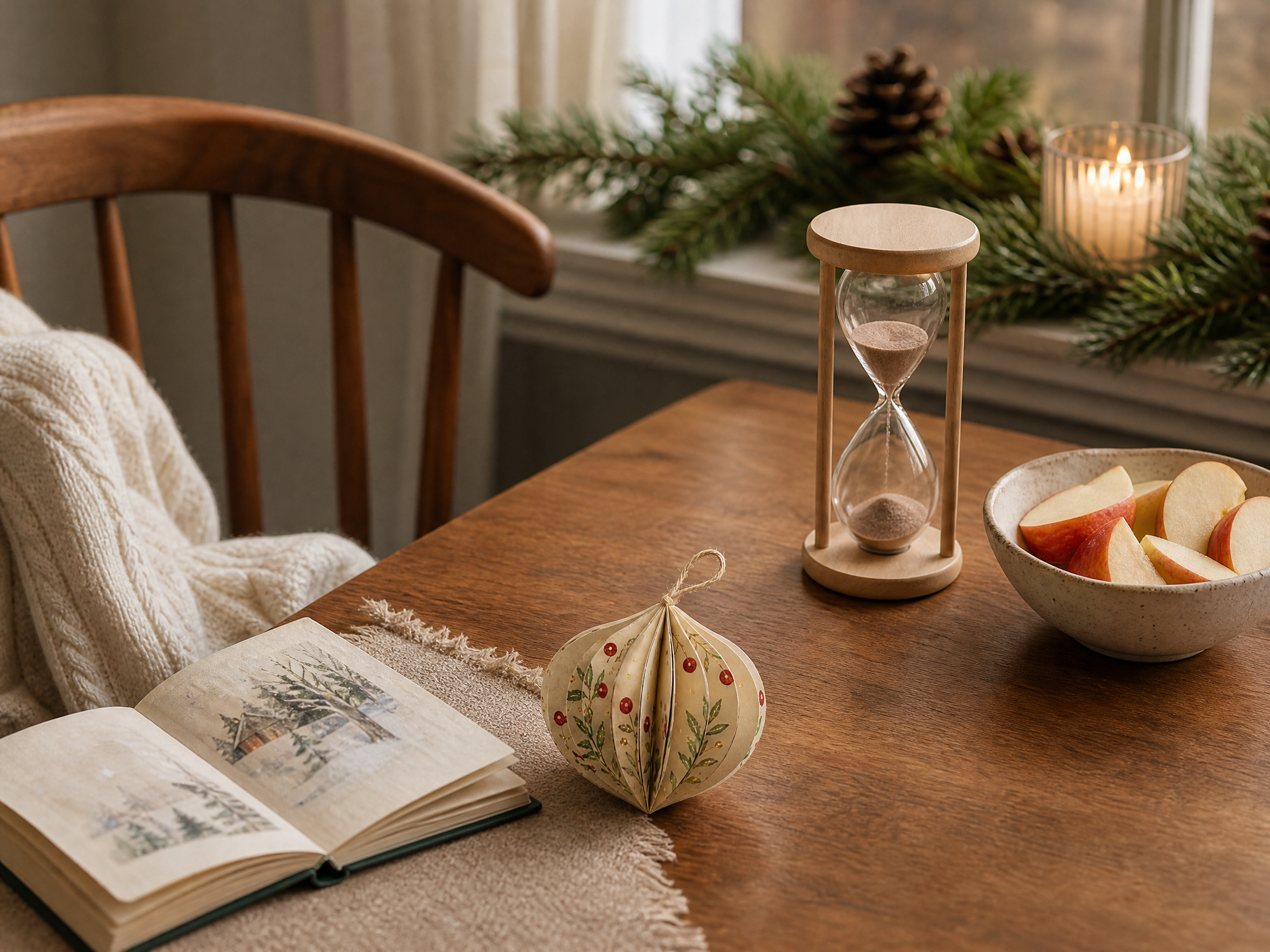
Keep the afternoon flexible and rhythmical rather than tightly scheduled. Start with a short group demonstration, allow free creation time, and include a quiet interlude for snack, story, or a mindful breathing break. Short, clearly signaled segments — 15 to 30 minutes of focused work followed by a low‑energy pause — help prevent overstimulation and keep attention steady.
Checklist:
- Open with a 3–5 minute demo
- Plan 15–30 minute creative blocks
- Schedule a snack/quiet break midway
- Offer a quiet table or corner for children who need a slower pace
- Rotate activities rather than insisting on finishing one complex piece
7. Turn finished pieces into seasonal decor
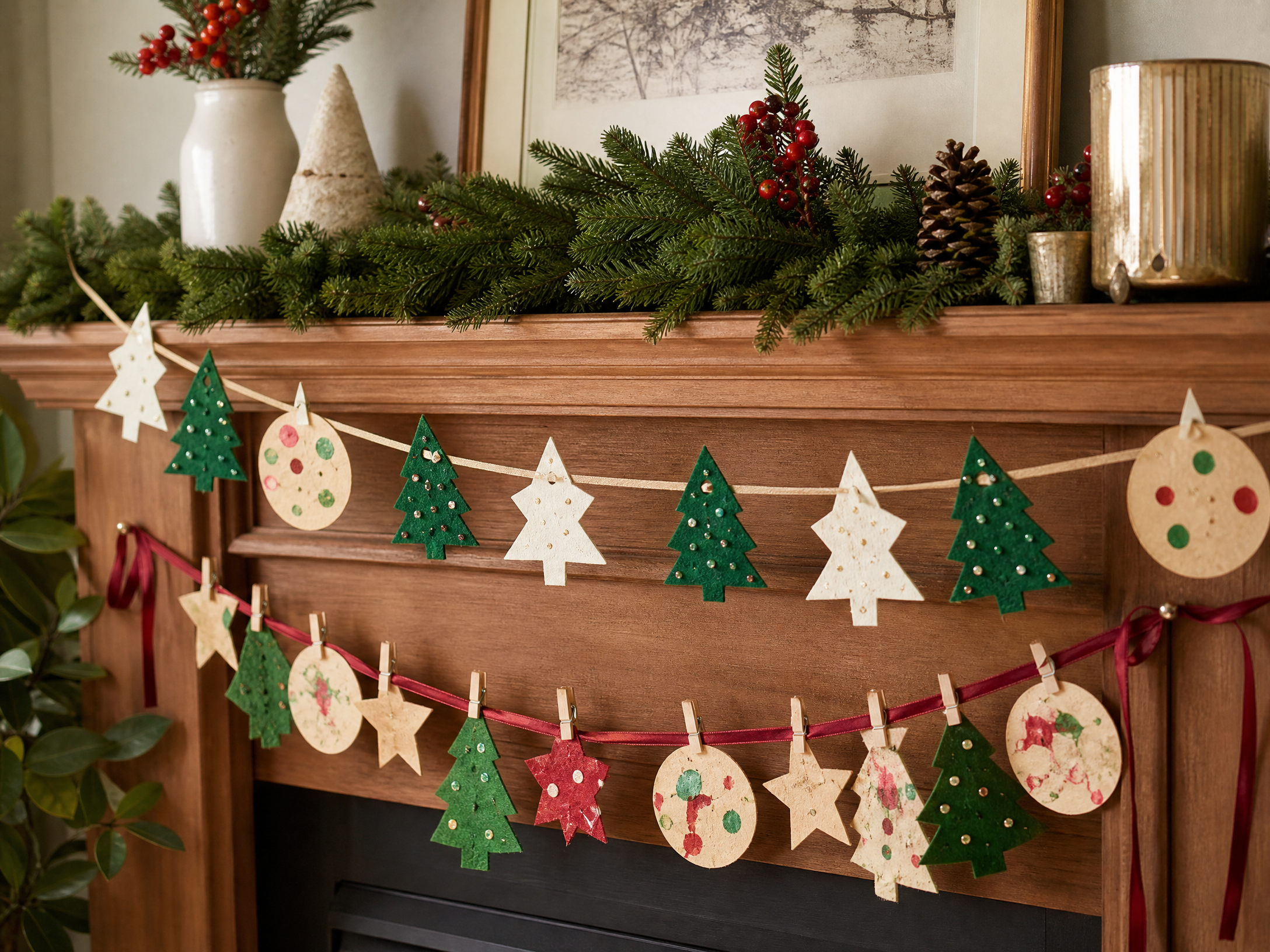
Think ahead about how crafts will be displayed so children feel their work matters beyond the table. Simple options include stringing small pieces onto a garland, clipping artwork to a ribbon with mini clothespins, or placing items in a seasonal table vignette. Use frames, clear sleeves, or shallow shadow boxes for flatter work to create a rotating gallery that’s easy to update.
Invite kids to help decide where their creations go and how long they should stay on display — that ownership makes the display feel special without pressuring them to produce a trophy piece. If you plan to use adhesives or other materials in the display, remember to follow product directions regarding drying and handling, and allow adequate time before hanging so items don’t smear or fall apart.
8. Encourage child‑led cleanup and show work without pressure
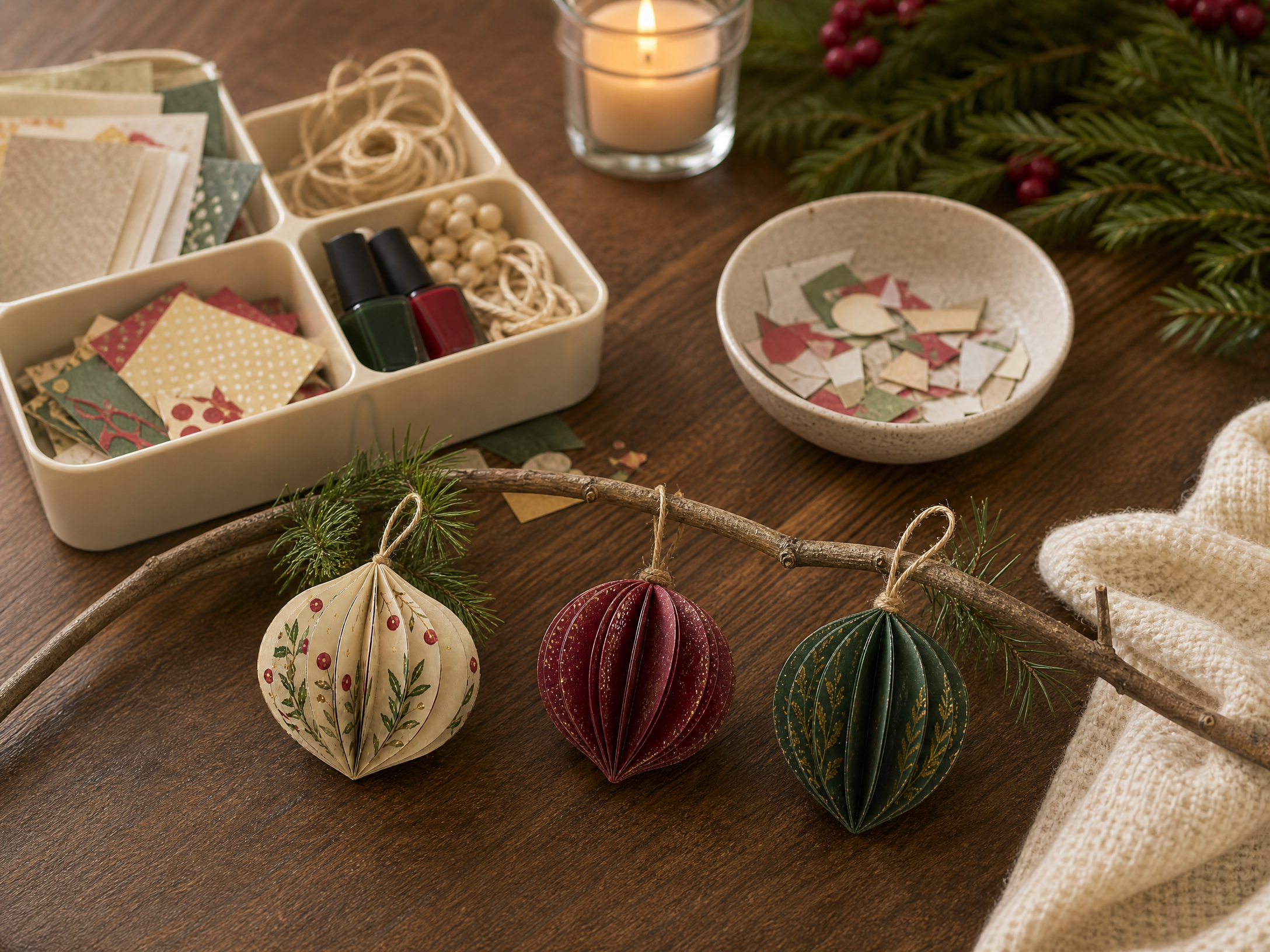
Turn tidying into a cooperative, age‑appropriate process: give toddlers a simple task (stack paper, put stickers back), ask school‑age children to sort reusable pieces into labeled containers, and make cleanup playful (short tidy races or a calming put‑away song). Provide clear bins and an obvious place for trash so decisions are quick. Praise effort and responsibility rather than perfection — the goal is participation, not spotless floors.
When it’s time to share finished pieces, avoid ranking or critique. Offer a calm sharing circle where each child can talk about their work if they want to, or suggest photographing pieces for a family album. Rotate what’s on display so everyone’s creations get a moment in the spotlight; keep invitations to share optional so children who feel shy aren’t pressured to perform.
Final Thoughts
A calm Christmas craft afternoon is built on simplicity: choose low‑mess formats, limit supplies, supervise appropriately, and pace the time so children feel free to create without pressure. Use age‑appropriate materials and always follow product directions for paints and adhesives. With these steps you’ll create a warm, relaxed space where making things together becomes the highlight of the season.