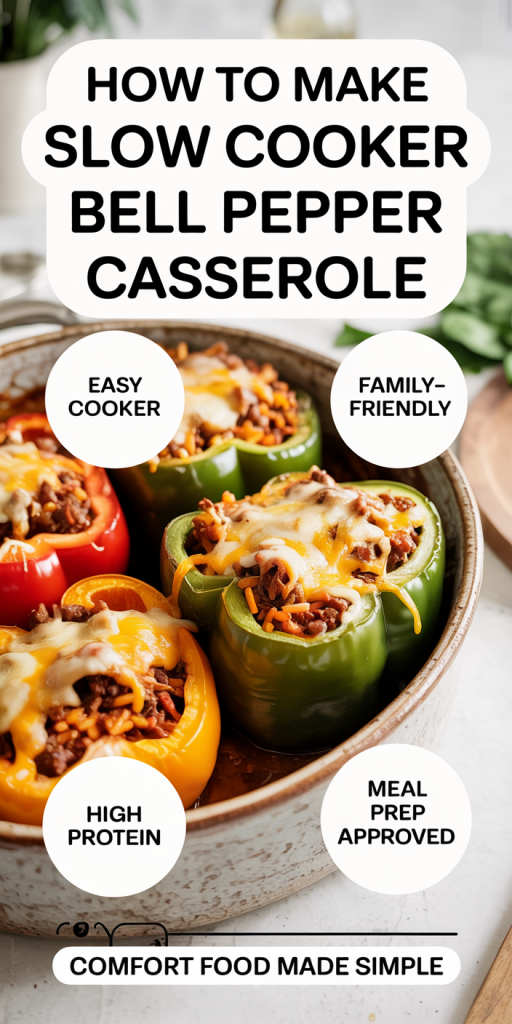
Stuffed bell peppers are comfort food at its most reliable: savory, saucy, and satisfying. But stuffing individual peppers can be fiddly and time-consuming, especially on busy weeknights. That’s where the slow cooker stuffed bell pepper casserole comes in. We get all the flavors of classic stuffed peppers, ground meat, rice, tomato sauce, melty cheese, without hollowing out a single pepper. In this post we’ll explain why the slow cooker method works, list precise ingredients and smart swaps, walk step-by-step through prepping and cooking, offer variations (including vegetarian and international twists), and give practical make-ahead, freezing, and troubleshooting tips so your casserole turns out perfect every time.
Why This Slow Cooker Version Works
The slow cooker stuffed bell pepper casserole takes everything we love about classic stuffed peppers and simplifies it for day-to-day life. Instead of stuffing hollowed-out peppers, we layer sliced peppers, a well-seasoned meat-and-rice filling, and sauce in the slow cooker. The low, even heat of the crockpot does three important things for us:
- It breaks down bell peppers gently, softening them without collapsing immediately or turning them limp and flavorless. The peppers keep structure but become tender enough to eat with a fork.
- It melds flavors over hours so the filling absorbs tomato and spice notes thoroughly: the result tastes deeper than a quick oven bake.
- It’s hands-off: once assembled, the casserole needs minimal babysitting, freeing us to work, commute, or relax. For weeknights and meal prep, that’s huge.
We should note the tradeoffs. A slow cooker won’t produce the crispy pepper edges or blistered, roasted notes you get from a hot oven. But we can replicate some texture by finishing under a broiler briefly to brown the cheese and edges (we’ll cover that in the Finish section). Overall, the slow cooker gives consistent tenderness, robust flavor integration, and convenience, exactly what a casserole should do.
Ingredients and Smart Substitutions
Ingredient List With Suggested Measurements
This recipe serves 6–8, depending on portion size. Adjust quantities proportionally for smaller or larger slow cookers.
- 1 1/2 pounds ground meat (we typically use beef: see substitutions below)
- 1 medium onion, finely chopped (about 1 cup)
- 3 cloves garlic, minced
- 1 1/4 cups uncooked long-grain white rice (or 1 cup brown rice — see notes)
- 3 cups low-sodium beef or chicken broth (or water)
- 3 cups crushed tomatoes (one 28-oz can)
- 3 large bell peppers, cored and sliced into 1/2″ strips (mix colors for presentation)
- 1 cup shredded mozzarella (plus 1/2 cup for topping)
- 1/2 cup grated Parmesan (optional)
- 1 tablespoon Worcestershire sauce
- 1 1/2 teaspoons kosher salt (adjust to taste)
- 1 teaspoon freshly ground black pepper
- 1 teaspoon dried oregano
- 1 teaspoon smoked paprika (or sweet paprika)
- 2 tablespoons olive oil (for browning meat and sautéing onion)
- Fresh parsley, chopped, for garnish
Notes: If you prefer a saucier casserole, add up to 1/2 cup extra crushed tomatoes or broth.
Protein, Grain, And Vegetable Substitutions
We like having flexible swaps so you can use what’s on hand.
- Protein: Ground beef (80/20) gives classic richness. For a leaner dish use ground turkey or chicken: increase seasoning slightly because poultry is milder. For a plant-based version use crumbled tempeh or a 12–14 oz package of plant-based ground “beef.” If using Italian sausage, reduce added salt and consider skipping the Worcestershire if flavors clash.
- Grains: White long-grain rice is reliable and cooks well in the slow cooker. Brown rice works but requires more liquid and longer cook time, use 1 1/3 cups brown rice and 3 1/2–3 3/4 cups liquid, and expect an extra 30–60 minutes. Quinoa can be used 1:1 with rice but absorbs liquid faster: reduce broth to about 2 1/2 cups and check doneness earlier.
- Vegetables: Additions like diced zucchini, corn, or mushrooms work well. If you add watery vegetables (zucchini, mushrooms), sauté them briefly or reduce some broth to avoid a watery casserole.
Seasoning Adjustments And Flavor Boosters
Small tweaks can shift the dish’s profile:
- Umami: Add 1–2 teaspoons tomato paste sautéed with the onion, or a splash of soy sauce in place of some Worcestershire for deeper savory notes.
- Heat: Stir in 1/2 teaspoon crushed red pepper flakes or a diced jalapeño with the onion for a spicy kick.
- Herb-forward: Swap the oregano for Italian seasoning, or add 1 teaspoon dried basil and 1/2 teaspoon thyme for an herbal lift.
- Brightness: Finish with 1 tablespoon red wine vinegar or a squeeze of lemon to brighten heavy tomato flavors.
We’ll point out specific swap recommendations again in the variations section so you can tailor the casserole to your pantry and taste.
Tools And Equipment You’ll Need
This recipe uses simple, common kitchen tools.
- Slow cooker (4–6 quart is ideal for a 6–8 serving casserole). Larger slow cookers work if doubling the recipe.
- Large sauté pan or skillet for browning meat and softening onions. Browning first adds flavor and reduces excess fat in the final dish.
- Cutting board and chef’s knife for chopping peppers and onions.
- Measuring cups and spoons for accurate rice-to-liquid ratio.
- Wooden spoon or spatula to combine the filling.
- Oven-safe dish or baking sheet (optional) if finishing under the broiler to brown cheese.
If you have a programmable slow cooker with multiple heat settings and a keep-warm function, use it, the precise timing options make life easier. We also recommend a slotted spoon for serving so you can drain some of the sauce if you prefer a firmer slice.
Step-By-Step Cooking Instructions
Prep: Preparing Peppers, Filling, And Sauce
- Prep peppers: Wash and core 3 large bell peppers. Slice into 1/2″ strips. We like leaving the stem on one side of each strip if presentation matters, but uniform slices cook more consistently.
- Sauté aromatics: Heat 2 tbsp olive oil in a large skillet over medium-high heat. Add chopped onion and a pinch of salt: sauté until translucent, 4–5 minutes. Add garlic and cook 30–45 seconds until fragrant.
- Brown meat: Add 1 1/2 lbs ground meat to the skillet. Break it up and cook until browned and mostly cooked through, about 6–8 minutes. Season with 1 tsp salt, 1 tsp pepper, 1 tsp oregano, and 1 tsp smoked paprika while it cooks.
- Combine filling: Stir in rice (uncooked) to coat in fat and toast slightly, then add Worcestershire sauce and crushed tomatoes. Scrape brown bits from the pan: this is flavor.
- Add liquids: Pour in 3 cups low-sodium broth and bring mixture to a simmer on the stove for 2–3 minutes, this helps jumpstart the rice so it’s not raw when the slow cooker finishes.
Assemble: Layering The Casserole In The Slow Cooker
- Grease the slow cooker lightly with cooking spray or a little oil.
- Layer half the bell pepper strips across the bottom in a single layer. Spread half of the meat-and-rice filling evenly over the peppers.
- Repeat: add the remaining peppers and the rest of the filling. Reserve 1/2 cup of shredded cheese for topping later.
- Cover and set the slow cooker.
Cook: Timing, Heat Settings, And What To Watch For
- Low setting: Cook on LOW for 4–5 hours. This yields tender peppers and fully cooked rice with minimal risk of drying out.
- High setting: Cook on HIGH for 2–3 hours: check rice around 2 hours to avoid overcooking.
What to watch for:
- Liquid level: The mixture should simmer gently inside the crockpot. If you see too much pooling liquid after 2–3 hours, remove the lid for the last 30 minutes to reduce it. Conversely, if the rice looks dry before it’s tender, stir in 1/4–1/2 cup additional broth.
- Rice doneness: Different rice types vary. Check near the shorter end of the timing window. If using brown rice, expect longer cook time and possibly more liquid.
Finish: Adding Cheese, Browning, And Resting Time
- About 15–20 minutes before serving, sprinkle the reserved 1/2 cup mozzarella and 1/4 cup Parmesan evenly over the casserole. Replace the lid so the cheese melts.
- Optional broiler finish: For a browned, slightly crisp top, transfer portions to an oven-safe dish or remove the slow cooker insert (if oven-safe) and broil on high for 3–5 minutes until cheese bubbles and edges brown. Watch closely to prevent burning.
- Rest: Let the casserole rest 8–10 minutes after cooking before scooping. Resting firms the mixture so portions hold together better. Garnish with chopped parsley and serve.
Recipe Variations And Customizations
Protein Variations: Beef, Turkey, Chicken, And Plant-Based
- Beef: Use 80/20 ground beef for juiciness and flavor. Brown well: the rendered fat deepens the sauce. Reduce added oil accordingly.
- Turkey/Chicken: Use ground turkey or chicken for a leaner casserole. Add an extra tablespoon of olive oil when sautéing to prevent dryness and boost savory flavor with a teaspoon of soy sauce or extra Worcestershire.
- Plant-Based: Crumbled tempeh, lentils, or commercial plant-based ground meat are excellent. Pre-cook lentils until just tender (about 15 minutes) or brown plant-based meat in the pan to develop flavor. You may need to reduce broth slightly because plant proteins can absorb less liquid than rice.
Grain And Rice Options: White, Brown, Quinoa, Cauliflower Rice
- White Rice: Predictable texture and cook time, our default.
- Brown Rice: Heartier and nuttier: requires more liquid and time. Increase broth to 3 1/2–3 3/4 cups and plan for an extra 30–60 minutes on LOW.
- Quinoa: Faster cooking and gluten-free. Use 1 cup quinoa with about 2 1/4–2 1/2 cups liquid. Check sooner because quinoa can overcook.
- Cauliflower Rice: For a low-carb option, use 4 cups frozen cauliflower rice. Add it in the last 45–60 minutes of cooking and reduce broth to keep the casserole from becoming soupy.
Style Variations: Mexican, Italian, Mediterranean Twists
- Mexican-style: Swap oregano for 1 tbsp taco seasoning (or cumin + chili powder), add black beans or corn, and finish with cilantro and pickled jalapeños. Top with pepper jack instead of mozzarella.
- Italian-style: Use Italian sausage or add 1 tsp fennel seed with the meat. Replace mozzarella with a mix of mozzarella and provolone, and stir in 1/2 cup sun-dried tomatoes for a tangy lift.
- Mediterranean-style: Use ground lamb or beef, add 1/2 cup chopped kalamata olives, 1 tsp ground cumin, and finish with crumbled feta and a squeeze of lemon.
These variations let us use the same basic method to deliver very different meals, great for weekly rotation or using pantry staples.
Make-Ahead, Freezing, And Batch Cooking Tips
We love casseroles that play nicely with meal prep. This dish is ideal for batch cooking and freezing.
- Make-ahead: Assemble the casserole in a freezer-safe slow cooker insert or in a disposable foil pan. Do not cook: instead, cover tightly and refrigerate for up to 24 hours before cooking. Bring to room temperature for 20–30 minutes before starting the slow cooker and allow extra cook time if chilled.
- Batch cooking: Double the recipe and use a 7–8 quart slow cooker or two smaller units. Alternatively, cook one pan now and one in the freezer for later.
How To Store Leftovers Safely
Cool the casserole for no more than 2 hours, then transfer to airtight containers. Refrigerate for up to 4 days. For longer storage, freeze (see below). Label with the date.
Best Methods For Freezing And Thawing The Casserole
- Freezing: Once cooled, portion into airtight containers or freeze in the assembled pan wrapped tightly in plastic and foil. Freeze up to 3 months for best quality.
- Thawing: Move the casserole to the refrigerator 24–48 hours before reheating. For quicker thawing, reheat from frozen in a 325°F oven (covered) for 60–90 minutes, or in a slow cooker on LOW for 4–6 hours, checking for even heat.
Reheating Recommendations For Best Texture And Flavor
- Oven: Reheat portions at 350°F, covered, until warmed through (about 20–30 minutes for refrigerated portions). Remove the cover for the final 5–7 minutes to re-crisp the top.
- Microwave: For single servings, microwave on medium power in 60-second intervals until hot: be aware microwaving can soften peppers further.
- Slow cooker: Reheat on LOW for 1–2 hours for refrigerated portions. Add a splash of broth if the casserole seems dry.
Troubleshooting Common Problems
Fixing Soggy Peppers Or Watery Casserole
Soggy peppers often come from too much liquid, watery vegetables, or cooking too long. To fix:
- Drain excess liquid with a slotted spoon and transfer the casserole to an oven-safe dish. Broil on high for 3–5 minutes to reduce moisture and brown the top.
- Stir in 1/4–1/2 cup cooked rice or breadcrumbs, then bake briefly to absorb excess liquid.
- Next time: reduce broth by 1/4 cup and avoid adding extra watery vegetables unless pre-cooked.
What To Do If The Filling Is Undercooked Or Dry
If rice or other grains aren’t done when the peppers are tender:
- Add 1/2 cup hot broth, stir gently, and continue cooking on LOW for 30–60 minutes. Brown rice will need significantly more time and liquid.
- If the filling is dry: stir in 1/4–1/2 cup broth or tomato sauce, cover, and allow it to steam for another 15–30 minutes.
- If you’ve overcooked and it’s dry: stir in a few tablespoons of olive oil or butter and a splash of broth before serving. Cheese also helps moisten and bind the filling.
Nutrition, Portioning, And Serving Suggestions
Estimated Nutrition Per Serving And Portion Sizes
Nutrition varies based on protein choice and grains. For a baseline using the recipe with ground beef and white rice (8 servings):
- Calories: ~380–420 per serving
- Protein: ~20–25 g
- Carbohydrates: ~35–40 g
- Fat: ~15–20 g
- Fiber: ~3–4 g
These are estimates: swap to lean turkey and brown rice to reduce calories and increase fiber. For accurate values, plug your exact ingredients into a nutrition calculator.
Portioning: We consider a hearty serving to be about 1 to 1 1/4 cups. For lighter meals, serve 3/4 cup with a salad or vegetable side.
Side Dishes, Garnishes, And Pairing Ideas
- Greens: A crisp green salad with a bright vinaigrette refreshes the palate and balances richness.
- Starches: Serve with roasted potatoes or garlic bread for extra comfort.
- Veggies: Steamed green beans, sautéed spinach with lemon, or a quick slaw add color and texture.
- Garnishes: Fresh parsley or basil, a dollop of sour cream or Greek yogurt for tang, and a squeeze of lemon brighten the dish. For Mexican-style versions, top with avocado, cilantro, and lime.
We often pair the casserole with a simple arugula salad dressed in lemon and olive oil, a contrast that keeps the meal lively without adding work.
Conclusion
The slow cooker stuffed bell pepper casserole is one of those recipes that rewards minimal effort with maximum comfort. It gives us the classic flavors of stuffed peppers, savory filling, tender peppers, and melty cheese, while saving time and reducing fuss. With flexible protein and grain swaps, international flavor variations, and simple make-ahead and freezing strategies, this casserole is a reliable weeknight star and a meal-prep winner. Try the base recipe once, then experiment, swap proteins, toss in extra veggies, or finish under the broiler for crisp topping. We think you’ll find it becomes a staple in your dinner rotation.