Slow cooker teriyaki chicken & vegetables is one of those weeknight heroes: hands-off, comforting, and reliably delicious. In this guide we’ll walk through why this method works, what ingredients give the dish its characteristic balance of sweet, salty, and umami, and every practical step for a perfect result, from prep and layering to troubleshooting watery sauce or soggy veggies. Whether you’re feeding a family, meal‑prepping for the week, or aiming to make a gluten‑free or lower‑sugar version, we’ve got options and tips so you can make this dish confidently.
Why This Slow Cooker Teriyaki Works
Slow cooker teriyaki chicken & vegetables succeeds because it leverages three reliable cooking principles: gentle, even heat: flavor infusion over time: and the natural thickening/starch behavior of sauces and vegetables. When we cook chicken low and slow, collagen breaks down and the meat becomes tender without requiring constant attention. Vegetables like carrots, potatoes, and onions release starches and moisture that mingle with the sauce, creating a naturally cohesive dish.
The teriyaki profile, soy, sugar, acid, and aromatics, benefits from time spent in contact with the protein. Marinating for even 30 minutes helps, but the real magic happens as flavors mellow and meld across several hours. Using a slow cooker also reduces the risk of burning sugar in the sauce, which can happen on the stovetop.
That said, slow cookers have quirks: steam circulation can dilute sauces and some vegetables can become mushy if overcooked. We address those drawbacks with clear layering, timing, and simple thickening options so you get the best of both worlds, tender chicken, crisp-ish vegetables (depending on choice), and a glossy teriyaki sauce that clings to everything.
Ingredients
Below we list a flexible ingredient framework. Quantities will vary with the size of your slow cooker and number of servings: the following is a solid starting point for 4–6 servings.
Chicken and Protein Options
- 2 to 3 pounds boneless, skinless chicken thighs (preferred for moistness) or breasts
- OR 2.5–3 pounds bone-in chicken (increase cook time slightly)
- For higher protein density: 1 pound extra chicken or a mix of chicken + firm tofu
Why thighs? They tolerate long cooking better and stay juicy. Breasts can dry if cooked too long, use lower heat and check earlier.
Vegetables and Add‑Ins
- 4 medium carrots, cut into 1-inch pieces
- 1–2 medium onions, thickly sliced
- 1–1.5 pounds baby potatoes or red potatoes, halved
- 1 red bell pepper, sliced (add last hour if you like them less soft)
- Optional: broccoli florets (add last 15–30 minutes), snow peas, sliced mushrooms, baby corn
Choose hearty root vegetables for long cooks and add delicate veg near the end.
Teriyaki Sauce Components
- 1 cup low-sodium soy sauce (or tamari for gluten-free)
- 1/2 cup brown sugar or coconut sugar
- 1/4 cup rice vinegar or mirin
- 2–3 tablespoons honey or maple syrup (optional for extra gloss)
- 3 cloves garlic, minced
- 1–2 teaspoons fresh ginger, grated
- 1/4 cup water or chicken broth
- 2 tablespoons cornstarch (for thickening, mixed with equal water into a slurry)
This base gives us the sweet-savory backbone. Adjust sweetness and salt to taste.
Seasonings, Garnishes, and Optional Extras
- 1–2 teaspoons toasted sesame oil for finishing
- Sesame seeds and sliced green onions for garnish
- Red pepper flakes or sriracha for heat
- Lime or lemon wedges for brightness
- 1–2 teaspoons fish sauce for deeper umami (optional)
These extras let us tweak the flavor profile without changing the cooking method.
Equipment You’ll Need
We keep the equipment list short and practical:
- 4–7 quart slow cooker (size depends on servings: 6-quart is versatile)
- Cutting board and chef’s knife
- Measuring cups and spoons
- Mixing bowl and whisk for sauce
- Small bowl for cornstarch slurry
- Tongs or large spoon for serving
- Optional: skillet for browning chicken before slow cooking
A 6-quart cooker comfortably handles 2–3 pounds of chicken plus vegetables. If you only have a small slow cooker, reduce quantities to avoid overfilling.
Step‑By‑Step Recipe Instructions
Below we walk through practical steps that account for common slow‑cooker pitfalls and produce consistent results.
Prep: Chop, Measure, and Marinate (Optional)
- Trim excess fat and pat chicken dry. If we have time, we’ll toss the chicken in half the sauce (reserve the rest) and marinate 30 minutes to 2 hours in the fridge: this improves flavor penetration but is optional.
- Chop vegetables into even pieces to promote uniform cooking, root veg slightly larger than softer veg.
- Whisk soy sauce, sugar, vinegar, garlic, ginger, and broth (or water) in a bowl: taste and adjust balance before adding to cooker. If we want less sugar, reduce by 1–2 tablespoons and add a splash more acid.
Layering the Slow Cooker: Veggies First or Chicken First
We typically layer root vegetables on the bottom because they need more direct heat. Place potatoes, carrots, and onions in a single layer (or as close as possible). Nestle chicken on top of the vegetables, this keeps the chicken from sitting directly on the hot base and helps juices drip down, flavoring the veg.
If we’re using bone-in chicken, place skin-side up so rendered fat baste the meat. For a one-layer cooker, avoid stacking chicken over 2–3 layers: overcrowding can affect cooking time.
Mixing and Adding the Teriyaki Sauce
Pour the prepared sauce over the chicken and vegetables. Use a spoon to spread it slightly so each piece gets coated. Resist the urge to stir too much, the slow cooker’s lid seals in steam and stirring extends cooking time when you open it.
Cooking Times and Settings (Low vs High, Frozen Chicken)
- Low: 4–6 hours (thighs), best for tenderness and even cooking.
- High: 2.5–3.5 hours (thighs), useful if you’re short on time: check earlier.
- Chicken breasts: check at 2.5–3.5 hours on low or 1.5–2 hours on high to avoid dryness.
If using frozen chicken, increase time by 1–2 hours on low. But, USDA recommends thawing for safety and more even cooking, if you must cook from frozen, ensure internal temperature reaches 165°F/74°C.
Optional Browning and Sauce Thickening Techniques
- Browning: Searing chicken in a hot skillet 2–3 minutes per side before slow-cooking adds Maillard flavor and improves color. We often do this when we have a few extra minutes.
- Thickening: If the sauce is thin at the end, remove a cup of liquid, whisk in 1–2 tablespoons cornstarch until smooth, then stir back into the cooker and cook on high for 15–30 minutes until glossy. Alternatively, reduce sauce on the stovetop in a saucepan until syrupy.
These finishing steps rescue watery sauce and add a restaurant-quality finish.
Variations and Substitutions
We want this recipe to be flexible. Below are straightforward swaps to match dietary needs, seasons, or preferences.
Protein Swaps and Vegetarian/Vegan Options
- Turkey: Use dark meat turkey pieces: treat like chicken thighs.
- Pork: Boneless pork shoulder or loin can work: adjust cook time (shoulder for longer, loin for shorter).
- Tofu: Use extra-firm tofu, pressed and cubed. Add tofu in the last 60–90 minutes if you want it to absorb flavor but keep shape. For firmer texture, pan-fry cubes first.
- Tempeh: Sliced tempeh soaks up sauce and holds up well through a long cook, add near the beginning.
For vegetarian/vegan versions, swap soy sauce with tamari or coconut aminos (for soy-free), replace honey with maple syrup, and use vegetable broth.
Vegetable Swaps for Seasonality or Preference
- Spring/Summer: Add zucchini, snap peas, bell peppers, and cherry tomatoes near the end.
- Fall/Winter: Use sweet potatoes, parsnips, or rutabaga as hearty alternatives.
- Green veg like broccoli and green beans should be added in the last 15–45 minutes to avoid mushiness.
Sauce Tweaks for Dietary Needs (Low‑Sodium, Gluten‑Free, Keto)
- Low‑Sodium: Use low-sodium soy sauce, cut added salt, and increase acid (rice vinegar) and aromatics to boost flavor.
- Gluten‑Free: Use tamari or coconut aminos instead of soy sauce, ensure other ingredients like mirin are gluten-free.
- Keto: Replace brown sugar with a low-carb erythritol blend or monk fruit sweetener: reduce overall liquid or thicken with xanthan gum (use sparingly).
These substitutions let us keep texture and flavor consistent while meeting restrictions.
Serving Suggestions and Pairings
How we serve this dish changes the meal: family-style over rice for comfort, or plated with bright sides for a lighter dinner.
Rice, Noodles, and Grain Options
- Steamed white or brown rice (short-grain for stickier texture)
- Jasmine or basmati for aromatic pairings
- Quinoa or farro for nutty whole-grain alternatives
- Stir‑fried or cold rice noodles for a lighter, slurpy option
We often spoon teriyaki chicken over a bed of steamed jasmine rice and let the sauce shine.
Sides, Salads, and Beverage Pairings
- Quick cucumber salad (rice vinegar, sesame oil, salt) adds brightness
- Steamed bok choy or sautéed spinach for extra greens
- Light Asian slaw with a ginger-sesame dressing
- Beverages: green tea, light lager, or a citrus-forward white wine like sauvignon blanc complement the sweet-salty profile
Plating, Garnishes, and Finishing Touches
- Finish with a drizzle of toasted sesame oil for aroma
- Scatter sliced green onions and toasted sesame seeds for texture and color
- Add a lime wedge to each plate for a last-minute acidity lift
Small finishing touches elevate the dish visually and flavor-wise.
Make‑Ahead, Storage, and Reheating
This recipe is excellent for make-ahead meals and leftovers. We follow safe cooling and storage practices to preserve quality.
Cooling, Refrigerating, and Shelf Life
- Cool: Let the slow cooker sit for 10–15 minutes, then transfer to shallow airtight containers to speed cooling.
- Refrigerate: Store in the fridge up to 3–4 days. If you used lots of soy/sugar, it’s safest to consume within 3 days for best flavor.
- Label containers with date to track freshness.
Freezing Instructions and Best Practices
- Freeze in airtight containers or heavy-duty freezer bags for up to 3 months. Remove as much air as possible to prevent freezer burn.
- For best texture, freeze sauce separately from potatoes (potatoes can become grainy). We sometimes freeze shredded chicken + sauce and refrigerate fresh vegetables for reheating.
Reheating Methods to Preserve Texture and Flavor
- Oven: Reheat at 325°F covered for 20–30 minutes until hot throughout, this preserves texture better than microwave.
- Stovetop: Simmer gently in a saucepan: add a splash of water or broth if sauce is too thick.
- Microwave: Use medium power and stir every 30–45 seconds to heat evenly.
If sauce has thickened in the fridge, whisk in a little water or broth while reheating to loosen it. Add a few drops of sesame oil or fresh scallions just before serving to revive aromas.
Troubleshooting and Expert Tips
We’ve collected practical fixes for common problems so you can course-correct without starting over.
Fixes for Watery or Too‑Thin Sauce
- Cornstarch slurry: Mix 1–2 tablespoons cornstarch with equal cold water, stir into a cup of hot sauce removed from the cooker, then return and cook on high 15–30 minutes.
- Reduction: Spoon sauce into a skillet and simmer until it thickens.
- Add pureed cooked vegetables (like a few carrots) to naturally thicken while adding body.
Preventing Overcooked or Dry Chicken and Mushy Vegetables
- Use thighs for long cooks: breasts need less time.
- Add delicate vegetables later in the cook (last 30–45 minutes).
- Don’t overfill the cooker, space promotes even heat distribution.
- Check internal temp at the lower end of the time range to avoid overcooking.
Balancing Sweetness, Salt, and Acidity
- Too sweet: Add a teaspoon or two of rice vinegar or a splash of lime juice: a pinch of salt can also rebalance.
- Too salty: Dilute with water or unsalted broth and add a touch more sweetener and acid to restore complexity.
- Too acidic: A small pinch of sugar or a drizzle of honey will soften sharpness.
Taste as you go during the prep and adjust the sauce before it goes into the slow cooker, small tweaks at the beginning save bigger fixes later.
Nutrition Snapshot and Approximate Macros
Below are ballpark nutrition estimates for a typical serving (recipe yields 6 servings). Exact numbers vary based on specific ingredients and portion sizes.
Estimated Calories and Macronutrients Per Serving
- Calories: ~380–480 kcal
- Protein: 30–40 g (depends on cut and portion)
- Carbohydrates: 25–40 g (mostly from sauce and vegetables)
- Fat: 12–20 g (more with thighs or if we add sesame oil)
These are estimates for a serving with 1/6 of the total recipe over a small scoop of rice. Removing rice reduces carbs significantly.
Ways To Lighten or Boost Protein Without Sacrificing Flavor
- Lighten: Use chicken breasts, reduce added sugar by 25–50%, and serve over cauliflower rice.
- Boost protein: Add extra shredded chicken after cooking or stir in cubed extra-firm tofu toward the end.
- Add healthy fats: Sprinkle toasted sesame seeds or finish with a teaspoon of sesame oil per serving for flavor without bulk.
We recommend adjusting portions and accompaniments to meet calorie targets or macro goals while keeping flavor intact.
Conclusion
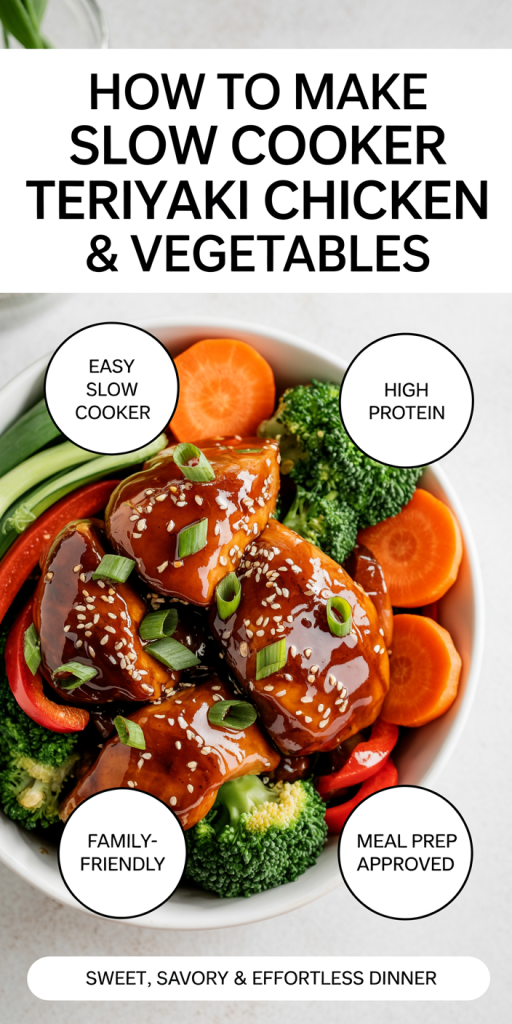
Slow cooker teriyaki chicken & vegetables gives us a flexible, crowd-pleasing meal that’s as forgiving as it is flavorful. With straightforward layering, mindful timing for delicate ingredients, and a few finishing techniques, browning, cornstarch slurry, or a quick stovetop reduction, we can solve most kitchen problems and produce a saucy, tender result every time. Make swaps for dietary needs, plan for leftovers, and don’t be afraid to tweak the sauce to suit your palate. Once you’ve dialed in your preferred balance of sweet, salt, and acid, this will become a go-to recipe for busy nights and easy entertaining.