A well-styled coffee table can lift an entire living room, bringing balance, personality, and purpose to the center of a space. We often underestimate this low surface, yet it’s one of the most visible and used parts of our homes. In this guide we’ll walk through how to style coffee tables like an interior stylist: practical rules, visual principles, must-have pieces, and real-world tips for different rooms and lifestyles. Read on and you’ll never leave a bare tabletop again.
Why Coffee Table Styling Matters
A coffee table is more than a place to rest drinks. It anchors seating arrangements, sets the tone for the room, and provides an opportunity to express taste without overwhelming the space. When styled well, a coffee table creates visual interest at eye level, acts as a practical landing spot for items we use every day, and helps unify the textures and colors in a room.
Think of the coffee table like the stage in a theater. Everything else, sofas, rugs, art, are the supporting cast. If the stage is cluttered or underdressed, the scene falls flat. Stylist-level coffee table styling ensures that what’s on display looks intentional: curated but approachable, layered but uncluttered. That balance is what makes a space feel edited and livable at the same time.
In the sections that follow we’ll break down the precise principles professionals use: scale, balance, texture, and composition. We’ll share the essential styling kit you’ll want to keep on hand, plus formulas and checklists so you can style quickly and confidently.
Understand Your Table and Space
Every successful styling starts with context. Before adding objects, we assess three things: scale and shape, traffic flow and function, and how the table should relate to the room’s style. Neglect any of these and even beautiful objects can look awkward.
Choose the Right Scale and Shape
Scale means proportion: the table should feel like it belongs among your seating. A common rule is that a coffee table should be about two-thirds the length of your sofa. Height-wise, it should sit roughly level with or slightly below the seat cushions, this creates comfortable reach when placing or picking up a cup.
Shape matters for both aesthetics and circulation. Round tables soften a square seating arrangement and are great where corners create traffic problems. Rectangular tables work well with longer sofas and allow for more layered groupings. Square tables read as formal and geometric: pair them with rounded accessories to soften the look.
Consider Traffic Flow and Function
We always ask: how will people use this table? If you have kids, expect spills, toys, and rougher use, choose durable materials and avoid fragile centerpieces. In a tight seating arrangement, avoid projecting objects that impede movement. Leave at least 18 inches between the coffee table and surrounding seating so people can move comfortably.
Also, think about the table’s purpose. Is it mostly decorative, or does it need to function as a tray station, board-game surface, or place for remote controls? Functional needs will affect what we place on it and how we anchor objects.
Match the Table to Your Room’s Style
The coffee table should echo the room’s overall aesthetic. In a modern space, a streamlined marble or metal table reads clean: in a rustic farmhouse living room, reclaimed wood or a trunk-style table feels right. But we’re careful not to match too literally. A contemporary sculpture on an otherwise traditional table can add necessary contrast and keep the look from feeling dated.
Eventually, understanding the table and space sets the parameters for every styling decision that follows.
Core Styling Principles Every Stylist Uses
Professional stylists rely on a handful of visual rules to make a coffee table look elevated yet lived-in. These principles, balance, texture and color, and negative space, are flexible, not prescriptive. Once we understand them, we can adapt to any piece or room.
Balance: Symmetry, Asymmetry, and Visual Weight
Balance is less about exact mirroring and more about distributing visual weight so the arrangement feels stable. We use three common approaches:
- Symmetry: Place matching objects or pairs on either side for a formal, calm look. Best for traditional or highly curated rooms.
- Asymmetry: Offset a large, heavier anchor (like a stack of books or a tray) with smaller items on the opposite side. This feels dynamic and modern.
- Central focal point: Use one dominant object (a vase or sculpture) in the middle and surround it with lower, simpler items.
Visual weight comes from size, color saturation, and material density. A black ceramic vase will read heavier than a pale linen book, balance accordingly.
Texture, Color, and Contrast
Texture adds depth. We layer matte ceramics, glossy glass, natural wood, and soft textiles to create tactile interest that catches the eye. Mix warm and cool tones to avoid a one-note display. If your couch is neutral, your coffee table can introduce a pop of color, but keep that color limited to one or two accents so it reads intentional.
Contrast helps objects stand out. Place a white object on a dark tray: rest a glossy book on a raw wooden surface. These small oppositions increase visual clarity.
Negative Space and Breathing Room
Stylists love negative space, the empty area around objects, because it gives the eye somewhere to rest. Resist the urge to fill every inch. Even with a small table, leave some surface visible. A carefully placed void makes the curated items feel more important.
A simple way to check negative space: step back and look for areas where the eye can pause. If everything demands attention at once, edit until some calm returns.
The Essential Coffee Table Styling Kit
There are a few items we use repeatedly because they reliably create structure, visual interest, and function. Keep these on hand and you’ll be able to build dozens of looks quickly.
Surface Anchors: Trays and Books
Trays are indispensable. They provide a tidy base for smaller objects and contain visual groups so the tabletop feels orderly. Choose trays in materials that complement your table, rattan for natural wood, brass for glam, or matte black for minimal spaces.
Coffee table books are another anchor. We stack books to introduce height and personality: the top book becomes a stage for smaller items like candles or a small sculpture. Use books with interesting covers or spines that align with your color story.
Live Elements: Flowers, Plants, and Greenery
A living element immediately refreshes a table. Cut flowers add fleeting beauty: a hardy potted plant or a small bunch of eucalyptus works longer. For low-maintenance looks, choose succulents, pothos, or dried stems like wheat. The key is scale: don’t pick a flowering arrangement so tall it blocks sightlines across the room.
Personal Touches: Objects, Sculptures, and Collections
These are what make a display feel singular. A favorite ceramic, a small sculpture, or a curated collection of shells or vintage finds gives the table character. We recommend keeping personal items to two or three pieces so they read as purposeful rather than cluttered.
Practical Items: Coasters, Remotes, and Functional Pieces
Practical items can be attractive too. A set of leather or stone coasters, an elegant remote caddy, or a decorative bowl for keys and matches maintains usability without sacrificing style. The trick is to keep these items grouped, usually on a tray, so they don’t disrupt the visual balance.
Layering and Composition Techniques
Layering transforms separate objects into a cohesive composition. Professionals think in planes: base layer, middle layer, and top layer: then vary height and spacing to create rhythm.
Create Height Variation and Triangular Groupings
We always build with height in mind. A good rule is to include at least one tall element, one medium, and one low item, this creates a safe, visually pleasing pyramid or triangular grouping. For example: a tall vase, a stack of books, and a low candle.
Triangular groupings help the eye travel across the display naturally. Place the tallest point slightly off-center, anchor with a heavier base on the opposite side, and fill smaller gaps with low objects.
How to Arrange Items on Different Shapes (Round, Rectangular, Square)
- Round tables: Favor off-center groupings and avoid long rectangular trays that echo the table’s curvature awkwardly. Use a circular tray or a central focal point with smaller objects radiating outward.
- Rectangular tables: Use length to your advantage. Create two or three groups along the length, or place a long tray to anchor a linear composition. Be sure to leave space at the ends so the table doesn’t feel crowded.
- Square tables: Symmetry works well here, but asymmetrical groupings can add interest. Consider a diagonal arrangement to create movement.
Use Repetition, Rhythm, and a Focal Point
Repeat shapes, materials, or colors in a small way to create rhythm. If you use brass in a candlestick, echo brass on a tiny picture frame or the tray trim. Choose one item as the focal point, this is where the eye lands first. Surround it with supporting objects that reinforce the theme without competing for attention.
Styling By Room Function and Lifestyle
Styling should always reflect how people actually use a space. We adapt our approach depending on family life, entertaining needs, apartment size, or design preferences.
Family Living Rooms: Durable and Kid-Friendly Styling
In family rooms we prioritize durability and safety. Use sturdy trays to corral breakables and choose non-tip vases or weighted objects. Opt for washable textiles and rounded edges when possible. Keep favorite toys in an attractive basket nearby rather than on the table itself, and use coasters and a protective mat under items that might stain.
Entertaining Spaces: Flexible and Elegant Layouts
For spaces where we entertain, flexibility is key. We favor lightweight trays that can be cleared quickly, dual-purpose objects (a bowl that holds snacks but looks sculptural), and groupings that can be pushed aside or reconfigured for extra surface area. Elegant touches, like a matching set of candleholders or a statement floral arrangement, make the table feel thoughtful without needing constant upkeep.
Small Spaces and Minimalist Styling Tips
In small rooms, less is more. Choose a single tray, one sculptural object, and one plant or book. Keep the center clear if you need the table for additional surface area. Low-profile objects and clear materials (glass, lucite) help the table feel lighter.
Styling For Different Design Aesthetics (Modern, Boho, Traditional)
- Modern: Clean lines, a limited color palette, and a mix of high-contrast materials (black metal with white marble, for example). Keep objects streamlined and avoid fussy ornamentation.
- Boho: Layer natural textures, wicker trays, carved wood objects, and layered textiles. Introduce collected, global pieces and plants for a relaxed, eclectic look.
- Traditional: Use symmetry, classic books, and ceramic or brass accents. A framed small print or pair of candlesticks reads timeless.
We always translate a room’s aesthetic into tangible choices on the table so it feels integrated rather than an afterthought.
Quick Styling Formulas and Checklist
When we’re in a rush, reliable formulas save time and still look intentional. Below are go-to setups and a practical checklist to follow before calling it done.
Fast Formulas: 3-Item, 5-Item, and Layered Looks
- 3-Item Look (Minimal): A stack of two books, a small vase with a single stem, and a tray with one functional item (coasters or candle). This works great on small or minimalist tables.
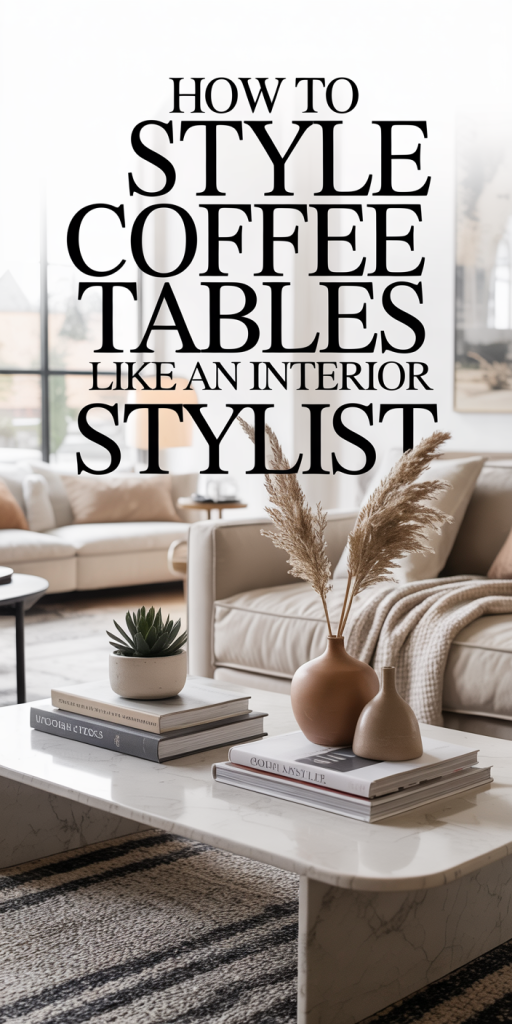
- 5-Item Look (Balanced): A tray with coasters and a candle, a medium-height book stack, a small plant, and one personal object (a sculpture or bowl). Arrange in a loose triangular composition.
- Layered Look (Editorial): Use a large tray, stack books on one side, place a tall vase behind the books, add a sculptural object in front, and finish with a low natural element (succulent or bowl of shells). This creates depth and complexity.
A Practical Styling Checklist to Follow
- Assess scale: Is the table proportionate to the sofa and room?
- Anchor: Place a tray or stack of books to start.
- Height: Include at least three different heights (tall, medium, low).
- Material mix: Combine at least three textures (wood, metal, ceramic, textile).
- Color balance: Keep a dominant neutral with one or two accent colors.
- Personal touch: Add one item that tells a story about you.
- Negative space: Step back, do you see breathing room? Edit if not.
- Function: Ensure practical items are accessible and tidy.
This checklist helps us quickly curate a table that reads edited and purposeful.
Common Mistakes to Avoid
Even well-intentioned styling can go awry. We watch for a few recurring pitfalls and offer simple fixes.
Overcrowding and Competing Focal Points
One of the most common mistakes is filling every inch. When too many objects compete, the table feels chaotic. Fix: remove one-third of the items and regroup. Choose a single focal piece and make other elements supportive.
Ignoring Scale, Proportion, or Function
A tall sculpture on a very low table or a tiny object on an oversized table will always look off. Similarly, placing only fragile items in a family room is impractical. Fix: test items against the table and room, if an object feels mismatched, swap it for something closer in scale or use it elsewhere.
Overly Themed or Clichéd Displays
Styling that leans too hard into a theme (nautical decor everywhere, for instance) can feel contrived. Authenticity matters. Fix: edit themed items and introduce neutral or personal pieces that balance the concept and prevent the display from reading like a souvenir shop.
Styling Maintenance and Seasonal Refreshes
A styled coffee table isn’t a set-and-forget project. Regular editing keeps it fresh and relevant to the season and our lives.
How to Edit and Refresh Your Display Regularly
We recommend a five-minute weekly tidy and a quarterly edit. Weekly, clear away crumbs and obvious clutter, wipe surfaces, and return stray objects to their homes. Quarterly, reassess: are the books scratched, do the plants need replacing, has the arrangement become stale? Swap out one major element, change the tray, replace the vase, or rotate books, to make the display feel new.
Simple Seasonal Swaps and Budget-Friendly Updates
Seasonal swaps are high-return: they signal change without major expense. In spring, bring in fresh flowers and lighter books: summer favors shells and woven textures: autumn calls for warm ceramics and a candle: winter responds to richer colors, evergreens, and cozy textiles.
Budget-friendly updates include painting a small tray, swapping pillow colors to echo the table, or sourcing a secondhand object from a flea market. Even a new arrangement of existing items can make a table feel refreshed.
We find these small rituals keep the coffee table relevant, reflecting both the calendar and how we live in the space.
Conclusion
Styling a coffee table like an interior stylist is mostly about making intentional choices: think scale, create balance, layer textures, and leave breathing room. With a small kit of trays, books, a living element, and a personal object, plus a handful of composition rules and quick formulas, we can create looks that feel curated and usable.
Start with the table’s context, anchor with a tray or book stack, vary height, and edit ruthlessly. Over time, build a collection of versatile pieces you love, those are what make the styling feel genuinely personal. Try one of the fast formulas this weekend: it’s a quick way to transform a room without a full redesign. We’re confident that armed with these strategies you’ll be styling coffee tables like a pro in no time.