How To Make High-Protein Chili
When the weather cools down or we’re in need of a comforting meal, high-protein chili comes to our rescue. Packed with flavor and nutrients, this dish not only fills us up but also fuels our bodies with the protein necessary for muscle recovery and overall health. In this guide, we’ll explore how to create a high-protein chili that we can customize to our taste and dietary preferences, ensuring a nourishing meal every time.
Understanding High-Protein Chili
High-protein chili is not just a satisfying meal: it’s also a powerhouse of nutrition. When we think of chili, we often picture a hearty dish filled with beans, ground meat, and spices. Yet, we can amp up the protein content to make it even more beneficial for our dietary needs.
Benefits of High-Protein Meals
Eating high-protein meals has numerous advantages. Firstly, protein plays a crucial role in muscle repair and growth. For those of us who are active or looking to build muscle, incorporating sufficient protein is essential. Also, protein-rich foods can help keep us feeling full longer, potentially aiding in weight management.
Also, high-protein meals can support healthy metabolism. By incorporating lean meats or plant-based proteins into our dishes, we can enhance our overall nutritional intake without excess calories. A delicious high-protein chili can serve as a cornerstone for our meal planning, making it easier to reach our daily protein goals.
Key Ingredients for High-Protein Chili
To make a high-protein chili, we must start with the right ingredients. The backbone of any good chili is its protein sources, and there are various options available.
Choosing the Right Proteins
When it comes to selecting proteins, we can choose from a range of animal and plant-based options:
- Ground meats: Lean ground beef, turkey, or chicken are excellent choices. They provide a robust flavor that complements the spices in chili.
- Beans and legumes: Options like kidney beans, black beans, and lentils not only add protein but also fiber, making our chili heartier.
- Tofu or tempeh: For those of us looking for plant-based proteins, tofu and tempeh are versatile, absorbing the flavors of the chili beautifully.
Vegetarian and Vegan Protein Options
If we’re following a vegetarian or vegan diet, don’t worry. There’s still plenty of room for protein. Plus to beans, we can use:
- Chickpeas: These pack a protein punch and add a nice texture.
- Quinoa: This superfood offers complete protein and can be added directly or used as a side.
- Textured vegetable protein (TVP): This dehydrated soy product can mimic the texture of ground meat and soak up flavors well.
Essential Spices and Flavorings
No chili is complete without a well-rounded mix of spices. The right combination not only enhances taste but can also boost our health with various benefits.
We often use spices like:
- Chili powder: A quintessential ingredient for that signature heat.
- Cumin: Adds depth and earthy flavor.
- Paprika: Choose smoked paprika for a rich, smokey flavor.
- Garlic and onion powder: These provide aromatic undertones.
- Fresh herbs: Adding cilantro or parsley at the end brightens the dish.
Don’t hesitate to experiment with spices we love or add new ones for a unique twist, such as cinnamon or cocoa powder for depth.
Preparing Your Chili Base
The way we prepare our chili can significantly affect its flavor and texture. Here are the three most common methods we can use to whip up our high-protein chili:
Cooking Methods for High-Protein Chili
Every method has its advantages, and it comes down to personal preference and time available.
Slow Cooker Method
For those days when we want to set it and forget it, the slow cooker is our best friend.
- Start by browning our protein first, then add to the slow cooker along with beans, spices, and any vegetables.
- Set on low for 6-8 hours or high for 3-4 hours.
- Stir occasionally, and let the flavors develop beautifully.
Instant Pot Method
The Instant Pot allows for quick meals without sacrificing flavor.
- Sauté the vegetables and ground meat in the pot first.
- Add in the rest of the ingredients and secure the lid.
- Cook on high pressure for about 15 minutes, followed by a natural release for another 10.
Stovetop Method
For those of us who crave chili quickly, the stovetop method works well.
- Sauté proteins and aromatics in a pot, followed by seasoning.
- Add canned tomatoes and beans, then simmer for about 30-45 minutes until thickened.
Customization Tips for Your Chili
One of the best parts about making chili is how customizable it can be. We can create variations that suit our tastes or incorporate what we have on hand. Here are a few tips:
- Add vegetables: Bell peppers, zucchini, or corn can enhance nutrition and texture.
- Experiment with different beans: Mixing chickpeas with black beans or pinto beans can lead to amazing flavor and appearance.
- Adjust the spice level: If we love heat, consider adding jalapeños or crushed red pepper flakes. For milder options, use sweet bell peppers or skip the spicy components altogether.
Serving Suggestions and Pairings
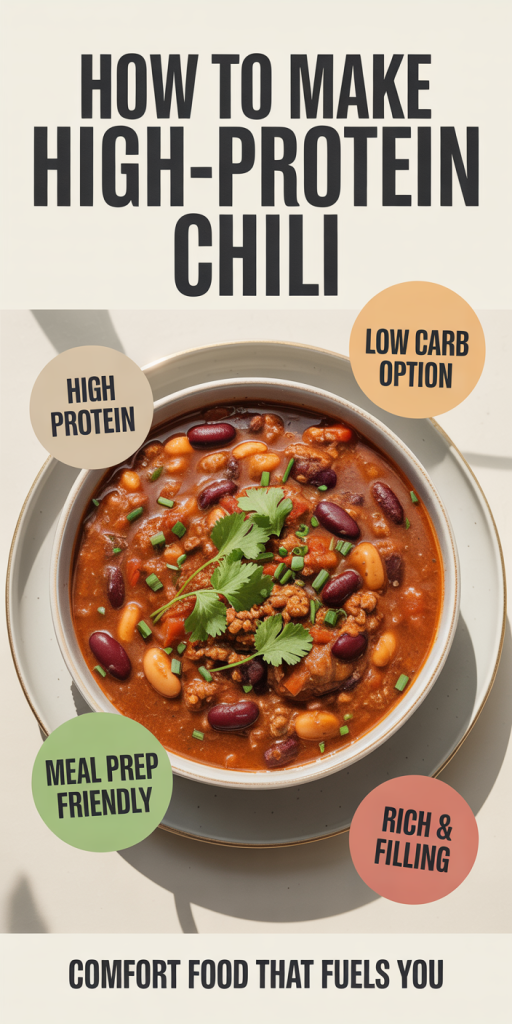
When it comes to serving our high-protein chili, we have plenty of options to enhance the meal.
- Toppings: Sour cream or Greek yogurt adds creaminess. Shredded cheese or avocado can add richness, while chopped green onions give a fresh crunch.
- Sides: Pairing chili with cornbread, tortilla chips, or a simple green salad balances the flavors and adds variety to our plates.
- Beverages: A light beer or a refreshing iced tea complements the spice well.
Storing and Reheating Leftovers
If we happen to have leftovers, storing and reheating our chili properly is essential to maintain flavor and texture.
- Storage: Store in an airtight container in the fridge for up to 4–5 days. For longer storage, we can freeze our chili in portions for up to three months.
- Reheating: When ready to enjoy our leftover chili, we can reheat it on the stovetop or in the microwave. Just be sure to add a splash of water if it’s too thick after freezing.
Conclusion
Making high-protein chili is not only an easy process but also a delightful culinary adventure. From selecting the right proteins to experimenting with spices and flavors, we have the opportunity to create a meal that showcases our preferences and dietary needs. So let’s gather our favorite ingredients and create a chili that warms our hearts and nourishes our bodies.