Modern life piles up fast , emails, errands, and especially stuff. Before you know it, closets are overflowing, kitchen drawers don’t close, and every surface is collecting random odds and ends. The truth is, clutter doesn’t just crowd your home , it clutters your mind. A messy environment can raise stress levels, lower productivity, and make even the simplest daily tasks feel harder.
The good news? A simpler, calmer home is closer than you think. With a focused 30-day plan, you can reset your entire space , one small step at a time , without feeling overwhelmed. This isn’t about perfection or minimalism. It’s about creating a home that feels light, easy, and peaceful again.
Here’s how to do it.
Week 1: Clear the Daily Chaos (Days 1–7)
The first week is all about small, visible wins. These are the spaces you walk through every day, the ones that either lift your mood or drain it. By the end of this week, your home will already feel noticeably calmer, and you’ll have built real momentum for the deeper work ahead.
Day 1 – The Entryway Reset: Make Your First Impression Calm
The entryway sets the tone every time you walk in. If it’s cluttered, you instantly feel the weight of disorganization.
Start by removing everything and giving the area a good clean. Then:
- Keep only the shoes you wear weekly by the door , store seasonal or rarely used pairs in a closet.
- Add a small tray or bowl for keys and mail to avoid random piles.
- Hang a few sturdy hooks for coats and bags instead of letting them pile on furniture.
- Place a small mat or basket for shoes if you’re trying to keep dirt from spreading through the house.
This is a quick project , 30 minutes or less , but the sense of order it creates will ripple into the rest of your home.
Day 2 – Kitchen Counters: Reclaim the Heart of Your Home
Cluttered counters are a constant source of visual noise. When every inch is covered, even making coffee feels stressful.
Here’s your plan:
- Completely clear your counters and wipe them down.
- Only put back what you use every single day: coffee maker, knife block, maybe a fruit bowl.
- Store small appliances you use weekly (like a blender) in cabinets or a pantry shelf.
- Group essentials into zones , a small tray for oils and salt by the stove, a basket for tea and mugs near the kettle.
The goal is breathing room. Empty counter space makes your kitchen feel bigger, brighter, and instantly more peaceful.
Day 3 – Refrigerator & Pantry: Reset Your Food Systems
Clutter here leads to wasted food and chaotic meal prep.
Step one: pull everything out. Yes, everything.
- Toss anything expired, stale, or freezer-burned.
- Group like items together (sauces, snacks, grains, canned goods).
- Wipe down shelves before putting anything back.
- Use clear bins or baskets to create “zones” , one for snacks, one for breakfast items, one for sauces, etc.
- Put healthy grab-and-go items (like yogurt, fruit, or prepped veggies) at eye level so you’ll reach for them first.
A clean, organized pantry and fridge make cooking easier and help you spend less because you’ll actually know what you have.
Day 4 – Bathroom Surfaces: Turn Chaos Into Calm
Bathrooms often collect more clutter than we realize , expired products, random samples, and half-empty bottles.
Here’s how to simplify:
- Clear every surface and cabinet, then wipe everything down.
- Toss anything expired or products you know you’ll never use.
- Limit countertop items to your daily essentials (toothbrush, soap, moisturizer).
- Use small containers or drawer organizers to keep similar items together , skincare in one bin, hair products in another.
A bathroom that feels like a spa isn’t about luxury. It’s about space to breathe and simplicity you’ll notice every morning.
Day 5 – Living Room Surfaces: Create a Space You Want to Be In
The living room is where you unwind, so clutter here chips away at your ability to relax.
Start by removing everything from coffee tables, shelves, and media consoles. Then:
- Be ruthless about what returns. If it doesn’t serve a purpose or make you smile, it’s probably just taking up space.
- Leave negative space , not every shelf needs to be full.
- Store remotes and small items in baskets or decorative boxes.
- Edit your decor: a few well-chosen pieces look intentional; too many look messy.
The result should feel light and inviting , like a room that welcomes you in instead of overwhelming you.
Day 6 – Paper Pile Cleanup: Stop the Stack Before It Starts
Paper is one of the sneakiest clutter culprits. Bills, school papers, receipts , they multiply fast.
Here’s how to stop the cycle:
- Gather all loose papers in one spot.
- Sort them into three piles: File, Action, and Recycle.
- Create a small, labeled file folder or bin for important documents.
- Go paperless where possible , opt for digital bills and statements.
- Set up a “paper inbox” where new mail lands, so it never piles up on counters again.
From now on, make it a habit to deal with paper once , don’t put it down “for later.”
Day 7 – Digital Detox: Declutter the Space You Can’t See
Clutter isn’t always physical. Digital mess clutters your mind just as much , and it’s often ignored.
Today, focus on a quick digital tidy-up:
- Delete apps you never use from your phone and computer.
- Unsubscribe from email newsletters you don’t read.
- Create folders for files and photos so you’re not scrolling endlessly to find what you need.
- Clear your desktop , keep only current projects visible.
A cleaner digital space helps you feel more focused and less overwhelmed, setting the stage for the rest of the month.
End of Week 1 Goal:
By now, you’ll feel a real shift. Your most-used spaces will feel easier, lighter, and calmer. You’ll have created new habits , a spot for keys, clear counters, a system for papers, that prevent future clutter from creeping back in. And most importantly, you’ll feel ready to tackle the deeper layers of clutter hiding behind closed doors in Week 2.
Week 2: Streamline Hidden Spaces (Days 8–14)
Now that your most visible spaces feel lighter, it’s time to go deeper , into the drawers, cabinets, and closets where clutter hides and multiplies. These areas might not be on display, but they’re the backbone of a functional home. Streamlining them now prevents messes from creeping back into your daily life.
Think of Week 2 as “infrastructure week.” You’re not just cleaning , you’re setting up systems that make staying organized almost effortless.
Day 8 – Kitchen Drawers: Conquer the Chaos Drawer
Everyone has one , the junk drawer overflowing with pens that don’t work, random screws, and mystery cords. Today’s goal is to transform it from chaos into order.
- Empty every drawer completely and wipe them clean.
- Toss anything broken, duplicate, or unidentifiable.
- Relocate items that don’t belong in the kitchen (tools, craft supplies, etc.).
- Use drawer dividers or small containers to group like with like , utensils, measuring spoons, gadgets, batteries.
Start with the junk drawer and move to other drawers if time allows. Even organizing one or two will make your kitchen feel more functional.
Day 9 – Under the Sink: Tidy the Forgotten Zone
This is one of the most neglected spots in any home, but when it’s organized, it saves time and frustration.
- Empty everything out and give the space a deep clean.
- Toss dried-out sponges, empty bottles, and products you never use.
- Combine half-used duplicates (like two bottles of glass cleaner).
- Use small bins or baskets to categorize items: cleaning sprays, dishwashing supplies, trash bags, etc.
- Consider installing a pull-out drawer or shelf riser to make better use of vertical space.
Once done, you’ll never have to dig around for cleaning supplies again.
Day 10 – Bathroom Cabinets: Streamline Your Self-Care
Out of sight shouldn’t mean out of mind. Clutter here often leads to overbuying or forgetting what you already have.
- Pull everything out of your cabinets and drawers.
- Toss expired medications, old sunscreen, and products you haven’t touched in six months.
- Store daily-use items at eye level and less-used items in the back or on higher shelves.
- Use bins or small baskets to keep categories together , skincare, first aid, travel-size items, etc.
When your bathroom storage is organized, your mornings start smoother and faster.
Day 11 – Linen Closet: Bring Order to the Chaos
If your linen closet looks like a fabric explosion, you’re not alone. A few intentional changes can make it feel like a boutique.
- Pull everything out and fold neatly.
- Donate or cut up old towels and sheets you no longer use.
- Store linens by set (sheets folded into pillowcases), and group items by category (towels, bedding, blankets).
- Use labeled bins for extras like guest toiletries or seasonal bedding.
Pro tip: Aim for two sheet sets per bed and two towel sets per person. That’s usually all you really need.
Day 12 – Bedroom Nightstands: Create a Calm Landing Spot
Your nightstand is the last thing you see before sleep and the first thing you see when you wake up , so it should feel peaceful, not chaotic.
- Clear everything off the top and empty drawers.
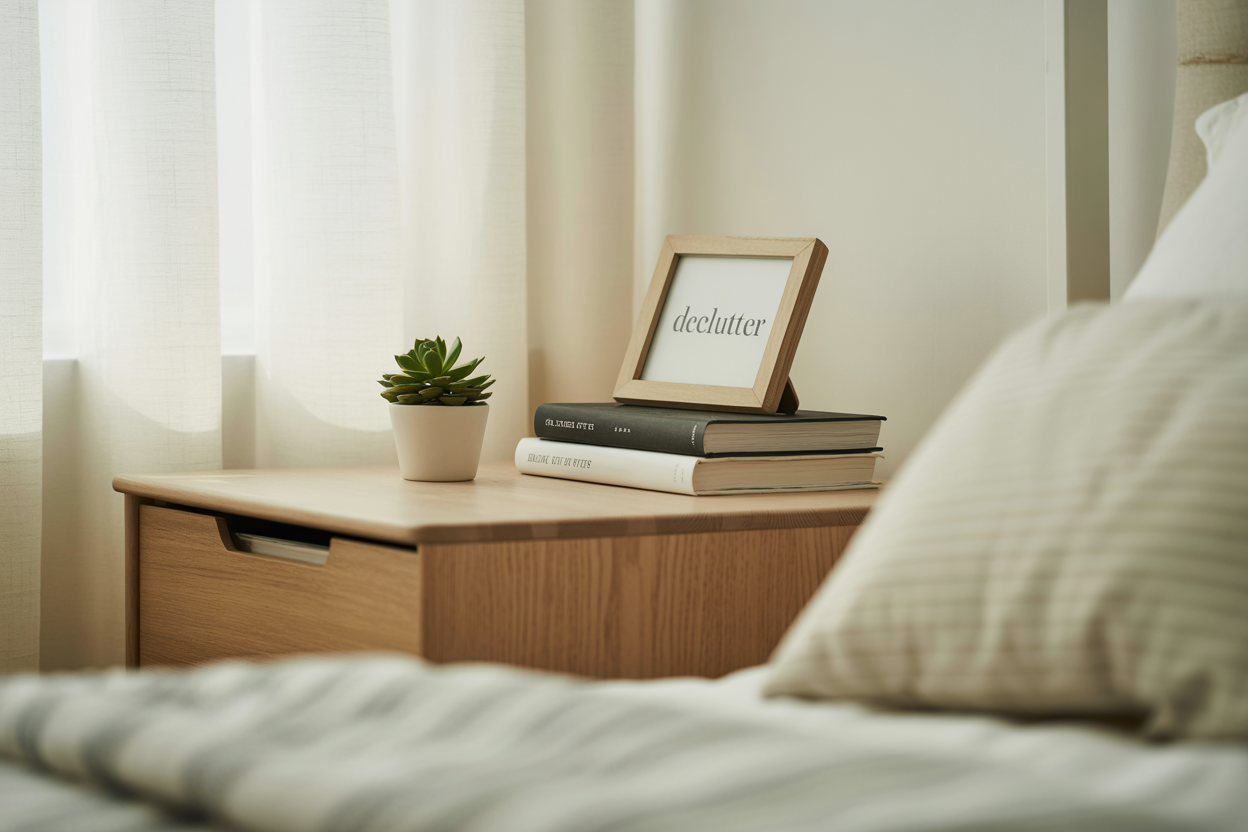
- Toss trash, relocate items that don’t belong, and keep only bedtime essentials: a lamp, book, glasses, maybe a small plant.
- Use a small tray or dish to corral small items like jewelry or lip balm.
- Avoid turning your nightstand into a mini storage unit , less is more here.
A clutter-free bedside space helps your brain wind down and start the day calmly.
Day 13 – Dresser Drawers: Lighten the Load
Clothing clutter sneaks up fast , and messy drawers make mornings harder than they need to be.
Today’s mission: make every drawer functional again.
- Empty one drawer at a time.
- Donate or recycle anything that doesn’t fit, you don’t love, or you haven’t worn in a year.
- Group similar items together (T-shirts, workout clothes, socks, etc.).
- Use simple folding techniques like the KonMari fold to maximize space and visibility.
When you open your drawers and see only what you actually wear, getting dressed becomes effortless.
Day 14 – Closet Audit (Round 1): Quick Wins First
We’ll go deeper in Week 3, but today is about building momentum with a fast, no-stress closet sweep.
- Pull out obvious items you no longer need: duplicates, anything stained or damaged, pieces you haven’t worn in over a year.
- Set up three bags: Donate, Sell, and Repair.
- Group what remains by type (tops, pants, dresses) to make next week’s full declutter easier.
This quick pass lays the groundwork for the deeper closet overhaul coming on Day 15.
End of Week 2 Goal:
By now, the “hidden chaos” in your home will be gone. Every drawer, cabinet, and shelf you’ve touched now has order and purpose. These small spaces might seem insignificant, but they’re the backbone of a simplified home. And with your daily zones and hidden storage now under control, you’re ready to tackle the bigger decluttering challenges , closets, garages, and sentimental stuff, in Week 3.
Week 3: Lighten the Bigger Loads (Days 15–21)
By now, your home already feels lighter. Daily clutter is under control, hidden spaces are organized, and you’ve built powerful momentum. Week 3 is where that momentum turns into real transformation.
We’re diving into the heavy hitters , closets, shoes, kids’ stuff, books, and storage zones. These are the areas that hold the most clutter and emotional weight. Decluttering them will not only free up space but also bring a deep sense of relief and control over your environment.
Day 15 – Closet Overhaul: The Real Reset Begins
Closets are the hardest and most rewarding space to declutter. They hide the “just in case” items and the “someday” outfits , and clearing them out can feel like lifting a weight off your shoulders.
Here’s the most effective approach:
- Empty everything. Yes, everything. Lay it on your bed or floor.
- Sort by category. Group similar items (jeans, jackets, dresses) to see how much you truly have.
- Use the 3-pile rule:
- Keep: You wear it, love it, and it fits your current life.
- Donate/Sell: It’s in good condition but not right for you anymore.
- Toss: Damaged, stained, or unwearable.
- Ask these 3 key questions:
- Would I buy this again today?
- Does it fit me now (not “someday”)?
- Do I feel confident wearing it?
Finally, put back only what earns a spot. Group clothes by type and color, and use slim hangers to save space. Add labeled bins for seasonal pieces if needed.
Day 16 – Shoes & Accessories: The Hidden Space Stealers
Shoes, bags, scarves, and hats pile up faster than we realize , and they often hide in corners we never check. Today’s focus is cutting back to what you actually wear and love.
- Shoes: Line them all up. Toss anything damaged beyond repair. Donate pairs you haven’t worn in a year. Keep only those that fit well and work with your lifestyle.
- Bags & Purses: Empty each one completely. Donate extras and store what’s left by size or use.
- Accessories: Pare down to what you truly use and love. Store scarves, belts, and hats in labeled bins or baskets.
By the end of today, you’ll have a wardrobe that’s easier to navigate and more enjoyable to use.
Day 17 – Kids’ Toys or Hobby Supplies: Tame the Avalanche
Whether it’s children’s toys or your own craft supplies, these items tend to multiply and spread. Decluttering them restores sanity and makes playtime or creative time more enjoyable.
- Gather everything in one place so you can see the full picture.
- Sort by category: building sets, dolls, board games, art supplies, etc.
- Edit ruthlessly: Donate toys your kids have outgrown and supplies you’ll never use.
- Set limits: Use labeled bins or baskets and decide how much space each category gets. If a bin overflows, something has to go.
- Involve your kids (if applicable): Let them choose what stays , you’ll teach them decision-making and reduce future resistance.
Bonus tip: rotate toys seasonally to keep things fresh without having everything out at once.
Day 18 – Books, Magazines & Papers: Curate What Matters
Books and papers carry emotional weight. But clutter isn’t about how much you own , it’s about how much adds value to your life.
- Books: Pull them all off the shelves. Keep only what you love, reference, or plan to read soon. Donate or sell the rest.
- Magazines: Recycle anything older than a few months (or scan pages you want to keep).
- Paperwork: File essential documents, digitize what you can, and shred anything outdated or unnecessary.
A curated bookshelf and paper system make your home feel intentional, not overwhelming.
Day 19 – Home Office: Build a Space That Works for You
A cluttered workspace creates mental clutter. Today, you’ll build a space that supports focus and creativity.
- Clear your desk completely and wipe it down.
- Only put back items you use daily , computer, notebook, a few pens.
- Organize supplies into drawers or small bins.
- Label folders for essential paperwork and shred anything outdated.
- Create a “to-do” tray for active projects so they don’t sprawl across the surface.
A clean office helps you think clearly and work efficiently , even if it’s just a small corner of your home.
Day 20 – Garage or Storage Closet: The Final Frontier
This is often the most dreaded space, but also the most satisfying. It’s where clutter goes to hide , and once you tackle it, everything else in your home feels lighter.
- Start small: focus on one zone (tools, holiday decor, sports gear).
- Sort everything into Keep, Donate/Sell, Trash, and Relocate.
- Be honest: if you haven’t used it in a year and it has no clear future purpose, it’s time to let it go.
- Use clear bins and label them by category so you can find things easily later.
- Install shelves or hooks to get items off the floor and free up space.
This might take more than one session , and that’s okay. Even one organized section is a major victory.
Day 21 – Sentimental Items: The Emotional Layer
This is the hardest part of decluttering for most people. Memorabilia, heirlooms, and keepsakes tug at our hearts , but too much of it can weigh us down.
Here’s how to handle it without guilt:
- Set a timer for 30–60 minutes. This keeps you from spiraling into decision fatigue.
- Sort items into three groups: Keep, Photograph, and Let Go.
- Keep only the pieces that truly spark strong, positive memories.
- Photograph items you want to remember but don’t need to physically store.
- Store what you keep in a small, clearly labeled bin , not scattered across closets and drawers.
Remember: memories live in your heart, not in boxes.
End of Week 3 Goal:
By now, your home should feel radically different. You’ve cleared the heavy clutter from closets, storage areas, and sentimental spaces , the kind of stuff that takes up physical and mental space. More importantly, you’ve redefined what deserves a place in your home and built trust in your ability to let go.
You’re in the home stretch. Next week, we shift from decluttering to designing a simpler lifestyle, systems and habits that keep your home this way for good.
Week 4: Simplify, Style, and Sustain (Days 22–30)
You’ve cleared the daily clutter, tackled hidden chaos, and lightened the heaviest loads. Now it’s time for the most important part: keeping it that way.
Week 4 focuses on intentional living , refining what’s left, styling it so your home feels welcoming, and putting simple habits in place so clutter never sneaks back in.
Day 22 – Rethink Your Furniture and Layout: Space to Breathe
Now that your home is lighter, you can see your space with fresh eyes. Are there pieces of furniture that feel unnecessary? Are traffic paths blocked? Are rooms trying to serve too many purposes?
- Walk through each room and ask: “Does this piece serve a purpose?” If not, consider donating or selling it.
- Remove bulky items that make a room feel cramped. Open space is valuable , it creates calm.
- Rearrange furniture for better flow and function. Even small changes, like pulling a couch away from the wall or swapping side tables, can transform a room.
- Think about how you live. A room should serve your lifestyle, not the other way around.
This step isn’t about redecorating , it’s about creating a space that supports how you actually live day to day.
Day 23 – Create a Donation Zone: Build a System for Letting Go
Decluttering isn’t a one-time event. Life changes, and so do your needs. By creating a permanent “donation zone” in your home, you make it easy to keep clutter from creeping back.
- Choose a small closet, bin, or basket as your donation zone.
- Any time you come across something you no longer need, drop it there immediately.
- When it’s full, schedule a pickup or drop it off at your local donation center.
This tiny habit keeps future decluttering projects from piling up , and helps others in the process.
Day 24 – Establish a Weekly Reset Routine
Clutter builds up in small doses , a jacket draped on a chair, mail on the counter, dishes left in the sink. A quick weekly reset keeps it all in check before it snowballs.
Here’s a simple routine to follow once a week:
- Do a 10-minute sweep through every main room. Return items to their homes.
- Clear off surfaces , countertops, nightstands, coffee tables , so they stay inviting.
- Do a fast fridge check and toss expired items.
- Run a load of laundry and put it away immediately.
This doesn’t have to take more than 30 minutes. Think of it as hitting “refresh” on your home every week.
Day 25 – Storage Systems Check: Everything Needs a Home
Clutter returns when items don’t have clear homes. Today’s task is to make sure everything does.
- Do a quick scan of every room and note anything that still doesn’t have a dedicated spot.
- Use bins, baskets, drawer dividers, and labels to give everything a home.
- Keep storage simple and intuitive. The less you have to think about where something goes, the more likely you are to put it away.
- If a category doesn’t fit easily, it might mean you still have too much of it , edit again.
A home where everything “lives” somewhere is a home that stays tidy with almost no effort.
Day 26 – Simplify Your Decor: Less Really Is More
Now that the clutter is gone, you can refine what’s left so your home feels calm and intentional instead of busy and overwhelming.
- Clear every surface and shelf. Put back only the pieces you truly love or that add meaning to the space.
- Consider scale and spacing , leaving empty space is just as important as filling it.
- Choose a few key accents (like a vase, a framed photo, or a plant) instead of scattering dozens of small items everywhere.
- Rotate decor seasonally to keep things fresh without adding clutter.
The goal isn’t a minimalist showroom, it’s a home that feels light, open, and deeply “you.”
Day 27 – Pantry Restock + Meal Plan: Simplify Daily Life
Clutter in your pantry often leads to clutter in your life , impulse buys, wasted food, and chaotic dinners. Now that it’s organized, keep it that way with a smarter system.
- Take inventory of what’s left and make a list of staples you actually use.
- Restock intentionally , think versatile basics, not random extras.
- Group similar items into clear bins (breakfast items, snacks, baking, etc.) to keep things organized.
- Create a simple weekly meal plan around what’s already in your pantry and fridge.
A well-stocked, well-organized kitchen reduces decision fatigue and saves time every day.
Day 28 – Adopt the “One In, One Out” Rule
This simple rule is the key to preventing future clutter: whenever something new comes into your home, something old must go out.
- Bought a new pair of shoes? Donate an old pair.
- Got a new kitchen gadget? Pass one along to someone else.
- Added a new sweater? Pull one you no longer wear from your closet.
It’s a small mindset shift that makes a huge difference. Over time, it keeps your home balanced and clutter-free without big purges.
Day 29 – Celebrate and Reflect: See How Far You’ve Come
Take time today to look around and really notice the difference. Your home isn’t just cleaner , it’s calmer, simpler, and more aligned with how you want to live.
- Walk through each room and appreciate the space you’ve created.
- Take photos to document your transformation (and remind yourself how far you’ve come if clutter creeps back).
- Share the before-and-after with a friend or family member , accountability helps you maintain it.
- Most importantly, reflect on how it feels to live in a lighter, simpler home.
This isn’t about perfection. It’s about progress , and you’ve made a lot of it.
Day 30 – Set Future Goals: Make Simplicity Your New Normal
You’ve built strong habits and systems over the past 30 days. Today, commit to a few small practices that will keep your home clutter-free long term:
- Schedule a monthly mini-declutter , just 30 minutes to tidy drawers, check closets, and reset.
- Do a seasonal review every three months , swap out decor, review clothing, and reassess storage.
- Revisit your donation zone regularly and keep it active.
- Stay mindful of what you bring in, purchases should earn their place.
Your home is no longer a storage unit , it’s a space that supports your best life.
End of Week 4 Goal:
You’ve done more than declutter your home , you’ve created a new way of living. One that’s simpler, calmer, and more intentional. With your new systems in place, you’ll spend less time cleaning, less time searching, and more time enjoying the space you live in.
Final Thoughts: A Simpler Home Is a Simpler Life
A 30-day home reset isn’t about getting rid of everything , it’s about getting rid of what doesn’t matter so you have more room for what does. Each drawer cleared and surface simplified was a small step toward a bigger goal: creating a home that supports the life you want to live.
And now you’ve done it. Your space is lighter. Your routines are easier. Your home feels like home again.
The work doesn’t end here, but it gets easier. Because now, simplicity is your new default.