If you’ve ever walked into the grocery store with good intentions and walked out with an expensive cart full of random items, you’re not alone. Eating clean doesn’t just start in your kitchen , it starts in the aisles of the grocery store. And the right grocery list can make the difference between meals that feel effortless and a fridge full of wilted greens you never touch.
The good news? Clean eating doesn’t have to mean expensive specialty foods or complicated ingredients. With the right strategy and a smart grocery list, you can eat better, feel better, and even spend less.
This guide will walk you through everything you need to stock a clean kitchen , plus smart tips to help you save money while you do it.
What “Clean Eating” Means (and What It Doesn’t)
Before we dive into the list, let’s clear something up: clean eating isn’t a diet , it’s a habit. It’s about choosing real, whole foods as close to their natural state as possible and cutting back on heavily processed products, added sugars, and artificial ingredients.
That means focusing on foods that:
- Come from nature, not a factory.
- Have short ingredient lists (or no label at all).
- Are minimally processed and nutrient-dense.
- Support your energy, digestion, and overall health.
It doesn’t mean you need to buy everything organic or swear off every packaged item. Clean eating is flexible and realistic , and it should fit your lifestyle and budget.
Proteins – The Building Blocks of Every Meal
Protein keeps you full, builds muscle, and helps balance blood sugar. Choose minimally processed options and look for short ingredient labels.
Stock up on:
- Chicken breast and thighs
- Ground turkey or lean beef
- Salmon, tuna, and cod (fresh or frozen)
- Canned wild fish (tuna, salmon, sardines in water or olive oil)
- Eggs (pasture-raised if possible)
- Plain Greek yogurt
- Cottage cheese
- Beans and lentils (dried or no-salt-added canned)
- Tofu or tempeh
Budget tip: Buy family-size packs of meat, then portion and freeze them. Canned beans and lentils are cheap, clean sources of protein too.
Whole Grains – Slow-Burning Energy
Whole grains provide fiber, vitamins, and long-lasting energy. They’re also some of the most budget-friendly items in the store.
Add these to your list:
- Old-fashioned rolled oats or steel-cut oats
- Brown rice or wild rice
- Quinoa
- Barley, farro, or bulgur
- 100% whole-grain bread or wraps
- Whole-grain pasta
- Popcorn kernels (air-popped is a clean snack)
Budget tip: Skip pricey pre-packaged grain mixes and buy from bulk bins when possible , it’s often half the cost.
Healthy Fats – For Hormones, Energy & Flavor
Healthy fats help your body absorb nutrients, keep you satisfied, and add delicious flavor to meals. Focus on whole food sources and unrefined oils.
Top picks:
- Extra-virgin olive oil
- Avocado oil or coconut oil
- Avocados
- Nuts (almonds, walnuts, cashews, pistachios)
- Seeds (chia, flax, hemp, pumpkin, sunflower)
- Natural nut butters (just nuts + salt)
- Unsweetened shredded coconut
- Olives
Budget tip: Buy nuts and seeds in bulk. Store them in the fridge or freezer to extend their shelf life and prevent them from going rancid.
Fruits & Vegetables – The Foundation of Clean Eating
Plants should make up the majority of your cart. They’re rich in fiber, antioxidants, and micronutrients , and they help your body thrive.
Fresh or frozen veggies to stock:
- Leafy greens (spinach, kale, romaine, arugula)
- Cruciferous veggies (broccoli, cauliflower, cabbage, Brussels sprouts)
- Root veggies (sweet potatoes, carrots, beets)
- Alliums (onions, garlic, shallots)
- Bell peppers, zucchini, cucumbers
- Tomatoes (fresh or canned)
- Mushrooms, celery, and herbs for flavor
Fruits to keep on hand:
- Apples, pears, and oranges
- Bananas and berries (fresh or frozen)
- Grapes, melons, and citrus
- Mango, pineapple, and kiwi
- Lemons and limes for cooking and flavor
Budget tip: Frozen fruits and veggies are just as nutritious as fresh , and often much cheaper. Stock up when they’re on sale.
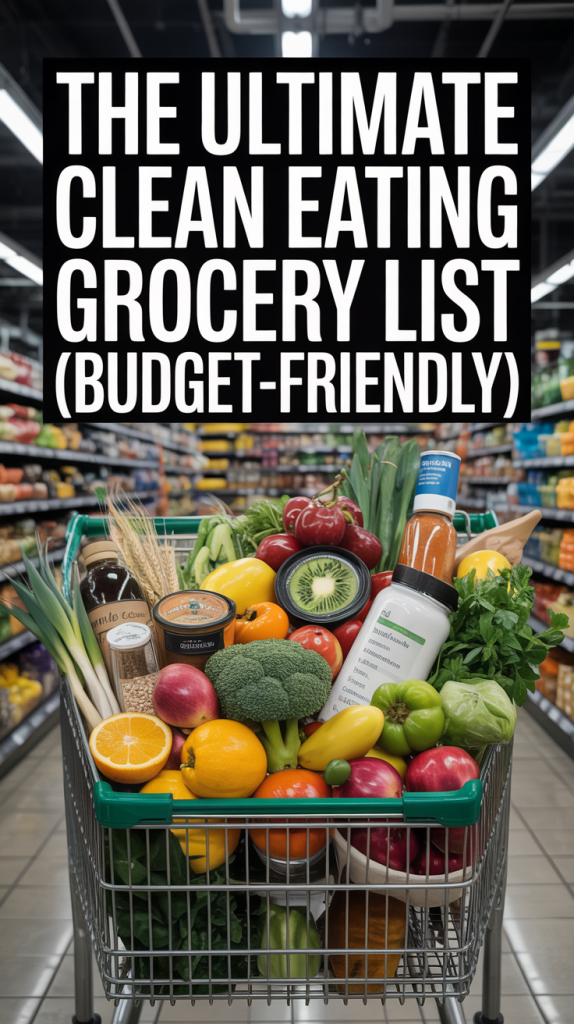
Flavor Boosters – Clean Seasonings & Condiments
Clean eating should never mean boring food. Spices, herbs, and simple condiments bring meals to life , without added junk.
Pantry staples:
- Sea salt and black pepper
- Garlic powder, onion powder
- Paprika, cumin, turmeric, cinnamon
- Dried herbs (basil, oregano, rosemary, thyme)
- Apple cider vinegar, balsamic vinegar
- Dijon mustard
- Tamari or coconut aminos
- Hot sauce (check for clean ingredients)
- Low-sodium broth or stock
Budget tip: Buy spices in bulk or from discount sections , they’re often much cheaper than prepackaged jars.
Smart Pantry Staples – For Quick, Clean Meals
A well-stocked pantry makes clean eating easier on busy days. These staples help you build fast meals without reaching for takeout.
Keep these on hand:
- Canned tomatoes and tomato paste
- No-salt-added canned beans
- Coconut milk (for soups and curries)
- Whole-grain or brown rice pasta
- Nut and seed butters
- Clean granola
- Dark chocolate (70%+ cacao)
Budget tip: Store brands are often just as high quality as name brands , and significantly cheaper.
How to Turn This Grocery List Into a Week of Clean Meals
Now that you’ve got your clean eating staples, let’s put them to work. Here’s a simple, budget-friendly 7-day meal plan using those ingredients. It’s built around real, whole foods, minimal prep, and balanced nutrition , all while staying easy on your wallet.
Each day includes breakfast, lunch, and dinner ideas that you can mix and match. Feel free to repeat your favorites or swap meals between days based on what you have on hand.
Monday
Breakfast: Greek yogurt topped with fresh or frozen berries, chia seeds, and a drizzle of honey
Lunch: Grilled chicken salad with mixed greens, tomatoes, cucumbers, and olive oil vinaigrette
Dinner: One-pot turkey chili with beans, tomatoes, and spices , serve with a side of brown rice
Time-saver: Make a big batch of chili and enjoy leftovers for lunch later in the week.
Tuesday
Breakfast: Overnight oats with almond butter, sliced banana, and cinnamon
Lunch: Whole-grain veggie wrap with hummus, spinach, bell peppers, and avocado
Dinner: Sheet pan salmon with roasted broccoli and sweet potatoes
Budget tip: Use frozen salmon fillets , they’re often cheaper and just as nutritious.
Wednesday
Breakfast: Scrambled eggs with spinach, onions, and salsa + a slice of whole-grain toast
Lunch: Quinoa and roasted vegetable bowl topped with a lemon-tahini dressing
Dinner: Stir-fried chicken and mixed veggies with tamari over brown rice
Make it simple: Use a frozen veggie mix for the stir-fry to save chopping time.
Thursday
Breakfast: Smoothie with spinach, banana, frozen berries, chia seeds, and Greek yogurt
Lunch: Leftover turkey chili with a side salad
Dinner: Baked sweet potatoes stuffed with black beans, salsa, and avocado
Smart swap: Swap Greek yogurt for sour cream as a clean topping.
Friday
Breakfast: Cottage cheese with pineapple chunks and a sprinkle of hemp seeds
Lunch: Tuna salad with leafy greens, cucumber, and a drizzle of olive oil and lemon
Dinner: One-pan baked chicken thighs with roasted carrots and Brussels sprouts
Batch prep: Roast extra veggies to use in wraps or grain bowls over the weekend.
Saturday
Breakfast: Oatmeal with apple slices, cinnamon, and a dollop of almond butter
Lunch: Lentil and vegetable soup with a side of whole-grain bread
Dinner: Zucchini noodles with tomato sauce and ground turkey
Budget tip: Double the soup recipe and freeze half for next week.
Sunday
Breakfast: Veggie omelet with sautéed mushrooms, peppers, and onions
Lunch: Clean out the fridge grain bowl , toss together leftover veggies, grains, and protein with a simple olive oil dressing
Dinner: Slow-cooked chicken and vegetable stew served with a side salad
Weekend reset: Sunday dinner is perfect for leftovers , pack some up for Monday’s lunch to start the week strong.
How to Use This Plan
- Mix and match: You don’t have to follow it perfectly. Repeat meals you love and skip the ones you don’t.
- Batch cook once, eat twice: Make extra grains, proteins, or soups and repurpose them in different meals.
- Shop smart: Use seasonal produce and store brands to keep costs down.
- Prep ahead: Spend an hour on Sunday chopping veggies or cooking grains , it’ll save hours during the week.
With this plan, your clean eating grocery list becomes more than just ingredients , it turns into a week of easy, nourishing meals that keep you full, energized, and on budget.
Smart Shopping Tips to Keep Costs Low
Clean eating has a reputation for being expensive, but with the right strategy, it can be more affordable than a processed diet. Here’s how to stretch your dollar without sacrificing nutrition:
1. Plan Your Meals Before You Shop
Decide on your meals for the week and make your list from there. It keeps you focused, reduces impulse buys, and ensures you use everything you purchase.
2. Shop Seasonal and Local
Seasonal produce is fresher, tastier, and much cheaper. Check farmers’ markets near closing time for discounts or try imperfect produce boxes for 30–50% off.
3. Embrace Store Brands
Generic versions of pantry staples like oats, beans, rice, and frozen veggies are usually identical in quality and significantly cheaper.
4. Use the “Perimeter Rule”
Most clean foods , produce, meat, dairy, eggs , are found around the store’s perimeter. Spend most of your time there and less in the processed aisles.
5. Batch Cook and Freeze
Cooking once and eating twice saves time and money. Double recipes and freeze extras for future meals.
6. Waste Less, Save More
Plan a “clean out the fridge” meal once a week using what’s left on hand , soups, stir-fries, and grain bowls are great ways to use odds and ends.
7. Buy Frozen or Canned When It Makes Sense
Frozen produce is often just as nutritious as fresh and much cheaper. Canned tomatoes, beans, and fish are budget-friendly staples with long shelf lives.
Perfect — here’s a polished section you can plug right into your grocery list article. It’s written in a clear, beginner-friendly tone and gives readers practical, side-by-side swaps so they can ease into clean eating without feeling deprived:
Clean Swaps for Common Processed Foods
One of the easiest ways to start eating cleaner isn’t by cutting everything out — it’s by making simple swaps for the foods you already eat. Small changes, repeated consistently, lead to big results over time.
Below are some smart, budget-friendly substitutions for everyday processed items. These swaps are easy to find, taste great, and help you reduce added sugar, refined oils, and unnecessary additives — without giving up your favorite meals.
Breakfast Swaps
| Instead of this… | Try this instead… | Why it’s better |
|---|---|---|
| Sugary breakfast cereal | Old-fashioned oats with fruit and cinnamon | More fiber, no added sugar, and keeps you full longer |
| Flavored instant oatmeal packets | DIY overnight oats made with oats, chia, fruit, and nut butter | Less sugar, more nutrients, and customizable |
| Store-bought granola bars | Homemade energy bites with oats, nut butter, and honey | No preservatives and balanced with protein and healthy fats |
Tip: Prep a few jars of overnight oats on Sunday night. They’re just as convenient as cereal — but way cleaner and cheaper.
Bread & Grain Swaps
| Instead of this… | Try this instead… | Why it’s better |
|---|---|---|
| White bread | 100% whole-grain bread | More fiber and nutrients, steadier blood sugar |
| White pasta | Whole-grain or chickpea pasta | Higher protein and fiber, lower glycemic impact |
| White rice | Brown rice, quinoa, or farro | More minerals and sustained energy |
Tip: If switching cold turkey feels hard, try mixing half white and half whole-grain pasta or rice at first.
Beverage Swaps
| Instead of this… | Try this instead… | Why it’s better |
|---|---|---|
| Soda or sweetened iced tea | Sparkling water with lemon or berries | Zero added sugar and just as refreshing |
| Store-bought smoothies | Homemade smoothies with fruit, greens, and Greek yogurt | No added sugars or fillers — plus extra protein |
| Sugary coffee drinks | Coffee with cinnamon and a splash of milk or almond milk | Same energy boost without 300+ empty calories |
Tip: Add fresh citrus slices or cucumber to water to make it feel more special (and help you drink more of it).
Snack Swaps
| Instead of this… | Try this instead… | Why it’s better |
|---|---|---|
| Potato chips | Air-popped popcorn or roasted chickpeas | More fiber, less fat, and fewer additives |
| Packaged cookies | Apple slices with almond butter or a piece of dark chocolate | Natural sweetness plus healthy fats and fiber |
| Cheese crackers | Whole-grain toast with hummus or homemade seed crackers | More nutrients, fewer artificial ingredients |
Tip: Portion snacks into small containers ahead of time to avoid mindless eating — and save money by buying in bulk.
Meal & Condiment Swaps
| Instead of this… | Try this instead… | Why it’s better |
|---|---|---|
| Frozen dinners | Batch-cooked chili, soups, or casseroles | More nutrients and no hidden sodium or preservatives |
| Store-bought salad dressing | Olive oil + vinegar or lemon juice | No seed oils, stabilizers, or added sugars |
| Ketchup with added sugar | Tomato paste mixed with vinegar and spices | Same flavor with clean ingredients |
| Processed deli meats | Roasted chicken or turkey breast | Lower sodium and fewer preservatives |
Tip: If convenience is the issue, cook once and freeze individual portions of clean meals — they’ll be just as easy to grab as a frozen dinner.
Small Swaps, Big Impact
You don’t need to overhaul your pantry overnight. Start by swapping just one or two items each week. Replace your cereal with oats. Trade soda for sparkling water. Switch store-bought dressing for a homemade version.
Over time, these tiny changes become habits — and those habits transform how you eat, how you feel, and how much you spend. Clean eating is all about progress, not perfection. And with swaps like these, it’s easier (and tastier) than you might think.
Smart Shopping Tips to Keep Costs Low
Clean eating has a reputation for being expensive, but with the right strategy, it can be more affordable than a processed diet. Here’s how to stretch your dollar without sacrificing nutrition:
1. Plan Your Meals Before You Shop
Decide on your meals for the week and make your list from there. It keeps you focused, reduces impulse buys, and ensures you use everything you purchase.
2. Shop Seasonal and Local
Seasonal produce is fresher, tastier, and much cheaper. Check farmers’ markets near closing time for discounts or try imperfect produce boxes for 30–50% off.
3. Embrace Store Brands
Generic versions of pantry staples like oats, beans, rice, and frozen veggies are usually identical in quality and significantly cheaper.
4. Use the “Perimeter Rule”
Most clean foods , produce, meat, dairy, eggs , are found around the store’s perimeter. Spend most of your time there and less in the processed aisles.
5. Batch Cook and Freeze
Cooking once and eating twice saves time and money. Double recipes and freeze extras for future meals.
6. Waste Less, Save More
Plan a “clean out the fridge” meal once a week using what’s left on hand , soups, stir-fries, and grain bowls are great ways to use odds and ends.
7. Buy Frozen or Canned When It Makes Sense
Frozen produce is often just as nutritious as fresh and much cheaper. Canned tomatoes, beans, and fish are budget-friendly staples with long shelf lives.
Final Thoughts: Stock Your Kitchen, Simplify Your Life
Eating clean doesn’t have to mean spending a fortune or buying every trendy product on the shelf. It’s about building meals from real, whole foods , and learning to shop with purpose.
Start small. Add a few of these staples to your pantry each week. Build meals around simple ingredients. Shop smart, waste less, and plan ahead. Over time, these habits will not only transform your health but also simplify your grocery trips and your life.
A clean kitchen leads to cleaner meals. And clean meals lead to more energy, better focus, and a lifestyle that feels good from the inside out.