Work From Home That Actually Pays: A Practical Guide to Choosing and Launching Self-Employed Jobs

Thinking about trading a commute for a kitchen-table office? Self-employment from home can deliver flexibility and control, but it also asks you to sell, deliver, and keep the books. This piece breaks down what self-employment really means, how to pick the right fit for your timeline and skills, and concrete steps you can take to be paid within 90 days.
1. What being self-employed really looks like
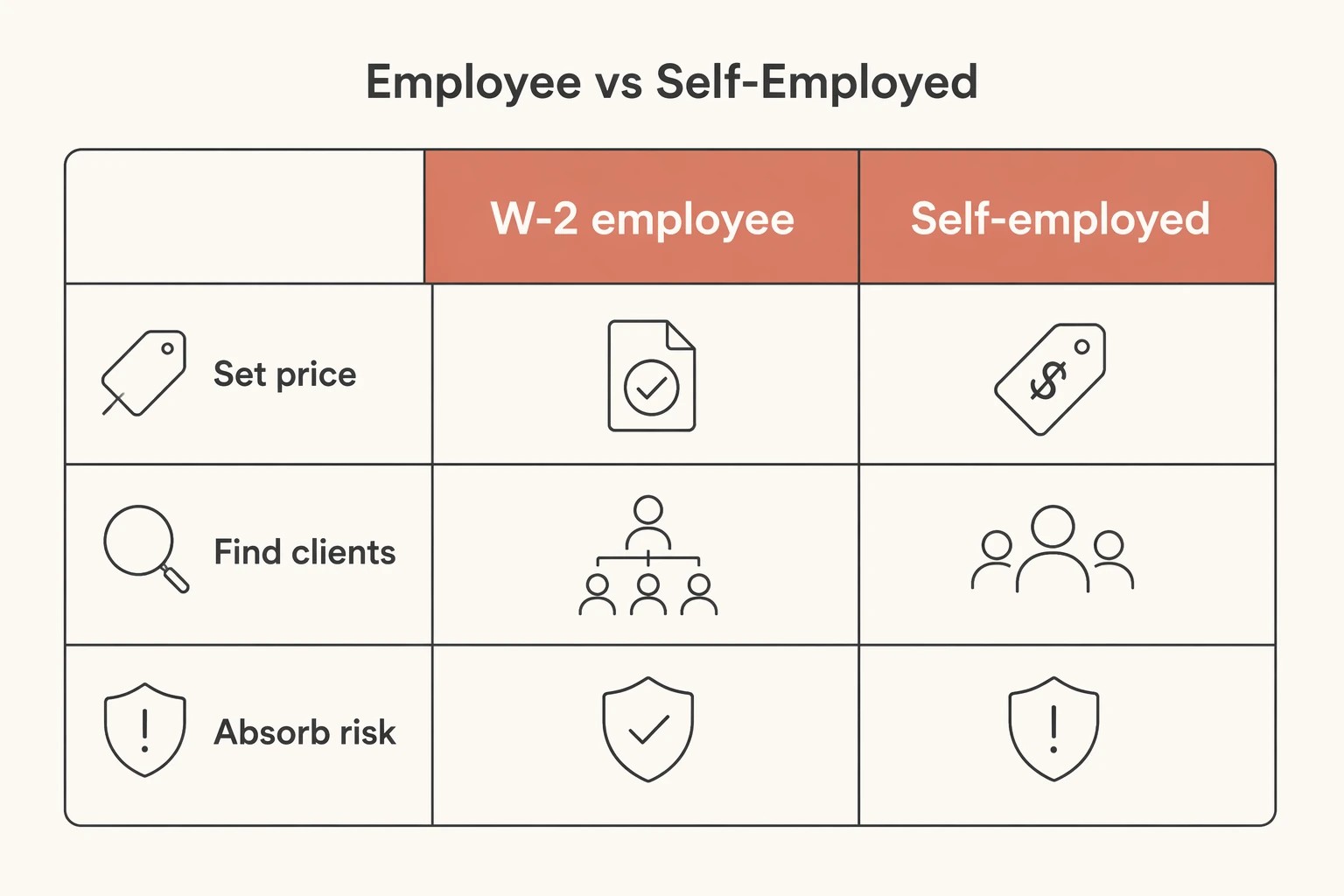
Self-employment is a legal and financial arrangement, not a place you sit. The key differences from a remote job are who sets prices, who finds clients, and who carries the gaps between paydays. As a sole operator you invoice clients, choose your rates, and cover payroll taxes and business expenses yourself. That means a tidy inbox and a tidy workflow matter as much as your core skill. Practical steps: set up a separate business email and bank account today, keep a simple spreadsheet of income and deductible expenses, and treat bookkeeping as a weekly 15-minute appointment so small slips don’t become big headaches.
2. Match a job to your cash needs and sales comfort
Before you pick a path, answer two questions honestly: how much do you need to earn and how fast must it arrive? If you need cash within weeks, favor services you can deliver now; if you can wait months, a product or content asset might fit. Also check your tolerance for outreach. If cold messages make you anxious, use platforms where clients post work; if you’re comfortable messaging local businesses, direct outreach can land higher-value gigs faster. Practical example: someone who needs $500 this month might offer two half-day bookkeeping packages to nearby cafés; someone with six months can invest evenings in building a niche blog or course.
3. Services that can put money in your account quickly
If immediate cash matters, sell a service people already understand and urgently need. Virtual admin support, short-term bookkeeping, proofreading, and local gigs like pet visits or house checks move fastest because the problem is obvious and the timeline is short. Make offers that communicate a single deliverable and a clear turnaround—for example, “I will reconcile last month’s expense sheet and flag five anomalies in two days” or “three daily pet-check visits for $X per week.” Use your existing network and neighborhood message boards first; a two-sentence pitch or a before-and-after demonstration often converts faster than a polished website.
4. Beginner-friendly ways to get started and build confidence
Some income streams are easier to begin than others because they rely on skills you already use. Writing short social posts, tutoring one-on-one, basic photography for headshots, or remote customer-service roles are realistic starting points. Keep initial offers specific: offer a week of social captions for gym owners, two one-hour language lessons, or a flat-rate mini photoshoot for LinkedIn headshots. Use inexpensive proof: create a sample post calendar, record a lesson plan, or photograph a volunteer. Deliver on time and ask for a short testimonial. Each paid small job builds the portfolio and confidence for larger contracts.
5. A focused 90-day plan to land your first clients

Treat the next three months as an experiment with one narrow offer. Weeks 1–2: choose one deliverable and set up the basics—business email, separate bank account, and a simple invoice template. Weeks 3–4: write a one-line offer with a starter price and test it by doing two discounted or free projects in exchange for permission to show results. Weeks 5–12: send five short, specific pitches per weekday to likely clients, deliver work promptly, invoice immediately, and request referrals and written feedback. Raise your price after every few paid jobs until you hit resistance; that feedback loop defines your market rate.
6. Paths with higher ceilings and how to reach them

Some careers start modestly but lead to larger incomes once you have demonstrable work to show. Web development and design reward live portfolios: a site that improves conversions lets you charge more. Recurring services like bookkeeping or ongoing SEO build stable monthly revenue through retainers. Specialties that automate business processes or connect tools can command project fees because a workflow that saves a client ten hours a week has clear value. The practical approach: spend months building three real examples you can point to, then lead with those case studies when you pitch rather than hypothetical skills.
7. Models that can become semi-passive over time
‘Passive’ income usually means front-loaded effort followed by ongoing returns. Narrow blogs that rank for buyer-intent queries, evergreen online courses, print-on-demand stores, podcast series that feed other offers, and flipping small websites can all generate revenue with less active time later. The work involves content creation, initial promotion, and periodic updates: keep course material fresh, refresh posts that fall in search rankings, and monitor designs that stop selling. Practical starter moves: pick a tightly focused niche, commit a set number of hours each week to content production, and schedule quarterly reviews to refresh the asset.
8. Fast answers to the questions people always ask
There are a few recurring practical questions when starting out. You usually don’t need an LLC day one; begin by keeping clean records and separating business money from personal funds. Legit offers are specific about the client, the deliverable, and how you’ll be paid; be wary of anyone asking for vague fees upfront. If you only have evenings and weekends, choose work that breaks into discrete tasks like editing, micro-consulting, or scheduled tutoring. And remember: a short sample, screenshots, or a testimonial often replaces a formal portfolio for early gigs.
9. One small habit that makes the business real
The single action that separates plans from paychecks is simple: send one specific offer to one real potential client this week. Don’t polish a logo or tweak a website; write a three-sentence message that names the deliverable, the price, and the turnaround (for example, ‘I’ll write a single 800-word blog post with headline and meta for $X, delivered in three days’). Track responses and refine the language. Repeat daily. That habit transforms vague ambition into revenue, and it keeps you learning from real feedback rather than hypothetical perfection.
Self-employment from home rewards clear choices and short experiments. Pick one specific offer, set a tiny administrative system, and send a real pitch this week. The rest is iterative: deliver reliably, collect proof, and let your pricing and focus evolve from real client responses.