Clean eating isn’t just a buzzword: it’s a lifestyle choice that promotes health and well-being. By making simple food swaps, we can nourish our bodies while enjoying delicious meals. In this text, we will explore what clean eating is, its benefits, and provide ten straightforward swaps that can make a significant difference in our diets.
Understanding Clean Eating
Clean eating focuses on consuming whole, minimally processed foods. This approach encourages us to embrace foods in their natural state, ensuring we get the most nutrients while avoiding added sugars, unhealthy fats, and artificial ingredients. By prioritizing whole foods like fruits, vegetables, whole grains, legumes, nuts, and seeds, we connect more deeply with what’s on our plates. Clean eating is not about rigid restrictions or perfection: rather, it’s about making healthier choices that support our wellness journey.
The Benefits of Clean Eating
The benefits of clean eating extend beyond just physical health. By choosing whole, nutritious foods, we can improve our overall well-being, boost our energy levels, enhance our mental clarity, and even support our immune function. Here are some key benefits we can enjoy:
- Improved Digestion: Diets rich in fiber from fruits, vegetables, and whole grains aid digestive health.
- Weight Management: Whole foods are often lower in calories and more filling, which can help us manage our weight more effectively.
- Reduced Risk of Chronic Diseases: Clean eating can lower our risk of developing conditions like heart disease, diabetes, and certain cancers.
- Enhanced Mood and Energy: Nutritious foods fuel our bodies, helping us feel more energetic and balanced throughout the day.
By embracing clean eating, we’re investing in our long-term health and happiness.
Top 10 Simple Swaps
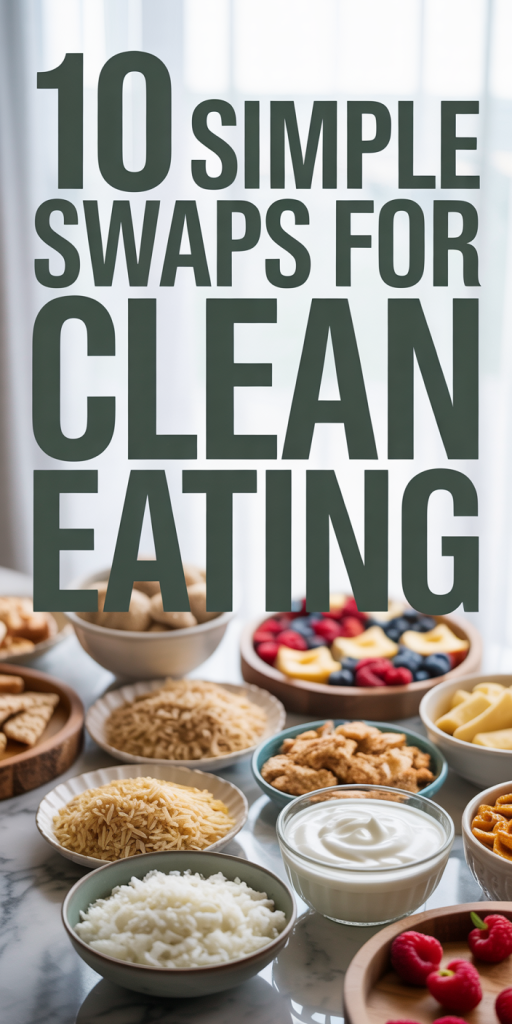
Here are ten simple swaps we can make to clean up our diet without sacrificing flavor or satisfaction.
1. White Rice To Quinoa
Instead of reaching for white rice, we can enjoy quinoa, a protein-rich grain packed with essential amino acids and fiber. Not only is quinoa a great source of nutrients, but its nutty flavor and appealing texture make it a perfect base for salads or bowls.
2. Processed Sugar To Natural Sweeteners
We can replace processed sugars with natural sweeteners like honey, maple syrup, or agave nectar. These alternatives are less refined and contain trace nutrients that offer a healthier option when we crave something sweet.
3. White Bread To Whole Grain Bread
Opting for whole grain bread instead of white bread allows us to increase fiber intake and sustain energy levels throughout the day. Whole grains contain more nutrients that support digestion and heart health.
4. Potato Chips To Air-Popped Popcorn
Craving a snack? Air-popped popcorn is not only lower in calories than potato chips, but it also provides whole grain benefits. We can spice it up with our favorite herbs and spices to keep it exciting.
5. Soda To Sparkling Water
Soda is often loaded with added sugars and empty calories. By switching to sparkling water, flavored with fresh fruits or herbs, we can still enjoy a refreshing beverage without the downside of artificial sweeteners or sugars.
6. Conventional Dairy To Plant-Based Alternatives
Choosing plant-based dairy alternatives, such as almond milk or coconut yogurt, can be a delicious way to reduce saturated fats and increase nutrient diversity in our diets. Plus, they often come fortified with vitamins and minerals.
7. Beef To Lean Proteins
Rather than choosing fatty cuts of beef, we can opt for leaner protein sources like chicken, turkey, or fish. These proteins provide essential nutrients and are easier on our hearts.
8. Jarred Sauces To Homemade Dressings
Many jarred sauces are packed with preservatives and sugar. By making our own dressings, using ingredients like olive oil, vinegar, and fresh herbs, we can control what goes into our meals while enhancing flavor.
9. Frozen Meals To Home-Cooked Dishes
While frozen meals may offer convenience, preparing home-cooked dishes allows us to choose fresh, clean ingredients. Meal prepping on weekends can help us stay on track during busy weeks.
10. Fruit-Flavored Yogurt To Greek Yogurt With Fresh Fruit
Instead of fruit-flavored yogurt, which often contains added sugars, we can enjoy plain Greek yogurt topped with fresh fruit. Greek yogurt is higher in protein and makes for a perfect base for a nutritious start to our day.
Tips For Making These Swaps Easier
Making changes to our dietary habits can be challenging, but here are some tips to help ease the transition:
- Start Gradually: Instead of overhauling our diet overnight, we can introduce one swap at a time. This makes the process more manageable and less overwhelming.
- Plan Ahead: Creating a weekly meal plan can help us incorporate these swaps more seamlessly into our routine. It also reduces the temptation to revert to old habits.
- Keep It Simple: We don’t need to create complex recipes. Finding simple, straightforward meals that incorporate these swaps can make clean eating enjoyable and sustainable.
- Stay Informed: Educating ourselves about the benefits of clean eating can keep us motivated. Reading books, following nutrition blogs, or attending workshops can provide valuable insights.
Creating A Clean Eating Meal Plan
A clean eating meal plan can serve as a roadmap for making healthier choices. Here’s how we can create one:
- Assess Our Current Diet: Take note of what we eat in a typical week and identify areas for improvement.
- Choose Whole Foods: Focus on incorporating whole, seasonal ingredients into our planning.
- Balance Our Plate: Each meal should contain a balance of macronutrients: proteins, healthy fats, and carbohydrates from whole grains or vegetables.
- Prepare and Portion: Meal prepping can be a game-changer. By preparing meals ahead of time, we can save time and ensure we stick to our clean eating goals.
Conclusion
Embracing clean eating is a journey that offers numerous health benefits and encourages us to reconnect with the food we consume. By making these ten simple swaps, we can significantly improve our diets and overall well-being. Let’s take these practical steps together, creating healthy habits that will nourish our bodies and enhance our quality of life.