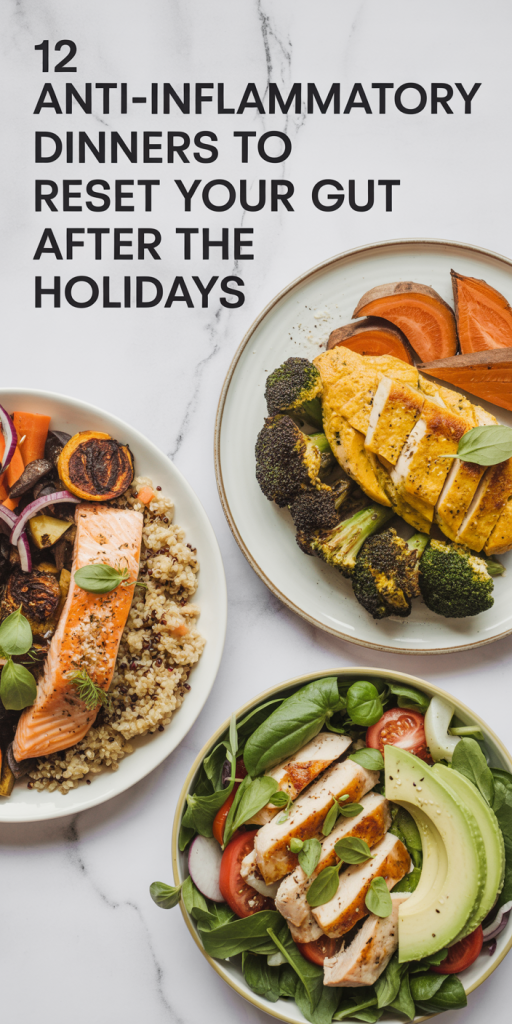
The holidays are a wonderful blur of flavors, late nights, and indulgent dinners, but our gut often pays the price. If we’re feeling bloated, sluggish, or just off our usual rhythm, switching to anti-inflammatory dinners can help reset our digestion and soothe the microbiome without sacrificing flavor. In this guide we’ll explain why anti-inflammatory meals matter after the holidays, what to keep (and what to stash), and give 12 practical, delicious dinner recipes plus meal‑prep and cooking strategies so we can get back to feeling our best in one week.
Why Choose Anti-Inflammatory Dinners After The Holidays
Inflammation is the body’s natural response to stress, physical, emotional, or dietary. During the holidays we often consume more sugar, refined carbs, alcohol, and processed foods than usual: those choices can tilt our gut toward pro‑inflammatory microbes and increase intestinal permeability for some people. That’s not to moralize holiday eating: rather, it’s useful to recognize how a short, intentional reset can restore balance.
Anti‑inflammatory dinners focus on whole foods that feed beneficial gut bacteria, reduce oxidative stress, and support intestinal lining integrity. They emphasize:
- Omega‑3 rich proteins (fatty fish, sardines, mackerel) to lower cytokine signaling.
- Fiber‑rich vegetables, legumes, and whole grains to nourish short‑chain fatty acid producers.
- Fermented or minimally processed condiments (miso, yogurt, sauerkraut) to reintroduce beneficial microbes.
- Polyphenol‑dense ingredients (turmeric, ginger, berries, beets) that act as antioxidants and microbial modulators.
By leaning into these foods for dinner, when we most often consume the larger meal, we give our digestive system a nightly window of nutrient-dense, gut‑friendly support. Over several nights, that pattern can reduce bloating, normalize bowel movements, and improve energy and sleep.
How These Meals Help Reset Your Gut
Resetting the gut isn’t about a quick cleanse: it’s about creating an environment where beneficial microbes can flourish and where the gut lining can repair. Here’s how targeted dinners move the needle:
- Feed the microbiome: Prebiotic fibers (onions, garlic, leeks, legumes, asparagus, leafy greens) are fuel for bacteria that produce short‑chain fatty acids (SCFAs) like butyrate, vital for colon health and inflammation control.
- Reduce inflammatory triggers: Minimizing ultra‑processed foods, added sugars, and excessive omega‑6 oils reduces pro‑inflammatory signaling.
- Supply anti‑inflammatory compounds: Turmeric (curcumin), ginger, garlic, and omega‑3s directly modulate inflammatory pathways.
- Reintroduce beneficial microbes: Small amounts of fermented foods can support microbial diversity, especially after a holiday period dominated by low‑diversity choices.
- Support mucosal repair: Collagen from bone broth, zinc‑rich foods, and vitamin‑A supporting vegetables (sweet potato, leafy greens) provide building blocks for mucosal healing.
Taken together, this approach helps rebalance microbial ecology, lower local and systemic inflammation markers, and reestablish regular, comfortable digestion. We should also remember that sleep, hydration, and stress management are part of the reset: food is powerful, but it’s one pillar among several.
Pantry Staples, Staples To Avoid, And Smart Swaps
Stocking our pantry with the right staples makes sticking to anti‑inflammatory dinners much easier. Here’s a practical list of what to keep, what to avoid for now, and simple swaps that preserve pleasure while improving gut health.
Pantry staples to keep:
- Extra‑virgin olive oil and avocado oil (stable options for dressings and light cooking)
- Canned wild salmon, sardines, and mackerel (convenient omega‑3 sources)
- Brown rice, quinoa, and steel‑cut oats
- Dried lentils and chickpeas (or canned for convenience)
- Miso paste, tamari (gluten‑free soy sauce alternative), and rice vinegar
- Bone broth or high‑quality low‑sodium stock
- Turmeric, ground ginger, and smoked paprika
- Nuts and seeds: walnuts, flaxseed, chia, pumpkin seeds
- Apple cider vinegar and whole‑grain mustard
- Jarred fermented veggies (sauerkraut, kimchi) or plain yogurt with live cultures
Staples to avoid, at least temporarily:
- Highly processed snack foods and pastries
- Sugary condiments and many commercial salad dressings
- Refined vegetable oils (corn, soybean) as primary cooking fats
- Ultra‑processed meat products (hot dogs, some deli meats)
- Excessive alcohol
Smart swaps to make dinners anti‑inflammatory-friendly:
- Swap white rice for brown rice or cauliflower rice.
- Replace creamy mayo‑based dressings with olive oil + lemon + mustard vinaigrettes.
- Trade heavy cream for coconut milk or a small amount of plain yogurt when appropriate.
- Use herbs, citrus, and spices instead of salt for flavor enhancement.
These choices reduce pro‑inflammatory inputs while boosting the nutrients and flavors our gut thrives on.
12 Anti-Inflammatory Dinners (Quick Recipes And Key Benefits)
Below are 12 dinners designed to be simple, flavorful, and gut‑supportive. Each entry includes a quick method and the key benefits so we can cook confidently.
Wild Salmon With Turmeric-Lemon Greens
Why it works: Wild salmon provides EPA/DHA to lower inflammation: turmeric and black pepper add curcumin bioavailability. Greens supply fiber and folate.
Quick recipe: Pan‑sear salmon fillets in olive oil, finish with a squeeze of lemon. Sauté kale and Swiss chard with garlic, turmeric, black pepper, and a splash of lemon. Serve salmon over the greens.
Key benefits: Omega‑3s, polyphenols, prebiotic fibers.
Miso-Glazed Eggplant With Brown Rice And Scallions
Why it works: Miso introduces fermented microbes and savory umami, while eggplant provides soluble fiber to feed beneficial bacteria.
Quick recipe: Halve eggplants, score flesh, brush with a glaze of miso, rice vinegar, a bit of maple, and broil until caramelized. Serve with brown rice and top with scallions and sesame seeds.
Key benefits: Fermented food, soluble fiber, whole grain carbohydrates.
Ginger-Turmeric Chicken With Roasted Root Vegetables
Why it works: Ginger and turmeric reduce inflammation: chicken supplies lean protein and root vegetables add fiber and polyphenols.
Quick recipe: Marinate chicken thighs in grated ginger, turmeric, garlic, olive oil, and lemon. Roast with chopped carrots, parsnips, and sweet potatoes at 425°F until caramelized.
Key benefits: Anti‑inflammatory spices, vitamin A, balanced macronutrients.
Lentil, Kale, And Sweet Potato Stew With Fermented Condiments
Why it works: Lentils are a prebiotic and protein source: sweet potato supports mucosal health: a spoonful of sauerkraut or kimchi adds microbes.
Quick recipe: Sauté onion, carrot, and celery: add lentils, diced sweet potato, vegetable stock, and chopped kale. Simmer until tender. Top with a small scoop of fermented condiment before serving.
Key benefits: Fiber, resistant starch, fermented microbes.
Sardine, Avocado, And Cucumber Salad With Apple Cider Vinaigrette
Why it works: Sardines are a convenient, sustainable omega‑3 source: avocado adds healthy monounsaturated fats: ACV may support digestion.
Quick recipe: Mix drained sardines with sliced cucumber, avocado, cilantro, and a dressing of apple cider vinegar, olive oil, and mustard.
Key benefits: Healthy fats, vitamin D, simple, no‑cook meal.
Chickpea And Spinach Curry With Cauliflower Rice
Why it works: Chickpeas provide resistant starch and fiber: turmeric and cumin give anti‑inflammatory power. Cauliflower rice reduces refined carbs.
Quick recipe: Cook onion, garlic, and spices: add canned chickpeas, diced tomatoes, and coconut milk: finish with wilted spinach. Serve over riced cauliflower.
Key benefits: Fiber, plant protein, gut‑friendly spices.
Grilled Shrimp With Quinoa, Fennel, And Citrus
Why it works: Shrimp is lean protein: quinoa supplies complete plant protein and fiber: fennel is traditionally used to ease digestion.
Quick recipe: Grill marinated shrimp: toss cooked quinoa with thinly sliced fennel, orange segments, olive oil, and herbs. Plate and top with shrimp.
Key benefits: Digestive‑soothing fennel, slow carbs, protein.
Roasted Beet And Walnut Bowl With Tahini Dressing
Why it works: Beets are high in betalains and polyphenols: walnuts provide ALA omega‑3s. Tahini adds calcium and creamy texture.
Quick recipe: Roast beets until tender: serve with mixed greens, toasted walnuts, and a tahini‑lemon dressing.
Key benefits: Polyphenols, plant omega‑3s, prebiotic fiber.
Bone Broth Pho With Bok Choy And Mushrooms
Why it works: Bone broth supplies collagen and amino acids that support gut lining: mushrooms and bok choy add fiber and antioxidants.
Quick recipe: Warm bone broth with star anise, ginger, and fish sauce. Add quickly blanched rice noodles (or spiralized zucchini), sliced mushrooms, and bok choy. Garnish with lime and herbs.
Key benefits: Collagen, hydrating, gentle on digestion.
Turkey And Vegetable Stuffed Peppers With Herbs
Why it works: Lean turkey is a low‑inflammatory protein choice: peppers and mixed vegetables contribute vitamins and fiber.
Quick recipe: Sauté ground turkey with garlic, chopped tomatoes, zucchini, and herbs: stuff into halved bell peppers and bake until peppers are tender.
Key benefits: Balanced macro profile, high in vitamin C and phytochemicals.
Oven-Baked Mackerel With Sautéed Swiss Chard And Garlic
Why it works: Mackerel is a fatty fish high in EPA/DHA and vitamin B12. Swiss chard provides magnesium and fiber.
Quick recipe: Brush mackerel with olive oil, lemon, and herbs: bake at 400°F until flaky. Quick‑sauté chard with garlic and a splash of lemon.
Key benefits: High omega‑3 content, minerals for repair.
Black Bean, Mango, And Cilantro Lettuce Wraps
Why it works: Black beans add resistant starch: mango and cilantro contribute polyphenols and flavor: lettuce wraps reduce heavy carbs.
Quick recipe: Toss cooked black beans with diced mango, red onion, lime juice, and cilantro. Spoon into butter lettuce leaves and top with sliced avocado.
Key benefits: Fiber, antioxidants, bright flavors for satiety.
These dinners are intentionally varied so we get a wide range of fibers, fats, and bioactive compounds that support the gut while keeping meals interesting.
Meal-Prep Strategy And A Sample 7-Day Dinner Plan
Creating momentum with a meal‑prep strategy helps us stay consistent. We recommend batching key components, using cross‑compatible ingredients, and keeping dinner assembly simple.
Time-Saving Prep Tips And Batch-Cooking Techniques
- Roast once, use twice: Roast a tray of root vegetables and beets. Use them in stews, bowls, or as a side across multiple nights.
- Batch grains and legumes: Cook a big pot of quinoa, brown rice, and lentils: refrigerate in portioned containers for up to 4–5 days.
- Make a flavor base: Sautéed onion, garlic, and ginger frozen in ice cubes is a quick way to start soups or curries.
- Pre-portion dressings and fermented condiments: Keep vinaigrettes and miso‑based sauces ready to revive quick salads.
- Use the oven and stovetop together: While a roast finishes, sauté greens or steam cauliflower rice so dinner comes together in 20–30 minutes.
Shopping List And Portioning Guidelines For A Week
Shopping list (core items for 7 days):
- 2–3 wild fish fillets (salmon, mackerel, or sardines)
- 1 lb shrimp or 1 whole chicken
- 2 cans chickpeas, 2 cans black beans, 1 lb dry lentils
- Brown rice/quinoa (enough for 7 portions)
- 2 large sweet potatoes, 1–2 beets, assorted root vegetables
- Large bag of kale or Swiss chard, spinach, mixed salad greens
- Avocados (3–4), citrus (lemons, oranges, limes)
- Miso paste, apple cider vinegar, extra‑virgin olive oil
- Bone broth (low sodium) or stock
- Nuts and seeds (walnuts, chia, pumpkin seeds)
- Fresh herbs: cilantro, parsley, dill: ginger and turmeric root
Portioning guideline (per adult, adjust for appetite):
- Protein: 3–6 oz cooked fish or poultry per meal (or 1 cup beans/legumes)
- Vegetables: 1.5–2 cups cooked or 2–3 cups raw salad greens
- Whole grains/starches: 1/2 to 1 cup cooked
- Fats: 1–2 tbsp olive oil or 1/4 avocado
Sample 7‑day dinner plan (rotate and reuse leftovers):
- Day 1: Wild Salmon with Turmeric‑Lemon Greens
- Day 2: Lentil, Kale, and Sweet Potato Stew (make extra)
- Day 3: Miso‑Glazed Eggplant with Brown Rice
- Day 4: Grilled Shrimp with Quinoa and Fennel
- Day 5: Bone Broth Pho with Bok Choy (use leftover broth)
- Day 6: Chickpea and Spinach Curry with Cauliflower Rice
- Day 7: Roasted Beet and Walnut Bowl with Tahini Dressing
We can swap days based on cravings, but keeping simple building blocks on hand makes it easy to follow the plan.
Cooking Tips To Maximize Gut-Healing Benefits
Small cooking choices can preserve nutrients and support the gut microbiome more effectively than bigger, restrictive steps. Here are focused tips to get the most benefit from our meals.
How To Preserve Nutrients And Support Gut Microbiome
- Avoid overcooking vegetables: Aim for tender‑crisp textures to preserve vitamins and polyphenols. Light steaming or quick sautéing retains more nutrients than prolonged boiling.
- Use minimal high heat for oils: Extra‑virgin olive oil is great for dressings and low‑to‑medium heat cooking: use avocado oil for higher heat.
- Pair fats with carotenoids: Serve leafy greens and orange vegetables with a little healthy fat (olive oil or avocado) to increase absorption of fat‑soluble vitamins.
- Favor whole food ferments: Choose unpasteurized sauerkraut, kimchi, or miso paste with live cultures when possible, store bought batches labeled “raw” or “contains live cultures” are ideal.
- Rotate fiber types: Different fibers feed different microbes. Alternate legumes, whole grains, and various vegetables across the week to encourage microbial diversity.
Flavor Tips That Keep Anti-Inflammatory Food Exciting
- Acid brightens: A squeeze of lemon or splash of vinegar balances richness and stimulates digestion.
- Toast spices: Quick toasting releases essential oils in cumin, coriander, and fennel, higher flavor without extra salt.
- Use herb pastes and condiments: A chimichurri, tahini dressing, or miso glaze transforms simple proteins quickly.
- Layer texture: Add toasted seeds or a small handful of toasted walnuts to salads for crunch and added nutrients.
- Embrace umami: Miso, mushrooms, fermented fish sauces, and slow‑roasted tomatoes give depth that makes vegetables satisfying.
These small practices make anti‑inflammatory dinners more nourishing and more likely to stick as habits.
When To Adjust Your Plan And When To Seek Professional Advice
While many people benefit from an anti‑inflammatory reset, we should be mindful about individual responses and when professional oversight is warranted.
Signs You May Need Medical Or Dietetic Support
Seek professional help if we experience any of the following:
- Severe or prolonged abdominal pain, blood in stool, or unexplained weight loss.
- Persistent diarrhea or constipation lasting more than a couple of weeks even though dietary changes.
- New or worsening symptoms after introducing multiple fermented foods, this could signal small intestinal bacterial overgrowth (SIBO) or other sensitivities.
- Pre‑existing medical conditions requiring dietary adjustments (IBD, celiac disease, kidney disease, etc.).
A registered dietitian or our primary care provider can offer personalized testing (food sensitivity or allergy testing, stool analyses) and help create a phased plan that fits medications, labs, and individual needs.
Modifications For Common Dietary Restrictions (Vegan, Low-FODMAP, Paleo)
- Vegan: Focus on legumes, tofu, tempeh, nuts, seeds, and a wide variety of vegetables. Add nutritional yeast for B‑vitamin support. Use miso sparingly and select soy‑free fermented foods if preferred.
- Low‑FODMAP: Choose low‑FODMAP vegetables (spinach, carrots, zucchini) and use canned lentils drained well in small portions. Avoid high‑FODMAP alliums and garlic: use garlic‑infused oil for flavor without the FODMAPs.
- Paleo: Replace legumes with extra vegetables and quality animal proteins: use tigernut flour or sweet potato for texture in some recipes. Keep fermented foods and bone broth as staples.
We should tailor the plan to our needs. Adjust seasoning, portion sizes, and ingredient choices so the reset is sustainable and enjoyable rather than punitive.
Conclusion
Resetting our gut after the holidays doesn’t require extreme measures, just thoughtful, delicious dinners that reduce inflammatory triggers and actively nourish the microbiome. By stocking the pantry wisely, leaning on anti‑inflammatory proteins and spices, and using simple meal‑prep strategies, we can restore balance quickly and without feeling deprived. Let’s approach the week ahead as an experiment: try a few of these dinners, notice how our digestion and energy respond, and iterate. In a matter of nights, we’ll likely feel less bloated, more satisfied, and back in control of how we eat, and that’s the kind of post‑holiday reset that actually sticks.