We all want to make better choices when it comes to our heart health, yet with so much information out there, it can be overwhelming to know where to start. The DASH diet, which stands for Dietary Approaches to Stop Hypertension, is not just another fad diet. It’s a scientifically-backed way to improve heart health, lower blood pressure, and enjoy delicious meals. In this text, we will guide you through a comprehensive 14-day meal plan, help you understand the principles of DASH, and provide tips for success that will make this journey enjoyable and sustainable.
Understanding the DASH Diet
The DASH diet emphasizes whole foods like fruits, vegetables, lean proteins, and whole grains while minimizing processed foods and added sugars. By focusing on a balanced intake of nutrients, this diet promotes a healthier heart and overall well-being. In its essence, the DASH diet:
- Is rich in nutrients like potassium, calcium, magnesium, and fiber.
- Reduces sodium intake to manage blood pressure effectively.
- Encourages balanced proportions of protein, carbohydrates, and fats in daily meals.
Understanding these principles sets the foundation for our 14-day meal plan, allowing us to make informed and healthy choices.
Benefits of the DASH Diet for Heart Health
Implementing the DASH diet has multiple benefits, particularly for heart health. Here’s why we believe it’s one of the best dietary choices:
- Lower Blood Pressure: Numerous studies show that the DASH diet can lead to significant reductions in blood pressure, especially in individuals with hypertension.
- Weight Loss and Maintenance: The emphasis on whole foods can naturally help with weight management, supporting heart health further.
- Lower Cholesterol Levels: A diet rich in fruits, vegetables, and healthy fats can help lower LDL (bad cholesterol) levels.
- Reduces Risks of Heart Disease: Adopting DASH can lower the risk of developing heart disease, stroke, and other cardiovascular issues.
- Improved Mood and Energy Levels: The nutritious foods promote higher energy levels and better overall emotional well-being.
With these noticeable benefits, it’s easy to understand why embarking on the DASH journey is worthwhile.
How to Prepare for Your 14-Day Plan
Preparation is key to any successful dietary change. Here are our recommended steps to prepare for the DASH meal plan:
- Grocery Shopping: Stock up on fresh fruits, vegetables, whole grains, lean proteins, and healthy fats. This may include beans, nuts, low-fat dairy, and whole grain bread.
- Meal Prepping: Consider pre-cooking meals and prepping snacks for the week. Having prepared meals on hand makes it easier to stick to our plan.
- Setting Goals: Decide on our specific health goals, whether it’s reducing blood pressure, losing weight, or simply feeling more energetic.
- Keeping a Food Journal: Record our daily meals and how we feel after each. This will help us stay accountable and notice patterns in our eating.
Your 14-Day Meal Plan Overview
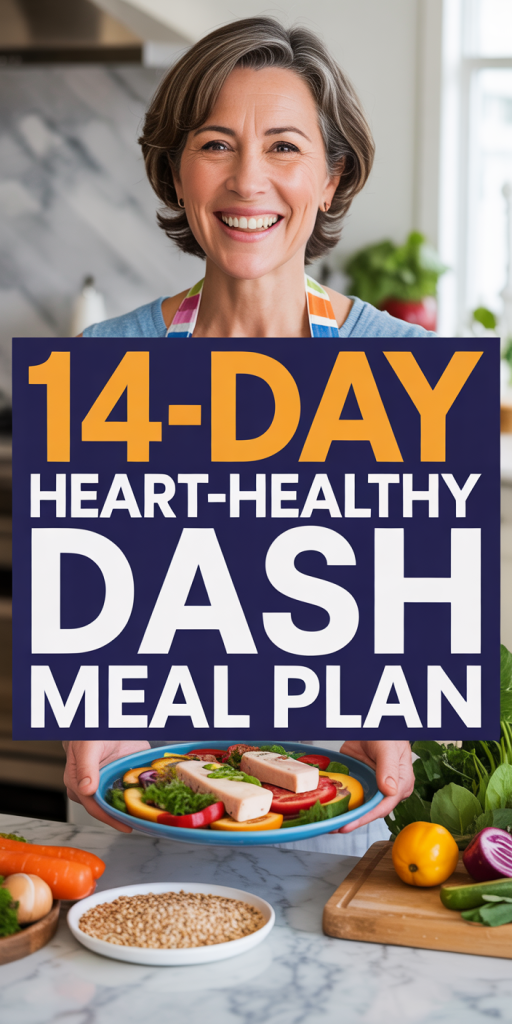
Now, let’s jump into the 14-day meal plan. We’ve designed the plan to provide variety while emphasizing the core components of the DASH diet.
Week 1: Daily Meal Breakdown
Day 1:
- Breakfast: Oatmeal topped with fresh berries and a sprinkle of cinnamon
- Snack: Apple slices with almond butter
- Lunch: Quinoa salad with mixed vegetables and vinaigrette
- Snack: Greek yogurt with a handful of walnuts
- Dinner: Grilled salmon with steamed broccoli and brown rice
Day 2:
- Breakfast: Smoothie with spinach, banana, and low-fat milk
- Snack: Carrot sticks and hummus
- Lunch: Turkey wrap with whole grain tortilla and plenty of veggies
- Snack: A peach
- Dinner: Stir-fried chicken with bell peppers and quinoa
(Continue specifying meals for Days 3 to 7 in this same format.)
Week 2: Daily Meal Breakdown
Day 8:
- Breakfast: Whole grain toast with avocado and poached egg
- Snack: Mixed nuts
- Lunch: Lentil soup with a side salad
- Snack: Celery sticks with peanut butter
- Dinner: Baked cod with asparagus and sweet potato
Day 9:
- Breakfast: Yogurt parfait with granola and mixed berries
- Snack: Banana
- Lunch: Chickpea salad with cucumber and feta
- Snack: Sliced bell pepper
- Dinner: Grilled chicken breast with roasted vegetables
(Continue specifying meals for Days 10 to 14 in this same format.)
This structured meal plan aligns with the DASH principles, focusing on nutrient-rich foods that promote heart health.
Tips for Success on the DASH Diet
To make the most of our 14-day DASH meal plan, consider the following tips for success:
- Stay Hydrated: Drink plenty of water throughout the day. It aids digestion and can help manage hunger.
- Get Creative with Recipes: Search for DASH-friendly recipes online. Variety is the spice of life and can prevent boredom with meals.
- Practice Mindful Eating: Pay attention to our meals, savoring each bite. This practice can help regulate our hunger signals.
- Stay Active: Incorporate regular physical activity into our routine. Exercise complements the dietary efforts we’re making to improve heart health.
- Seek Support: Whether through family, friends, or online communities, having support can make our meal plan journey enjoyable and effective.
Monitoring Your Progress
Monitoring our progress is crucial for staying motivated and achieving our heart health goals. Here are some strategies:
- Regular Check-Ins: We recommend weekly check-ins to assess how we feel physically and emotionally.
- Record Changes: Keeping track of weight, blood pressure, or how our clothes fit can provide tangible evidence of progress.
- Celebrate Successes: Whether big or small, celebrating our successes will keep our motivation high throughout this 14-day journey.
Conclusion
Embarking on the 14-day heart-healthy DASH meal plan is a significant step towards improving our overall health and well-being. By understanding the principles of the DASH diet and committing to the meal plan, we can enjoy delicious foods while benefiting our heart health. Remember, this is not just a temporary fix but rather a sustainable lifestyle choice that promotes long-term health. Let’s take this journey together towards a healthier heart.