Intermittent fasting has surged in popularity as an effective way to manage weight, boost mental clarity, and improve overall health. If you’ve ever considered trying it, you’re in the right place. In this guide, we’ll simplify the process of starting your intermittent fasting journey with a comprehensive 14-day plan. We’ll explore what intermittent fasting is, the health benefits it offers, prepare you for the experience, and share valuable tips to ensure your success. Let’s immerse and make this journey as easy and enjoyable as possible.
Understanding Intermittent Fasting
What is Intermittent Fasting?
Intermittent fasting (IF) is an eating pattern that alternates between periods of eating and fasting. Rather than focusing on what foods to eat, it emphasizes when to eat. While it may sound daunting, the concept is quite simple: you primarily restrict your eating to a specific window of time, which can lead to numerous health benefits.
Health Benefits of Intermittent Fasting
The benefits of intermittent fasting are backed by plenty of research. Some of the most notable health advantages include:
- Weight Loss: By limiting the eating window, we often consume fewer calories, which can lead to weight loss.
- Improved Metabolism: Fasting can enhance the body’s ability to burn fat for energy.
- Cognitive Benefits: Many people report improved focus and mental clarity during fasting windows.
- Enhanced Longevity: Some studies suggest that intermittent fasting can increase lifespan by improving cellular repair processes.
- Reduced Inflammation: Fasting may help reduce markers of inflammation in the body.
Different Types of Intermittent Fasting
There are several methods of intermittent fasting, allowing each person to choose what works best for their lifestyle:
- 16/8 Method: Fast for 16 hours and eat during an 8-hour window.
- 5:2 Method: Eat normally for five days a week and limit calorie intake to around 500-600 calories on two non-consecutive days.
- Eat-Stop-Eat: Involves fasting for a full 24 hours once or twice a week.
- Alternate-Day Fasting: Alternating between days of normal eating and days of fasting.
Choosing the right method aligns with our schedule can make all the difference.
Preparing for Your 14-Day Journey
Setting Your Goals and Intentions
Before we jump into the fasting schedule, it’s essential to establish our goals and purposes for this journey. Are we looking to lose weight, enhance our health, or just try something new? Clarity in our intentions not only boosts our motivation but also helps us remain focused throughout the experience.
Choosing the Right Fasting Method
After setting our intentions, we’ll choose a fasting method that suits us best. If we’re busy during the day, the 16/8 method (eating between noon and 8 PM) may be ideal. On the other hand, if we feel comfortable with longer fasts, then the Eat-Stop-Eat method could be more beneficial. Understanding our own lifestyle is key to ensuring sustainability.
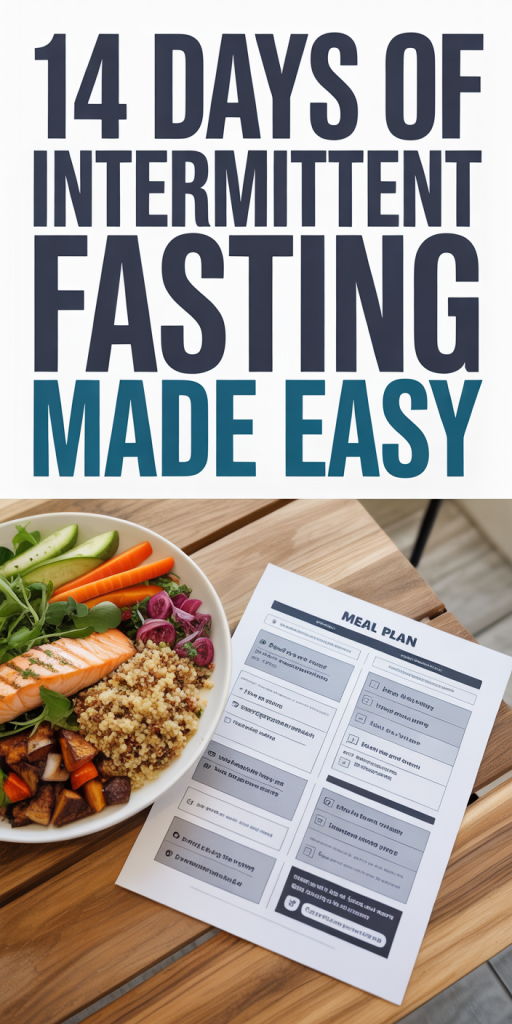
Meal Planning and Preparation Tips
Proper meal planning is crucial in maximizing our success. Here are some tips:
- Plan ahead: Prepare meals that align with our fasting windows.
- Stock healthy options: Fill our pantry with nutritious snacks and meals.
- Meal prep: Consider batch cooking to save time on busy days.
This groundwork sets the stage for our two-week commitment.
The 14-Day Intermittent Fasting Schedule
Week 1: Getting Started
Day 1-7
- Days 1-3: Start with the 16/8 method. Focus on drinking plenty of water during fasting windows and consider light meals like salads and lean proteins when it’s time to eat.
- Days 4-5: Intermittent fasting can increase hunger, but we should be gentle with ourselves. If we feel overwhelmed, it’s okay to adjust. Focus on healthy foods rich in nutrients during eating windows.
- Day 6-7: Evaluate our progress and how we feel. If we’re adapting well, we might consider gradually extending our fasting hours, if we choose.
Week 2: Building Momentum
Day 8-14
- Days 8-10: Continue with the 16/8 method or try alternate-day fasting if we feel ready. We can introduce exercise, as light workouts can complement fasting by improving metabolism.
- Days 11-12: Learn to listen to our body’s hunger cues. If we feel faint or overly hungry, it’s acceptable to modify our fasting approach. Let’s focus on nutrient-dense options during eating periods.
- Days 13-14: Reflect on our progress and determine what worked and what didn’t. By now, fasting should feel more manageable and natural.
Tips for Success During the 14 Days
Staying Hydrated and Managing Hunger
Hydration can be our greatest ally during fasting. Water, herbal teas, and black coffee help curb hunger and maintain energy levels. To manage hunger, we can focus on what we eat during our eating periods. Foods high in fiber and protein can keep us feeling fuller for longer.
Incorporating Exercise and Activity
Physical activity is fantastic for both our mental and physical health. Consider integrating light activities such as walking, yoga, or strength training during fasting windows. The key is to listen to our bodies: on days we feel especially hungry or fatigued, we might opt for gentler exercises.
Tracking Your Progress and Adjusting as Needed
Keeping a journal of our experiences can be incredibly helpful. We can note how we feel each day, any hurdles we face, and the physical changes we notice. This will guide our adjustments throughout the 14 days, whether that means modifying our fasting method or changing what we eat.
Common Challenges and Solutions
Dealing with Hunger Cravings
Hunger cravings can be challenging, especially at the beginning. Here are strategies we can employ:
- Distract ourselves: Engage in activities that keep our mind off food, such as reading or taking a walk.
- Stay busy: Keeping a full schedule can help.
- Enjoy herbal teas: These can help stave off cravings without breaking the fast.
Managing Social Situations
Social gatherings can be tricky during our fasting period. We can handle this by:
- Communicating our goals: Letting friends and family know about our fasting can rally their support.
- Choosing the right events: Opt for gatherings that aren’t centered around food.
- Adjusting our schedule: If we have a dinner invitation, we might shift our eating window to accommodate the event without feeling deprived.
Maintaining Your Routine Post-14 Days
Transitioning to Long-Term Fasting
After completing our 14 days, we might consider how to maintain the momentum. Is there a specific fasting schedule that felt best? Should we continue with this pattern, or mix in some days of regular eating? Being flexible will help solidify our journey.
Sustaining Healthy Eating Habits
Maintaining a healthy diet is essential post-fasting. We can eat balanced meals full of whole foods. Incorporating vegetables, lean proteins, whole grains, and healthy fats ensures we nourish our bodies, regardless of our fasting schedule.
Conclusion
Embarking on a 14-day intermittent fasting journey can be transformative, not just for our bodies but also for our relationship with food. By understanding the principles, preparing effectively, and staying mindful about our choices, we can unlock the myriad benefits of intermittent fasting. Whether we decide to continue this practice long-term or embrace some flexibility afterwards, the key takeaway is that we’ve established healthier habits that can last a lifetime. Let’s celebrate our achievements and the improved wellness we’ve gained.