14 Ideas for a $400 Two-Week Family Meal Plan for Six
Feeding six people on a careful grocery budget is less about making every meal elaborate and more about building a dependable rhythm. This two-week plan combines filling breakfasts, repeatable lunches, flexible dinners, leftovers, freezer use, and inexpensive homemade touches. It is designed as a practical framework: adjust portions, produce, and proteins to match your household, sales, and pantry rather than treating any single menu as rigid.
1. Build the menu around what you already own
Before shopping, take an inventory of the pantry, refrigerator, and freezer. Plan meals around rice, pasta, canned goods, frozen vegetables, meat, and other staples already on hand, then buy only the gaps. A small stockpile built from genuinely good sale prices can make later menus cheaper, especially when several modest discounts accumulate across a full grocery trip.
Explore this resource
2. Use the freezer as a second pantry
Freeze foods before they spoil and prepare extra components when you are already cooking. Cooked meat, rice, soup, chopped onions, zucchini, and other suitable ingredients can become ready-to-use building blocks for a later meal. Label portions and dates so leftovers are easy to find, and thaw only what the family will use.
3. Make inexpensive basics from scratch
Homemade sauces, cream-style soup mix, baking mix, pie crust, and desserts can replace convenience products when the ingredients are already in the cupboard. The biggest savings come from choosing a few versatile recipes and making enough for more than one meal, rather than attempting every item from scratch at once.
4. Keep breakfasts simple and filling
Rotate homemade granola, chocolate granola, baked oatmeal, cereal, and fruit for breakfasts that are inexpensive, satisfying, and easy to repeat. A consistent morning menu reduces decision fatigue and makes bulk ingredients such as oats, milk, bananas, and seasonal fruit work harder. For an afternoon treat, homemade iced coffee, a blended coffee drink, or warm vanilla custard can provide variety without requiring a daily café purchase.
5. Plan lunches from flexible staples
Use a small set of lunch patterns throughout the two weeks: tuna salad sandwiches, meat-and-cheese sandwiches, egg salad, peanut butter with homemade apple butter, and refried-bean quesadillas. Add hummus with carrots, yogurt, fruit, or popcorn to round out the meal. Repeating the structure while changing the filling keeps preparation manageable and helps use open packages before they are wasted.
6. Treat snacks as an optional bridge
Hearty meals may carry the family from breakfast to lunch and lunch to dinner without much snacking. When someone does need food between meals, offer fruit, nuts, yogurt, popcorn, or no-bake energy bites first. Cookies, chips, and gifted sweets can still fit occasionally; the budget-friendly principle is to avoid assuming that every afternoon requires a packaged snack for everyone.
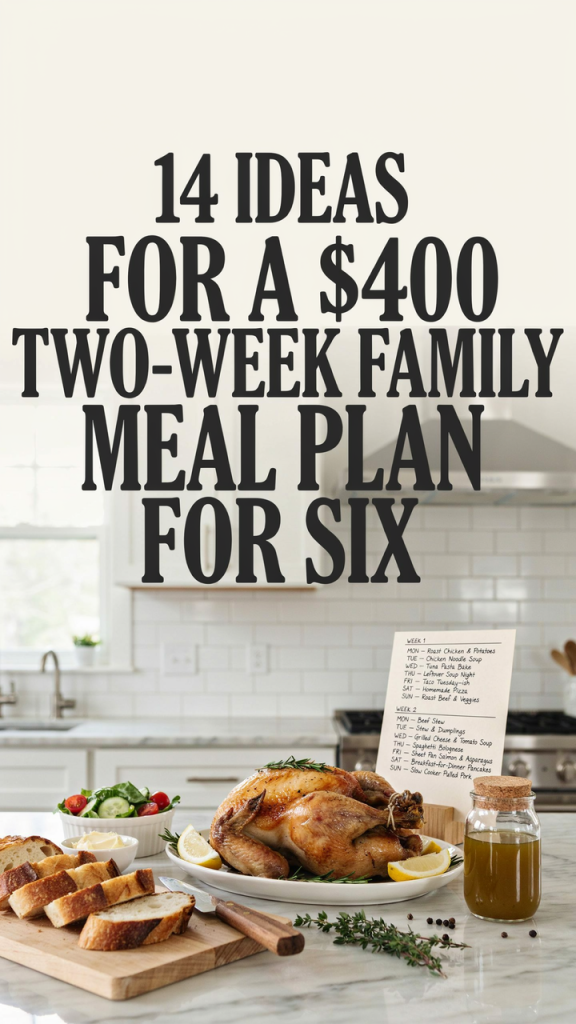
7. Start week one with rice, pasta, and quesadillas
The first week opens with economical comfort foods that share familiar ingredients. Serve Spanish rice with ground beef, salad, and an apple dessert; follow with Italian sausage pasta and salad; then use pepperoni quesadillas for lunch and chicken curry soup with rice for dinner. A macaroni-and-beef skillet, green beans, chicken pot pie, and a bean-and-cheese quesadilla night continue the pattern. These meals stretch modest amounts of meat with rice, pasta, beans, vegetables, and homemade bread or dessert.
8. Use leftovers deliberately during the first week
Assign leftovers a place on the calendar instead of hoping they disappear. Blueberry breakfast cake can become a next-day dessert, pumpkin coffee cake can be served again with Mexican rice bowls and dinner rolls, and Saturday can become a planned leftovers night. Pair remaining entrées with a fresh lettuce salad and homemade dressing so the meal feels renewed rather than repetitive.
9. Make the second week a mix of familiar favorites
Begin the second week with hamburgers, salad, and cheesecake bars, followed by tuna quesadillas and fruit smoothies. One-pan Spanish chicken and rice keeps cleanup low, while egg salad sandwiches provide an inexpensive lunch for two days. For dinners, rotate a sausage-and-potato soup with salad, crispy southwest chicken wraps, and an easy taco-style casserole with peas and banana muffins.
10. Stretch seasonal produce across several meals
Fresh apples, pears, plums, grapes, cherries, oranges, bananas, and peaches appear in different forms across the plan. Use orchard or homegrown fruit when available, choose frozen fruit when it costs less, and rely on canned fruit when that is the practical pantry option. Zucchini, broccoli, green beans, peas, carrots, and lettuce provide flexible sides without requiring a separate specialty ingredient for every dinner.
11. Finish dinners with inexpensive homemade sides
Simple sides make economical main dishes feel complete. Rotate lettuce salads with a homemade dressing, green beans, roasted broccoli, peas, dinner rolls, garlic-butter biscuits, and rice. Baking one dessert or batch of muffins can cover several days: consider apple dumplings, a fruit cake, chocolate cookies, pumpkin coffee cake, apple dump cake, cheesecake bars, or banana chocolate-chip muffins, depending on what needs using.
12. Shop markdown meat safely and strategically
Reduced-price meat can lower the cost of hamburgers, sausage, chicken, and beef dishes when it is purchased before the sell-by date and handled promptly. Cook or freeze it according to safe food-handling practices, divide large packages into meal-sized portions, and let beans, rice, pasta, and vegetables carry part of the plate so the protein does not have to do all the budget work.
13. Make one flexible night for odds and ends
A leftovers night is a useful part of a two-week plan, not a failure to meal-plan. Set out remaining casserole, soup, rice, vegetables, sandwiches, or salad components and let each person assemble a plate. This clears refrigerator space, prevents forgotten food from becoming waste, and gives the cook a night without a new recipe or a full round of preparation.
14. Adapt the framework to your household
A two-week schedule is easier to maintain than a month-long record for many families, and it can be repeated with seasonal substitutions. Scale portions for appetites, exchange fresh fruit for frozen or canned alternatives, omit costly toppings, and move meals around when plans change. The lasting idea is to create a short, realistic rotation that uses food efficiently while leaving room for sales, gifts, garden produce, and actual family preferences.
A low grocery budget becomes more manageable when the plan is built from repeatable meals rather than constant novelty. Stock the foods your family actually eats, freeze useful extras, cook a few basics at home, and reserve space for leftovers and flexible substitutions. With those habits in place, a two-week menu can offer variety and satisfying portions without turning shopping or cooking into an exhausting daily project.