17 Ways to Feed a Family of Six on a $400 Grocery Menu Plan
A modest grocery budget becomes more workable when meals are planned around what is already in the pantry, freezer, and refrigerator. This two-week outline combines filling breakfasts, repeatable lunches, economical dinners, planned leftovers, and flexible treats so a large family can eat varied food without requiring a separate specialty ingredient for every meal. Use the framework as a starting point, then adjust portions and substitutions to match your household.
1. Build the menu around a realistic household
Start by counting the people you actually feed and considering appetites, ages, schedules, and leftovers. A family with several growing children may need larger batches than a couple, while smaller households can halve recipes or freeze extra portions. Treat the budget as a planning limit rather than a promise that every family will spend the same amount.
Explore this resource
2. Shop the freezer and pantry before the store
Inventory shelf-stable foods, frozen produce, cooked meat, grains, canned goods, and condiments before writing the shopping list. Build meals around those ingredients first, then buy only the pieces that complete the plan. This prevents duplicate purchases and turns forgotten food into usable dinners.
3. Use sales to create a small stockpile
When dependable staples reach a genuinely good price, purchase a practical reserve rather than buying only for the current week. Store foods safely and keep a running list so sale purchases support future menus instead of becoming clutter. Even small per-item savings can matter when repeated across many staples.
4. Choose whole chickens and stretch every part
A whole chicken can supply cooked meat for casseroles, sandwiches, soup, or rice dishes, often at a lower cost than buying several packages of prepared pieces. Simmer the bones with vegetables and seasonings for broth, and freeze the finished stock in meal-size containers. This approach gives one purchase several jobs.
5. Freeze ingredients and cooked components
Freeze surplus peppers, onions, zucchini, cottage cheese, cooked rice, extra meat, and finished soup in clearly labeled portions. Frozen ingredients make quick meals such as pizza breads, quesadillas, casseroles, and skillet dinners easier to assemble. Date each container and rotate older food first.
6. Make low-cost basics from scratch
Homemade hummus, cream-style soup mix, baking mix, pie crust, salad dressing, jam, and simple desserts can replace convenience versions when the ingredients are already on hand. Choose a few basics your household uses repeatedly rather than attempting every project at once. The savings come from repetition and reduced packaging, not from making cooking unnecessarily complicated.
7. Keep breakfast filling and predictable
Rotate inexpensive breakfasts such as granola, chocolate granola, baked oatmeal, cereal, fruit, and scrambled eggs with vegetables. A hearty first meal can reduce midmorning grazing and makes weekday planning easier. Homemade coffee drinks or a warm milk-based beverage can add variety without requiring a café purchase.
8. Plan substantial lunches with repeat ingredients
Use a small set of lunch building blocks—meat-and-cheese sandwiches, tuna salad sandwiches, peanut butter and jelly, hummus with carrots, yogurt, fruit, popcorn, and chips—to keep midday meals affordable. Repeating ingredients across several days simplifies shopping while changing the combinations prevents the plan from feeling monotonous.
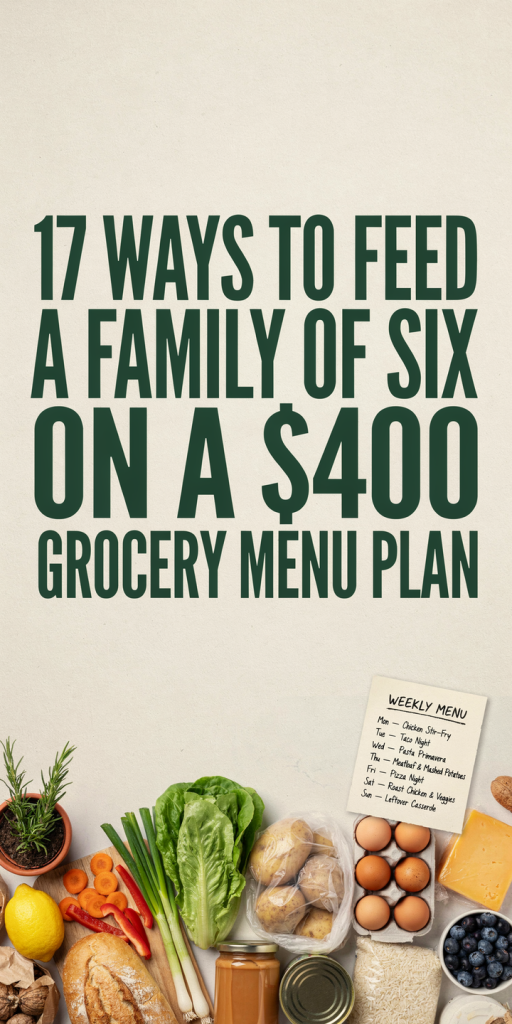
9. Begin week one with flexible family dinners
The first week can move from a sour-cream chicken enchilada skillet to creamy sausage and potatoes, Mexican chicken and rice casserole, vegetable beef soup, chicken with mustard cream sauce over rice, and a taco-style casserole. Pair these hearty mains with salad, green beans, broccoli, or another inexpensive vegetable. Finish selected nights with simple desserts such as apple dumplings, cookie bars, muffins, or cake, and save suitable portions for later.
10. Turn leftovers into an intentional Saturday meal
Reserve the end of the first week for assorted leftovers rather than forcing a new entrée onto the shopping list. Add a fresh salad and use a frozen or stored dessert to make the meal feel complete. A planned leftover night also reveals which quantities were too generous or too small for the next menu cycle.
11. Use marked-down bread for a second-week pizza night
Close-dated rolls, ciabatta, or other sturdy bread can become pizza breads when topped with sauce, pepperoni, and cheese and baked until crisp. This is a useful way to rescue bread at its best value while creating a quick dinner or lunch. Freeze any extra bread before it becomes stale.
12. Build week two from skillet, pasta, and soup staples
The second week adds scrambled eggs with vegetables, creamy garlic chicken pasta, a ground-beef-and-potato skillet, white chicken chili, one-pot chili macaroni and cheese, and creamy Mexican chicken over rice. Serve these with salads, peas, green beans, or other vegetables already available. The mix of one-pot meals and leftover-friendly dishes keeps cleanup and ingredient costs under control.
13. Use produce, garden food, and gifted ingredients strategically
Fresh pineapple, apples, bananas, grapes, clementines, oranges, kiwi, canned peaches, and frozen or homegrown rhubarb can fill out meals without requiring elaborate sides. Homemade jam or other gifted pantry items can also become part of lunch. Let seasonal, marked-down, frozen, and preserved foods rotate through the plan instead of treating every meal as a fresh purchase.
14. Keep snacks occasional and simple
When meals are filling, many people need fewer snacks. For the times they do, offer fruit, nuts, yogurt, carrots with hummus, homemade energy bites, popcorn, or an occasional cookie or chip. The aim is not perfection; it is to avoid automatically buying a large assortment of individually packaged snacks.
15. Repeat successful dressings and sides
A dependable salad with two homemade dressing options can appear several times without requiring a new recipe each night. Reusing a dressing, rice, beans, or vegetable side helps ingredients earn their place in the grocery cart and makes a large menu easier to execute. Keep alternatives such as green beans available for family members who dislike a particular vegetable.
16. Bake desserts in batches and carry them forward
Apple dumpling dessert, cinnamon-sugar muffins, monster cookie bars, gingerbread cake, rhubarb pudding cake, pumpkin pie cupcakes, molasses cookies, and pecan pie provide variety across the two weeks. Bake a manageable batch, freeze or cover extras, and schedule leftovers into a later meal. This reduces waste and prevents a new dessert from becoming an unplanned grocery expense every day.
17. Use a two-week planning cycle
A two-week menu is detailed enough to guide a substantial shop but short enough to revise when plans, prices, or leftovers change. At the end of the cycle, note what was popular, what remained unused, and which ingredients worked across multiple meals. Then repeat the structure with new combinations rather than starting from zero.
A $400 menu works best as a flexible system: buy strategically, cook versatile staples, freeze what will not be used soon, and schedule leftovers before they are forgotten. Simple breakfasts and lunches leave room in the budget for satisfying dinners, vegetables, and occasional homemade desserts. With a short planning cycle and a willingness to substitute based on what is already available, feeding a large family can be organized without making every meal expensive or elaborate.