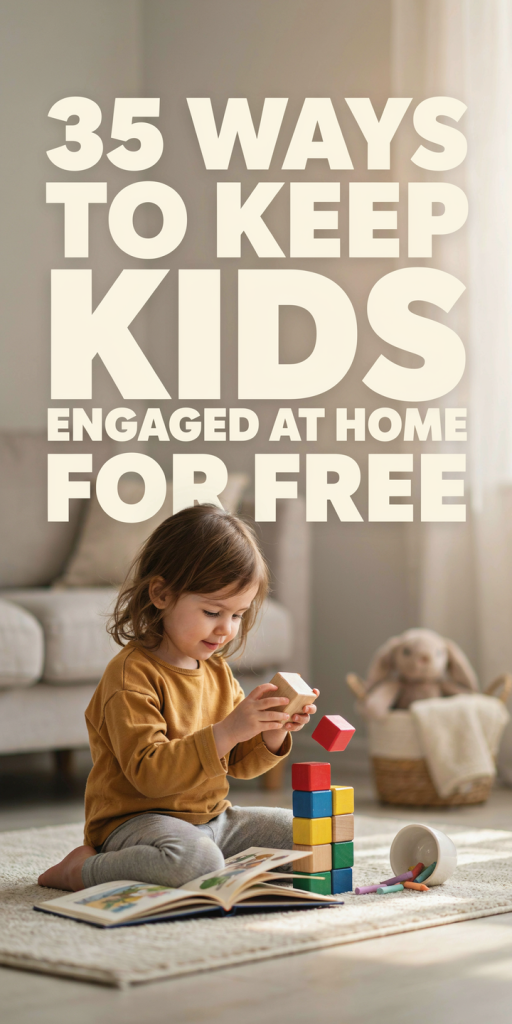
35 Ways to Keep Kids Engaged at Home for Free
When children run out of things to do, you do not need a shopping trip or a packed schedule to reset the day. Everyday household items, imagination, movement, and a little focused attention can turn a slow afternoon into meaningful family time. These no-cost ideas are flexible enough for different ages and easy to adapt for rainy days, school breaks, or weekends at home.
1. Turn Shipping Boxes into Pretend-Play Props
Save a clean cardboard box and let children transform it into a castle, robot, shop, vehicle, or a set of shields and props. Encourage them to sketch a plan first, then decorate with crayons, paper scraps, or washable markers.
Explore this resource
2. Build a Living-Room Fort
Use blankets, chairs, cushions, and a table to create a reading nook or make-believe campsite. Give the fort a purpose, such as a quiet hideaway, puppet theater, or headquarters for the next game, and set a simple cleanup rule before construction begins.
3. Design a Household Scavenger Hunt
Write clues based on color, shape, texture, or location and hide them around the house. Younger children can search for objects you describe, while older children can write clues for one another or create a timed hunt that ends with a family puzzle.
4. Bring Out the Board and Card Games
Choose games already on hand and rotate who gets to select the next one. If a full game is not appealing, invent a quick matching, sorting, guessing, or counting game with a regular deck of cards.
5. Practice Simple Magic Tricks
Learn one trick at a time using coins, cups, paper, or objects already in the room. Children can practice the secret move, write a short introduction, and perform for the family, turning a small skill into a confidence-building show.
6. Write and Exchange Letters
Invite children to write a note to a relative, friend, neighbor, or future version of themselves. They can add drawings, questions, or a description of their day, then place the letter in an envelope for hand delivery or mailing when convenient.
7. Stage a Stuffed-Animal Play
Use stuffed animals as the cast and let children choose the setting, problem, and ending. Older kids can write a script and assign roles, while younger children can retell a familiar fairy tale or make up dialogue as they go.
8. Play a Calm Round of Twenty Questions
One person secretly chooses an object, animal, place, or person, and everyone else asks questions that can be answered with yes or no. Set a limit on questions so the game stays brisk, or use it as a quieter activity before bedtime.
9. Make Encouragement Cards for Older Adults
Create cheerful cards for an older relative, neighbor, or care community. Children can draw, write a kind message, or share a small story, making the project a gentle way to practice empathy and connection.
10. Refresh Hide-and-Seek with a Hidden Object
Play traditional hide-and-seek indoors with clear boundaries, or hide one safe object and guide the search with warmer and colder clues. Change the seeker each round and use a short time limit to keep the pace lively.
11. Create a Pretend Home Spa
Set up a relaxing afternoon with hand massages, warm washcloths, nail painting, hair styling, or homemade cucumber rounds. Skip anything that could irritate sensitive skin and let children design the menu of gentle, age-appropriate treatments.
12. Fold Paper into Origami
Start with ordinary square paper and learn a few folds, such as a boat, animal, flower, or jumping frog. Display the finished pieces, use them as game tokens, or challenge everyone to make the same model in a different color or pattern.
13. Explore Family Photos Together
Look through printed pictures or a shared photo folder and invite children to ask who, where, and when questions. Let them choose favorites, arrange a simple timeline, or tell the story behind one picture from each year.
14. Build an Indoor or Outdoor Obstacle Course
Arrange pillows, tape lines, chairs, and safe household objects into a course with steps such as crawl, balance, toss, and hop. Focus on creativity and personal bests rather than speed, and clear the route of anything that could cause a fall.
15. Finish a Jigsaw Puzzle as a Team
Choose a puzzle that fits the available attention span and sort pieces by edge, color, or pattern. Add a story, music, or family conversation while working, then leave the completed picture out for everyone to admire.
16. Write a Story Collaboratively
Begin with a character, place, or surprising problem and have each person add a sentence or paragraph. Children can illustrate the pages, create a title, and read the finished story aloud as a homemade family book.
17. Plan a Blanket Picnic
Spread a blanket on the living-room floor, porch, or yard and serve whatever snack or meal is already available. Add a picnic basket, handmade place cards, or a pretend destination to make an ordinary meal feel like an outing.
18. Set a Building Challenge with Bricks
Use existing building bricks or blocks for a focused challenge such as creating a bridge, animal shelter, tallest tower, or tiny town. Give each child a different constraint, then ask them to explain how their design works.
19. Bake a Simple Treat Together
Choose a familiar recipe that uses ingredients already in the pantry and divide the work into age-appropriate jobs. Children can measure, stir, shape, decorate, and help wash up while learning that cooking is both a creative activity and a practical skill.
20. Hold a Friendly Family Contest
Pick a challenge that matches the group, such as paper-airplane distance, drawing, singing, building, balancing, or costume design. Use playful awards such as most inventive or best teamwork so the activity stays inclusive rather than focused only on winning.
21. Make Car Washing a Water-Play Project
If weather and local conditions allow, let children wash a family car, bicycles, or outdoor toys with buckets and cloths. Treat it as a supervised activity, and add a playful target such as finding the dirtiest spot or making the best rinse pattern.
22. Try a Few Words in a New Language
Choose a language and learn greetings, numbers, colors, or useful phrases together through free lessons, homemade flash cards, or a labeling game around the house. Finish by acting out a short restaurant, travel, or introduction scene.
23. Make Ice Cream in a Bag
For a small hands-on treat, combine milk or cream with a little sweetener and flavoring in a sealed inner bag, then place it inside a larger bag filled with ice and salt. Seal carefully, shake with towels or gloves for several minutes, and rinse the outside before opening; children should have adult supervision because the mixture becomes very cold.
24. Invent a Craft from Recycled Supplies
Gather paper tubes, scrap paper, cartons, fabric pieces, and other clean odds and ends, then challenge children to make an animal, character, or useful organizer. The goal is improvisation, so substitute materials freely rather than buying a special kit.
25. Solve Word and Number Puzzles
Use newspapers, old worksheets, or homemade grids for word searches, crosswords, riddles, and number puzzles. Adjust the difficulty by giving hints, working in pairs, or asking children to create a puzzle for someone else to solve.
26. Fold and Test Paper Boats and Airplanes
Try several paper airplane shapes and compare how far, straight, or gently each one flies. Fold boats from scrap paper, float them in a basin, and experiment with small changes to the shape while keeping water play supervised.
27. Learn to Draw Step by Step
Pick a simple subject such as a pet, face, plant, or favorite object and break it into basic shapes. Let children repeat the drawing, change the expression, or create a whole scene so improvement feels more important than artistic perfection.
28. Ask a Round of Would-You-Rather Questions
Take turns offering two imaginative choices and asking everyone to explain their answer. Children can make the questions silly, thoughtful, or themed around animals, travel, food, and superpowers, then invent a few for the next round.
29. Take a Virtual Geography Trip
Use a free digital globe or map to choose a city, landmark, coastline, or national park to explore from home. Ask children to notice the landscape, buildings, language, and time zone, then have them present three discoveries to the family.
30. Form a Household Band
Turn pots, pans, containers, wooden spoons, and safe everyday objects into instruments. Choose a beat, assign sections, and perform one short song; keep volume and instrument choices comfortable for everyone in the home.
31. Play I Spy Anywhere
One person chooses something visible and gives a clue such as its color or first letter while others guess. Make the game easier for preschoolers by naming a color, or harder for older children by using abstract clues and a no-pointing rule.
32. Give Lost Socks a Puppet Makeover
Use a clean unmatched sock as a puppet and add paper eyes, yarn hair, or drawn features. Children can create several characters, name them, and use them in a short interview, story, or puppet show.
33. Run a Baking-Soda Science Experiment
Combine baking soda and vinegar in a tray or cup to observe fizzing, then experiment with food coloring, hidden shapes, or different amounts. Work on a washable surface, keep the mixture away from eyes and mouths, and invite children to predict what will happen before testing.
34. Ask Questions That Reveal New Things
Take turns asking open-ended questions about favorite memories, imaginary adventures, worries, talents, or future plans. Listen without correcting the answers, and let children interview the adults too so the conversation feels mutual.
35. Make Dinner Feel Like a Special Event
Turn an ordinary meal into a candlelit family dinner or themed restaurant night. Children can make menus, fold napkins, create name cards, and choose music; use battery-operated lights instead of open flames when that is safer for your household.
A no-cost activity does not have to be elaborate to work. Keep a short list of ideas visible, match the choice to the children’s energy level, and let them take ownership of preparing the game or project. The best memories often come from ordinary supplies, shared laughter, and a little attention given to an otherwise uneventful day.