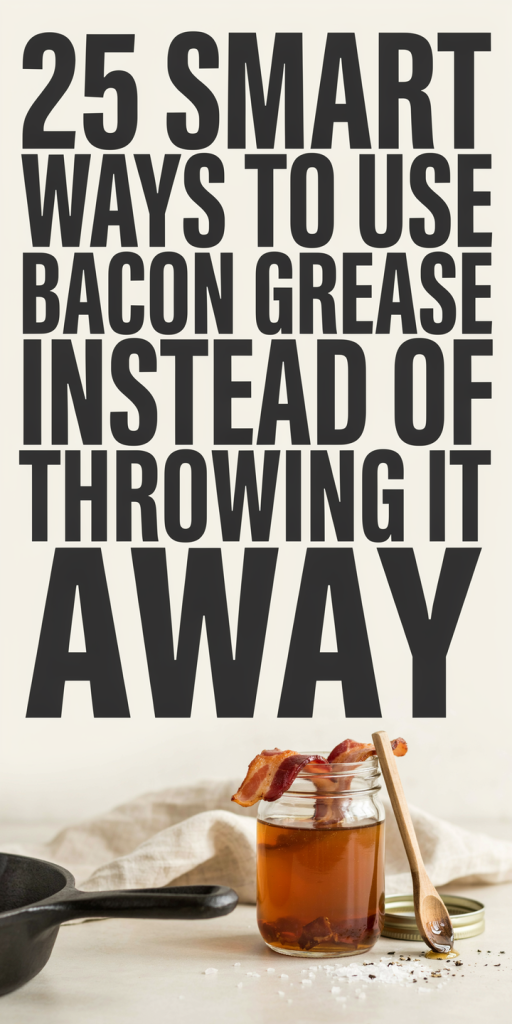
25 Smart Ways to Use Bacon Grease Instead of Throwing It Away
Bacon grease can be a useful cooking ingredient rather than a disposable byproduct. Saved carefully, a small amount can add savory flavor to everyday meals, replace some butter or cooking oil, and help stretch the ingredients already in your pantry. These ideas range from breakfast and side dishes to baking, kitchen care, and a simple non-food use.
1. Fry eggs in it
Warm a small spoonful of bacon grease in a skillet before adding eggs. It works especially well for fried eggs, giving the edges a crisp finish and a savory flavor without needing a separate splash of oil.
Explore this resource
2. Make better skillet potatoes
Use bacon grease to brown diced, sliced, or parboiled potatoes. Cook them over medium heat and turn them occasionally so the outside becomes golden while the centers stay tender.
3. Brown onions and peppers
Replace part or all of the usual butter or oil when sautéing onions and peppers. The fat helps the vegetables soften and caramelize while adding depth to soups, sandwiches, tacos, and casseroles.
4. Coat vegetables for roasting
Add a small amount of chilled grease to a bowl of vegetables before roasting. As it melts in the oven, toss the vegetables to distribute it, then season as usual and roast until browned and tender.
5. Build flavor into soups and stews
Use bacon grease to sauté the aromatics at the beginning of a soup or stew. It can also replace some of the fat in a roux, creating a richer base for creamy soups, bean dishes, and gravies.
6. Whisk it into gravy
Bacon grease can stand in for butter when starting a pan gravy. Combine it with flour, cook the mixture briefly, and whisk in broth or pan juices for a strongly seasoned sauce.
7. Brighten green beans
Toss cooked green beans with a modest spoonful of warm bacon grease. Add black pepper, garlic, or a little vinegar to balance the richness and turn a simple vegetable into a flavorful side.
8. Season popcorn
Drizzle melted bacon grease over freshly popped popcorn and toss thoroughly so the kernels are lightly coated. Because the grease is flavorful, start with a small amount and add salt only after tasting.
9. Finish corn with savory richness
Brush a little melted grease over corn on the cob or stir it into cooked corn. It can replace butter in this simple side dish, especially when paired with pepper, smoked paprika, or chopped herbs.
10. Enrich cornbread
Substitute bacon grease for part of the butter or other fat in a cornbread batter. The result is especially fitting alongside chili, beans, greens, or a hearty vegetable soup.
11. Add flavor to biscuits
Replace a portion of the butter or shortening in a homemade biscuit recipe with cooled bacon grease. Keep the fat cold while mixing so the dough retains the flaky texture expected from biscuits.
12. Upgrade macaroni and cheese
Use a little bacon grease in place of part of the butter when preparing the cheese sauce. Its smoky, salty character pairs naturally with cheddar and can make a familiar boxed or homemade dish taste more substantial.
13. Season refried beans
Stir a small amount into mashed pinto or black beans while they warm. The grease complements cumin, onion, garlic, and chili, but use enough only to add flavor without making the beans oily.
14. Make baked beans more savory
A spoonful mixed into baked beans can deepen their flavor and help round out a sweet or tangy sauce. Add it gradually, since the beans may already contain bacon or other salty ingredients.
15. Crisp quesadillas
Lightly grease the outside of a tortilla before browning a cheese or bean quesadilla. Cook over medium heat so the tortilla crisps without burning, then slice and serve with fresh toppings.
16. Grill sandwiches in it
Use a thin film of bacon grease on the skillet when making grilled cheese. It helps the bread brown and contributes a savory note that works well with mild, sharp, or peppery cheeses.
17. Give burgers a bacon-like sear
When pan-frying hamburgers, use a small amount of bacon grease instead of neutral oil. Keep the heat controlled and avoid excess fat so the patties sear rather than simmer.
18. Roast crisp chickpeas
Toss drained, thoroughly dried chickpeas with a little melted bacon grease before roasting. Season them with paprika, garlic, or pepper and bake until crisp, shaking the pan partway through.
19. Stir-fry fried rice
Use bacon grease as the cooking fat for leftover rice, vegetables, and eggs. Add the rice to a hot pan and keep it moving so the grains become lightly toasted instead of greasy or clumped.
20. Brown pancakes or French toast
A lightly greased skillet gives pancakes or French toast a browned exterior and pairs nicely with maple syrup. Wipe out excess between batches if the pan begins to darken too quickly.
21. Blend a bacon-style mayonnaise
For a quick sandwich spread, let a small amount of grease cool until fluid but not hot, then whisk it into mayonnaise gradually. Keep the mixture refrigerated and use it in moderation with burgers, sandwiches, or roasted vegetables.
22. Bake crunchy croutons
Toss bread cubes with melted bacon grease, pepper, and dried herbs before baking. Turn the cubes once or twice as they crisp, then use them on salads or soups.
23. Prepare a savory cooking base
Keep a small jar available for recipes that begin with a little cooking fat. A teaspoon can replace oil when softening garlic, celery, carrots, or other aromatics, helping use up leftovers without opening a new bottle of oil.
24. Maintain cast-iron cookware
After cleaning and drying cast iron, wipe on an extremely thin layer of bacon grease and warm the pan briefly to help maintain its seasoning. Remove any visible excess so the surface does not become sticky or rancid.
25. Turn it into a fire starter
Bacon grease can be incorporated into a homemade fire starter with a suitable absorbent material. Use this only in a safe, approved fireplace or fire pit, keep the starter dry, and never pour grease directly onto an active fire.
To save bacon grease, let it cool enough to handle and transfer it to a clean glass container rather than pouring hot fat into plastic. Refrigerate it for short-term use or freeze it for longer storage; straining out solids can improve its keeping quality. Label the container, use clean utensils, and discard it if it develops an off smell, mold, or an unusual appearance. With sensible storage and small portions, this kitchen leftover can become a practical way to add flavor while reducing waste.