11 Clever Built-In Bookshelf Ideas That Instantly Change First Impressions (With Easy Styling Tips)
First impressions are formed in seconds, and few features influence those split-second judgments like well-designed built-in bookshelves. We’ve all walked into homes where a bookcase feels like choreography, purposeful, polished, and telling a story about the people who live there. Built-ins do more than hold books: they give rooms scale, texture, and a sense of permanence. In this guide we’ll walk through eleven built-in bookshelf ideas that rewrite your space’s first impression, from modern floating cubes to a cozy window-seat library, and share practical styling tips so each solution looks like it belongs there. Whether you’re renovating, staging to sell, or just craving a smarter shelf, these concepts will help you make an immediate, confident statement.
Why Built-In Bookshelves Shape Immediate Perception
Why Built-In Bookshelves Shape Immediate Perception
Built-in bookshelves are architectural gestures: they imply thoughtfulness, investment, and a curated lifestyle. When we enter a room and see a built-in, our brains register stability and intention. Unlike freestanding furniture, built-ins read as part of the home’s bones, they’re permanent, tailored, and often custom-fit to their surroundings. That translates to an elevated first impression.
There are several psychological and practical reasons built-ins shape perception quickly:
- Anchoring and scale: Built-ins give a room vertical and horizontal anchors. A floor-to-ceiling wall of shelves makes ceilings feel taller and spaces feel ordered. We instantly sense proportion.
- Narrative cues: Books, objects, and framed photos communicate identity. The way items are arranged, deliberate stacks, empty negative space, curated objects, tells visitors who we are without words.
- Quality signal: Custom millwork or integrated lighting suggests attention to detail and higher craftsmanship. That raises perceived value, which is why built-ins are frequent features in high-end listings.
- Functional polish: Built-ins hide clutter, create storage, and can be tailored to activities (reading nook, media wall, entryway drop zone). Function that’s beautiful sends a powerful message: form and use can coexist.
Styling built-ins smartly heightens their first-impression power. We’ll show how simple choices, paint color, lighting, object scale, can change a built-in from purely useful to the central design feature. Throughout the ideas below, we’ll pair practical construction notes with quick styling moves so each concept is both achievable and photogenic.
Floating Cubes And Asymmetrical Shelving For Modern Impact
Floating Cubes And Asymmetrical Shelving For Modern Impact
Floating cube shelves and asymmetrical arrangements give an immediate contemporary edge. They break the predictable grid, creating movement that catches the eye, perfect when we want a fresh, gallery-like first impression.
Design notes:
- Layout: Combine cubes of varying depths and widths across a single wall, or stack them in an off-kilter column. Leave intentional gaps: negative space is part of the composition.
- Materials: Go with thin-edge plywood or painted MDF for a crisp, lightweight look. For a luxe touch, alternate matte paint with stained walnut or brass-accented cubes.
- Installation tip: Use French cleats for a secure, clean mount. For asymmetry that looks effortless, sketch a loose sketch and then place larger cubes at anchor points (eye level and low on the wall).
Styling tips:
- Limit palette: Keep the objects to two or three hues to avoid visual chaos. Monochrome stacks of books + a couple of sculptural pieces look modern and curated.
- Scale play: Put larger objects like vases or sculptures in the bigger cubes, and use smaller stacks of books or small framed pieces in the shallow cubes.
- Lighting: Integrate puck lights or small LED strips in select cubes to create focal nodes, illuminated cubes draw the eye and add depth.
Why this changes first impressions: Floating cubes signal contemporary taste and design confidence. They say we value artful restraint and intentional asymmetry, a strong, modern personality that registers instantly when someone walks in.
Under‑Stair Libraries: Turn Dead Space Into a Design Moment
Under‑Stair Libraries: Turn Dead Space Into a Design Moment
Under-stair areas are often wasted or cluttered. By turning that triangular footprint into a built-in library, we transform a dead zone into a memorable design moment that guests notice immediately.
Design and build considerations:
- Use the geometry: Shelves should follow the stair angle, but we can also mix horizontal cubbies with slanted niches to echo the riser slope. Closed cabinets at the lowest point hide seasonal items or shoes.
- Structural needs: Assess load-bearing needs, the lower shelves can be deeper and support heavier objects. Use plywood cleats and secure shelving to studs for durability.
- Accessibility: Pull-out drawers or hinged doors in the lowest segments improve function, especially if you’ll use this space for toy storage or multimedia.
Styling tips:
- Create zones: Keep frequently used books and items on the easier-to-reach middle shelves: display decorative objects on the upper, more eye-level tiers.
- Lighting: A linear LED strip along the underside of each shelf softly reveals the steps and creates an inviting glow. Motion sensors are a nice practical touch.
- Visual flow: Paint the back of the shelves a contrasting color or wallpaper the back panels. That visual cue makes the under-stair library look intentional, not an afterthought.
Why this changes first impressions: An under-stair library demonstrates resourceful, thoughtful design. It turns quirky architecture into usable real estate and communicates that we see potential where others see waste, a big plus in first impressions.
Window Seat With Built‑In Shelves: Cozy, Practical, Photogenic
Window Seat With Built‑In Shelves: Cozy, Practical, Photogenic
A window seat framed by built-in shelves is one of those features that instantly reads as warm, lived-in, and well-designed. It’s both a functional perch and a staging moment that looks great in photos, ideal for buyers or guests.
Design essentials:
- Depth and comfort: The seat should be about 18–22 inches deep, with a cushion no more than 4–6 inches thick for comfortable sitting. Place storage drawers or cabinets beneath for blankets, games, or extra linens.
- Shelving proportion: Flank the window with vertical shelving that stretches from seat level to ceiling. Keep the lower shelves shallower to prevent visual heaviness.
- Materials and finish: Natural wood warms the nook: painted built-ins can recede and let the view be the star. Consider cushions in durable, stain-resistant fabrics.
Styling tips:
- Layered textiles: Use two cushions and one lumbar pillow to create an approachable but intentional look. A folded throw casually draped signals hospitality.
- Book placement: Keep a mix of stacked and upright books, with a basket or decorative box for remote controls or small items. Small plants on the shelves add life and color.
- Seasonal swaps: Change a few accent objects with the seasons, swap heavy winter throws for light linen in spring to keep the space feeling current.
Why this changes first impressions: A window-seat built-in communicates lived comfort and hospitality. It invites people to stay a while, and that emotional pull shapes how they value the whole room on first glance.
Floor‑To‑Ceiling Statement Wall With Integrated Lighting
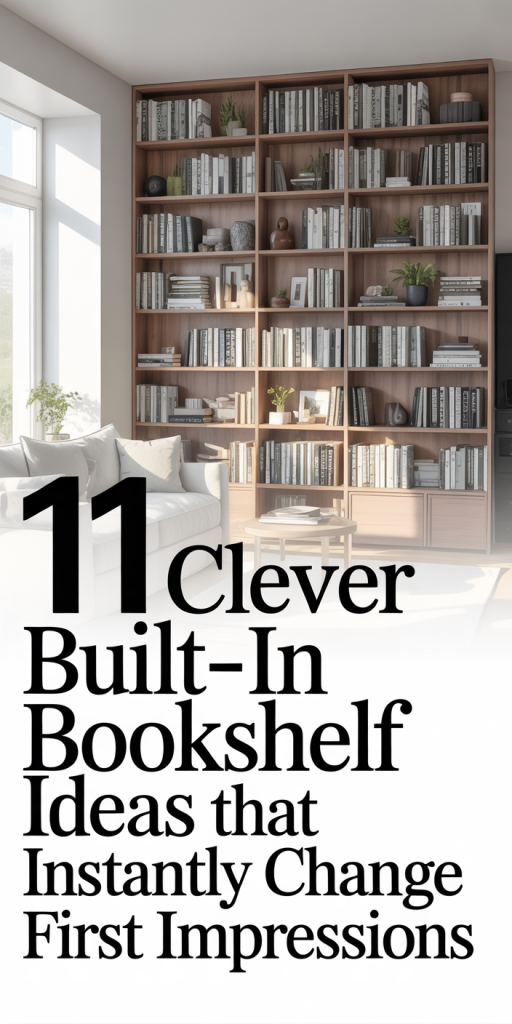
Floor‑To‑Ceiling Statement Wall With Integrated Lighting
A full wall of built-ins creates drama, especially when we add integrated lighting. This is the approach to choose when we want a single architectural move to define the room.
Design and technical notes:
- Continuous vertical lines: Use full-height panels and consistent shelving spacings to emphasize height. For an elegant look, conceal hardware and use touch-latch doors where possible.
- Lighting integration: Recessed linear LED strips along shelf undersides, adjustable spotlights, or backlighting behind floats can add depth. Plan wiring during framing to keep visible fixtures minimal.
- Mixed storage: Combine open shelves for display with closed cabinets for hidden storage. Glass-front cabinets can showcase delicate objects while protecting them from dust.
Styling tips:
- Create vignettes: Group objects in threes, vary heights, and alternate textures (ceramic, metal, wood) to avoid monotony.
- Negative space matters: Don’t fill every shelf. Leaving empty pockets accentuates the objects you do display and gives the eye breathing room.
- Color and finishes: A dark painted back can make warm wood or brass accents pop, while a neutral palette keeps attention on the room’s furnishings.
Why this changes first impressions: A floor-to-ceiling statement wall reads as intentional architecture, not decoration. Integrated lighting elevates perceived material quality and creates that magazine-ready wow factor the instant someone walks in.
Entryway Built‑In Shelves And Bench: The First Impression Power Play
Entryway Built‑In Shelves And Bench: The First Impression Power Play
The entryway is the moment of truth for first impressions: we want it to be welcoming and organized. Built-in shelves paired with a bench give us both a practical landing zone and an immediate style statement.
Design pointers:
- Function-first layout: Include open cubbies for shoes, hooks above for coats, and closed cabinets for items you’d rather not display. A built-in bench with storage underneath keeps clutter at bay.
- Durable materials: Use easy-to-clean surfaces (laminates or painted MDF with a tough coat) and hard-wearing bench upholstery for high-traffic use.
- Proportion: Keep the bench at standard seat height (16–18 inches) and ensure the shelving doesn’t overpower a narrow hallway, scale matters.
Styling tips:
- Welcome vignette: Place a tray on a shelf for keys and mail, and add a mirror or art above the bench for last-minute checks and to visually expand the space.
- Seasonal switches: Swap a basket for umbrellas in rain season, or display a woven hat and gloves in winter, these small touches make the entry feel curated, not utilitarian.
- Greenery and texture: A small plant or vase and a textured rug soften the utilitarian framework and read as hospitable.
Why this changes first impressions: The entry sets expectations for the rest of the home. A built-in entry system signals organization, thoughtful planning, and hospitality, a combination that positively biases visitors from the first step inside.
Curved Corner Shelves And Architectural Nooks For Soft Drama
Curved Corner Shelves And Architectural Nooks For Soft Drama
Straight lines are reliable: curves make you look twice. Curved corner shelves and arched built-ins introduce softness and an architectural flourish that feels subtle yet unforgettable.
Design and construction tips:
- Plywood bending or beadboard: Use thin plywood bent over a form or flexible beadboard for smooth curves. For a high-end look, steam-bent wood veneers create beautiful continuous grain.
- Integrate with walls: Curved shelves that transition into an arched niche or window recess make the structure feel built-in rather than tacked-on.
- Safety and use: Rounded corners are safer in tight spaces, and curved shelves can be shallower while still feeling substantial.
Styling tips:
- Layered objects: Use lower shelves for books (stacked horizontally to follow the curve) and the top shelves for sculptural objects that benefit from softer silhouettes.
- Contrasting back finishes: A plaster or Venetian finish behind curved shelves amplifies the niche effect and adds tactile interest.
- Soft lighting: Wall washers or recessed lights that follow the curve create a warm halo effect that reads as intentional drama.
Why this changes first impressions: Curved built-ins feel bespoke and thoughtful. They soften the room’s geometry and communicate a level of design consideration that subtly impresses visitors without shouting.
Conclusion
Conclusion
Built-in bookshelves are among the most powerful, yet underused, tools for shaping first impressions. Whether we opt for floating cubes, an under-stair library, a photogenic window seat, or a full-height statement wall with integrated lighting, the right built-in tells a clear story about our priorities: beauty, function, and attention to detail. When styling, we favor negative space, layered textures, and integrated lighting to make each shelf feel intentional. Start with one well-designed built-in and you’ll see how quickly a room’s narrative, and the way others perceive it, can change.