Tiny Apartment? Stop Buying Storage Bins and Do This Instead — Smart Space Secrets for 2026
Living in a tiny apartment forces us to confront a truth most of us avoid: more bins don’t equal more space. When we pile clear plastic boxes into closets and under beds, we’re often delaying the real work, rethinking what we own and how each item fits into our life. In 2026, with smaller footprints and higher rents the norm, the smartest approach is less about tucking things away and more about transforming how we store, use, and even buy. In this guide we’ll walk through a practical system, from ruthless decluttering rules to clever multifunctional furniture and vertical hacks, so you can stop wasting money on more storage bins and actually live comfortably in a small space. No sermons, just usable tactics we can try this weekend.
Why Storage Bins Are A Band‑Aid, Not A Solution
We get it: storage bins feel productive. A shiny stack of matching boxes gives instant visual order and the small rush of accomplishment. But they’re a band‑aid, cosmetic containment that rarely addresses the root problems of cramped living. First, bins encourage accumulation. When it’s easy to hide things, we keep collecting them: sentimental items, duplicates, things we think we’ll use someday. The more we hide, the less we evaluate. Second, bins waste precious cubic feet. A slim apartment gains little from shallow, mismatched containers that block airflow, reduce usable shelf depth, and create dead zones where items become basically invisible. Third, bins create a retrieval tax. We spend time searching through labeled tubs or digging through stacked boxes, which makes daily life clunkier and increases the psychological friction of using our own belongings. Finally, many bins are single purpose and disposable, plastic after plastic, which isn’t great for our budgets or the planet.
Instead of stacking more boxes, we should ask three questions before buying any container: Does this item deserve to stay? Will the container make the item easier to use? Is there a smarter design solution that removes the need for a box entirely? When we shift from hiding to redesigning, storage becomes functional: items are accessible, visible, and integrated into our living system. Later sections will show concrete alternatives: multifunctional furniture, vertical solutions, and rules for deciding what stays. For now, remember: bins can organize chaos, but they won’t reduce it.
Adopt The ‘Cut, Keep, Create’ Declutter Method
The simplest way to reduce our reliance on bins is to adopt a three‑step workflow we call Cut, Keep, Create. It’s fast, repeatable, and decision-focused, perfect for small apartments where clarity is literally spatial. The method forces us to move from passive containment to active design: cut what doesn’t belong, keep what serves a purpose, and create systems that make remaining items easy to store and use.
How it works in practice: we set a timer for 45–60 minutes and pick a zone (a closet, the top of the fridge, under the bed). For each item we touch, we ask three questions: Do we use it in the last year? Does it enable daily life? Does it spark joy or serve a measurable need? Based on answers, items go into three piles: Cut (out), Keep (in), Create (system needed). The Create pile is crucial, these are the items we value but which currently lack a proper home. Instead of buying more bins, we design specific storage solutions for those items: a hanging shoe organizer repurposed for cleaning supplies, a shallow shelf for spices, or a pegboard for kitchen utensils.
Using Cut, Keep, Create repeatedly, monthly for high‑traffic areas and seasonally for wardrobes, reduces volume and forces smarter storage decisions. The end goal isn’t a bare apartment: it’s a curated one where every kept item has a clear, repeatable place.
How To Cut: Quick Rules For Letting Go
Letting go is the hardest part, so we use compact, practical rules to make it painless. First rule: the 12‑month test. If we haven’t used something in a year, chances are high we don’t need it, exceptions being heirlooms and specific seasonal gear. Second rule: single‑use clutter ban. If an item exists only for a rare, one‑off task (specialty kitchen gadgets, single‑event décor), we consider borrowing, renting, or buying secondhand when that need crops up instead of dedicating storage space to it. Third rule: duplicate audit. For small‑space living, one reliable version of a tool beats three mediocre ones. Keep the best: donate or sell the rest. Fourth rule: the “one in, one out” policy for nonessentials, when we buy something new, one similar item must leave.
We also use emotional shortcuts: if an item requires a long defense speech about why we’re keeping it, that’s usually a sign it’s negotiable. For sentimental items we can’t part with, we photograph them and store the image digitally: the memory often feels intact without the physical object. Applying these rules regularly keeps our volume down and makes future storage solutions realistic.
How To Create Systems That Replace Bins
Creation is where we move from theory to design. Systems replace bins when they fit the lifecycle of an item: arrival, use, maintenance, and return. For example, instead of a bin for mail and papers, we set up a slim wall file by the door, an open tray for incoming items, a labeled slot for bills, and a small shredder bin for junk mail. For frequently used tools (screwdrivers, tape), a magnetic strip on the garage wall or a pegboard keeps them visible and ready.
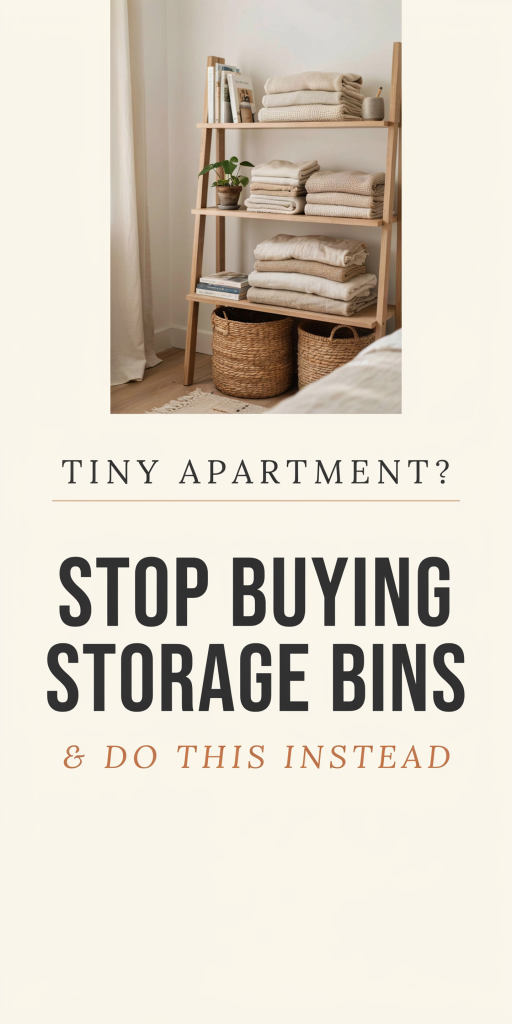
We prefer open containers and vertical mounts that reduce “out of sight, out of mind.” Laundry systems that hang on the back of a door or slide under a sink use otherwise wasted space. Replace bulky kitchen bins with drawer dividers, mounted spice rails, and vertical pot racks. For linens and seasonal clothing, vacuum bags might seem tempting, but they compress fabrics and make access hard, instead, modular shelving with labeled baskets (not dozens, but a few) gives visibility without complete concealment.
Finally, build checkpoints into the system: a weekly five‑minute reset where we return items to their home prevents drift. Systems that account for daily habits, shoes by the door, keys in a hook, backpacks on a dedicated shelf, eliminate the need for extra hiding spaces.
Make Every Item Pull Double Duty: Invest In Thoughtful Replacements
When square footage is tight, every piece of furniture should earn its keep. We want items that pull double (or triple) duty: seating that stores, tables that expand, beds that conceal. Choosing thoughtful replacements reduces our need for separate storage containers because the furniture itself becomes the storage solution.
Start with an inventory of the largest items in a room, if we can replace one bulky sofa with a smarter alternative, the released space often trumps dozens of small bins. Multi‑function pieces are investment buys we’ll appreciate daily: a storage ottoman that holds winter blankets, a coffee table with lift storage for remotes and paperwork, or a bookshelf that doubles as a room divider with built‑in drawers. In the kitchen, a dining bench with internal storage is far more useful than a set of plastic bins tucked under a counter.
We recommend prioritizing upgrades that match lifestyle. If we host often, choose expandable tables. If we work from home, pick desks with cable management and drawers deep enough for files. Small‑apartment living is eventually about design tradeoffs, spend on the one piece that eliminates multiple bins and gives back usable surface area.
High‑Impact Pieces To Replace Your Bins (Sofas, Tables, Beds)
A few strategic replacements change everything. Sofas: swap a bulky couch for a sectional with underseat storage or a comfortable sleeper with built‑in compartments. We store seasonal bedding, puzzles, or extra pillows inside, items we’d otherwise bury in bins. Tables: choose a coffee table with a lift top or nesting tables that slide together: they provide surface area without forcing extra storage boxes. A dining table with leaves can function as a workspace, reducing the need for a separate desk and its storage.
Beds: the bed is our largest storage opportunity. Opt for a platform bed with deep drawers or hydraulic lift storage where mattresses rise to reveal a cavernous compartment, ideal for bulky items like luggage or winter coats. If a new bed isn’t feasible, bed risers paired with shallow rolling drawers offer the same benefit. In apartments with high ceilings, lofted beds free up the floor for a sofa or desk beneath, removing the pressure to hide things in bins. When choosing pieces, consider modularity: platforms that can be reconfigured as our needs change are especially valuable in rental situations.
Use Vertical And Hidden Spaces Smartly — Think Walls, Ceilings, And Floors
If floor space is currency, walls and vertical zones are our bank. We often underestimate how much storage the vertical plane offers. Using walls, ceilings, and even under‑floor cavities transforms tiny apartments without sacrificing movement. Start by mapping vertical real estate: above doors, beside the stove, along hallway walls, under stairs (if applicable). Anything that’s usually dead space becomes an opportunity.
Wall‑mounted cabinetry and open shelving keep items visible and accessible, which reduces the urge to shove things into opaque bins. Ceiling racks work well for lightweight, infrequently used gear, seasonal décor, kayaks in studio lofts, or extra pillows. Invisible storage is another trick: floating shelves with concealed compartments, recessed niches behind headboards, or shallow wall cabinets for spices near the stove. We should also think about the back of doors and the vertical strip between studs, these narrow spaces are perfect for slim trays, brooms, or rolling shoe racks.
Using vertical space requires good fasteners and respect for load limits (especially in older buildings). But once we get comfortable with wall solutions, the apartment breathes. Everything becomes reachable and purposeful, rather than relegated to plastic boxes stacked in the corner.
Concrete Examples: Shelves, Hooks, Ceiling Racks, And Underfloor Hacks
Examples make the concepts tangible. Shelves: install shallow, staggered shelves in a narrow hallway for keys, sunglasses, and mail. A shallow spice shelf mounted inside a cabinet door saves shelf depth for pots. Hooks: a row of strong hooks near the entrance for coats, bags, and reusable grocery totes replaces a bin of catchall items. Use decorative hooks in the bedroom for jewelry, hats, and belts.
Ceiling racks: in kitchens, a suspended pot rack clarifies where cookware lives and frees cabinet space. In studios, a ceiling rail with carabiners can hold plants, freeing the floor. Underfloor hacks: if we have access to raised floors or a small crawlspace, build shallow pullout trays for rarely used items. If that’s not possible, use the space beneath furniture intentionally, rolling bins under a sofa or bed should be shallow, labeled, and rotated seasonally so they don’t become permanent graveyards.
One practical trick we love: magnetic strips along the inside of a cabinet door for spice tins or metal tools. It’s cheap, low profile, and eliminates dozens of small containers. Small investments like this compound: fewer bins, more usable living space, and less time spent searching.
Digitize, Donate, Or Outsource: Alternatives To Hoarding Things In Plastic
Some possessions aren’t worth owning in physical form. Digitizing, donating, or outsourcing lets us keep value without wasting space. Paper is the low‑hanging fruit: bills, warranties, and handwritten notes scan easily with a phone and a simple folder structure in cloud storage. We keep the originals only when legally necessary. Photographs and children’s artwork can be photographed and compiled into a printed photo book or digital album, the sentimental value remains, but the bulk doesn’t.
For items we rarely use but want access to (formal wear, rarity tools), consider renting or borrowing. Services and apps let us rent dresses, camera gear, or camping equipment cheaply for single uses. For seasonal storage needs, like holiday décor, a storage unit might make sense, but before renting space we evaluate cost vs. frequency of use. Often donation or selling is better: if we haven’t used something in years and it has resale value, selling recovers money and clears space.
Outsourcing maintenance tasks also reduces clutter. A local laundromat or garment service can eliminate the need for ironing boards and large drying racks. For long‑term travel, put possessions in short‑term storage managed by friends or paid neighborhood services instead of packing them into bins that hog closet space. The point: keeping fewer physical things often increases our lifestyle flexibility.
Simple Weekly Habits To Keep Your Tiny Home Functional Long Term
A one‑time overhaul only lasts if we maintain it. Simple, repeatable habits keep our tiny apartment functional without reverting to bins. Habit one: the five‑minute nightly reset. Each evening, we spend five minutes returning items to their designated homes, shoes on the rack, dishes in the sink into the dishwasher, a quick fold and tuck of blankets. Habit two: the Sunday ten. Once a week we do a ten‑minute sweep of entry zones, counters, and the inbox tray: anything that’s spilled into the apartment without a home gets assigned one of our three labels: keep, cut, create.
Habit three: purchase pause. For 48 hours before buying nonessential items, we wait, often the urge passes and we avoid acquiring another thing that needs storage. Habit four: seasonal audits. Every three months we revisit closets and under‑bed storage to rotate items, purge what’s unnecessary, and test systems for wear. Habit five: visible labeling. We keep a simple label system on shelves and baskets so everyone in the household knows where things belong. Labels reduce the “I didn’t know where to put it” excuse that fills bins.
These habits are small but powerful. They replace the reactive purchase of more bins with proactive routines that preserve the design gains we worked hard to build. Over time, maintaining less becomes easier than managing more, and that’s the whole point of tiny‑space living.