Small-Space Living That Feels Generous: Six Design Shifts for a Happier Home
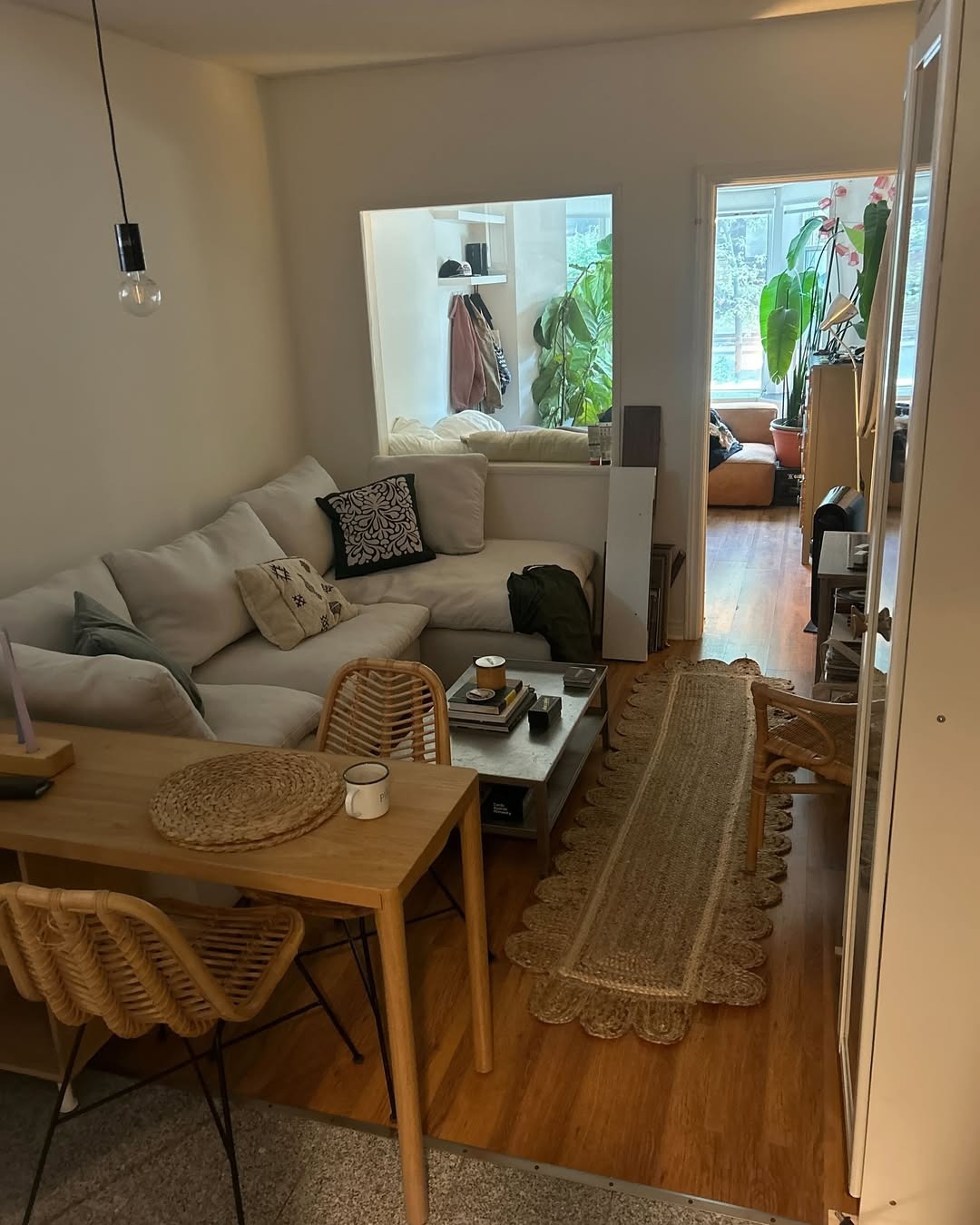
A compact home does not have to feel like a compromise. The most welcoming small apartments are planned around how people actually move, rest, cook, work, and gather—not around a strict rulebook about minimalism. When each area earns its keep and the visual language stays intentional, limited square footage can feel edited, personal, and surprisingly relaxed.
The ideas below translate adaptable small-home principles into everyday choices: use furniture to create gentle boundaries, build storage into overlooked surfaces, and let lighting, texture, and color do more than one job. Each section includes a quick Kitchen Pause recipe, because a home that supports good routines should make room for nourishing breaks as well as beautiful rooms.
1. Let Furniture Draw the Floor Plan
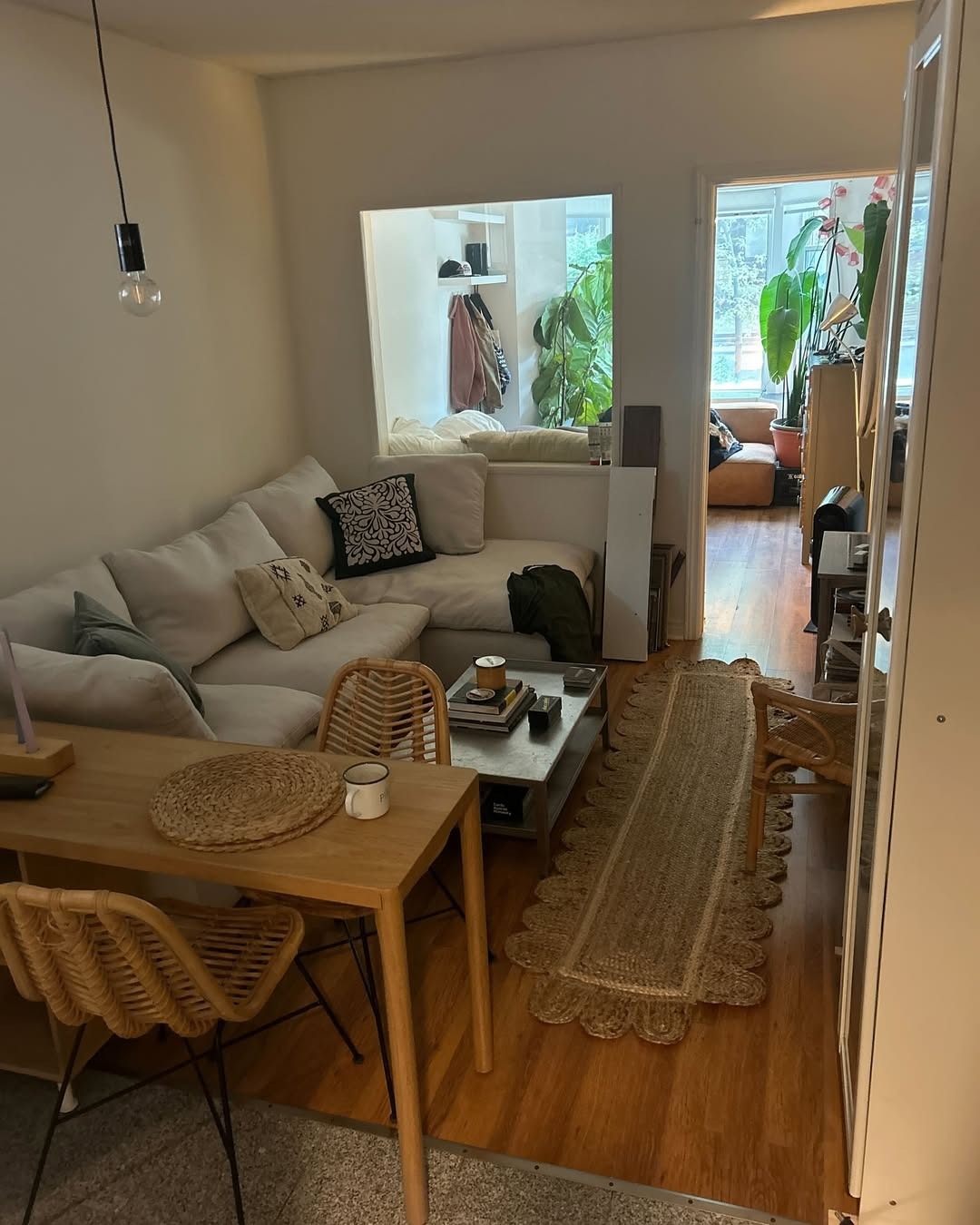
In an open apartment, the sofa, table, and shelving can quietly establish a floor plan without making the room feel chopped up. Place the back of a sofa toward the dining or work area, then keep a clear walking lane between the entry and the brightest window. A narrow console behind the sofa can become a drop zone, serving surface, or breakfast station, while a small round table softens circulation and makes room for an extra chair when guests arrive.
The key is to give each zone one primary promise. The living area should invite unwinding; the dining surface should support meals and paperwork; the entry should catch keys and bags before they migrate. Choose pieces with visible legs or open bases where possible so the floor can visually continue underneath them. A rug can anchor a seating group, but leave enough surrounding floor exposed to preserve a sense of air. Before buying anything, mark the footprint with painter’s tape and test the route with a laundry basket in hand. That simple rehearsal reveals whether a layout is attractive only in a photograph or genuinely comfortable every day.
Kitchen Pause — Lemon-Herb White Bean Toast
- 1 can cannellini beans, rinsed
- 2 slices whole-grain bread
- 1 tablespoon olive oil
- 1 teaspoon lemon zest
- 1 tablespoon chopped parsley
- Pinch of salt and pepper
- Mash beans with oil, zest, parsley, salt, and pepper.
- Toast the bread until crisp at the edges.
- Spoon the bean mixture over toast and serve warm.
2. Build Up Before You Spread Out
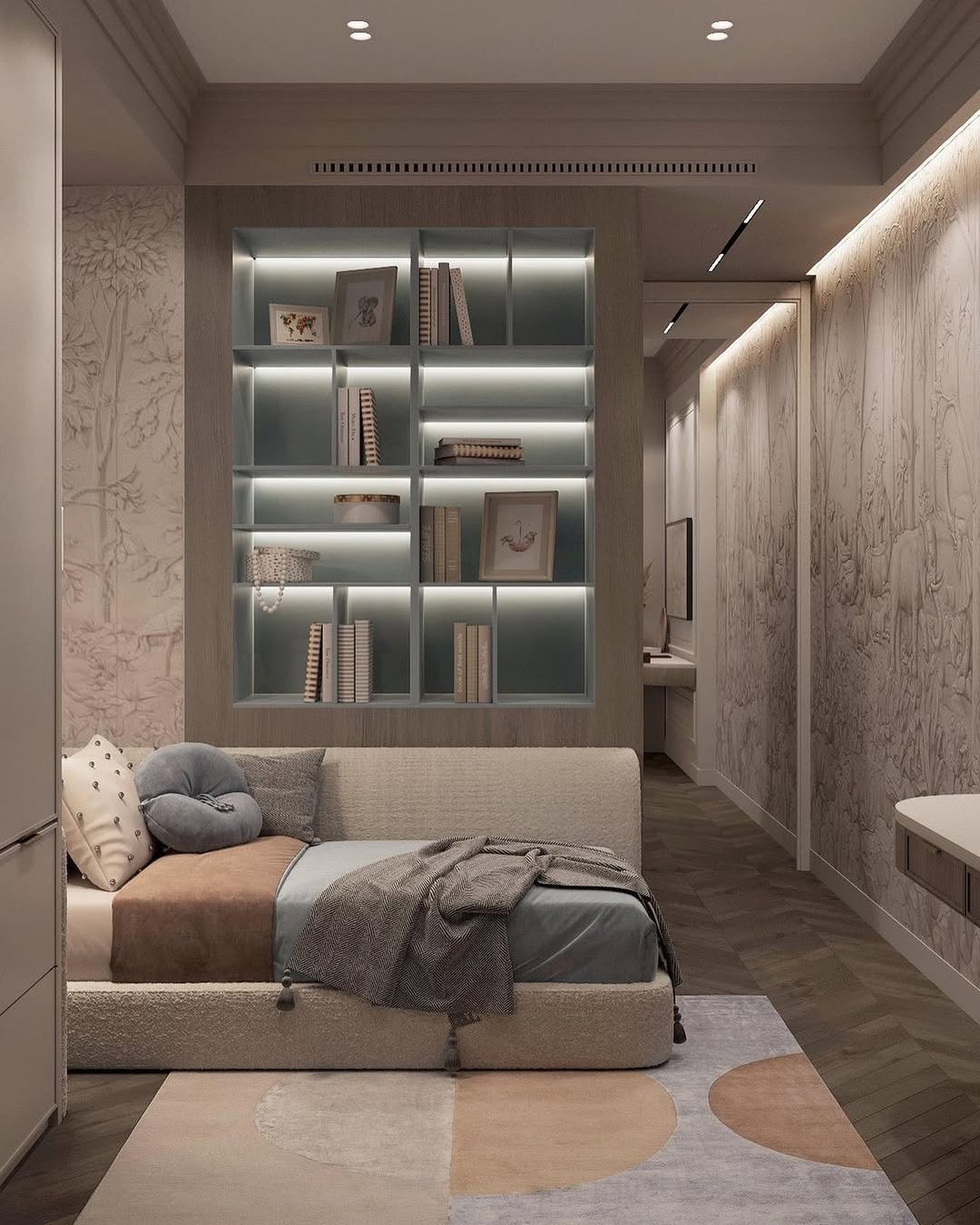
Small homes often have more unused wall than unused floor. Take advantage of that vertical real estate with cabinets that reach higher, shelves above a desk, and hooks that move daily essentials off countertops. The goal is not to fill every inch; it is to place storage where the action already happens. A shallow shelf near the kitchen can hold spices and oils, while a tall closed cabinet can hide less attractive appliances and spare linens.
Use a two-level approach: open storage for objects that add rhythm or are used constantly, and doors or drawers for visual noise. Keep the lower portion of a tall unit easy to reach and reserve the highest shelves for seasonal items. If a shelf becomes a dumping ground, give it a tray or a small set of matching boxes so the boundary is obvious. In a sleeping area, a built-in ledge can replace a bedside table and provide space for a lamp, book, and glass of water without widening the bed zone. Even a peg rail can work hard when it carries a tote, apron, headphones, and a small plant. The most successful vertical storage makes routines shorter rather than creating another system to maintain.
Kitchen Pause — Five-Minute Apple Cinnamon Oats
- 1/2 cup rolled oats
- 1 cup milk or unsweetened plant milk
- 1/2 apple, finely diced
- 1/2 teaspoon cinnamon
- 1 tablespoon chopped walnuts
- 1 teaspoon maple syrup
- Combine oats, milk, apple, and cinnamon in a saucepan.
- Simmer for 4–5 minutes, stirring once or twice.
- Finish with walnuts and maple syrup.
3. Make One Room Change Roles Gracefully
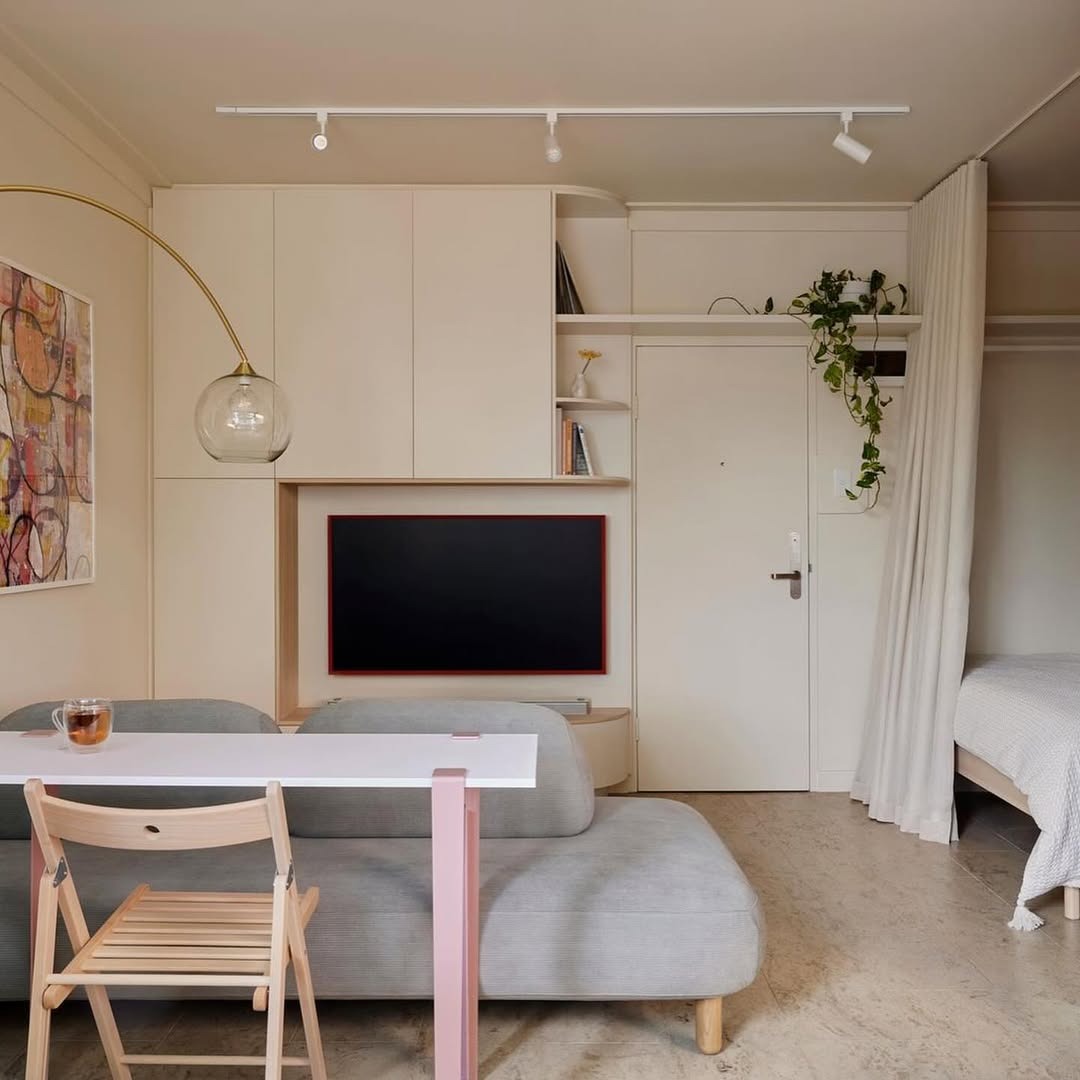
A studio feels easier when its furniture can change jobs without a dramatic reset. Look for a table that serves as a dining surface by day and a work desk when needed, or a bench that offers seating, shoe storage, and an occasional guest bed. A compact kitchen cart can carry produce, become a serving station, and roll aside when the floor needs to open for stretching or cleaning.
Flexibility works best when the transitions are designed in advance. Keep chargers in a basket near the work spot, store linens inside the seating bench, and choose a lamp with a movable arm so one light can serve reading and meal preparation. If you work from home, position the desk so it does not dominate the first sightline from the entry; a curtain, folding screen, or tall plant can provide a gentle visual close at the end of the day. Avoid buying multifunctional pieces merely because they advertise several uses. The useful question is whether you will perform those changes often enough to justify the mechanism. Simple transformations usually win: a nesting table, a folding chair, or a lift-top surface is more likely to become part of your rhythm than a complicated piece that requires instructions.
Kitchen Pause — Cucumber Chickpea Crunch Cups
- 1 cup cooked chickpeas
- 1/2 cucumber, diced
- 2 tablespoons plain yogurt
- 1 teaspoon lemon juice
- 1 tablespoon chopped dill
- 4 lettuce leaves
- Salt and pepper
- Stir chickpeas, cucumber, yogurt, lemon, dill, salt, and pepper together.
- Spoon the mixture into lettuce leaves.
- Fold or roll the leaves and eat immediately.
4. Use Texture to Add Warmth Without Clutter
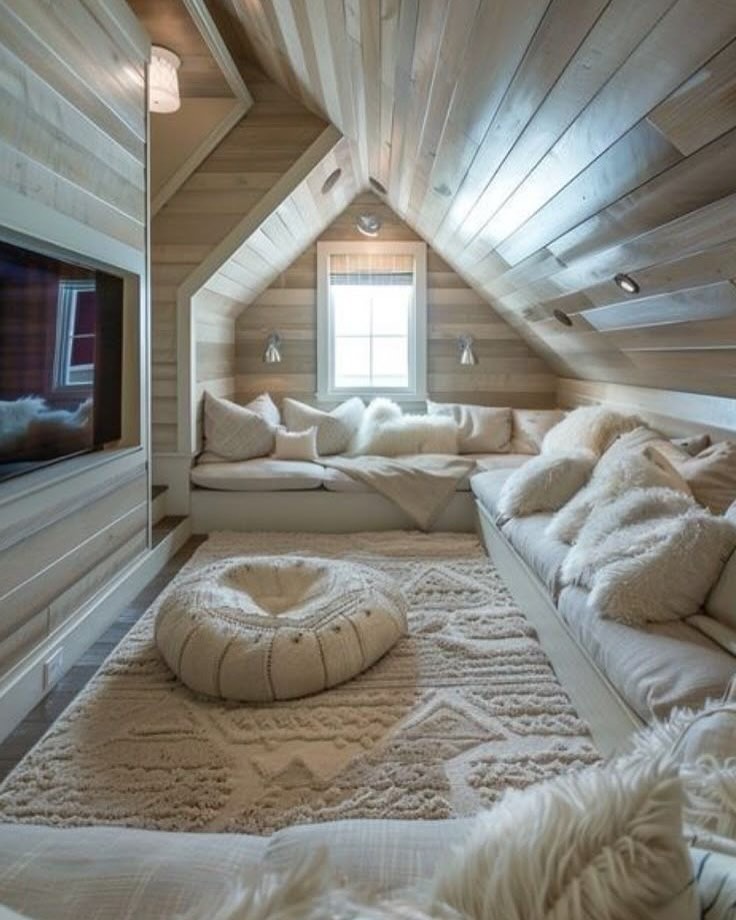
When a small room needs personality, texture is often more forgiving than a collection of accessories. Layer a flatwoven rug with a nubby cushion, a smooth wood surface with woven storage, or crisp bedding with one substantial throw. These contrasts create depth while keeping the number of objects under control. A restrained base—warm white, sand, clay, or soft gray—also gives tactile pieces room to register.
Bring in color through a few repeatable notes rather than scattering unrelated accents. A muted blue in a cushion might reappear in a small print; a mossy green can connect a plant pot to a kitchen towel. Curved forms can soften a narrow passage, while vertical lines emphasize height and make a low ceiling feel more intentional. Lighting matters just as much: combine a task lamp, a low evening glow, and one ceiling source instead of relying on a single bright fixture. Before adding decor, remove three items and observe the room for a day. If it feels calmer but not empty, you have found useful breathing space. The best compact interiors are not bare; they are selective, allowing a few tactile, meaningful elements to carry the emotional weight.
Kitchen Pause — Warm Pear Ricotta Bowl
- 1 ripe pear, sliced
- 1/2 cup ricotta
- 1 tablespoon pumpkin seeds
- 1/2 teaspoon cinnamon
- 1 teaspoon honey
- Pinch of sea salt
- Warm pear slices in a skillet for 2–3 minutes.
- Spoon ricotta into a bowl and top with pear.
- Add seeds, cinnamon, honey, and salt.
5. Separate Private Moments Without Losing Light
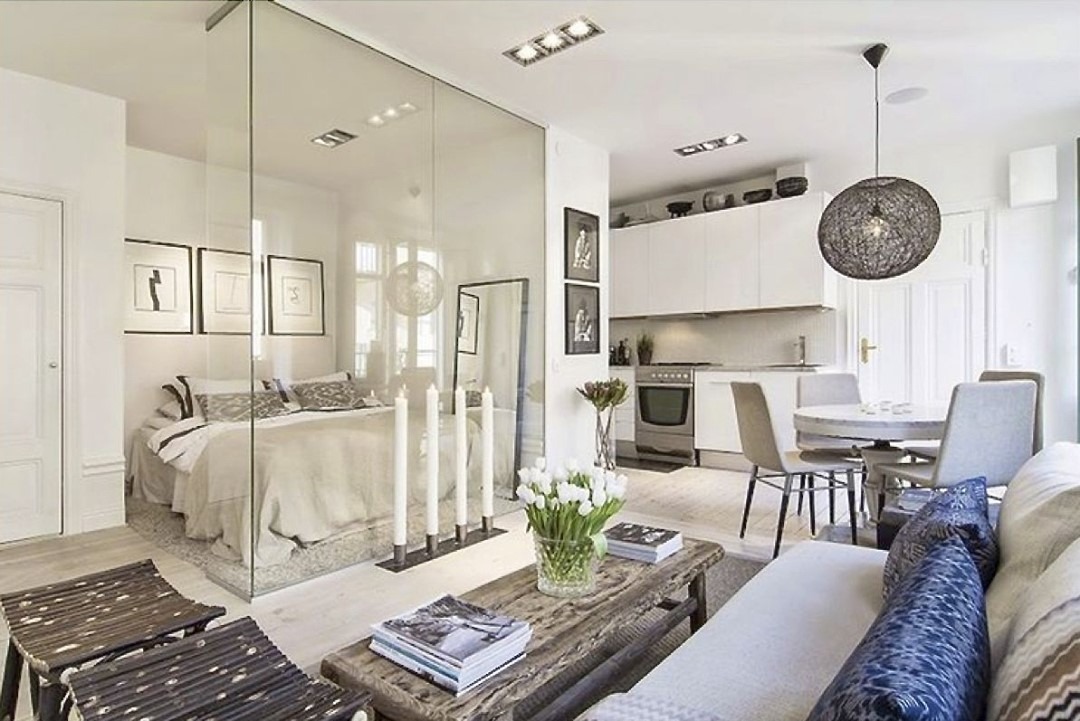
Sleeping, working, and cooking can share an address without feeling like one long activity. Instead of defaulting to a solid wall, consider a glazed partition, a curtain, an open bookcase, or a change in ceiling treatment. These dividers signal that one zone has ended while preserving daylight and the sense of one connected home. A translucent curtain is especially useful in a rental because it is reversible and can be drawn when the bed needs privacy.
Keep the private zone visually quiet. Repeating the wall color in bedding, or using one calm material behind the bed, reduces the feeling that the sleeping area is competing with the kitchen. In the cooking zone, closed fronts and a clear counter make the room feel reset quickly after dinner. Plants can mark a transition, but choose varieties and placement that will not narrow the walkway or create a maintenance burden. For a split-level or lofted layout, use the change in height to distinguish activities, then add a consistent railing, handrail, or lighting temperature so the home still feels cohesive. Think in terms of sightlines: sit on the sofa and notice what you see first, then edit the view until it supports the mood you want when you come home.
Kitchen Pause — One-Pan Tomato Egg Skillet
- 1 cup crushed tomatoes
- 2 eggs
- 1/4 bell pepper, diced
- 1 tablespoon olive oil
- 1 tablespoon chopped basil
- Salt, pepper, and paprika
- Sauté pepper in oil for 2 minutes.
- Add tomatoes, paprika, salt, and pepper; simmer 5 minutes.
- Make two wells, crack in eggs, cover, and cook until set.
- Scatter basil over the skillet before serving.
6. Give the Apartment a Point of View
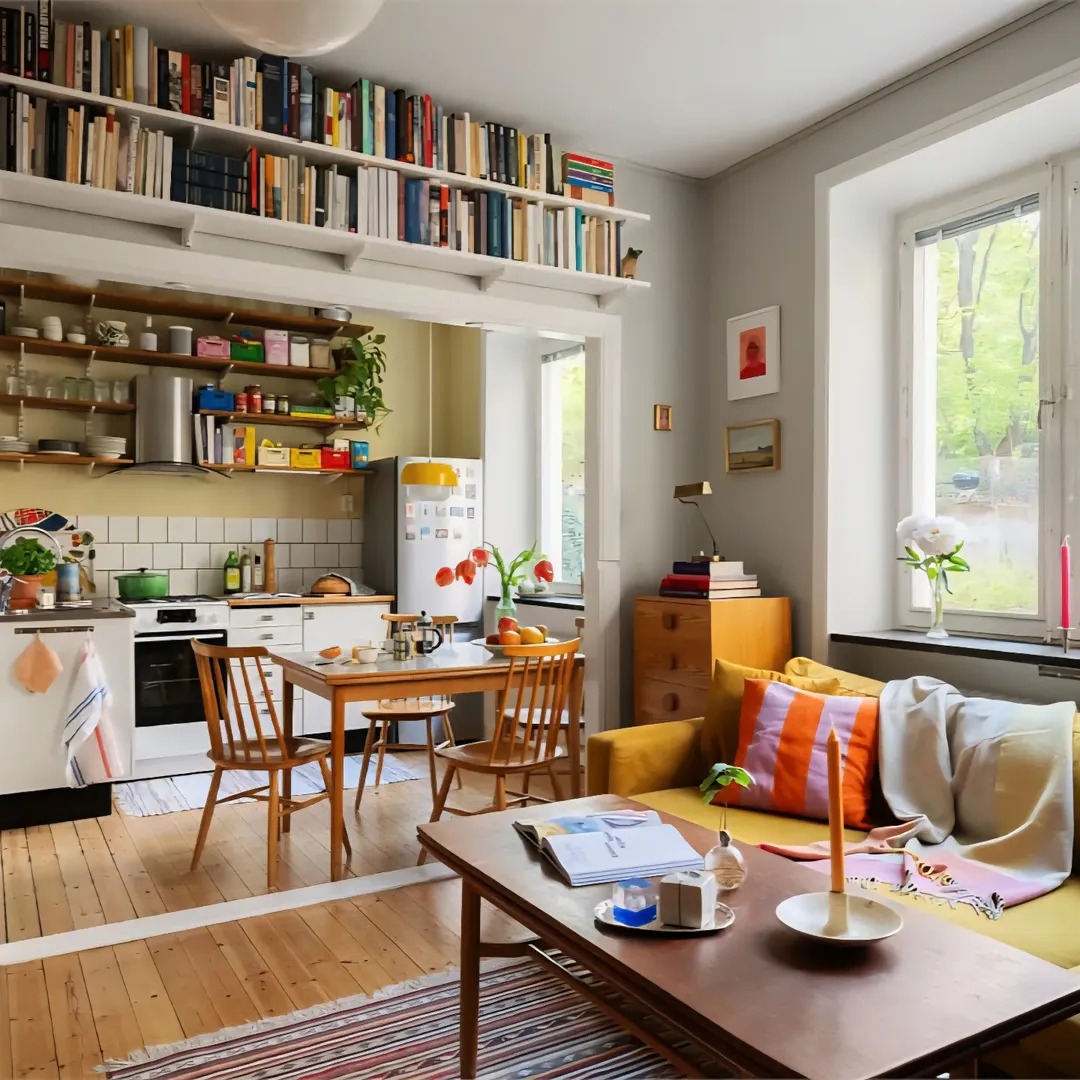
Efficiency should not erase identity. A compact home becomes memorable when it contains a deliberate point of view: a gallery wall built around family images, a confident painted niche, a shelf of well-loved books, or one sculptural light that turns an ordinary corner into a destination. Personality is easier to sustain when it is concentrated. Choose one visual anchor for each major zone, then let the surrounding pieces support it rather than compete.
Color can be bold in a small dose. A sunny chair, deep blue cabinet, or patterned curtain may provide more life than a room full of tiny ornaments. If you love collected objects, group them by height, material, or story so the display reads as a composition. Leave a little empty space around the arrangement; contrast makes meaningful objects more visible. The same principle applies to entertaining. A round table, a generous serving board, and stackable stools can make a small home feel hospitable without requiring a permanent party setup. At the end of the week, reset only the surfaces that affect tomorrow morning: the entry, kitchen counter, and bedside ledge. A home with a clear personality does not need to look perfect. It needs to make the people who live there feel recognized, comfortable, and ready to use every inch well.
Kitchen Pause — Citrus Herb Couscous Salad
- 1 cup cooked couscous
- 1/2 orange, segmented and chopped
- 1/2 cup cucumber, diced
- 2 tablespoons chopped mint
- 1 tablespoon olive oil
- 1 teaspoon lemon juice
- Salt and pepper
- Fluff couscous and cool for 5 minutes.
- Fold in orange, cucumber, and mint.
- Dress with oil, lemon juice, salt, and pepper, then toss.
Final Thoughts
The most livable small apartments are not defined by how little they contain. They are defined by how clearly each choice supports daily life. A flexible table, a well-placed shelf, a softer boundary, or a carefully chosen color can make a home easier to navigate and more satisfying to inhabit.
Start with one friction point—an overcrowded entry, an undefined work corner, or a kitchen counter that never clears—and solve that problem before adding anything new. Small changes accumulate. With thoughtful zones, useful storage, and a little room for delight, a compact home can feel generous in all the ways that matter.