How to Create a Clean, Modern Coastal Home: Practical Decorating Ideas
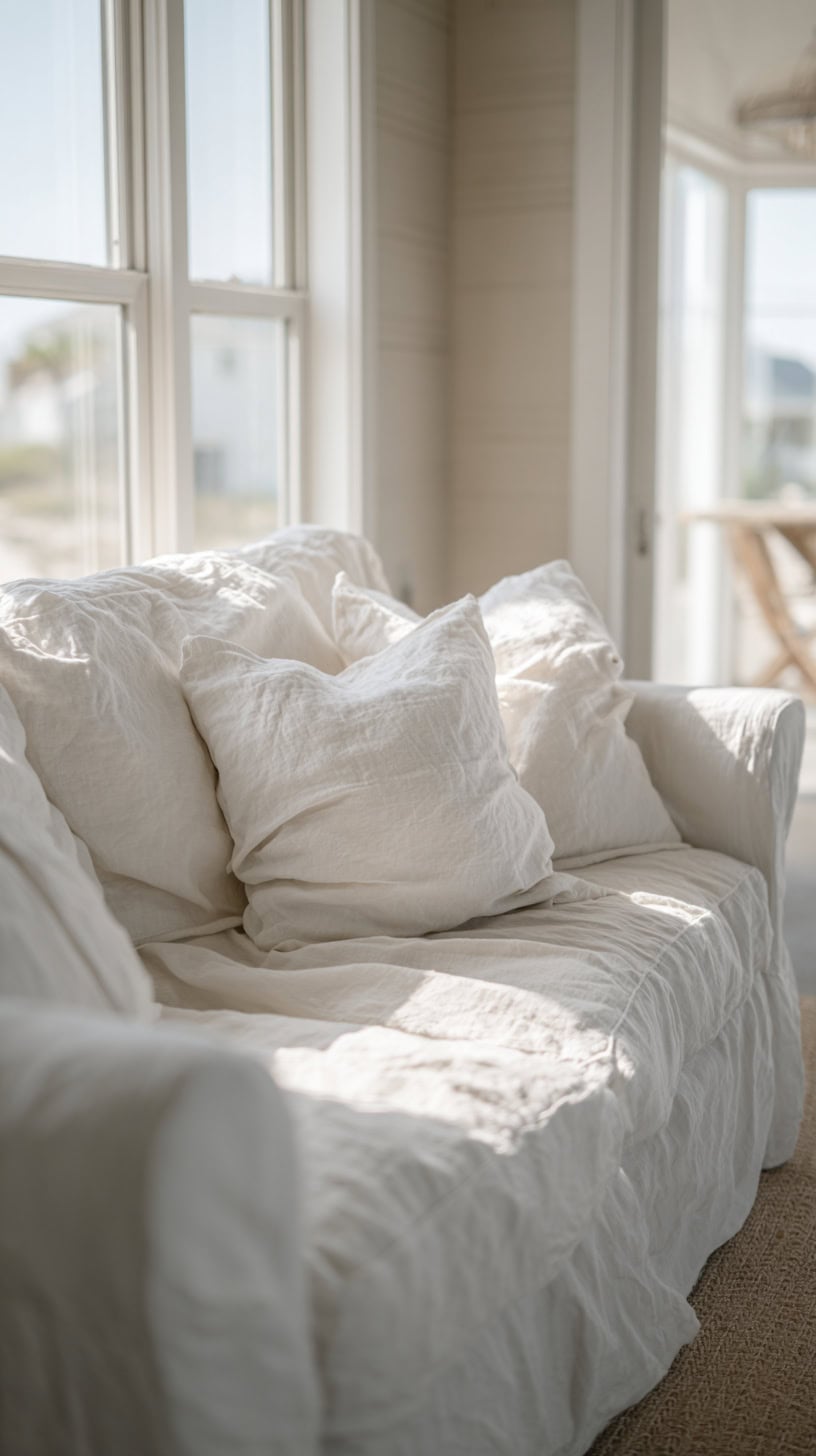
A modern coastal home feels relaxed, bright, and uncluttered—more about atmosphere than literal seaside souvenirs. Achieving that calm, beach-inspired look comes down to a few consistent choices: a soft neutral foundation, natural textures, well-chosen accents, and thoughtful editing so rooms feel airy rather than crowded.
This guide groups practical tips for fabrics, surfaces, shelving, accents and everyday living so a house near the water (or simply inspired by it) feels comfortable and refined. These ideas focus on durable, low-fuss solutions that maintain a fresh coastal vibe without staging a nautical theme.
1. Start with a Soft Neutral Base and Layer from There
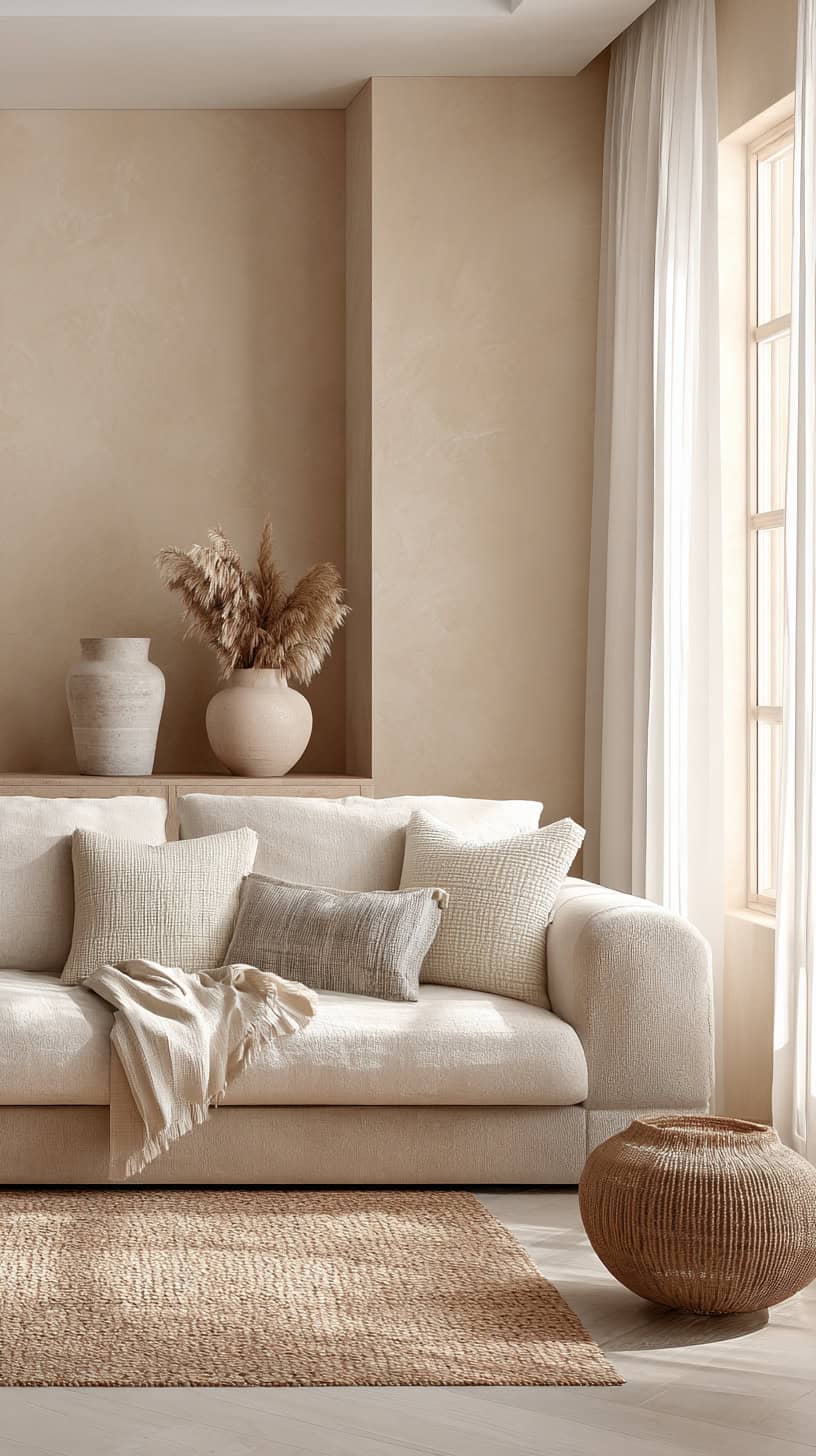
Begin decorating with a palette that echoes sand, sea glass, and driftwood: warm beiges, soft grays, creams, and muted taupes. These tones create a calming backdrop and make rooms feel more open. Use the palest shades on walls to reflect light, then bring depth with mid-tone upholstery and darker accents in small doses. Layer textures—smooth plaster or paint, woven fibers, and light wood grains—to prevent the neutrals from appearing flat. When choosing paint and textiles, test samples in the room at different times of day to ensure the hues keep the airy feeling without washing out the space.
2. Choose Lightweight, Washable Fabrics for Comfort and Ease
Opt for breathable, easy-care fabrics such as linen, cotton-linen blends, and lightweight gauze for upholstery, slipcovers, and window treatments. These materials allow airflow, diffuse sunlight softly, and look relaxed when slightly unpressed, which suits a casual coastal environment. Prioritize removable, machine-washable slipcovers for sofas and chairs to handle sand, pets, or spills. For curtains, floor-to-ceiling panels in sheer or semi-sheer fabrics create vertical lines that visually increase ceiling height while still providing privacy. Keep curtain hardware wide and high to maximize perceived window size and light.
3. Mix Natural Fibers and Weathered Wood for Tactile Interest
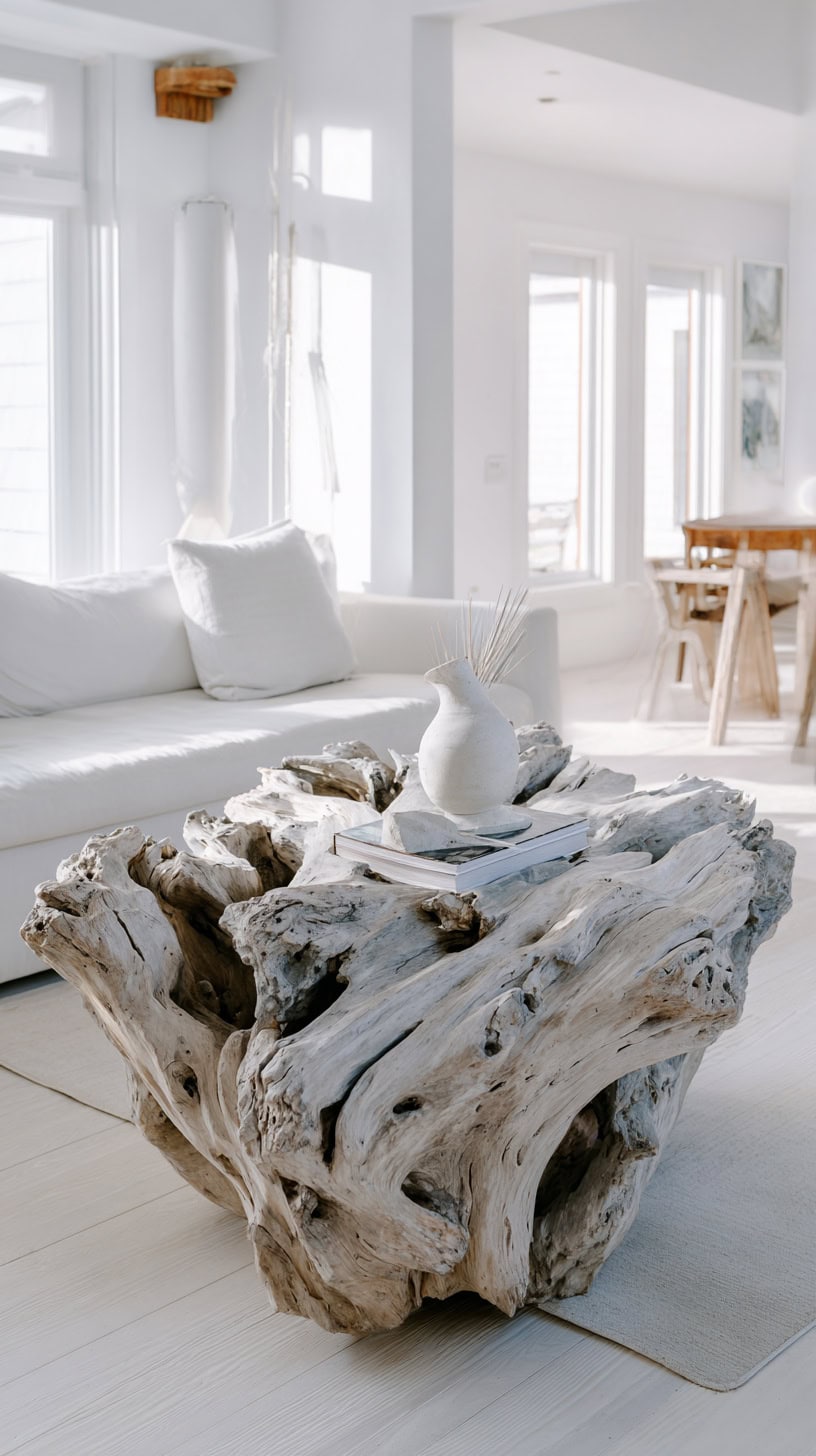
Incorporate organic materials like rattan, jute, and reclaimed or weathered wood to introduce warmth and texture. Woven rattan chairs, baskets, and lamp shades add handcrafted character without weighing a room down, while a nubby jute rug provides grounding underfoot and hides light debris common in beach homes. A weathered or driftwood-finish coffee table can be paired with glass tops to protect the surface and maintain clean lines. Balance these tactile pieces with smoother elements—painted cabinetry, polished metal details, or glass—so the overall look remains modern and curated.
4. Use Glass and Subtle Color Accents to Evoke the Sea
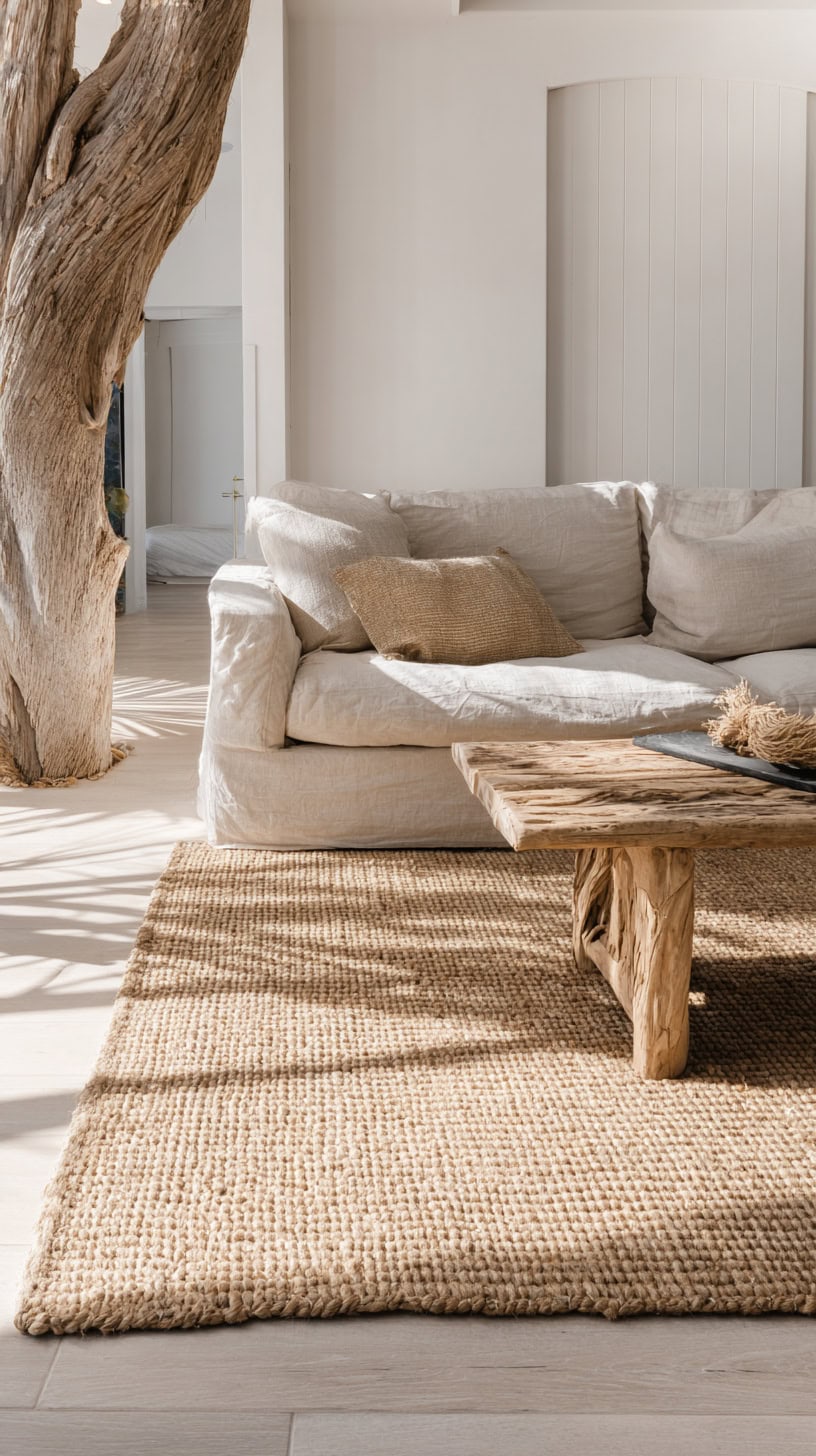
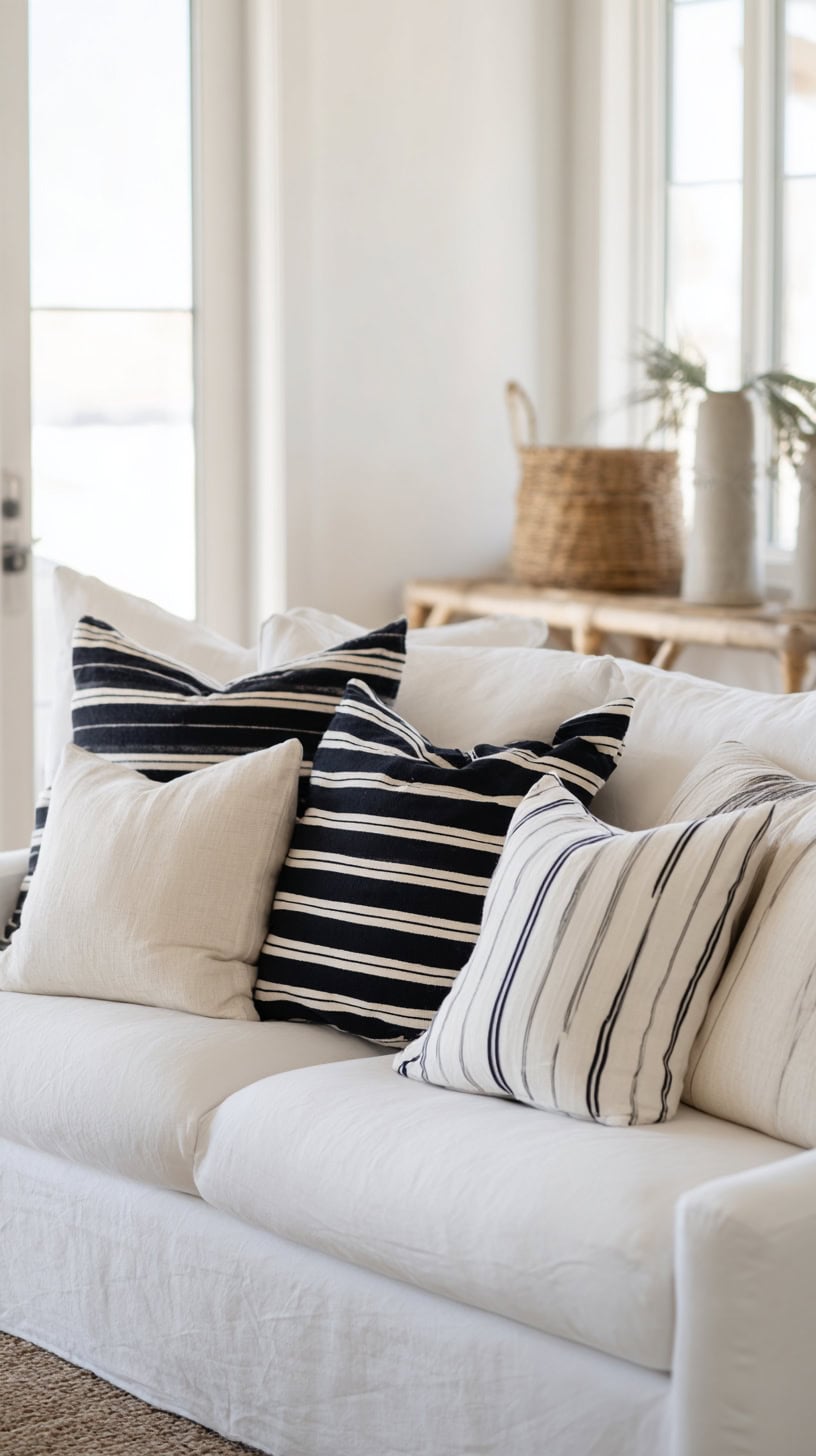
Rather than relying on bold nautical motifs, introduce oceanic color through measured accents like blue glass vases, seafoam ceramics, or small artworks in aqua tones. Transparent or translucent pieces catch light and create a luminous, water-like quality. Combine these with striped textiles in muted shades to add structure without overwhelming the space: think narrow sand-and-cream runners or soft navy-and-white throw pillows. Place colored glass near windows or on open shelves where natural light can interact with it for a gentle glow that shifts through the day.
5. Make Open Shelving Work with Thoughtful Curation
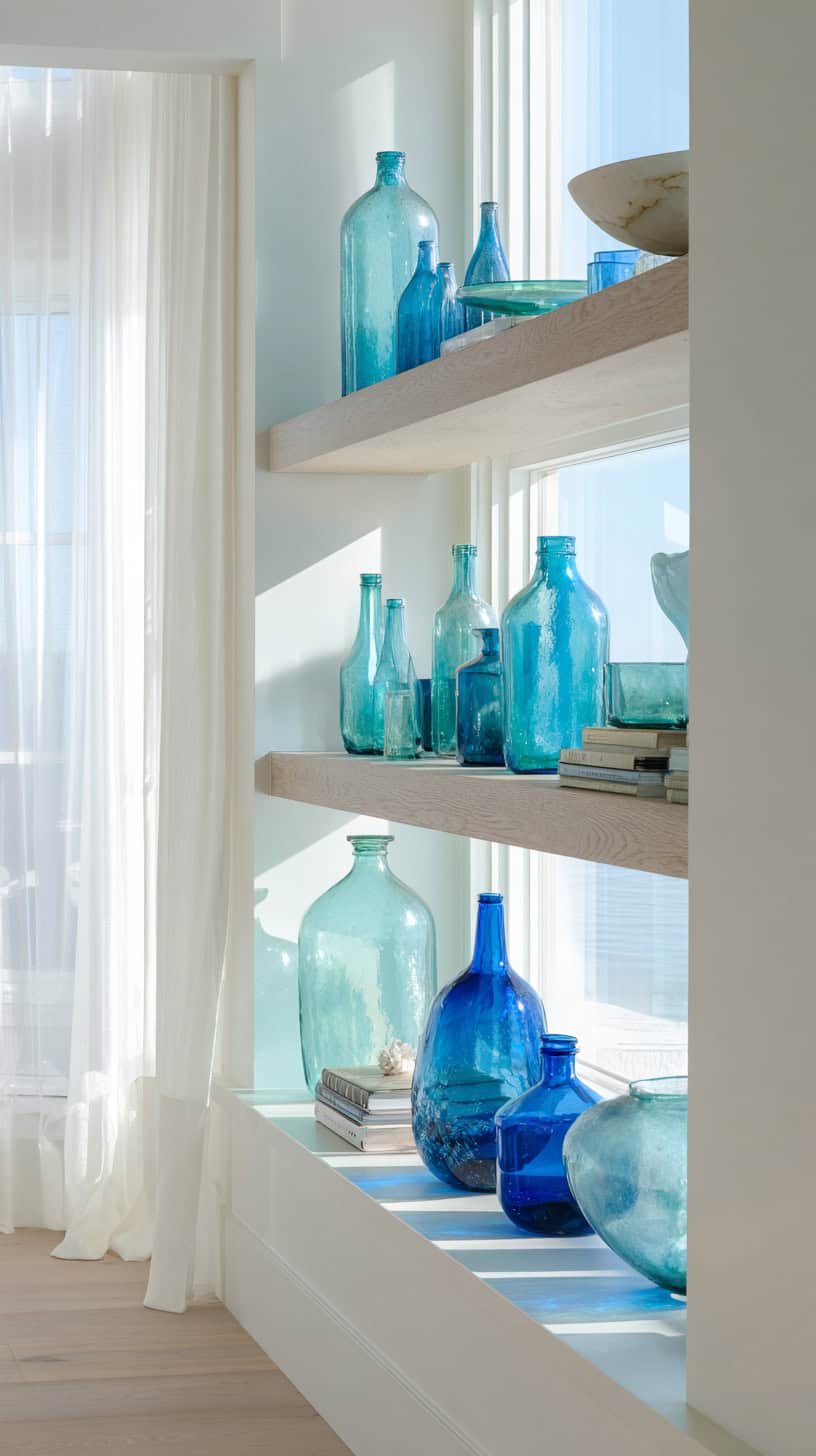
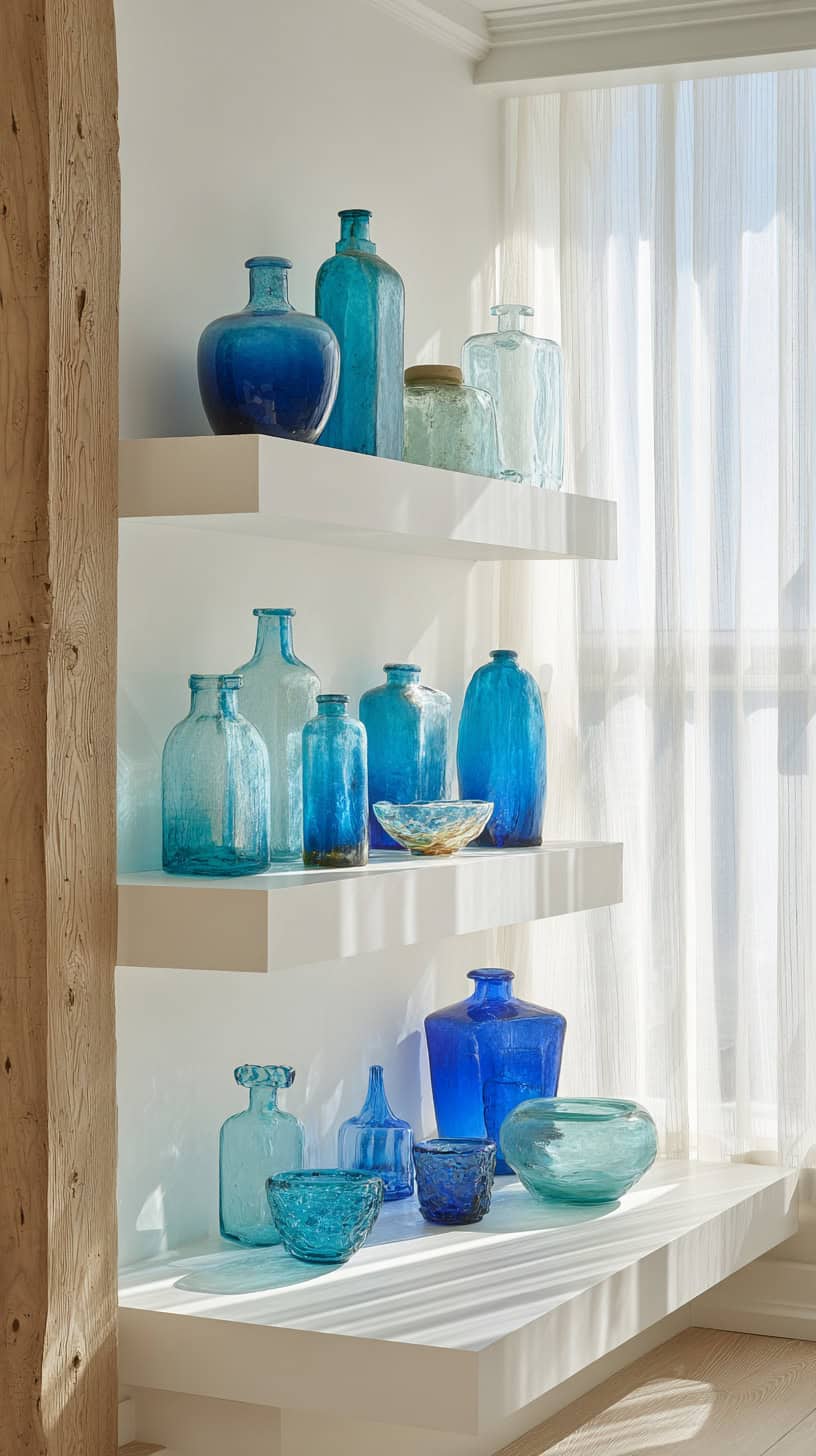
Open shelves in light woods such as pale oak are excellent for keeping a kitchen, living room, or bathroom feeling airy. The key is restraint: group items by color and material, leave breathing room between objects, and mix functional items (stacked plates, jars) with a few decorative pieces. Use boxes or woven baskets to hide small essentials and keep the overall display tidy. Rotate seasonal pieces so the shelving feels fresh and intentional rather than cluttered; a repeat rhythm of books, ceramics, and a single sculptural item makes the arrangement look edited and serene.
6. Treat Shells and Natural Finds as Sculptural Art
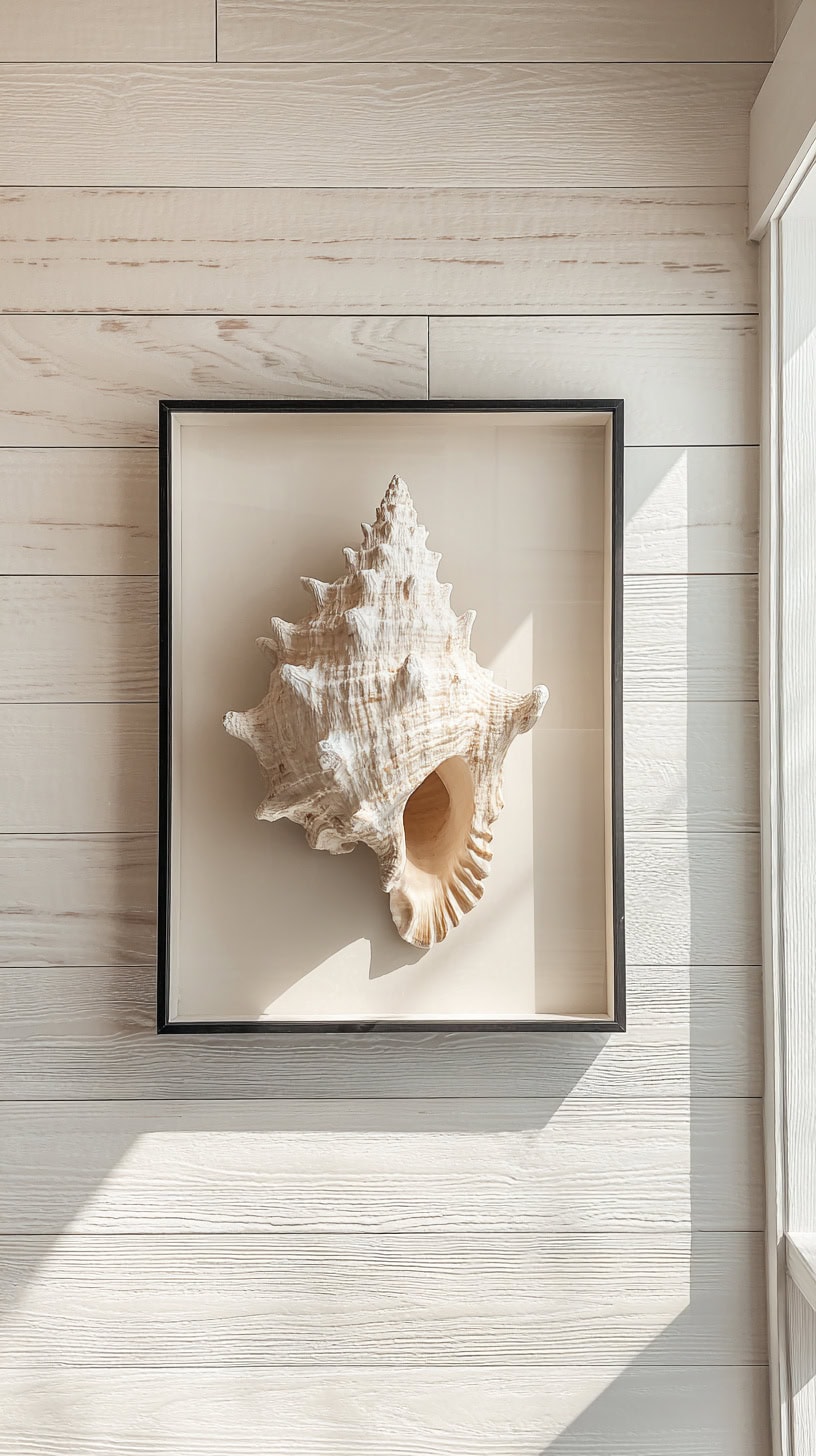
When incorporating shells or coastal finds, present them as individual sculptural elements rather than filling a shelf with numerous small trinkets. Choose a few well-formed specimens and frame them in shadow-boxes or mount them on neutral backings to emphasize shape and texture. Small groupings in odd numbers create visual interest without overcrowding walls. Consider mixing shell displays with minimal line drawings or neutral prints to maintain a refined gallery feel. This restrained approach keeps the look contemporary and avoids cliché, turning nature’s curiosities into elegant focal points.
7. Design for Everyday Life: Durability and Placement Tips
A practical coastal home balances style with durability. Select rugs and upholstery that can withstand sand, moisture, and frequent cleaning—natural fiber rugs layered over low-maintenance mats can protect floors while adding warmth. Place doormats both outside and inside entry doors to reduce tracked sand, and choose surface finishes that resist fading from sunlight. Position heavier furniture away from direct sun where fabrics and wood can lighten unevenly. For families, prioritize furniture with removable covers and finishes that tolerate cleaning; thoughtful layout—clear pathways and defined seating zones—keeps the home functional and relaxed.
Final Thoughts
A modern coastal interior is achieved by combining a soft neutral base, breathable textiles, natural textures, and a few carefully chosen accents. Focus on editing, durability, and thoughtful placement to maintain an airy, lived-in atmosphere that feels both relaxed and refined. Small changes—layered textures, curated displays, and washable fabrics—create lasting, comfortable coastal style.