Design a Calm, Family-Friendly Canopy Bedroom: Practical Tips for Eclectic, Layered Style

A canopy can transform a bedroom into a soothing retreat without feeling fussy. With thoughtful choices for frame style, fabrics, color, and storage, a layered, eclectic look can be achieved even in smaller rooms or rental spaces. The goal is comfort, durability, and a lived-in charm that supports real life.
This guide lays out clear, doable steps: how to pick a canopy system that fits your ceiling and family rhythm, which textiles create an airy feel, where to add color, and how to balance beautiful pieces with easy-clean finishes. Each section focuses on practical solutions that make the room restful by night and resilient by day.
1. Pick a canopy solution that fits your room and lifestyle

Measure the space and choose a canopy approach that respects ceiling height, door swings, and any overhead fixtures. Low-profile four-post frames create a grounded silhouette without crowding lower ceilings, while slim metal posts read visually light in compact rooms. Ceiling-mounted hoops or rings produce a dramatic floating effect and free up floor area—just confirm ceiling joist locations and weight limits. For renters or temporary setups, tension rods, adhesive hooks rated for ceiling hangings, or a lightweight dowel supported by Command-style hangers provide damage-free options. Always account for ceiling fans and keep at least a foot of clearance between moving blades and fabric. Before ordering, mark the intended top-rail height on the wall and measure from the mattress to ensure the finished scale feels balanced and easy to access.
2. Choose fabrics and draping methods for a soft, breathable canopy

Select fabrics that breathe and drape rather than feel heavy—cotton gauze, lightweight linen blends, and voile or sheer netting all create that cloudlike movement. For a gathered, flowing look, aim for 1.5 to 2 times the width of each side in fabric fullness; beds with posts often look best with multiple narrow panels rather than a few bulky pieces. Ceiling hoops typically need a single wide panel or two that meet in the middle. Laundering tips: machine-wash on gentle cycles, avoid heavy fabric softeners that can weigh fibers down, and finish by hanging to dry to reduce ironing. For kid safety, use soft fabric ties with Velcro release, wide elastic bands wrapped in matching textile, or magnetic drape clips set out of reach. Add small clip weights or sewn-in hem weights if panels billow too much and risk lifting into moving air.
3. Build a calming color plan and place accents thoughtfully
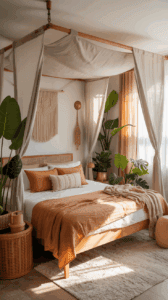
Start with a muted base—soft creams, warm sand, or a gentle camel—then layer in one or two accent hues that can be swapped seasonally. Earthy tones like terracotta, olive, and rust add warmth; blush or navy offer contrast depending on the mood desired. Keep large surfaces neutral (walls, main furniture, the duvet) and introduce accent color through pillows, a throw at the foot of the bed, lampshades, or one statement art piece. If an accent wall is desired, limit it to the width of the bed plus a few inches on each side to frame the canopy without overwhelming the room. For renters, peel-and-stick wallpaper or a painted arch behind the headboard delivers impact and removes cleanly. Repeat your chosen accent color in three places—such as a pillow, a small framed print, and a bedside lamp—to make the scheme feel intentional and cohesive.
4. Layer textiles and patterns with simple rules for a collected look
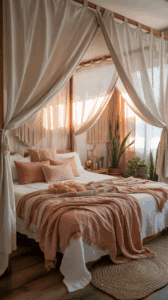
Textile layering creates warmth and visual interest, but a few structure rules keep it calm. For rugs, choose a size that extends beyond the bed—typically allowing 18–24 inches of rug around each side—so the bed appears anchored. Pattern mixing works when using three scales: one large-scale motif (rug or bedspread), one medium (pillow or throw), and one small (sham or lumbar). Limit textures to three main types on the bed—smooth cotton, a tactile woven, and a smaller knit—to avoid visual clutter. A practical pillow setup is two sleeping pillows, two euro shams for height, and a lumbar for comfort. Curtains should be hung high and wide to enhance perceived height; pair sheer panels for daytime light diffusion with blackout liners for better naps and darker evenings.
5. Light thoughtfully and add low-maintenance greenery

Layered lighting sets the room’s mood and highlights the canopy’s soft lines. Choose warm white LEDs (around 2700K) and put key fixtures on dimmers or plug-in dimmer switches for flexible control. Keep string lights and any decorative bulbs outside the main fabric line and use LEDs to minimize heat near textiles. Bedside lamps should be scaled to the nightstand and easy to reach; clip-on reading lights are a good alternative for narrow surfaces. For greenery, favor resilient, non-toxic varieties if children or pets access the room: snake plants, pothos in high planters (out of reach), and spider plants in hanging pots placed to the side of the bed. Establish a simple watering routine based on a weekly soil check: water thoroughly only when the top inch of soil feels dry, and wipe leaves monthly to reduce dust.
6. Choose finishes and furnishings that withstand everyday life
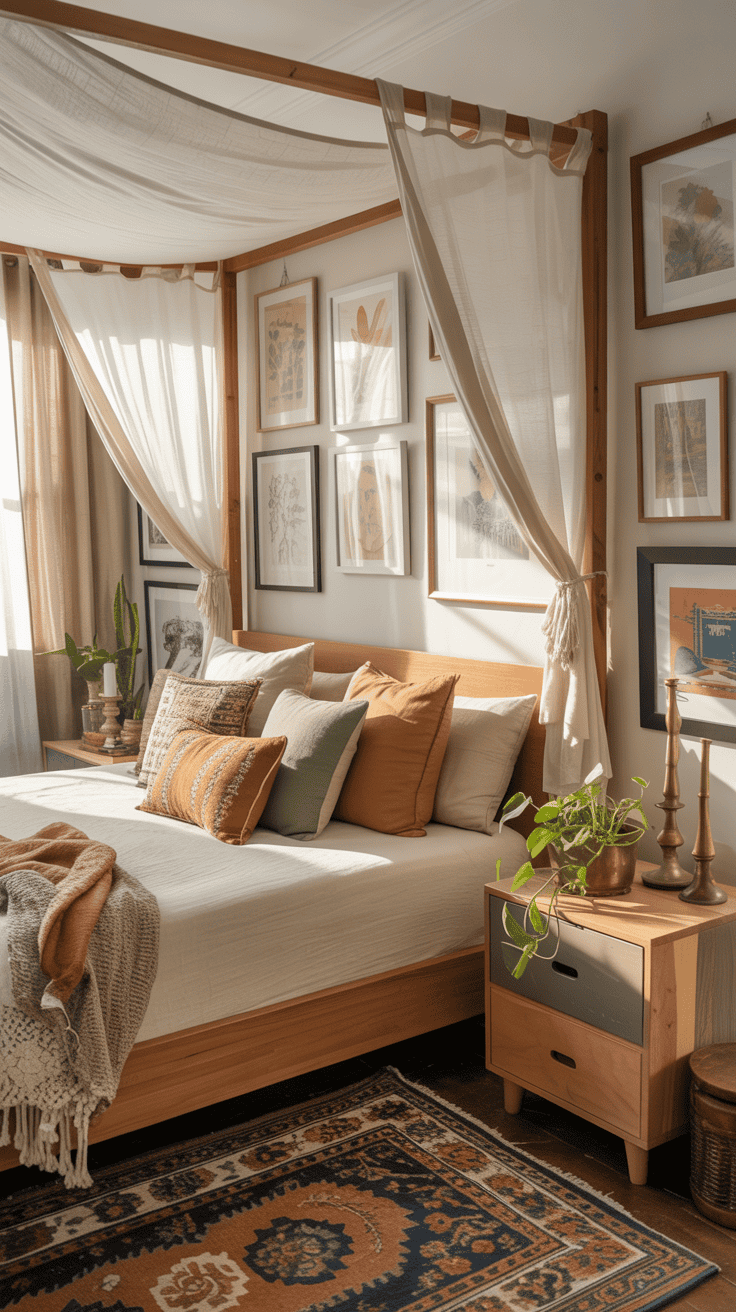
Opt for washable or wipeable finishes in high-use areas. Walls in washable eggshell or satin paints hide scuffs and clean easily; trim and doors in semi-gloss handle frequent touch-ups. For furniture, prioritize solid joinery and easy-to-maintain surfaces—performance fabrics, treated linens, and indoor/outdoor rugs perform well under frequent use. Keep a small cleaning kit in the bedroom (mild soap, white cloths, a soft brush) to treat spots immediately. Storage choices should make tidying effortless: low rolling bins under the bed, benches with concealed compartments at the foot, and lidded woven baskets for toys or laundry. Label storage with simple icons for younger children and words for older ones to encourage quick pick-ups.
7. Plan spending, hunt for meaningful finds, and finish in a weekend

Allocate budget toward items that affect daily comfort and longevity—mattress, main rug, and blackout curtains—then save or thrift for accent pieces like side tables, frames, and woven baskets. Thrift-hunting strategies: look for solid wood construction, inspect rugs for even wear, and test furniture stability in person. Clean and refresh found pieces with a vacuum, a gentle soap solution, and a spot of mineral oil on wood if needed. For a compact refresh that fits a busy weekend: declutter and launder bedding Friday evening; assemble or place the bed and rug Saturday morning; paint or hang an accent wall Saturday afternoon if desired; finish Sunday with textiles, lamps, art, and plants. Small, staged tasks preserve motivation and deliver a finished, livable room without a prolonged overhaul.
Final Thoughts
A calm, eclectic canopy bedroom balances visual warmth with everyday practicality. Choosing the right canopy approach, pairing airy fabrics with family-friendly finishes, and layering color and texture in measured ways yields a restful space that adapts to life. Start with one change—new curtains, a washable rug, or a rearranged lighting plan—and build the layered look over time to create a room that feels both personal and durable.