As we jump into the world of healthy eating, one dish that consistently stands out is the quinoa power bowl. Not only does it allow us to pack in a plethora of nutritious ingredients, but it’s also incredibly versatile and satisfying. In this guide, we’re going to explore how to create a delicious, veggie-packed quinoa power bowl that can be customized for any taste preference or dietary need.
Understanding Quinoa: The Superfood Base
Quinoa has earned its reputation as a superfood for good reason. This ancient grain is not only gluten-free but also packed with essential nutrients that can provide a solid foundation for our meals.
Nutritional Benefits of Quinoa
Quinoa is a complete protein, meaning it contains all nine essential amino acids that our bodies can’t produce on their own. It’s an excellent source of fiber, magnesium, and antioxidants. One cup of cooked quinoa has about 8 grams of protein and 5 grams of fiber, which can help keep us feeling full and energized throughout the day.
Different Types of Quinoa
There are several varieties of quinoa, but the most common types include white, red, and black quinoa. White quinoa tends to have a milder flavor and fluffier texture, making it a good choice for a classic power bowl. Red quinoa has a nuttier taste and firmer texture, while black quinoa offers a slightly sweeter flavor. Mixing different types of quinoa can also create an appealing visual and textural contrast in our bowls.
Choosing the Right Veggies for Your Bowl
The beauty of a quinoa power bowl lies in its adaptability, particularly when it comes to vegetables. Choosing a variety of fresh, colorful vegetables not only enhances the visual appeal but also boosts the nutritional profile of our meal.
Seasonal Veggie Options
Incorporating seasonal veggies not only maximizes freshness but also supports local farmers and reduces our carbon footprint. In spring, we might choose asparagus, peas, and radishes, while summer vegetables like bell peppers and zucchini shine in the summer months. Autumn brings in hearty vegetables such as pumpkin and Brussels sprouts, and winter often calls for root vegetables like sweet potatoes and carrots.
Colorful Combinations for Flavor and Appeal
A colorful veggie assortment does more than just make our bowl pretty: different colors often signify different nutrients. For example, greens like spinach and kale are high in vitamins A and K, while red bell peppers are loaded with vitamin C. We love mixing and matching veggies to create visually stunning and delicious combinations.
Protein Additions to Boost Your Bowl
While quinoa itself is a great source of protein, adding additional protein sources can make our power bowl even more satisfying.
Plant-Based Proteins: Legumes and Tofu
Legumes like chickpeas, black beans, and lentils not only add protein but also provide fiber and various essential nutrients. Tofu is another fantastic plant-based protein option that can be marinated or seasoned to add flavor. We can cube it and either sauté it or bake it for added texture and taste.
Dairy Alternatives: Cheese and Yogurt
For those of us who prefer dairy, adding a sprinkle of feta cheese or a dollop of Greek yogurt can enhance creaminess and flavor. Plant-based alternatives like almond yogurt or vegan cheese can be great options for those seeking dairy-free solutions. Mixing these toppings into our bowl can elevate the dish both nutritionally and aesthetically.
Making the Perfect Dressing
A power bowl wouldn’t be complete without a delicious dressing to tie everything together. The right dressing can elevate the flavors and make our quinoa bowl even more enjoyable.
Healthy Dressing Options
Opting for lighter dressings made with natural ingredients can keep our bowls healthful and vibrant. Some great options include lemon-tahini sauce, balsamic vinaigrette, or a simple olive oil and vinegar mix. These dressings offer flavor without overwhelming the dish.
Homemade Dressing Recipes
Here are a couple of simple recipes for homemade dressings:
- Lemon-Tahini Dressing: 2 tablespoons tahini, juice of 1 lemon, 1 garlic clove minced, water to thin, salt to taste. Whisk until smooth.
- Balsamic Vinaigrette: 1/4 cup balsamic vinegar, 1/2 cup olive oil, 1 teaspoon honey or maple syrup, salt and pepper to taste. Mix until emulsified.
Experimenting with these dresses helps us personalize flavors that complement our chosen ingredients.
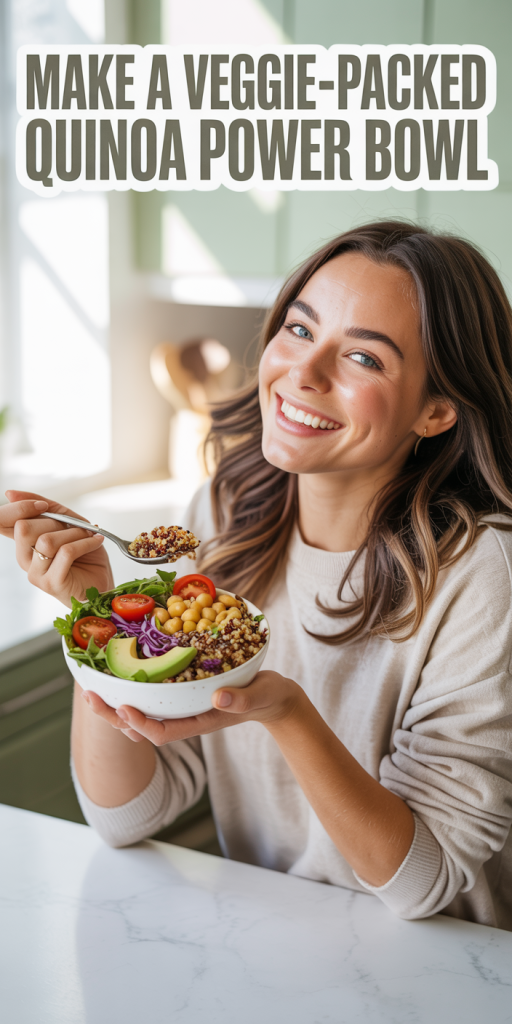
Assembling Your Veggie-Packed Quinoa Power Bowl
Now that we’ve chosen our ingredients, it’s time to assemble our veggie-packed quinoa power bowl. How we layer our ingredients can make a significant difference in the eating experience.
Layering for Texture and Flavor
Start with a base of quinoa, then add a layer of our chosen veggies. Mixing raw and cooked vegetables creates a fantastic combination of textures. For example, pairing roasted sweet potatoes with fresh spinach and crunchy cucumbers offers a delightful contrast. Topping our creation with proteins and a sprinkle of dressing can really enhance the dish.
Tips for Meal Prep and Storage
Meal prepping our quinoa bowls can save us time and keep us on track with healthy eating. Cook a large batch of quinoa and store it in the fridge. We can also prepare our veggies ahead of time. Keep dressings separate until we’re ready to eat to maintain freshness. Stored properly in airtight containers, our assembled bowls can last for about 3-5 days in the fridge.
Conclusion
Making a veggie-packed quinoa power bowl is not only a wonderful way to nourish our bodies but also an opportunity for creativity in the kitchen. With the versatility of quinoa, combined with the endless possibilities of toppings and dressings, we can enjoy a personalized meal that’s packed with nutrients and flavor. So let’s get started. Whether for lunch or dinner, this power bowl can easily become a staple in our meal prep routine.