My Client Had Insulin Resistance… Then Everything Changed
There’s a moment I see all the time.
A client walks in, exhausted. Not just physically—but mentally. They’ve tried everything. They’ve followed the rules. And yet, nothing is working.
That’s exactly where Sarah was.
She was 44, frustrated, and quietly terrified of what her doctor had just told her:
“You have insulin resistance.”
Her blood sugar was climbing. Her A1C was borderline. And she knew where that road led—Type 2 diabetes.
She looked at me and said something I’ll never forget:
“I don’t want medication. Just tell me what I can eat.”
That question changed everything.
The Hidden Problem Most People Miss
Before we changed anything, we had to understand what was actually going on.
Insulin resistance isn’t just a “blood sugar issue.” It’s a metabolic breakdown happening behind the scenes.
Here’s the simple version:
Insulin is like a key. It unlocks your cells so sugar can enter and be used for energy.
But with insulin resistance, those locks stop working properly.
So what happens?
- Sugar builds up in your bloodstream
- Your body pumps out more insulin to compensate
- Fat storage increases (especially around the belly)
- Energy crashes become constant
- Cravings take over
It turns into a vicious cycle.
Most people try to fix this by eating less and exercising more.
But that rarely works long term.
What I told Sarah instead was this:
“We’re not going to fight your body. We’re going to work with it.”
And we did that through food.
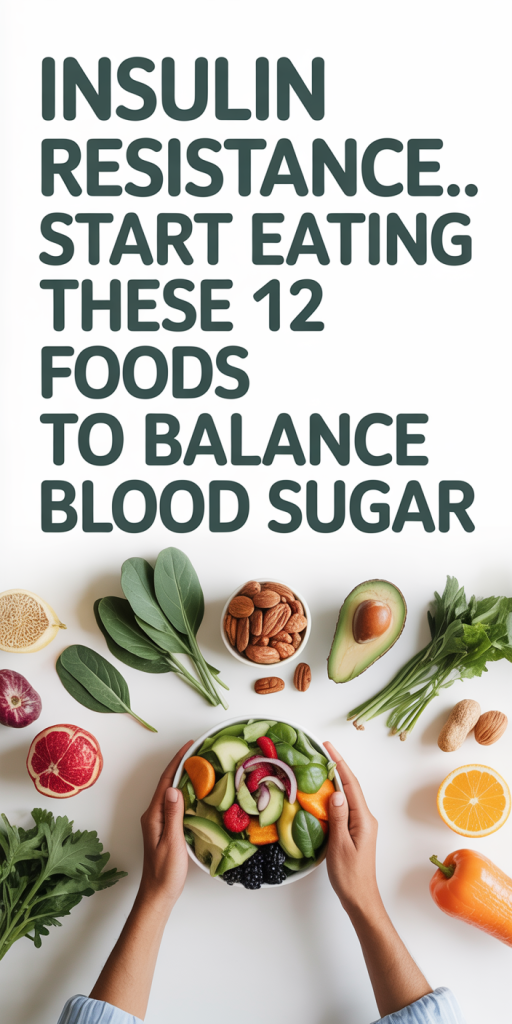
The 12 Foods That Helped Reset Her Blood Sugar
We didn’t count calories. We didn’t restrict her into misery.
We simply added the right foods—consistently.
Here’s exactly what she used.
1. Coconut (Oil + Milk)
Coconut was the first shift.
It’s rich in MCTs—fats your body can quickly turn into ketones (an alternative fuel source to sugar).
That means:
- More stable energy
- Fewer blood sugar spikes
- Less dependence on carbs
Within two weeks, Sarah’s afternoon crashes disappeared.
2. Turmeric
Sitting in her kitchen the whole time.
Turmeric contains curcumin, which helps:
- Improve insulin sensitivity
- Reduce inflammation (a major root cause of resistance)
We added it to eggs, soups, and even coffee.
Simple, but powerful.
3. Ceylon Cinnamon
Not all cinnamon is equal.
Ceylon cinnamon helps your cells respond better to insulin—so your body doesn’t have to overproduce it.
After adding it daily, Sarah noticed something huge:
Her sugar cravings started fading.
4. Raw Cacao
Yes—chocolate.
But the right kind.
Raw cacao is loaded with:
- Magnesium
- Chromium
Both play a major role in blood sugar control.
It also helped curb her cravings, which made everything easier to stick with.
5. Organic Coffee
She didn’t have to give it up—we upgraded it.
High-quality coffee can:
- Improve metabolic function
- Increase ketone production
We added coconut oil and turmeric, turning her morning coffee into a metabolic boost instead of a crash trigger.
6. Green Tea (Matcha)
This became her afternoon ritual.
Matcha contains EGCG, which supports:
- Fat burning
- Blood sugar stability
But just as important—it replaced her snacking habit.
That alone made a difference.
7. Apple Cider Vinegar
One of the simplest tools.
Just one tablespoon before meals helped:
- Slow carbohydrate absorption
- Reduce blood sugar spikes
It’s not flashy—but it works.
8. Lemons & Limes
Even easier.
Adding lemon to water or meals lowers the glycemic impact of food.
Sarah started every morning with warm lemon water—and stuck with it.
9. Avocado
This became a daily staple.
High in healthy fats and fiber, avocados:
- Prevent spikes
- Keep you full longer
They also support lower insulin levels—which was key for her.
10. Olives & Olive Oil
We swapped out processed oils completely.
Extra virgin olive oil contains powerful anti-inflammatory compounds that help repair metabolic function.
She used it on everything—and snacked on olives instead of crackers.
11. Grass-Fed Butter
This one surprised her.
She’d been avoiding butter for years.
But grass-fed butter contains CLA, a fat linked to improved insulin sensitivity.
Once she stopped fearing fat, her body started responding differently.
12. Pasture-Raised Eggs
Her breakfast changed completely.
Pasture-raised eggs are:
- Nutrient-dense
- Low in carbs
- High in beneficial fats
They kept her full for hours and eliminated her mid-morning crash.
What Happened After 90 Days
No calorie counting.
No extreme dieting.
No burnout.
Just consistency.
Three months later, Sarah went back to her doctor.
- Her fasting blood sugar was normal
- Her A1C improved significantly
- Her energy was back
- The belly fat started coming off
Her doctor asked what she did.
She smiled and said:
“I changed what I eat.”
Your Simple Blood Sugar Toolkit
If you want to follow the same approach, start here:
- Coconut
- Turmeric
- Ceylon cinnamon
- Raw cacao
- Organic coffee
- Green tea
- Apple cider vinegar
- Lemons & limes
- Avocado
- Olives & olive oil
- Grass-fed butter
- Pasture-raised eggs
You don’t need all 12 at once.
Start with 2 or 3.
Build from there.
Final Thought
Insulin resistance doesn’t show up overnight.
And it doesn’t reverse overnight either.
But your body is not broken.
It’s responding to signals.
And one of the most powerful signals you send every day…
is what’s on your plate.
Start small. Stay consistent.
Your body is listening.