Thoughtful, Not Overstuffed: A Practical Guide to Building a Child’s Christmas Stocking
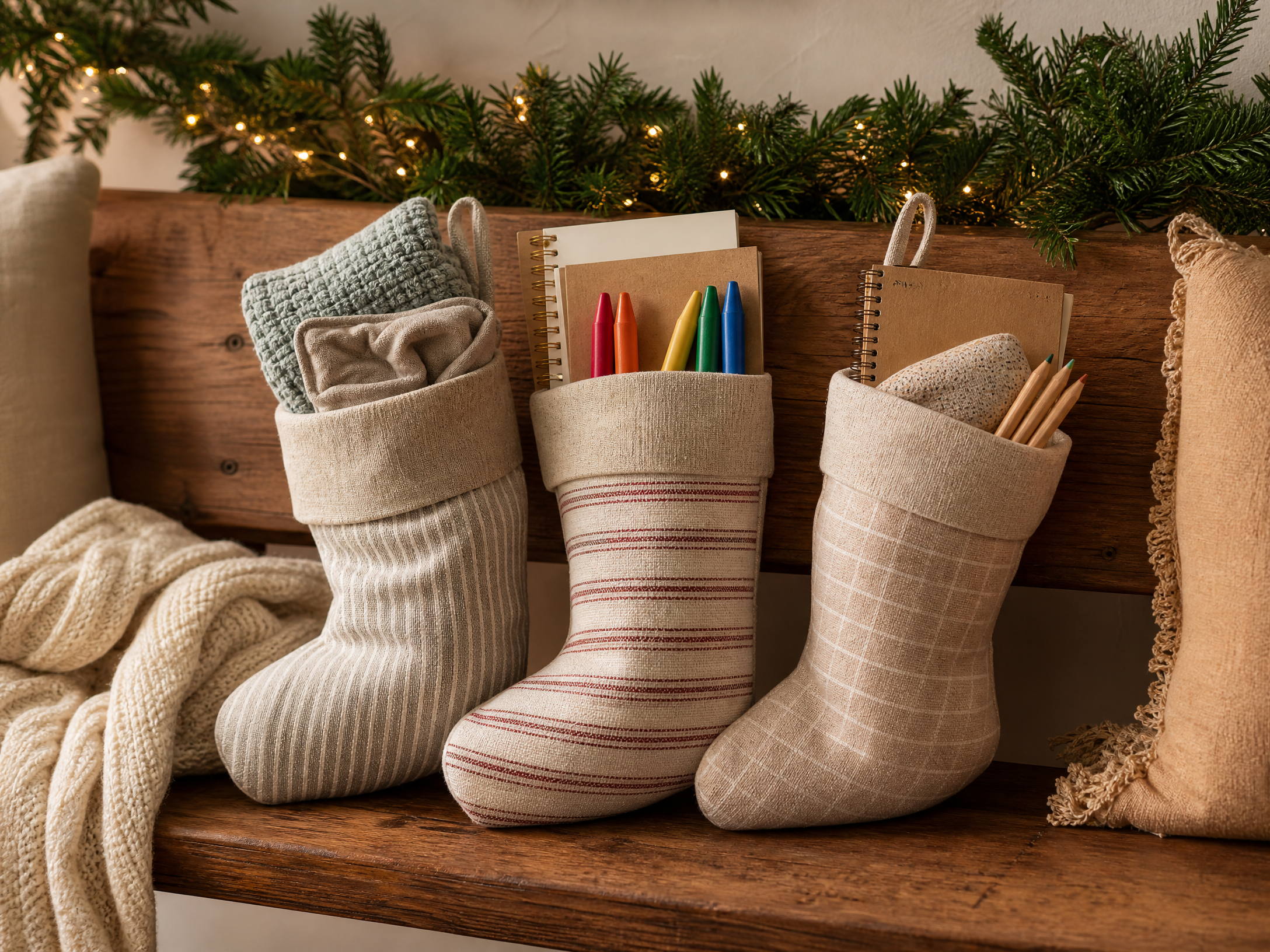
Stockings are a tiny stage for imagination, comfort and surprise — not a place for overwhelm. A thoughtfully packed stocking can feel abundant and special without being stuffed to the brim. The planning that produces calm, developmentally appropriate treats also saves you time, money and post-holiday clutter.
This guide gives a clear framework you can use year after year: match items to age and development, balance categories so each stocking feels complete, protect safety and the family budget, keep packaging low-waste, and apply fair tactics for multiple children. Each section includes practical tips you can act on immediately.
1. Match to Age and Development, Not Birthdate Alone
Think of age as a starting point and development as the compass. For infants and toddlers, prioritize sensory and comfort items — things that are soft, easy to grasp, and washable. Preschoolers benefit from items that support pretend play, early fine motor skills and short attention spans. Elementary-aged children gain from items that stretch concentration, creativity and independence, while older kids and teens usually prefer more functional, expressive or experience-based surprises.
Within any age group, adjust for individual differences. A five-year-old who loves building may enjoy a simple construction activity that challenges coordination, while a peer who prefers stories would treasure a short, age-appropriate story snippet or a mini reading light. Keep a family notes file with quick observations so each year’s choices reflect how the child is growing rather than only how old they are.
2. Aim for a Balanced Mix: Activity, Comfort, Creative and Everyday
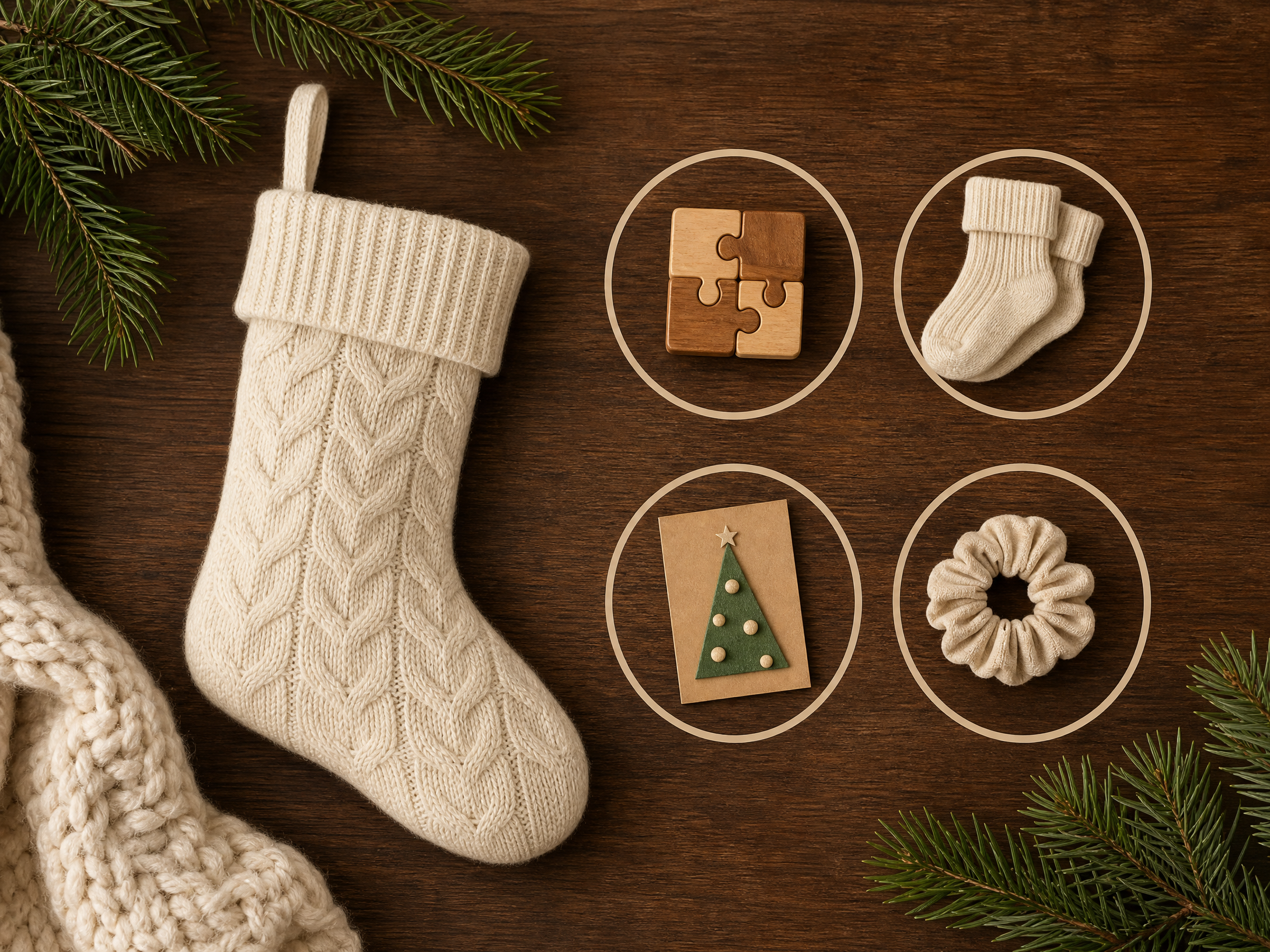
Choose a small set of categories and fill each stocking with one item from several of them so the overall feeling is varied and satisfying. Activity items invite interaction (a tiny game or puzzle appropriate for the child’s skills). Comfort items are tactile and soothing (a soft cuff, cozy socks, or a mini blanket folded small). Creative items encourage making or storytelling (small craft packs, stickers and simple tools). Everyday surprises make routine moments special (a special toothbrush, a fun snack, or a useful hair accessory).
Avoid leaning too heavily on any single category. If everything is edible, the novelty fades and you can trigger sugar highs or waste. If everything is practical, the stocking loses delight. By choosing one item from each of four categories you create a multi-textured experience: something to use immediately, something to savor, something to make, and something to keep.
3. Set Budget Guardrails and Stretch Value Creatively
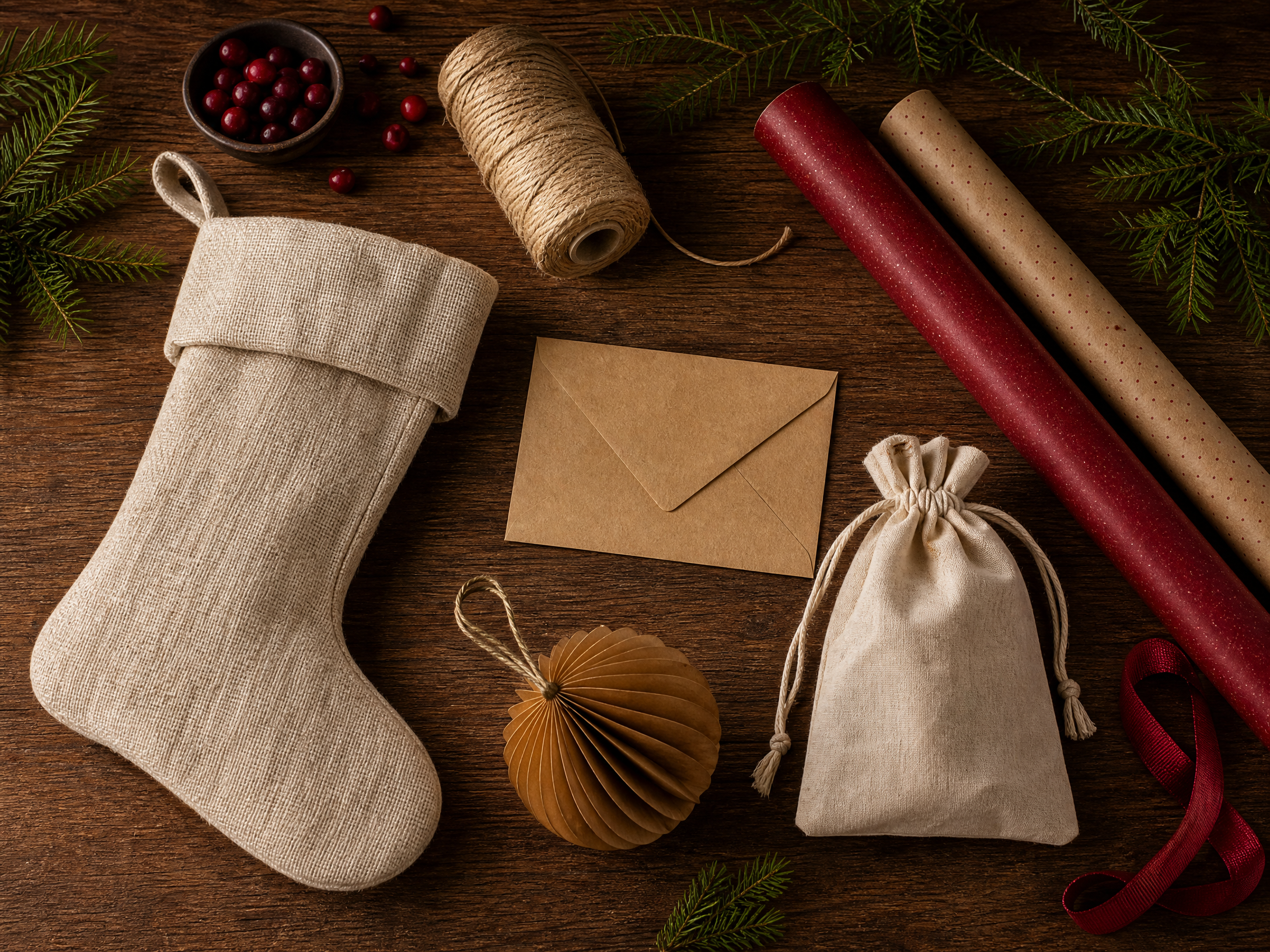
Decide a per-stocking budget before you shop and stick with it. A clear cap removes pressure to ‘add one more thing’ and helps you choose quality over quantity. To make the budget go further, combine small purchases with homemade items: a hand-written coupon for a later activity, a small handcrafted ornament, or a laminated scavenger list for a winter walk feel valuable but inexpensive.
Think in tiers rather than item counts. One slightly larger item paired with two or three smaller surprises often feels more special than many tiny trinkets. Also, watch timing: seasonal sales, after-holiday clearance and bulk buys for generic supplies (like craft bits or hair ties) let you pick up neutral staples without overspending.
4. Safety First: Avoid Choking and Age-Inappropriate Items
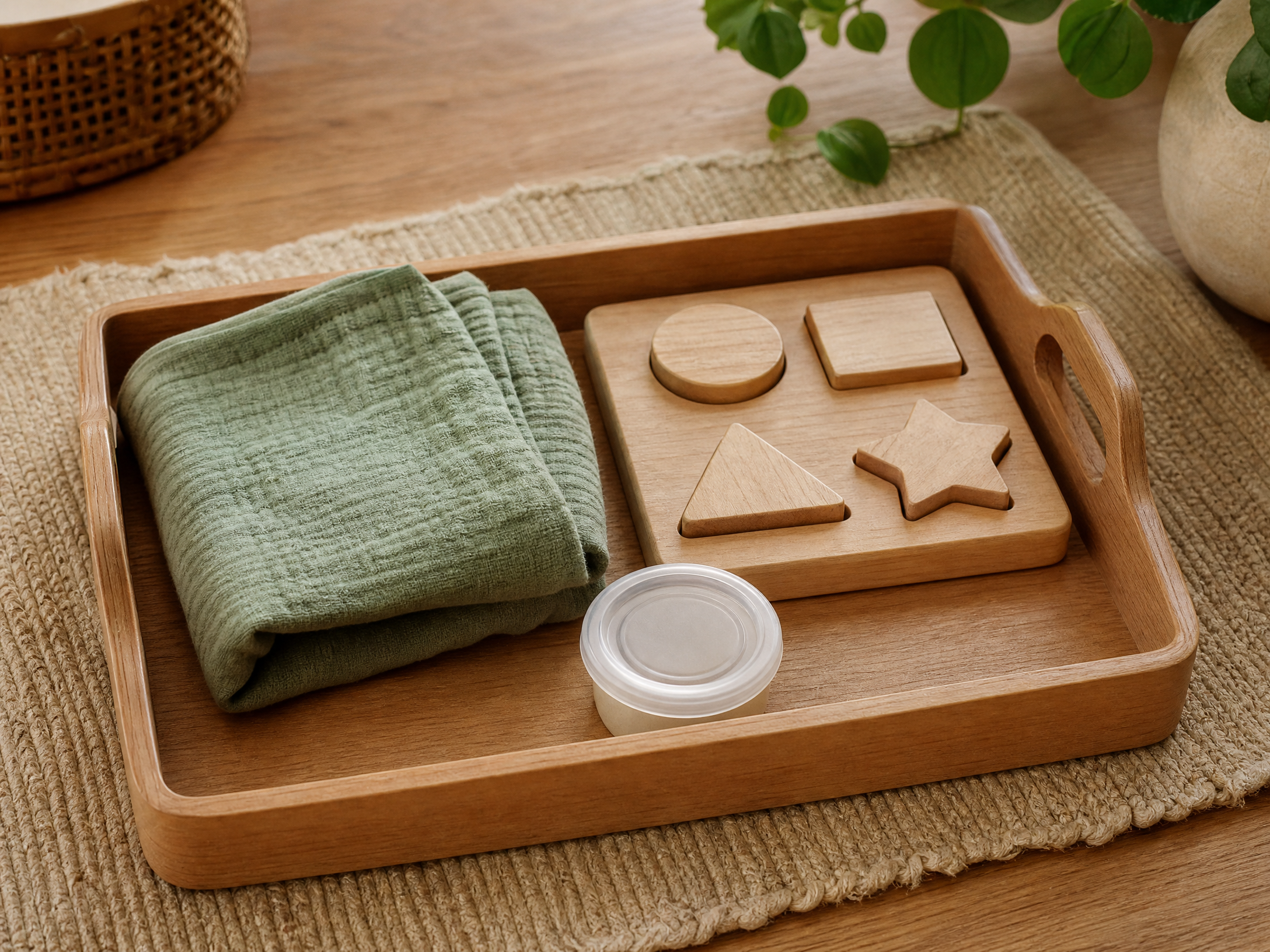
Small pieces and breakable components can pose real risks for young children. Follow age recommendations as a baseline but inspect each item regardless of packaging: remove sharp tags, check for loose parts, and avoid items with long cords or high allergen risk for those with sensitivities. For infants and toddlers, eliminate anything that could detach into a small sphere or be swallowed.
When in doubt, choose items that are multi-piece only if parts are large and robust. Keep a small kit of safe alternatives — silicone teething rings, fabric-based toys and solid nonbreakable items — so you can substitute quickly if something feels borderline. Store fragile or small-part gifts out of reach until the child is older enough to handle them under supervision.
5. A Simple Packing Sequence That Minimizes Wrapping and Bursting
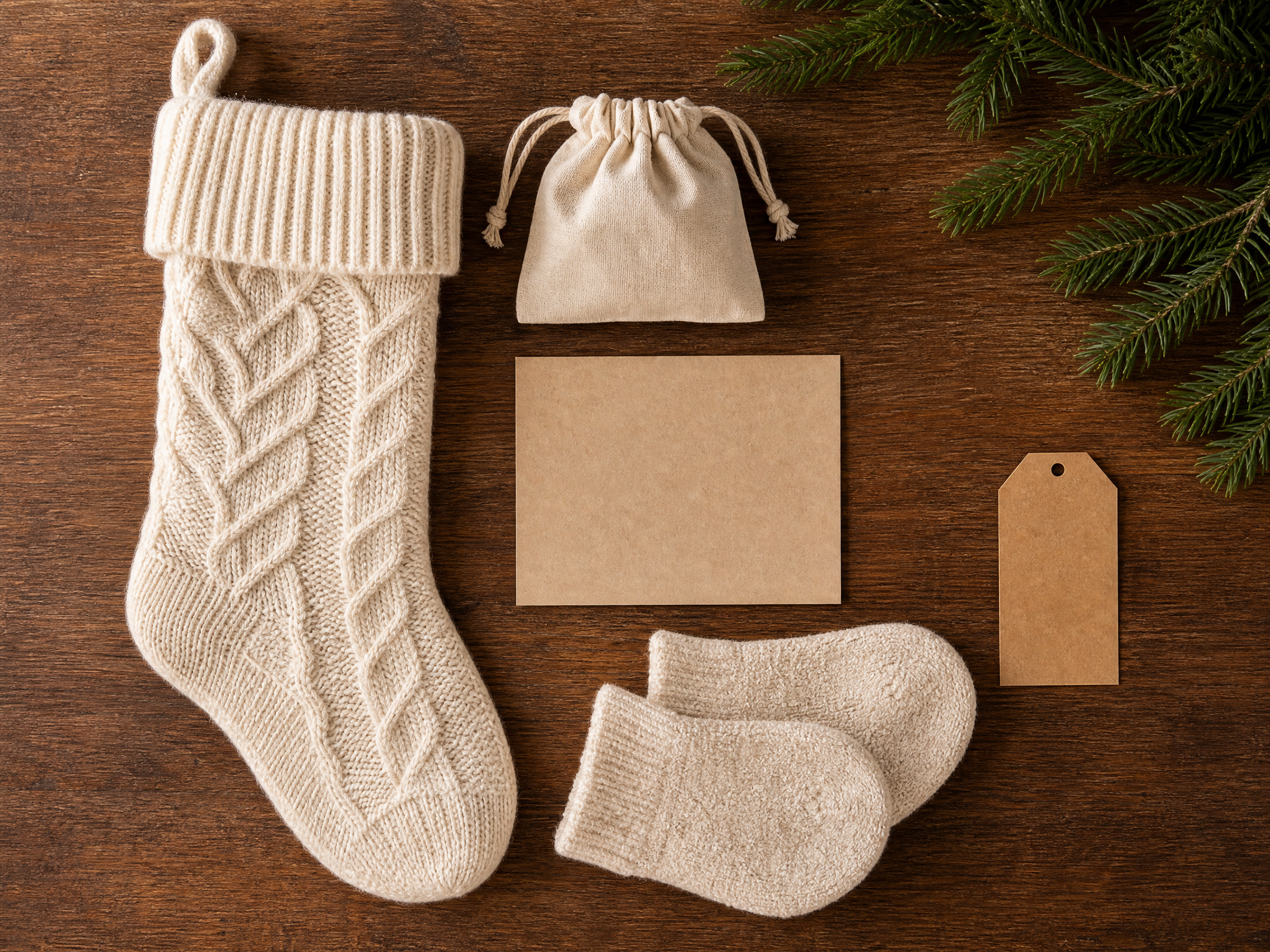
Start with the heaviest or bulkiest item first so it sits at the back of the stocking and doesn’t misshape the fabric. Add medium-sized items next, filling in gaps with soft things that cushion fragile bits. Place very small items in sealed pouches or small cloth bags and tuck them into the toe or top rim so they don’t slip out during handling. Finish with a lightweight topper — a family note, a handmade coupon, or a small decoration — so the first thing a child sees feels personal.
Checklist:
- Place the largest, sturdiest item in first to stabilize the base.
- Add medium items and position them evenly to avoid lopsided bulk.
- Use small fabric pouches or envelopes for tiny pieces.
- Fill gaps with soft comfort items to protect fragile objects.
- Top with a personal note or small lightweight surprise for immediate delight.
6. Low-Waste Presentation and Storage
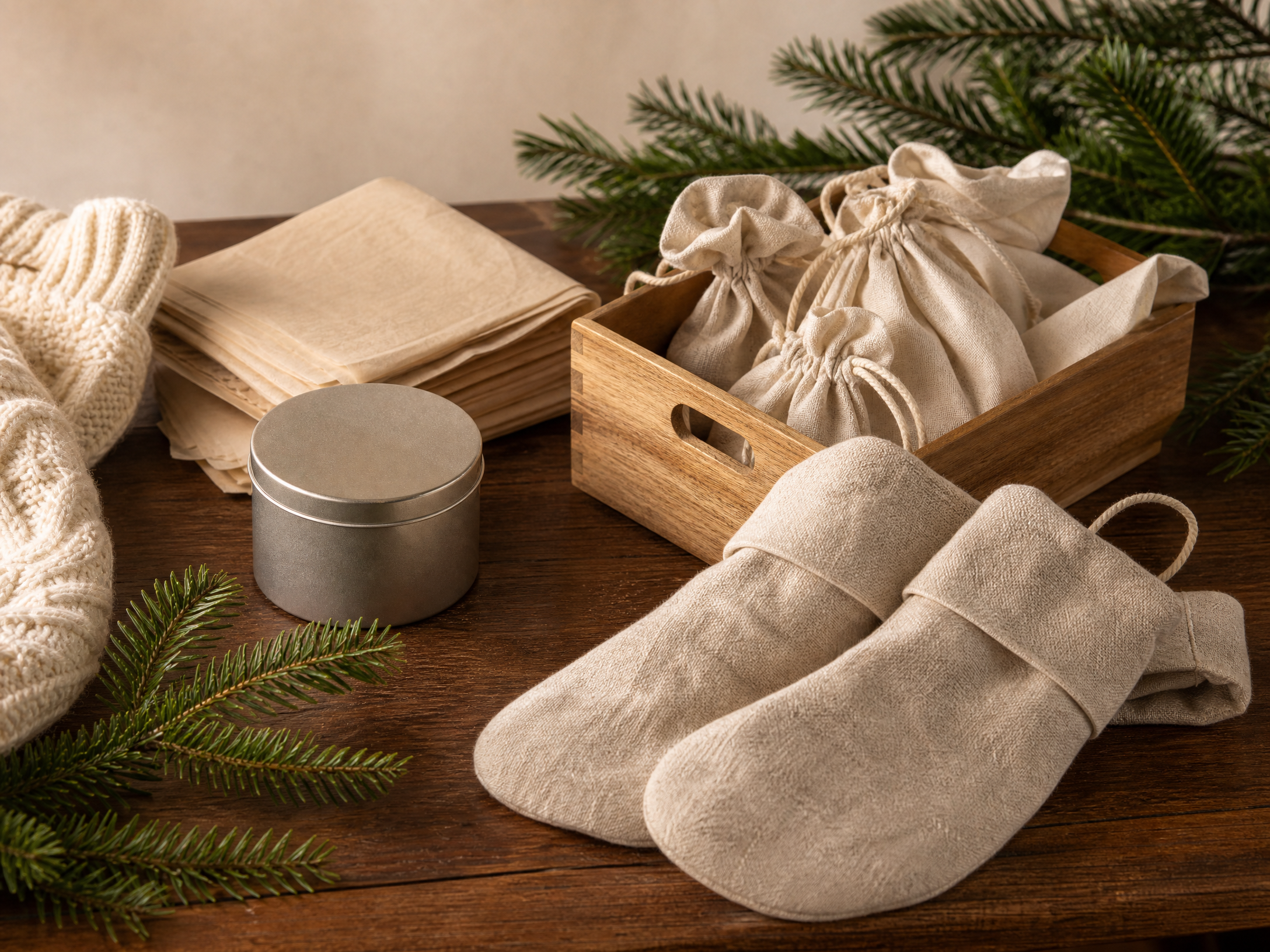
Choose reusable containers and wrapping that become part of play or storage: fabric stockings, small drawstring bags, or tin containers can be reused year after year. Avoid single-use plastic wherever possible by selecting compostable paper, cloth or recyclable materials. If you include edible goods, wrap them in waxed paper, glass jars or recyclable envelopes that won’t turn into quick landfill waste.
Plan for storage from the start. Keep a small box with reusable bags, tissue paper and labels so next year’s packing is faster and avoids excess new materials. Encourage children to keep or return durable items like mini games or craft kits to a communal box; this reduces annual purchases and reinforces the idea that stockings are about experiences and treasures, not instant discardables.
7. Handling Siblings and Fairness Without a Scorecard
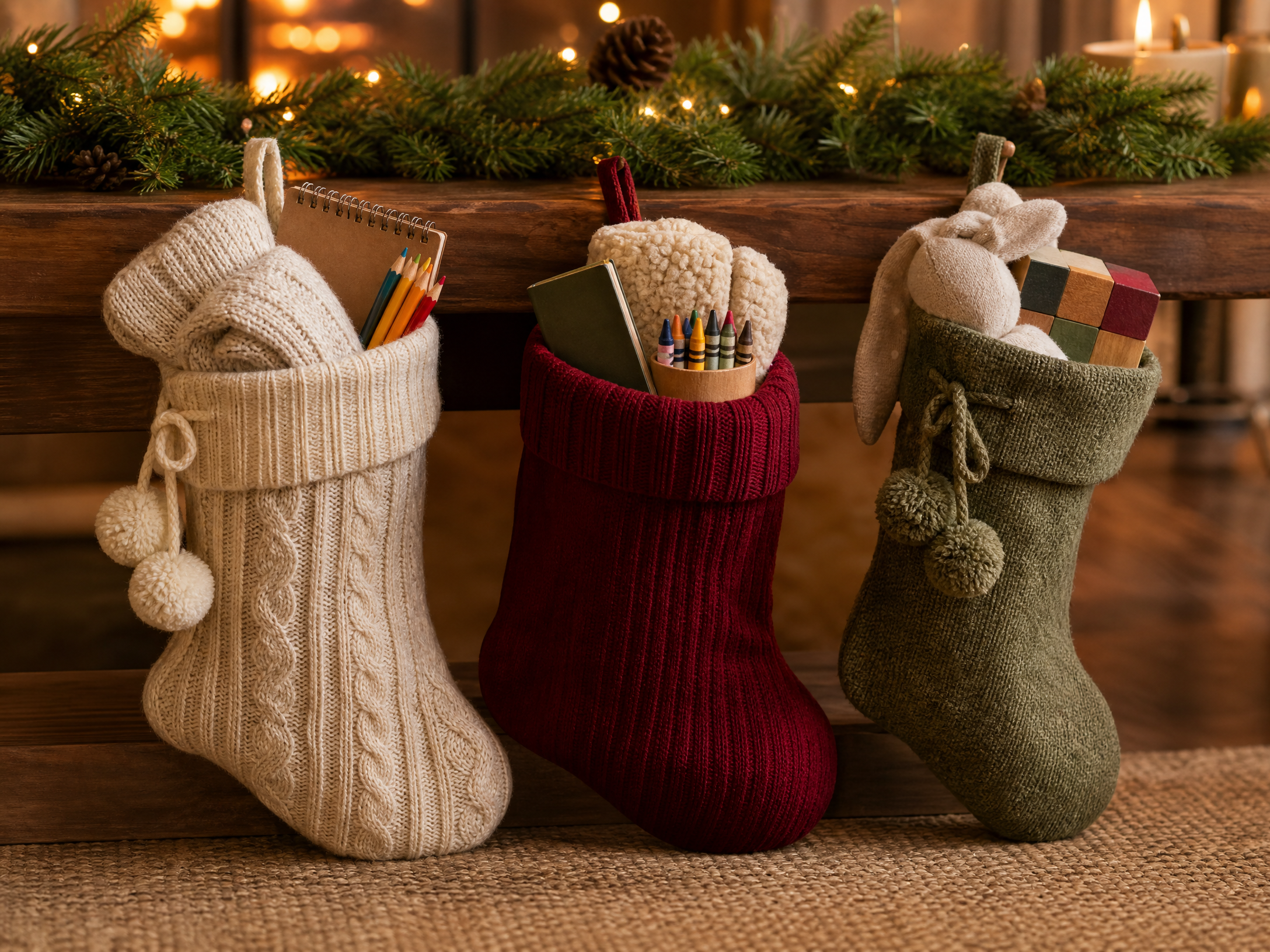
Fairness isn’t equality of items, it’s equality of feeling. That means you don’t have to give the exact same objects to each child, but you should aim for a comparable sense of delight. One method is to calibrate by category: each child gets one activity, one comfort, one creative and one everyday item (or the equivalent value). Another is to give a slightly larger shared family surprise plus one individual surprise so everyone feels connected.
Be transparent with older children when you’re tailoring stockings to age or interest. Let them know a sibling’s item may be more age-appropriate even if it looks ‘bigger.’ Rotate perks year to year — a child who receives more activity-style items one year might find more keepsake-oriented surprises the next. For tense moments, involve siblings in selecting one family item together so they build shared ownership of the holiday experience.
8. Final Touches: Personalization, Timing and Keeping the Magic
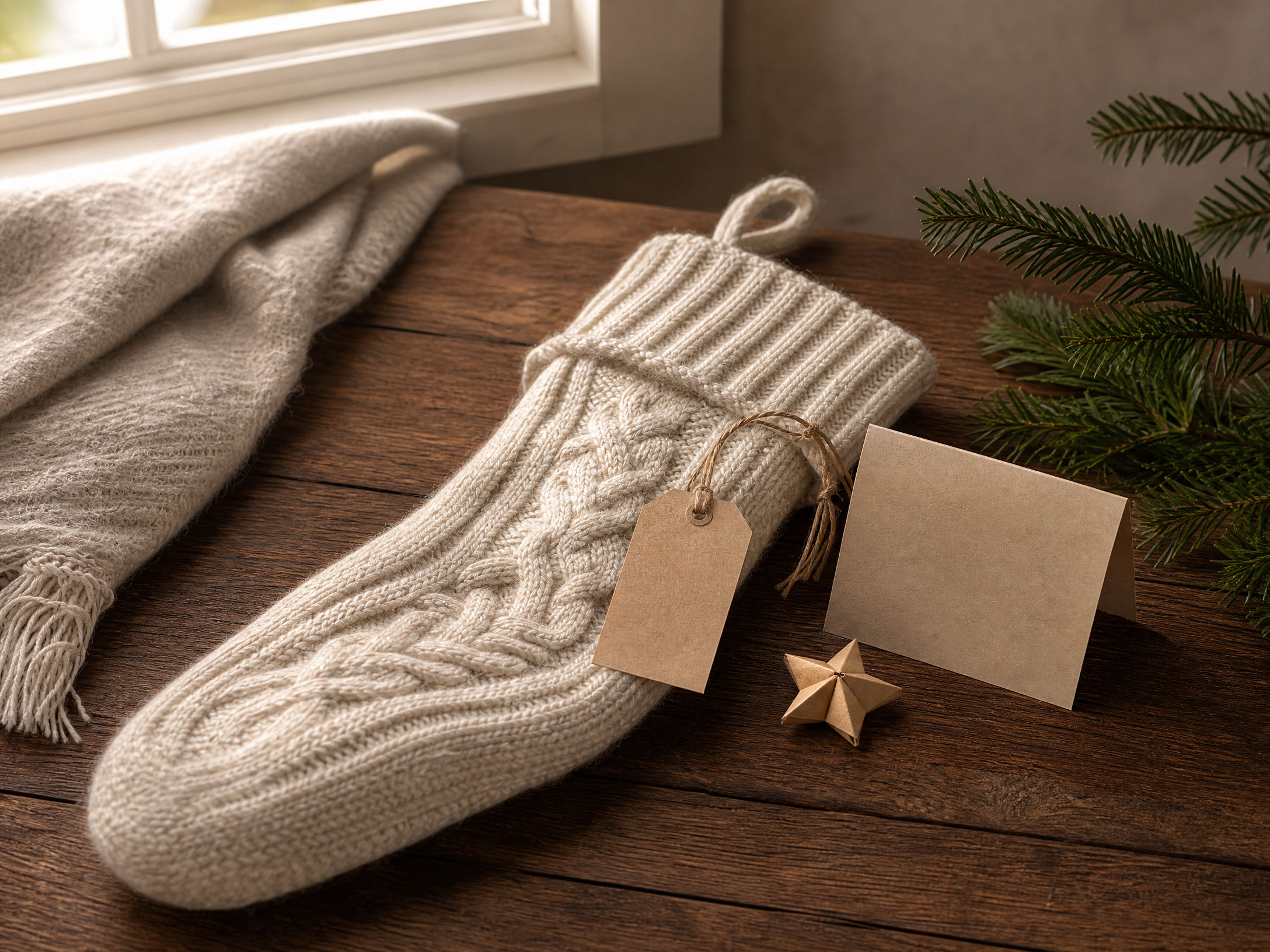
Personal touches make modest stockings feel luxurious: a short handwritten note, a sticker with the child’s name, or a tiny printed coupon for a one-on-one activity adds emotional value without cost. Think about timing as part of the surprise — placing the stockings where children discover them together can amplify joy, while keeping small items hidden until a planned moment preserves suspense.
After the holidays, do a quick debrief: discard or donate damaged items, note what was loved or ignored, and save a short list of ideas for the following year. With a little record-keeping and consistent guardrails, stockings become a sustainable and meaningful family tradition rather than a yearly scramble.
Final Thoughts
A well-curated stocking is a compact lesson in thoughtful gifting: it celebrates who your child is today without creating waste, safety risks or family stress. Use these practical frameworks — developmental fit, category balance, budget caps, safety checks, simple packing and fair-splitting — to create stockings that feel special, manageable and memorable year after year.